
A cat pulling on curtains may be stretching, marking a familiar surface, chasing movement, or trying to climb toward a view. The challenge is not simply a snagged panel. Curtains can also move, unravel, or bring down hardware if a determined cat grabs them. The best plan keeps window access appealing while making a sturdy scratching station easier to use than the fabric. Observe when and where the pulling occurs before changing the room. This is general behavior and environment guidance, not a diagnosis. Sudden behavior change or signs of pain deserve veterinary advice. See our veterinary disclaimer.

Watch what the cat does before reaching up
Is the cat planting both hind paws and raking downward, or climbing the fabric to reach a windowsill? These are different problems. A full-body stretch suggests a vertical scratcher near the curtain edge. Climbing toward a window may call for a separate secure perch. If the cat targets movement after a draft or a dangling hem, tie the curtain back temporarily without leaving loose loops. Note whether the behavior happens after naps, during dawn activity, or when neighborhood cats are visible outside. Those details help you change the trigger rather than merely hiding damage.
Check curtain hardware and hanging hazards first
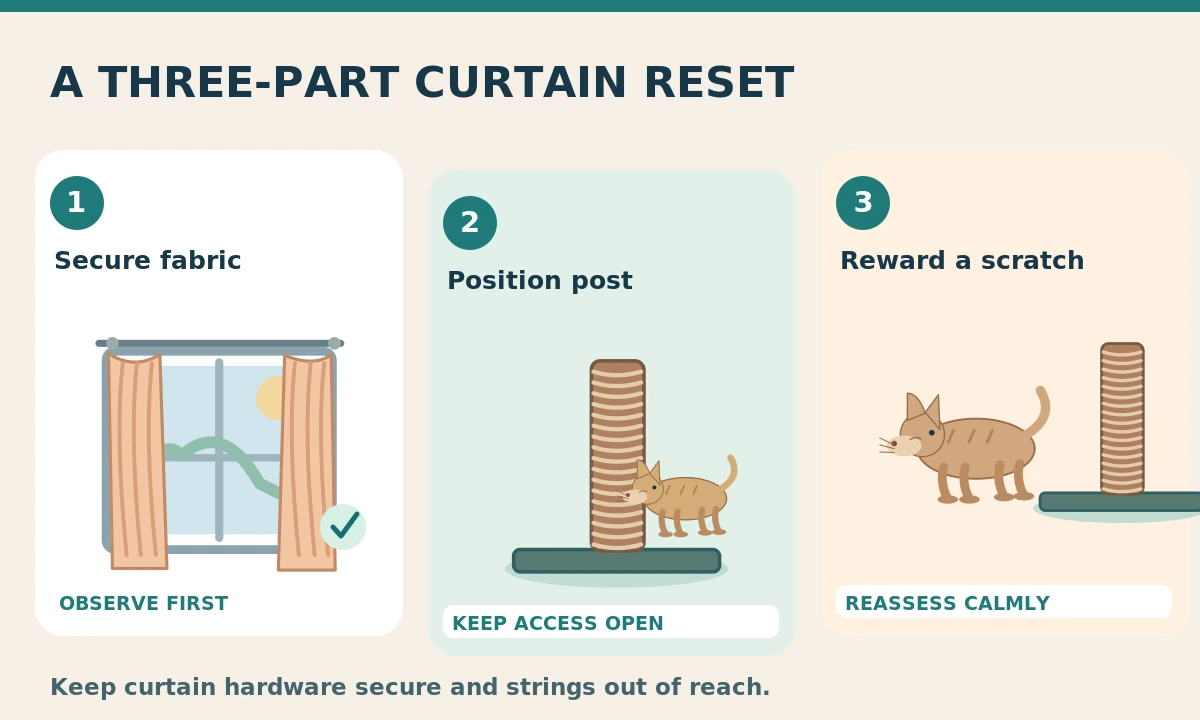
Inspect the rod brackets and the anchors that carry the curtain weight. A fabric panel must not become a climbing ladder or a load-bearing play surface. Remove or safely secure loose blind cords and tiebacks so they cannot form loops around a pet. Look for long pulled threads, loose beads, weighted hems, hooks, and sharp broken rings. Close off the window area while repairing an unstable rod. A temporary flat panel or safely fitted window covering is better than an attractive strand of hanging thread. Do not attach a scratcher to a curtain rod or to fragile trim.
Match the direction and height of the scratch
Many cats scratch upright with their forelegs extended, but others prefer a diagonal or horizontal surface. Offer a tall, stable post or a firmly mounted scratcher that accommodates the cat’s natural reach without forcing it to stand awkwardly. Choose a textured surface that catches claws gently, such as suitable sisal or corrugated board, while avoiding loose loops. Test the base with a modest sideways push before inviting the cat near it. The ASPCA and Cornell both emphasize matching the cat’s orientation and texture preferences, rather than buying any post and hoping for the best.
Place the alternative where the scratching occurs
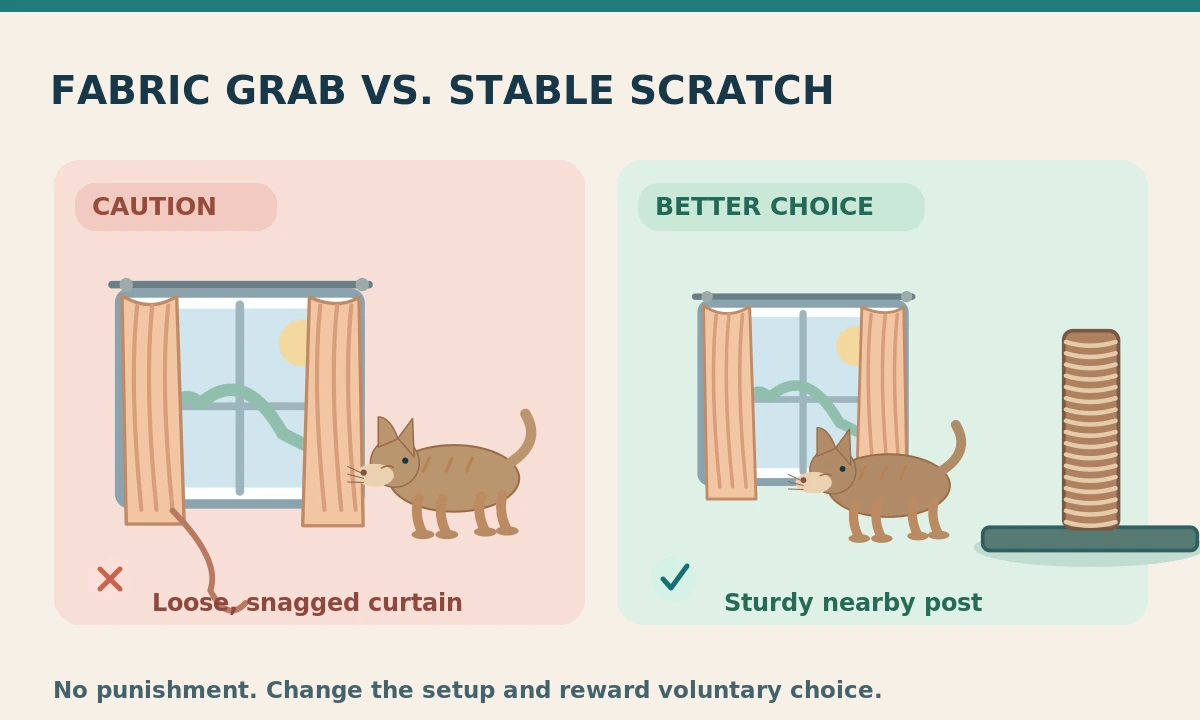
Position the upright scratcher beside the favorite curtain edge, not across the room. Leave sufficient space so paws can reach the scratcher without brushing the fabric, and keep the base clear of heater vents and door swings. A wide perch near the window can address watching or climbing behavior, but it should be attached or supported independently and offer a safe descent. Avoid blocking the cat’s normal route or making the new object wobble. If the cat reliably uses the post, relocate it slowly over several days. Sudden removal of an established station can restart the curtain scratching.
Protect fabric without frightening the cat
Temporarily lift vulnerable curtain hems out of reach or choose a shorter, simpler panel that still provides privacy. Check that any fabric cover is fixed so the cat cannot get tangled. Avoid essential-oil sprays, harsh irritants, startling devices, or spraying the cat with water. Punishment can create fear without teaching a better behavior. If using a removable surface protector on nearby furniture, test it on an inconspicuous area first and keep adhesive away from fur and paws. The priority is a safe, rewarding scratcher, not a contest to make the original surface as unpleasant as possible.
Reward the first small choices at the post
Let the cat approach the new scratcher voluntarily. A wand toy can create an inviting route around the post, but do not pull the cat’s paws against it. Reward sniffing, a light paw touch, and especially a natural scratch with a brief treat, play, or praise the cat likes. Keep sessions short and choose quiet moments. If the cat returns to the curtain, interrupt the setup rather than the cat: shorten the hanging panel, move the post closer, or increase play in that room. The ASPCA and welfare guidance favor teaching where to scratch instead of attempting to suppress scratching altogether.
Make the window appealing in a different way
Some curtain attacks start with excitement about birds or outdoor movement. Provide a steady viewing platform with a clear landing area, then check for outside sights that create prolonged agitation. If neighborhood cats appear frequently and your cat paces or marks repeatedly, partial visual screening may be worth testing. Use short play sessions and a predictable rest area away from the window. Do not assume a scratching surface alone will resolve anxiety about another animal. In multi-cat homes, place more than one scratching station so one cat cannot block access to the preferred one.
Recheck for wear and changes in behavior
Examine the scratcher for dangling rope, staples, sharp splinters, and a shifting base. Retire or repair parts that could catch toes, while keeping a familiar usable surface when possible. If the cat suddenly claws at many new locations, becomes unusually agitated, or shows paw pain, contact a veterinarian rather than attributing everything to misbehavior. Check the curtains after each trial for fresh threads or hardware strain, and adjust the layout. A useful outcome is not a cat that never scratches; it is a cat that can scratch naturally on a dependable alternative.
How We Research
Our editorial approach uses veterinary and animal-welfare guidance from Cornell, ASPCA, VCA, and AAFP/ISFM. Documented principles on normal scratching, resource access, surface preference, and low-stress handling inform specific home checks. The illustrations explain design and behavior; they do not represent clinical trials or independent product tests. If pain, urinary changes, wounds, or abrupt behavior changes occur, veterinary assessment takes priority. Read our editorial approach and research method.
Sources
ASPCA — Destructive Scratching — background on feline scratching, enrichment, safe choice, and humane redirection.
Cornell Feline Health Center — Feline Behavior Problems: Destructive Behavior — background on feline scratching, enrichment, safe choice, and humane redirection.
AAFP/ISFM — Feline Environmental Needs Guidelines — background on feline scratching, enrichment, safe choice, and humane redirection.
VCA — Why cats scratch furniture — background on feline scratching, enrichment, safe choice, and humane redirection.
Start immediately beside the targeted edge where the cat can find it; keep enough clearance that paws do not catch the curtain.
Shorter secure panels can reduce fabric access, but the cat still needs a stable, attractive scratcher.
No. Startling or punishing can increase fear and does not teach an acceptable scratching location.
Climbing toward a view, play, or movement may be the main motivation. Offer a safe, separate perch.
Seek advice for sudden behavior changes, pain, injured claws, or significant distress, rather than assuming it is purely a training issue.