
Cat Scratching Window Screens calls for understanding a cat’s normal needs before changing the home. Scratching can maintain claws, stretch muscles, and communicate through scent and visible marks. The safest approach is to protect vulnerable surfaces while providing an appealing, stable alternative at the place your cat actually visits. This article gives a practical sequence for observing the behavior, adjusting the environment, and rewarding the right choice. It does not recommend punishment, declawing, or holding a cat’s paws against a post. Sudden pain, injury, distress, or a major change in behavior warrants veterinary advice. Read our veterinary disclaimer for the limits of general guidance.
Identify what attracts your cat to the window
A cat may reach toward insects, birds, moving shadows, or the scent of another animal outside. Pawing can look like scratching even when the animal is trying to investigate movement beyond the glass. Some cats scratch near windows to mark an area where outdoor cats appear. Observe from a distance without startling the cat. Note whether the window is open, whether the animal can see another cat, and where the claws catch. Do not assume repeated screen scratching is simply a training issue: the view, access route, and physical safety of the opening matter just as much.
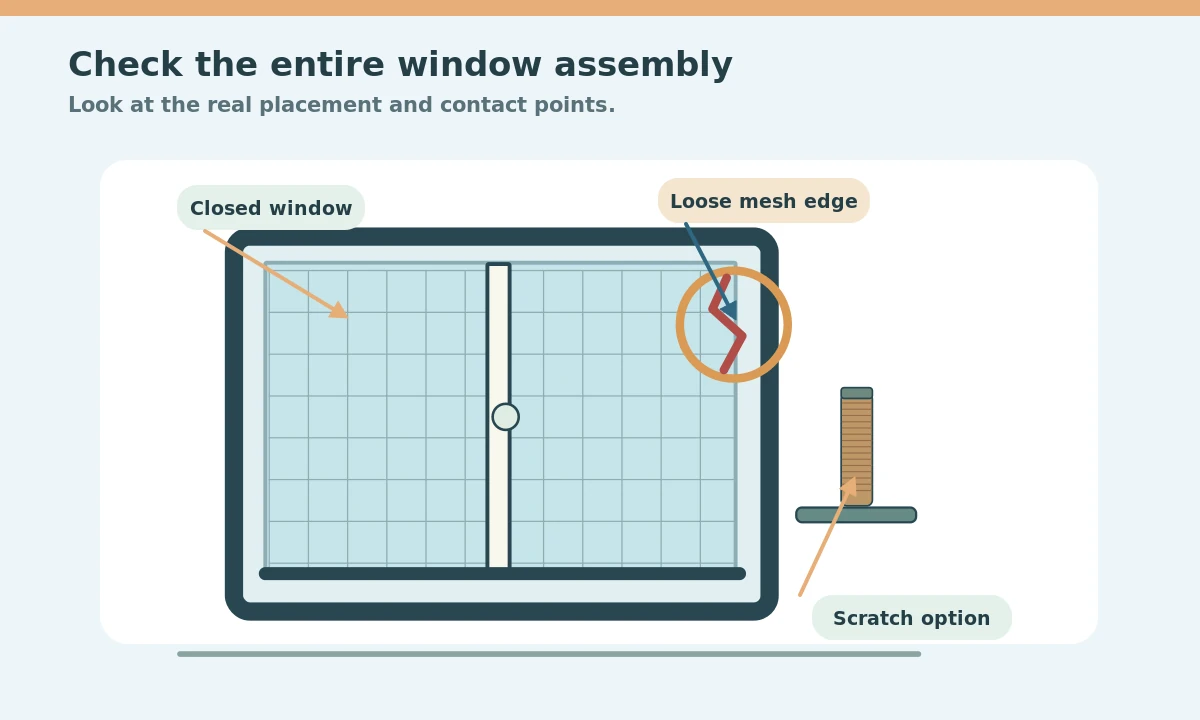
Treat a screen as insect protection, not fall protection
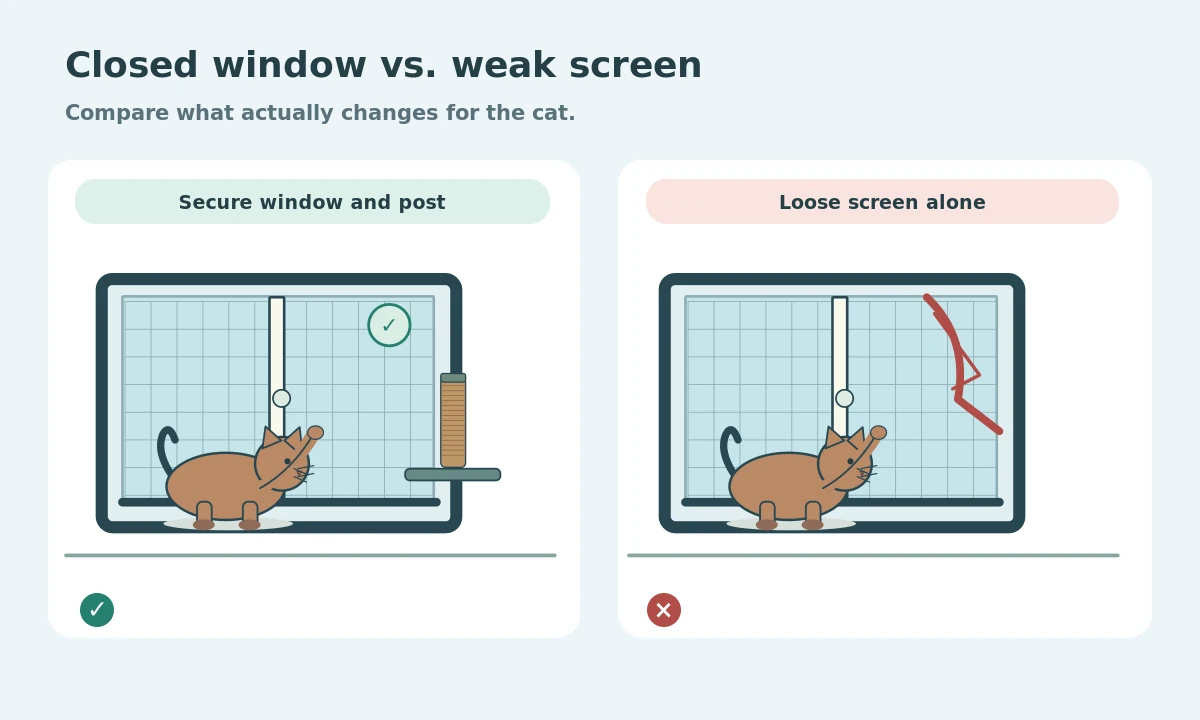
Ordinary window screens keep insects out; they cannot reliably contain a cat leaning, pushing, or clawing against the mesh. A torn seam, loose spline, or weak frame can fail suddenly. Keep the window closed or use a purpose-built, correctly installed pet-secure barrier appropriate to your building and climate; never rely on unverified screen strength. A cat can reach a high window without obvious risk until the frame moves. Check local building and rental requirements before altering a window. For upper stories, prioritize preventing access to any unprotected opening.
Inspect mesh, frame, and fasteners safely
With the cat in another secure room, inspect the mesh for punctures and unraveling strands. Check the perimeter where the screen sits in its frame, including corners, latches, and any retaining strip. A panel that rattles or lifts under light hand pressure may fit poorly in its frame. Do not test it by putting a cat against it. Replace damaged parts with components suited to the exact window system, or ask a qualified installer. Keep staples, loose wire ends, and removed spline away from pets. Even pet-resistant mesh does not automatically turn a screen into a fall-prevention barrier.
Create an acceptable view without claw contact
When possible, provide a stable indoor perch a comfortable distance from closed glass so your cat can watch outdoors without resting its paws on the screen. Keep curtain cords secured and the landing route clear. Position a separate scratching post close enough to serve the usual location, but not so close it helps the cat climb into an unsafe opening. A stable vertical post may suit a cat that drags claws down the screen; others prefer a horizontal board near the perch. Give the cat choices that do not involve reaching toward damaged mesh or cords.
Respond to outside-cat triggers thoughtfully
If the scratching coincides with another cat appearing outside, consider a partial window film or moving the perch to a quieter view. Sudden aggressive reactions, tail lashing, and repeated patrols at doors may indicate tension rather than an unmet need for a toy. Do not spray the cat with water or punish it at the glass. Such interruptions can increase fear without changing the outdoor trigger. Provide indoor hiding and resting spots and consider whether household cats need additional separated resources. A veterinarian or qualified feline behavior professional can help assess new or intense reactivity.
Practice scratching in the right place
Offer a textured scratcher that resembles the screen’s vertical pull but has a firm, stable base. Place a toy near the scratcher and reward voluntary use, keeping the cat at a safe distance from the opening. Avoid touching the paws or holding the cat against the post. Start practice in a quiet room with the window shut. Later, reward use of the post when the outdoor view is mildly interesting. If a hanging toy draws the cat directly toward the screen, relocate the toy and choose a floor-level activity instead.
Know when physical repair comes first
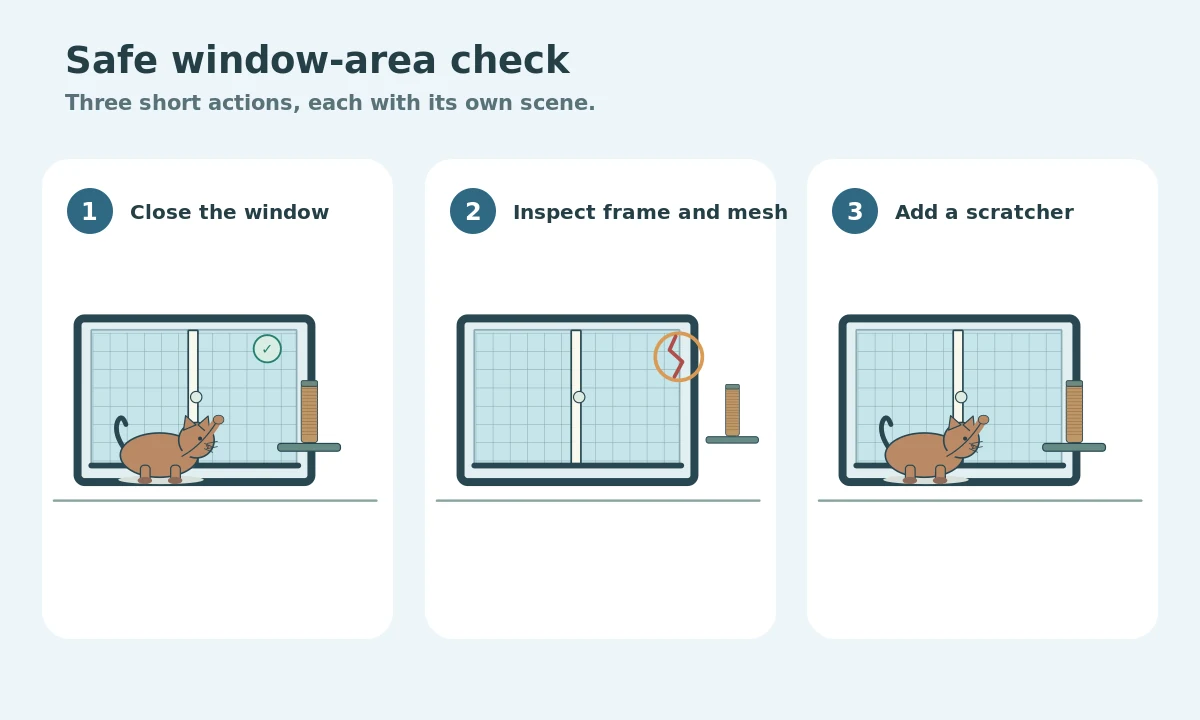
Training cannot compensate for a screen that has already torn or an open window with unsafe fall exposure. Close and secure the window first; then schedule repair or replacement. Avoid makeshift tape patches that can peel, create sticky strands, or hide a weak frame. If your cat chews or swallows screen fibers, contact your veterinarian rather than waiting for symptoms. Sharp wire mesh or exposed fasteners can injure paws or mouths. After any repair, inspect the whole assembly before restoring the cat’s normal room access. Never use the cat to test the barrier.
Maintain a simple window-area checklist
Recheck window locks, screen seating, and visible mesh damage when you clean the sill. Confirm that furniture has not shifted to create an easier jump to a hazardous opening. Check that the scratching post is stable and still attractive. If scratching resumes, look for a new outside animal, insect activity, or room change. A cat that previously ignored the screen may develop a new habit when seasons and views change. Preserve safe observation opportunities and scratching outlets together, rather than removing enrichment and expecting the behavior to disappear.
How We Research
HubPet reviewed guidance from established veterinary and animal-welfare organizations and compared the recommendations against the physical layouts shown in the illustrations. We focused on normal feline scratching, voluntary reward-based behavior change, stable materials, safe access, and triggers for seeking professional help. We do not claim product tests or individual behavior assessments. See our editorial research process. Check instructions for furniture, windows, and scratching products before applying any setup advice.
Sources
ASPCA — Destructive Scratching — https://www.aspca.org/pet-care/cat-care/common-cat-behavior-issues/destructive-scratching (accessed October 2026).
VCA — Cat Scratching Behavior — https://vcahospitals.com/know-your-pet/cat-behavior-problems-scratching (accessed October 2026).
Cornell Feline Health Center — Destructive Behavior — https://www.vet.cornell.edu/departments-centers-and-institutes/cornell-feline-health-center/health-information/feline-health-topics/feline-behavior-problems-destructive-behavior (accessed October 2026).
Safety note: This is general animal-welfare guidance, not a diagnosis or replacement for a veterinarian. Do not restrain, frighten, declaw, or punish cats to suppress natural scratching. For sudden pain, injury, or intense distress, consult your veterinarian. For human wounds, seek medical advice where appropriate.
No. Ordinary insect screens should not be treated as fall protection; use a secured window or a specifically rated, correctly installed barrier.
Stronger mesh may resist claws, but its frame and installation still matter. Do not assume it can support a cat at an open window.
No. Move the cat away from the hazard and provide a stable alternative scratching surface and a safer observation spot.
A visible outdoor cat can trigger territorial tension. Reduce the view when needed and offer separated resources and calm resting options.
Contact a veterinarian promptly. Strings, wire, and other screen material can cause injury or obstruction; do not induce vomiting or pull a strand.