
Kitten playpens can help create a temporary, defined space while you kitten-proof a home. They are not substitutes for a safe room, regular interaction or supervision. A useful pen must hold a curious climber without trapping paws, allow comfortable standing and turning, and separate a low litter tray from bedding, water and food. Some soft-sided models fold easily but offer tempting seams and zippers; some wire models create climbable grids and large gaps. This guide offers a hands-on inspection before the kitten enters and a layout that still supports normal movement and choice. General guidance does not replace veterinary care; see our veterinary disclaimer for health and safety concerns.
Decide whether a pen is the right tool
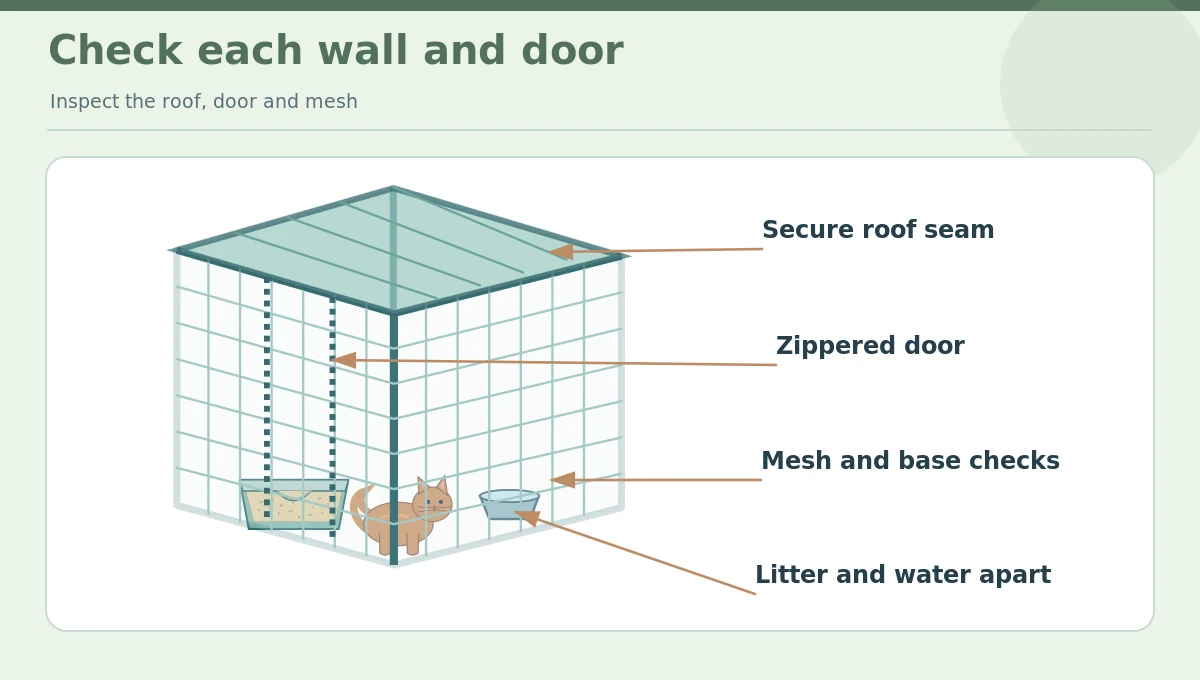
A pen may help during a short introduction, room cleaning or supervised recovery plan approved by a veterinarian. It should not become the kitten’s entire living space. A prepared room usually offers more opportunities for climbing, hiding, scratching and social contact. If you need containment, ask whether the enclosure can remain secure when the kitten climbs the walls or pushes against a zipper. A confident jumper may escape an open top even when the side panels seem tall. Consider a secure, ventilated roof approved for the model instead of improvising a loose cover.
Inspect mesh openings, seams and zippers
Run your fingers along the full perimeter while the pen is empty. Look for torn mesh, loose stitching, protruding wire, sharp edges and zipper pulls that a kitten could chew. Check each gap near the base and panels against the size of your individual kitten; do not rely on a nominal adult-cat label. Pull the door closed and inspect whether the zipper leaves a wedge-shaped opening. Never tie dangling string to keep a flap shut. A damaged or poorly fitting enclosure requires replacement or repairs using only manufacturer-approved parts before use.
Make stability visible before adding gear
Put the pen on an even surface away from heaters, cords, blind pulls and unstable furniture. Open and lock every support bar according to the maker’s instructions. Push gently against the empty side and see whether the frame rocks or folds. Soft floors can let legs sink; polished floors can let the whole pen slide. Use a flat nonslip base only when it cannot bunch up and that a kitten cannot chew into pieces. Do not anchor the pen to a heavy object with a long cord. Stability matters when a kitten suddenly jumps against a wall.
Allocate a real litter corner
Choose a low-entry uncovered tray, and place it at one end of the enclosure on stable flooring. Provide enough space for the kitten to turn and exit without stepping through food or water. Place water and feeding dishes on the opposite side when the pen is large enough. If the pen cannot hold these resources separately along with a comfortable resting space, it may be too small for the intended duration. Keep waste removed and check for spilled litter in door tracks or under the support frame. The entrance to the tray must remain open after bedding shifts.
Leave a comfortable rest zone and hide
A small washable bed or folded blanket gives the kitten a dry resting area; a stable cardboard hide can offer privacy if it cannot collapse or block an exit. Put the bed away from the litter tray and avoid hanging fabric loops. A hide should not create a springboard that makes an unsafe gap reachable near the roof. Check that the kitten can stretch without contacting food dishes or the wall. Kittens sleep for substantial portions of the day; offer a calm, draft-free space rather than a crowded collection of toys that leaves no resting room.

Choose only low-risk enrichment inside
Use a few sturdy, size-appropriate toys without strings, loose feathers, detachable eyes or tiny pieces. Supervised wand sessions can happen outside the pen; store the wand afterward. Check whether a ball could roll beneath a panel and cause frantic pawing at a gap. Avoid dangling cords, clipped-on bells or anything that can loop around a limb or neck. Rotate uncomplicated toys rather than filling the pen with objects. A small scratching surface can be helpful if it cannot tip onto the kitten or block the litter entrance.
Introduce the pen without turning it into punishment
Leave the door open at first and invite the kitten to explore with a familiar blanket and a treat or toy. Let the kitten step out if uneasy. Later close the door for a short, calm period while you remain nearby. Return before the kitten becomes distressed and build duration gradually. If the kitten climbs continuously, cries in panic or attempts to bite through the mesh, stop and review whether a safe room would work better. Never shake the pen or spray water at the kitten. Containment should support safety, not create fear.
Build a simple pre-use inspection routine
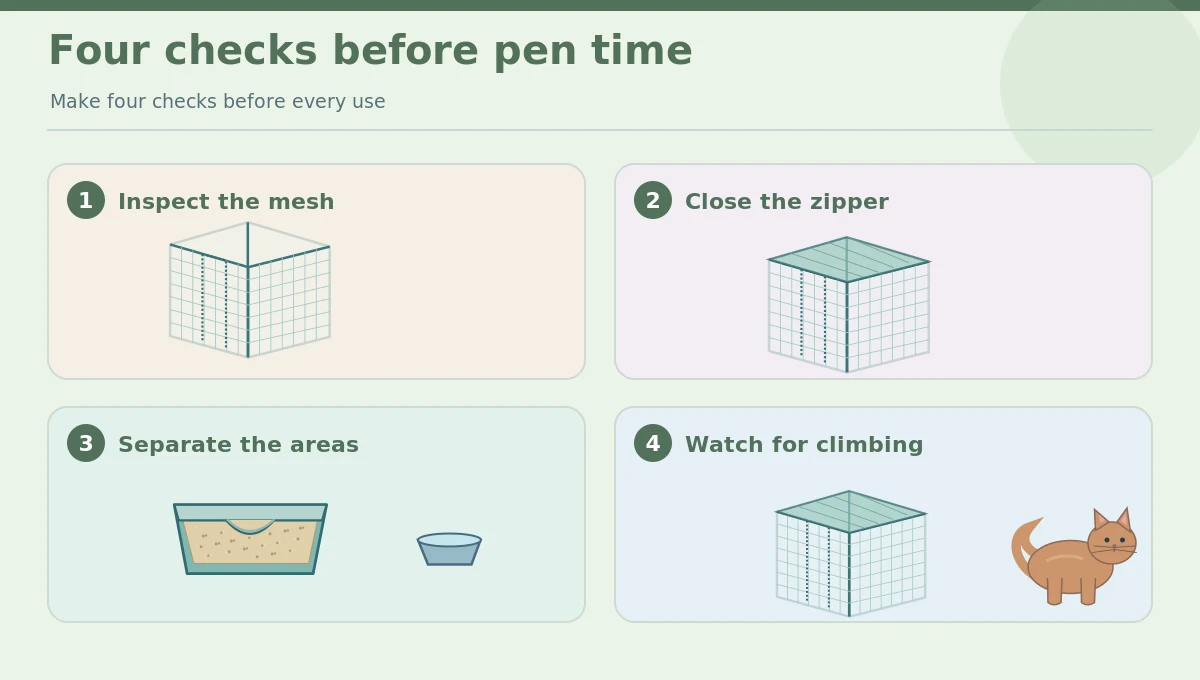
Before each session, check roof closure, door latch, lower corners, mesh integrity and any support locks. Remove debris, food scraps and toys with damaged seams. Confirm that the tray remains dry and the water bowl has not tipped. Check temperature and ventilation, especially near sunny windows. Watch the kitten’s first minutes for escape attempts and unexpected climbing routes. Enclosures that work for a tiny newcomer can become unsuitable as the kitten gains weight and agility. Reassess frequently rather than assuming a one-time inspection lasts for months.
Know the limits of confinement
An exercise pen can be a useful temporary arrangement, but kittens need opportunities to explore, move, play with people and rest in a larger enriched environment. VCA notes that extended confinement is not healthy and that pens need a roof to reduce escape risk. Never leave an unfamiliar pen unobserved with an escape-prone kitten or a resident pet circling it. If a kitten needs restricted activity following an injury or procedure, follow the veterinarian’s specific instructions rather than general pen advice. Safety comes from appropriate space and human attention as well as equipment.
How We Research
We reviewed current veterinary and animal-welfare guidance alongside practical construction and layout checks. Sources were accessed October 29, 2026. Our original illustrations describe safe-use principles rather than product certifications or a substitute for individual veterinary advice. Manufacturer directions take priority for specific equipment. The HubPet About page describes our editorial approach.
Sources
VCA Animal Hospitals, Crate Training and Confinement for Kittens and Cats. Read source.
Cats Protection, Bringing a New Kitten Home. Read source.
VCA Animal Hospitals, How To Create a Safe Space for Your Kitten. Read source.
Safety note: This is general kitten-care information, not a diagnosis or guarantee of product safety. Stop using damaged equipment, seek veterinary care for pain or suspected ingestion, and follow a veterinarian’s instructions for very young, ill or recovering kittens.
Many kittens climb or jump out of open pens. A secure, ventilated roof designed for the enclosure reduces escape risk, but the pen still needs supervision.
Yes, if the pen leaves enough separate room for a low-entry tray, bedding, water and movement. A crowded setup is not suitable.
Neither material is automatically safer. Inspect mesh tears and zippers on fabric pens, and spacing, sharp ends and locks on wire pens.
No. Kittens need social interaction, exercise and environmental choice. Use a safe room or other suitable arrangement for longer periods.
Keep the door open, provide familiar bedding and allow voluntary visits. Build short closed-door sessions only while the kitten stays calm.