
A kitten who has an accident is not being spiteful. The box may be too distant, too tall, too dirty, or frightening to reach; sometimes illness or discomfort plays a role. The safest response is to inspect the entire route from the kitten’s usual resting area to the tray before replacing every supply. This troubleshooting guide focuses on a practical layout audit, a careful cleaning routine and signs that require veterinary assessment. This guide addresses kittens already old enough to eliminate independently. Very young or ill kittens need individual professional guidance rather than trial-and-error changes. General guidance does not replace veterinary care; see our veterinary disclaimer for health and safety concerns.
Map the exact accident location
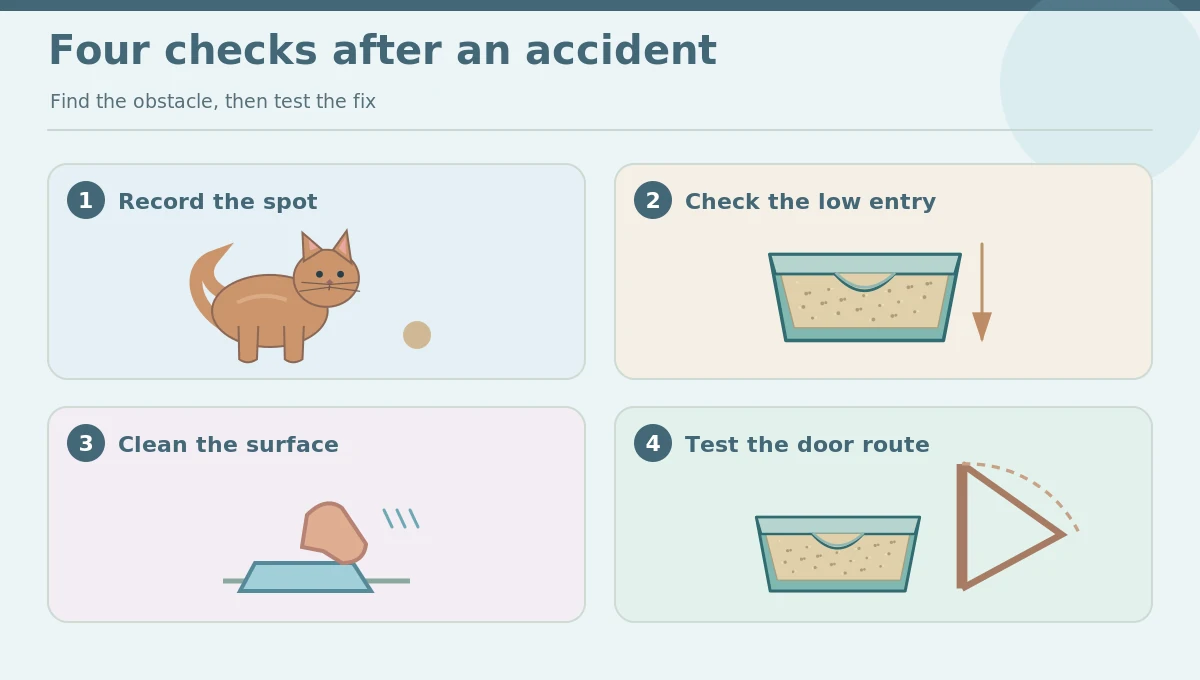
Write down where each accident occurred and whether the kitten was resting, eating or playing shortly beforehand. A repeated spot near a closed bedroom door suggests an access problem. A spot directly outside the tray suggests that entrance height, texture or cleanliness may deserve attention. Patterns matter more than one isolated incident. Check the route at the same time of day: a bathroom door that stays open at noon may close at night. Do not assume the kitten understands your preferred location just because it used the tray once.
Inspect the entrance and the floor
Stand beside the tray at the kitten’s eye level. Is there a tall rim, lid flap or step that requires a jump? Does a slippery mat buckle as the kitten enters? Can the tray rock or slide after a paw pushes the edge? Replace a difficult entrance with a stable open tray or a low cutout. Keep a small washable mat outside for scattered granules, but do not use one that traps claws or blocks the doorway. Watch a voluntary entry and exit rather than forcing a demonstration. The kitten should move freely both ways.

Give every used room a reachable choice
A young kitten may not reach a single box on another floor during play. Start with at least one box in the kitten’s safe room and add another when access expands. A box behind a noisy washing machine, near a barking dog or inside a room with a swinging door may technically exist but not feel usable. Separate litter locations from feeding stations and make sure other pets cannot corner the kitten. Place boxes in distinct quiet areas, not shoulder to shoulder in a single crowded corner. Convenience for people should not outrank access for the cat.
Check scent, texture and cleaning routine
Many cats prefer a familiar, unscented litter and a clean tray. If accidents started after a scented refill, different granule size or new plastic liner, return toward the previous successful setup when possible. Scooping more frequently may help if waste accumulates quickly. Avoid heavy fragrance or sharp cleaners to hide odors. Wash with suitable products and rinse fully. Keep a short record of what changed so you can reverse one variable at a time. A dramatic simultaneous change of box, room, litter and cleaning product makes the cause hard to identify.
Remove odor without creating a second hazard
Blot fresh accidents using disposable towels, then treat the area with a pet-compatible enzymatic product according to its fabric and flooring instructions. Test delicate materials in an inconspicuous spot and let everything dry before the kitten returns. Never combine bleach with ammonia-based cleaners or other cleaning chemicals. Store the cleaner out of reach during drying. Scrubbing can spread urine into carpet padding; controlled blotting is often kinder to the material. Dispose of waste safely and wash your hands. Cleaning helps reduce repeated attraction but is not a substitute for a usable box.

Avoid punishment and frightening corrections
Scolding a kitten after finding a puddle cannot explain which route was difficult. Carrying the kitten to the stain or forcing a paw into litter may make both the person and tray feel unsafe. Reward calm exploration and normal use instead. If the kitten freezes at the box, step away and reduce noise. A hiding kitten may need privacy and a slower adjustment period. When a resident cat guards a doorway, manage separate access rather than expecting the kitten to push past. Focus on making the correct option easier, not making accidents frightening.
Change the setup in a testable order
Start by keeping the box accessible around the clock. Next fix entry height and stability. Then review litter texture, cleanliness and stressors in the room. Give each change a fair observation period while recording results, unless the kitten shows signs of illness. If the problem improves, retain the helpful feature instead of introducing another new product. When you need to move the final box, transition gradually and leave a second accessible tray temporarily. A practical troubleshooting plan changes one or two likely obstacles, not the whole home overnight.
Recognize discomfort before behavior labels
Straining, repeated unproductive trips, vocalizing during elimination, blood, diarrhea, sudden weakness or marked thirst are medical concerns. An inability to pass urine is urgent. Contact your veterinarian promptly rather than waiting for the layout experiment to work. Even a kitten who appears healthy may need an examination when accidents persist despite appropriate tray access. Do not restrict water, try home medication or infer a diagnosis from urine position alone. The purpose of a layout audit is to remove preventable barriers while healthcare professionals evaluate symptoms that an environmental change cannot explain.
Verify the fix with ordinary daily life
After the changes, watch whether the kitten can reach the tray from the room where it sleeps and from favorite play areas. Test access with doors in their usual daytime and nighttime positions. Recheck the mat and entrance after cleaning, because moving supplies can introduce a new obstruction. Keep waste scooped and put fresh water well away from the box. Celebrate a steady pattern of comfortable use, not a single flawless day. If accidents return, compare your notes with recent changes and seek veterinary help rather than beginning an endless cycle of new products.
How We Research
We reviewed current veterinary and animal-welfare guidance alongside practical construction and layout checks. Sources were accessed October 29, 2026. Our original illustrations describe safe-use principles rather than product certifications or a substitute for individual veterinary advice. Manufacturer directions take priority for specific equipment. The HubPet About page describes our editorial approach.
Sources
Cornell Feline Health Center, Feline Behavior Problems: House Soiling. Read source.
VCA Animal Hospitals, How To Litter Train Your Kitten. Read source.
Cats Protection, Bringing a New Kitten Home. Read source.
Safety note: This is general kitten-care information, not a diagnosis or guarantee of product safety. Stop using damaged equipment, seek veterinary care for pain or suspected ingestion, and follow a veterinarian’s instructions for very young, ill or recovering kittens.
The entrance may be hard to climb, the tray may be dirty or the surface may feel unpleasant. Repeated accidents should also prompt a veterinary discussion.
A temporary additional box near a repeated spot can help reveal access preferences. Keep the original box available and make any permanent relocation gradually.
A thick, unstable or claw-catching mat can interfere with entry. Choose a flat, easy-clean surface that does not block the low opening.
It removes residues that may attract repeat marking, but it does not solve a high entrance, blocked route or medical discomfort.
Call for persistent accidents or any straining, blood, diarrhea or distress. Little or no urine despite repeated efforts needs urgent veterinary attention.