
Lightweight cat litter can make carrying and pouring bags easier, especially for someone managing stairs or limited storage. But two packages with the same volume do not necessarily weigh the same, and lighter grains may move differently across floors and fur. Some formulas remain fine and clumping; others use porous granules or plant fibers. The best choice preserves a substrate your cat uses willingly while reducing effort for the caregiver. This buying guide describes features to check, not a ranking of specific brands. For concerning elimination changes, consult your veterinarian and HubPet’s veterinary disclaimer.
Separate bag weight from usable litter volume
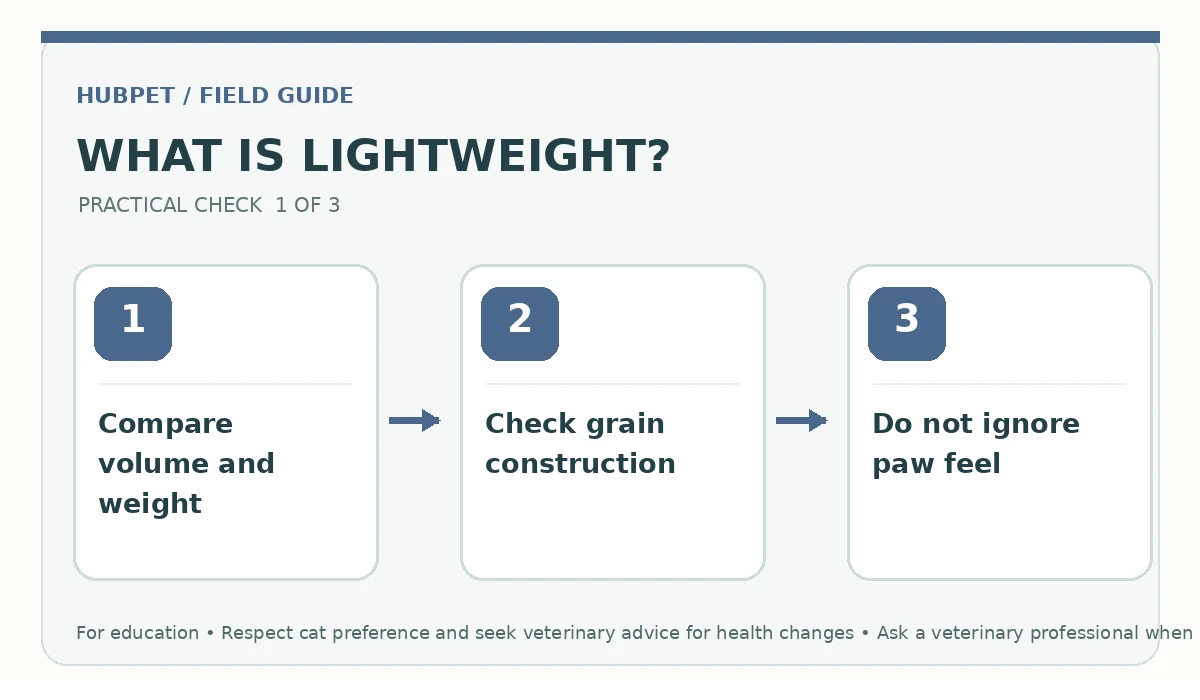
Compare net weight and volume on packaging rather than assuming a small bag means the same amount of litter as a heavier alternative. For example, different materials pack differently; a light product may fill the same tray to a similar depth with fewer pounds. It may also require different top-up amounts after each scoop. Record how many full fills a bag provides at your chosen box depth. A higher price per pound does not automatically mean a higher price per month, and a lighter bag does not guarantee savings. Your useful comparison is the cost and effort of maintaining a clean box for a whole month.
Check whether texture still suits your cat
Lightweight formulas can be fine and sand-like or quite different in texture, depending on their construction. However, some cats strongly prefer fine unscented grains, as described in Cornell and AAFP/ISFM guidance. Do not choose a new substrate solely because it is easy to lift. Watch your cat enter, dig, posture and leave; hesitation may indicate an unpleasant surface. Provide a familiar option during any transition. If the cat has painful paws or mobility limitations, a coarse substitute may be particularly unwelcome. A lighter purchase should not make normal toileting harder.
Consider tracking and scatter before committing
Light grains may bounce or travel differently when a cat kicks them out of the box, although performance varies by particle shape and paw fur. In addition, examine where grains collect after normal daily use and whether the material sticks to a mat or upholstery. A wide tray with sufficient room to dig can reduce some scatter. A flat washable mat may catch grains without blocking access. Avoid forcing a jump through a covered cabinet just to contain the mess. Compare how much floor cleanup you actually need, not only the photograph of a clean showroom. Product labels like low tracking require observation at home.
Evaluate dust under ordinary use
A lighter substrate is not automatically dustier, but certain particles can become airborne while pouring or when they fragment. Meanwhile, open and pour a small quantity gently; observe whether a fine layer settles on the tray rim. Do not create a cloud intentionally to test it. If your cat has respiratory symptoms, ask a veterinarian for an individual assessment rather than making promises about a product label. Ventilate the area without placing the litter box directly in the path of a strong fan. An unscented product can help avoid adding another sensory burden. Keep the scoop and pan clean to reduce debris.
Compare clumps and refill losses
If you use clumping lightweight litter, check whether clumps hold together when lifted with your current scoop. Therefore, fragile clumps may break and leave wet bits behind, leading you to remove more clean material or replace the tray earlier. A non-clumping formula needs its own moisture-removal routine. Watch how much litter stays in the pan after daily cleaning and how often you must top up. Take brief notes for a week to compare costs fairly. An easier bag is not much help if you now carry extra replacement bags every few days. The cat still needs daily hygiene.
Make pouring and storage easier on the body
Choose a package size that you can lift and control without spilling. Instead, store it close enough to the litter area to avoid repeated heavy carrying, but keep it away from damp floors and curious pets. Pour slowly at a comfortable height rather than lifting a large bag above shoulder level. Smaller sealed containers can make refilling manageable; label them with the original formula and retain package instructions. Do not mix different litters into one storage tub when trialing a product, because you may lose the ability to tell which one a cat dislikes. Ease of handling is a valid purchasing goal.

Offer a comparison box instead of a sudden swap
Keep the existing litter available while placing the lightweight alternative in another clean box of similar size. Also, notice which one your cat uses across several normal days. A forced change might lead to avoidance and accidents unrelated to your intention to simplify lifting. If the new formula suits your cat, continue monitoring whether the floor and box remain manageable. If the animal refuses it, stop the trial and return to the stable setup. Alter one feature at a time, such as litter first and mat position later. This allows you to judge what truly changed.
Plan a realistic monthly budget
Write down the shelf price, net weight, advertised volume, the number of fills you obtain and how often you discard used material. Next, include the time spent sweeping tracked particles and washing the tray. A lightweight product may offer substantial physical convenience even when it costs more; that is a personal value decision, not an objective best rating. Compare brands only when you know their actual ingredients and care instructions. Claims of natural, premium or maximum odor control do not replace the cat’s preference or a clean litter box. Avoid buying bulk quantities before a careful trial.
Recognize the point to abandon the change
A useful lightweight litter makes lifting easier without causing refusal, discomfort or a messy home. As a result, stop if your cat starts avoiding the pan, shows pain or develops sudden changes in urination or defecation. A cat straining without producing urine needs urgent veterinary attention. Otherwise, discuss persistent litter box problems with your veterinarian before trying endless substitutions. Keep enough separate boxes in accessible locations and continue daily waste removal. The winning setup is not the lightest bag on a store shelf: it is the one both cat and caregiver can manage safely.

How We Research
Our editorial review compared veterinary and animal-welfare guidance on cat litter materials, feline substrate preference, accessible box placement, hygiene, and signs that warrant veterinary evaluation. We used published feline guidance as the basis for practical owner choices and contrasted it with the limitations of packaging claims. We did not run comparative laboratory absorption tests, conduct product trials or endorse brands. Texture tolerance, accessible boxes and cleaning routines vary by animal and household; ask a veterinarian about persistent behavior changes. We last reviewed the sources on October 27, 2026. Read about our editorial process on the About HubPet page.
Sources
VCA Animal Hospitals: Understanding different types of cat litter. Accessed October 27, 2026.
Cornell Feline Health Center: Feline house-soiling behavior. Accessed October 27, 2026.
AAHA: General litter box considerations. Accessed October 27, 2026.
No. Compare net weight and usable volume. Different materials can fill the same tray to the same depth with different weights.
Not always. Tracking also depends on grain shape, fur, digging and the tray. Compare actual floor cleanup in your home.
Texture, ease of access and paw comfort matter more than bag weight. Offer a familiar option and ask your veterinarian about painful movement.
No. Some lightweight formulas clump and others absorb moisture without firm clumps. Read the specific cleaning directions.
Track fills per bag, top-ups, discarded material and cleanup time over several ordinary weeks rather than judging price per pound alone.