
A bag labeled flushable does not eliminate sewer, septic, or wildlife concerns. Keep used cat litter out of toilets and choose a safer waste route. The checks below prioritize your cat’s normal toilet habits and the real handling limits of the material. For health-related decisions, see our veterinary information disclaimer.
What the flushable label can and cannot promise
Some plant-derived cat litters advertise that small clumps can break apart in water. That product claim does not establish that every plumbing system, municipal sewer or septic tank can safely process contaminated litter. A loose grain may disperse in a glass of water yet still settle in a bend, combine with other solids or travel into a system with separate restrictions. The safest household decision is not to flush any used litter or cat feces. Read the package for handling information, but give your local wastewater rules and environmental guidance priority over advertising.
Why toilets are not general-purpose waste bins
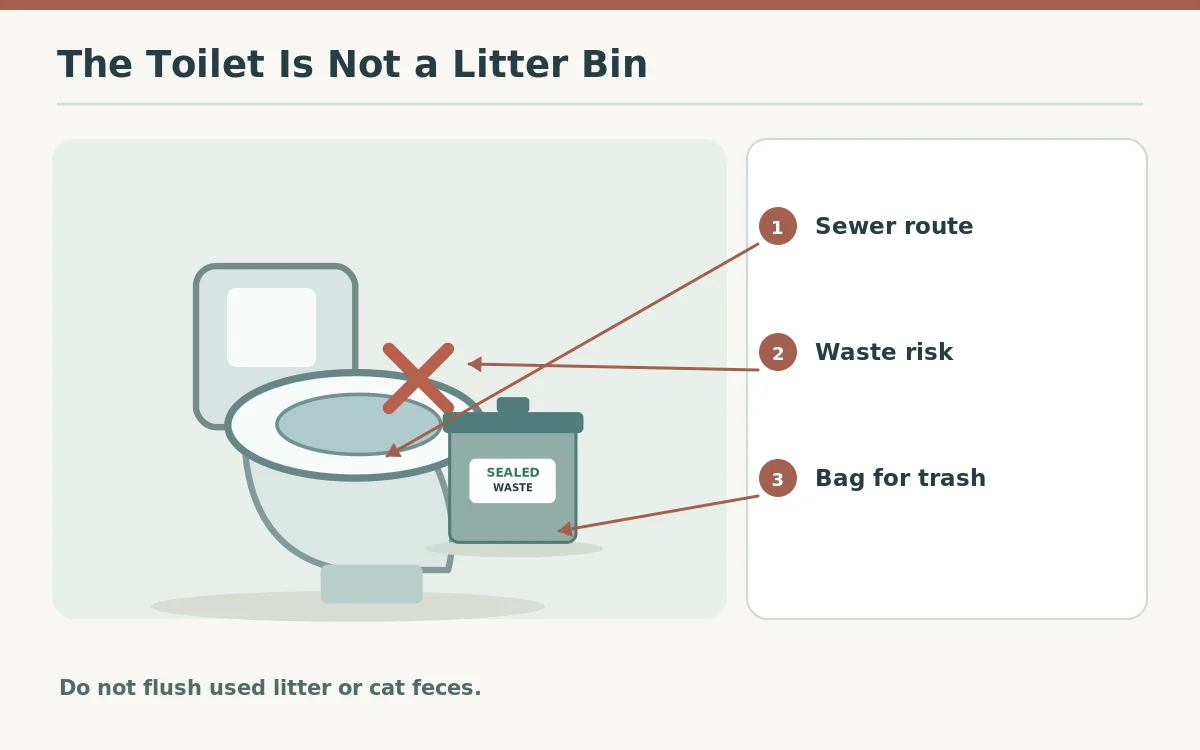
A toilet carries human waste and toilet paper through plumbing designed for those materials. Even a material that softens can contribute grit or blockages when used repeatedly, particularly in older pipes or long drains. The EPA specifically says that cat litter must never go into a septic system. Municipal sewers have their own acceptance rules and maintenance challenges. Do not conduct home flush tests using litter, and do not pour a scoop into a bathroom sink as an alternative. Dry, bagged disposal avoids introducing foreign solids into fixtures in the first place.
The added concern: material contaminated with cat feces
A cat’s feces can carry Toxoplasma gondii, a parasite with public-health and wildlife implications. The CDC recommends cleaning litter boxes daily and washing hands afterward. UC Davis Wildlife Health Center advises not flushing kitty litter because wastewater treatment may not destroy all Toxoplasma oocysts, which can harm marine wildlife. This does not mean every cat is shedding the parasite, or that every litter box is infectious. It does mean disposal recommendations should address credible contamination risk, not just whether the litter grains appear plant-based.
Do not confuse septic advice with municipal sewer permission
Septic households have explicit EPA guidance against flushing litter, including products marketed as flushable. A home on a municipal system still needs to follow local utility rules; connection to a public sewer does not turn cat feces into acceptable flush material. Some areas issue particular warnings to protect aquatic ecosystems. The safest general instruction works across both settings: never put used cat litter or cat feces into the toilet. If your local disposal authority offers a specific collection method, use it. A manufacturer’s website is not a substitute for the wastewater authority’s rules.
Why compostable does not mean safe in the garden
Plant-based substrates can decompose under some conditions, but once used they contain waste that can carry pathogens. The EPA’s home compost guidance excludes pet waste and cat litter. A backyard pile may not reach conditions needed to handle contaminated material safely. Do not bury used litter in vegetable beds, scatter it outdoors or place it into a compost bin simply because the base ingredient began as wood, corn or peas. Check municipal collection rules before using a green-waste or organics bin. Most households should package used cat litter for approved trash collection.
Set up a safer daily disposal station
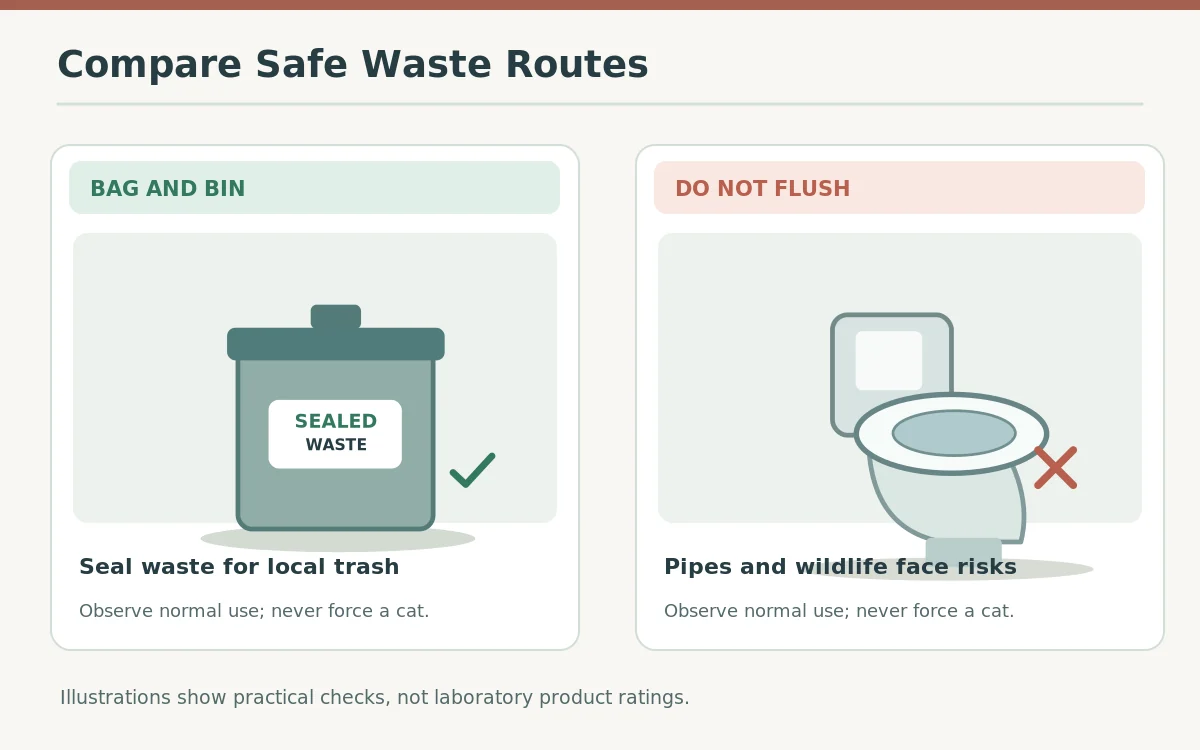
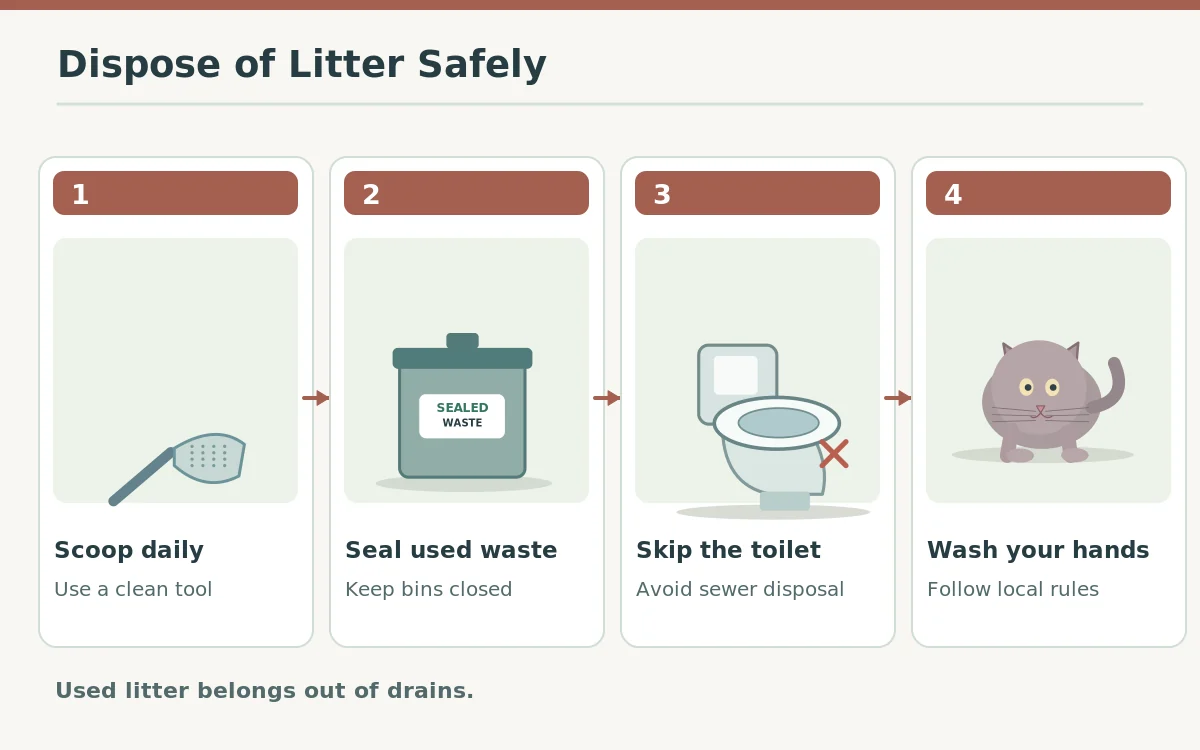
Place a sturdy, sealable waste container near but not directly in the cat’s toilet path. Keep bags and a scoop where you can remove feces and wet clumps without carrying an open scoop through the home. Empty the container at a frequency that prevents odor and spills, and place bagged litter in the approved household garbage stream. Do not reuse food containers that could become confused with storage for edible products. Use gloves if indicated, wash hands thoroughly and clean the scoop. Keep waste containers inaccessible to pets and children.
Special hygiene precautions for vulnerable people
CDC guidance highlights extra precautions for people who are pregnant or have weakened immune systems. When possible, another household member should handle litter cleaning for someone at higher risk. Otherwise, follow professional guidance on gloves and handwashing and clean the litter box every day. Do not rely on perfume, deodorizing additives or a flushable label to make contaminated material harmless. Avoid stirring dusty litter, and never mix household cleaning chemicals to disinfect the box. Ask a healthcare professional for individual risk advice; a litter article cannot assess your medical situation.
What to do if someone already flushed litter
Do not follow one questionable flush with a larger amount of water or chemicals in an attempt to dissolve material. If the toilet drains normally, stop disposing of litter that way and monitor for slow drainage. If the fixture backs up or drains poorly, use ordinary plumbing guidance or call a qualified professional. For septic homes, seek service advice if the tank or drainfield shows signs of trouble. Avoid aggressive chemical drain products around animals. You cannot judge environmental safety by the absence of an immediate clog; stop the practice instead of treating one successful flush as proof.
A straightforward rule for comparing eco claims
Judge the litter’s source material, packaging, cat acceptance and cleaning performance separately from end-of-life disposal. A genuinely useful low-waste choice still needs safe handling after contamination. Compare bag volume, tracking, frequency of full changes and whether your municipality accepts the packaged waste. If a brand makes broad environmental promises, look for specific verifiable qualifications rather than assuming toilet disposal is a benefit. A comfortable litter box and bagged, responsible disposal are more important than an appealing flush icon on the package.
How We Research
We compared feline welfare and public-agency guidance cited below, separated general litter-box preferences from product-specific claims, and identified what owners can safely observe during normal use. Our comparison of flushable cat litter does not claim laboratory testing, brand endorsement, veterinary diagnosis, measured dust scores, or proof that an eco label applies to used pet waste. Product instructions, local disposal rules and the individual cat’s response take priority. See how we approach editorial research. Reviewed October 28, 2026.
Sources
US EPA, How to Care for Your Septic System. View the guidance. Accessed October 28, 2026.
UC Davis Wildlife Health Center, Species and Threats. View the guidance. Accessed October 28, 2026.
Metro Vancouver, Pet Waste Disposal Guidance. View the guidance. Accessed October 28, 2026.
CDC, Preventing Toxoplasmosis. View the guidance. Accessed October 28, 2026.
US EPA, Composting At Home. View the guidance. Accessed October 28, 2026.
Safety note: For sudden litter-box avoidance, repeated straining, obvious pain, breathing difficulty or abnormal urination, contact a veterinarian rather than attempting to treat the problem by changing products. Follow safe hygiene and local waste-disposal rules.
The safer choice is no. Municipal rules vary, septic systems should not receive litter, and cat feces add environmental concerns.
A plant ingredient does not establish plumbing or environmental safety after use; bag and dispose of used litter according to local rules.
Potentially. UC Davis advises against flushing because wastewater treatment may not remove all Toxoplasma oocysts.
EPA recommends keeping pet waste and cat litter out of backyard compost; follow local collection rules.
Scoop daily, seal used litter in an appropriate bag, use approved household garbage collection, and wash your hands.