
Hemp cat litter typically uses processed plant fiber or particles, yet products can differ greatly in length, dust content, and absorbency. A softer-looking material may still feel unfamiliar to a cat that prefers sandlike grains. Before you switch, inspect the fibers, see how a damp sample behaves, and plan a cleaning routine that prevents wet patches from remaining in the box. Read our veterinary information disclaimer before interpreting changes in toileting as a product issue.

Identify whether it is fiber or granules
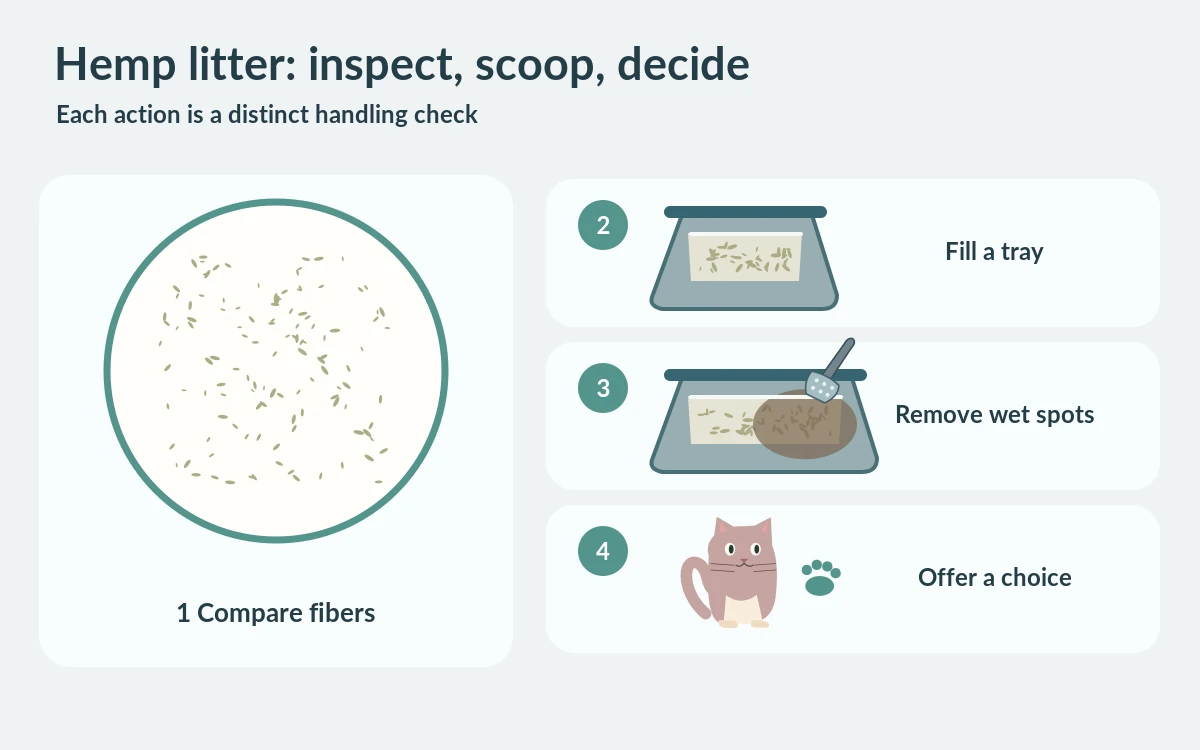
Look at a handful against a contrasting surface. Long shredded fibers, short pieces, and compact granules behave differently when a cat digs. Long fibers may catch on a scoop or paws; finer particles may move around the room. Check the manufacturer’s intended use, the type of box it recommends, and whether the litter actually clumps. Do not assume a product behaves like clay simply because both bags use the word absorbent.
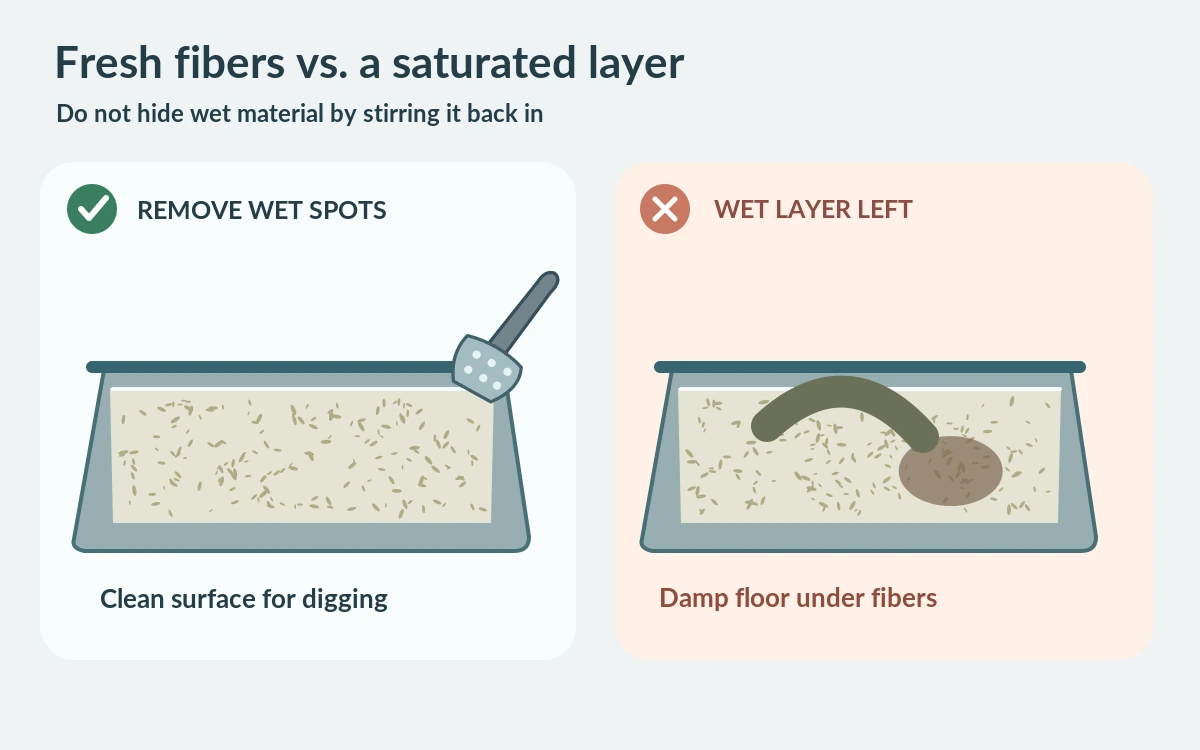
Keep a clear view of the tray bottom
In a non-clumping hemp formula, moisture may spread into a wider layer rather than forming a liftable ball. Stirring an already wet layer into dry material will hide the problem. Instead, inspect dark or heavy spots, remove the affected portion as directed, and replace material on schedule. With clumping formulas, slide the scoop under the whole damp mass. The goal is a dry comfortable surface, not a box that merely looks tidy from above.
Do not confuse plant origin with safe disposal
Fiber-based litter may come in packaging that uses ecological language. Those claims do not determine whether used litter belongs in sewage pipes or garden compost. Cat waste can carry harmful organisms. Bag waste and follow local municipal disposal requirements. If you want to compare environmental tradeoffs, examine product packaging, transport, and disposal guidance without inventing an official certification or universal sustainability score.
Reduce airborne debris during pouring
A product can produce visible fluff or powder even when it does not feel gritty. Lower the bag close to the tray and pour slowly while the cat is elsewhere. Avoid shaking the bag vigorously. Wipe surrounding surfaces with a damp cloth when appropriate and allow everything to dry. If the household is sensitive to airborne dust, judge the real refill experience rather than relying on an unverified zero-dust marketing phrase.
Make the box comfortable for digging
Use a sufficiently large open litter box with an easy entry. Cats often prefer fine, unscented substrates, but individual preferences differ. Begin with a shallow layer that permits digging and follows the product instructions. Notice whether the cat can cover waste naturally or walks away without trying. Excessively springy, coarse, or snagging fibers can be a reason to discontinue the trial, especially when a familiar litter works well.
Keep the spare stock truly dry
Store the unused bag above floor level in a clean, dry area. Inspect a long-opened package before refilling, especially after leaks or humid weather. Fiber can conceal damp clumps within a larger loose pile. Do not mask musty smells by adding fragrance. If you suspect product spoilage, discard it in accordance with the label and wipe and dry the storage container before adding fresh stock.
Run a fair side-by-side trial
Put hemp litter in one additional tray without removing the established box. Match box size, entrance style, scoop frequency, and location quality as closely as practical. Observe routine choices without hovering. Some cats visit both boxes; others strongly prefer one. If the trial leads to avoidance or house soiling, restore familiar conditions immediately rather than escalating changes. This approach lets the cat, not the label, set the pace.
Distinguish preference from a medical issue
Cats may avoid a litter box because of pain, fear, social conflict, or an unpleasant substrate. A change that happens immediately after switching materials is a clue, not a diagnosis. Check accessible routes and cleanliness, and ask your veterinarian about persistent elimination changes. Straining, repeated small attempts to urinate, or obvious distress require prompt attention. Never rely on a different fiber to solve a medical problem.
A practical buying and routine checklist
Before buying a large supply, record the exact ingredient list, whether the formula clumps, and its recommended depth. Check the weight of the bag you will carry and the storage space you have. Keep a washable mat and a scoop that matches the grain size. Most important, preserve your cat’s access to a familiar clean box during trials. Revisit the decision after a week of ordinary use instead of relying on a single enthusiastic visit.
What to record during a trial
For owners who compare fiber litter with pellets, focus on behavior inside the tray. Does the material shift away when the cat scratches, or can it hold a comfortable digging surface? Does wet litter collect in a removable area, or does it spread underneath loose fibers? A side-by-side test can answer those household questions without making unsupported claims about odor, chemical exposure, or a product being universally safer than mineral litter. Keep each box equally clean during that comparison.
How We Research
We reviewed cat litter guidance from the Ohio State Indoor Pet Initiative, ASPCA, Cats Protection, and RSPCA. Those sources support clean, accessible boxes, individual substrate preferences, and cautious litter changes. Product-specific grain behavior should be checked against the actual manufacturer label. Our illustrations explain practical checks rather than laboratory testing or brand endorsements. Read more about our approach on the About HubPet page.
Sources
Ohio State Indoor Pet Initiative: Litter Boxes — reference for cat litter preference, box hygiene, and safe comparison of substrates.
ASPCA: Litter Box Problems — reference for cat litter preference, box hygiene, and safe comparison of substrates.
Cats Protection: How to Choose Cat Litter — reference for cat litter preference, box hygiene, and safe comparison of substrates.
No. Some hemp products absorb moisture without forming firm scoopable clumps. Read the product instructions before buying.
They can, depending on fiber length and the cat’s coat. Observe ordinary exits and clean any tracked material with a gentle mat.
Do not assume so. Cat waste brings sanitation concerns, and local disposal rules may prohibit composting or flushing.
Seal it in a dry place above damp floors, away from food and inquisitive pets. Discard contaminated or musty material.
Provide a separate clean choice and watch relaxed digging and regular use. Avoid forcing a change when the cat prefers familiar litter.