
A cat scratching the bedroom door at night may be asking for access, reacting to a changed routine, marking a well-used threshold, or simply enjoying the surface. These explanations call for different responses. A scratched door is not evidence of spite, and shouting through it can accidentally turn the noise into an attention routine. First confirm that your cat has water, a clean litter box, a comfortable resting place and appropriate scratching choices. This guide focuses on night-time door behavior, not general sofa protection. It offers a low-stress sequence to try and signs that warrant further help. Read HubPet’s veterinary disclaimer for general care information.
Identify what the door means to your cat
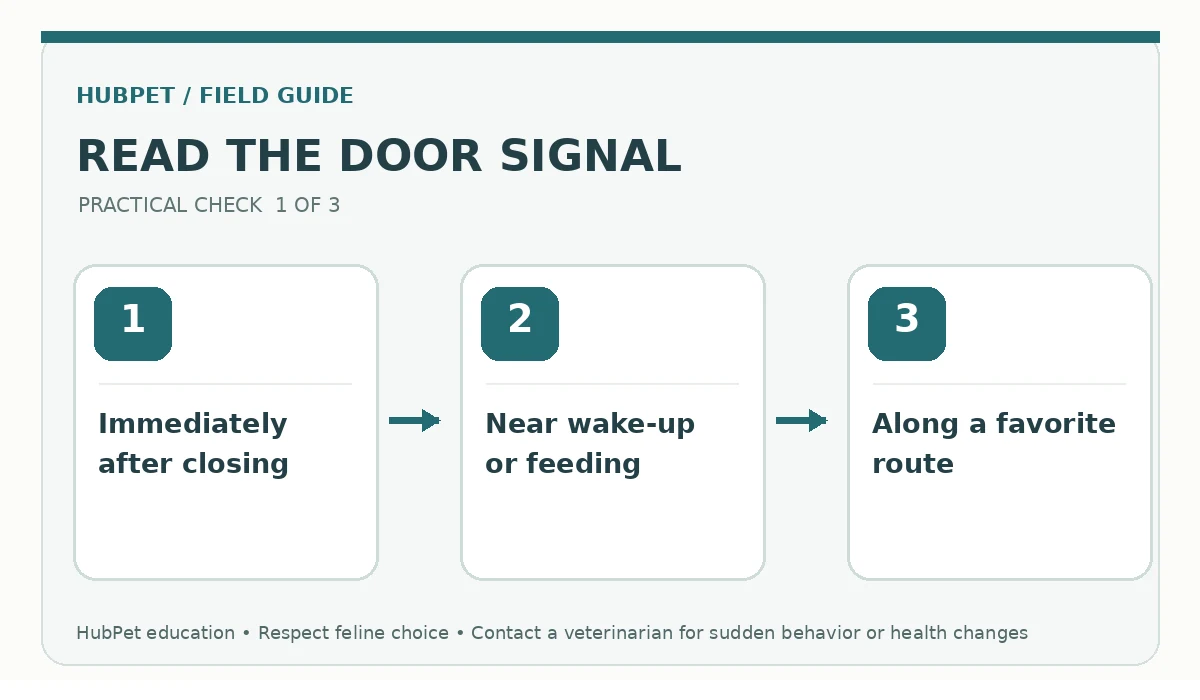
Observe whether scratching starts as you shut the door, after a period of silence, or around your usual wake-up time. Immediate scratching can reflect frustration over access; repeated scratching near breakfast may be linked to a predictable reward. Some cats also scratch door frames as territorial signposts. Keep a brief record of time, location and what happened just before the noise. Do not assume the cat is seeking attention until you have checked basic needs and possible distress. A sudden change in an older cat deserves veterinary discussion.
Decide whether the room should remain open
Choose a realistic household rule rather than opening the door some nights and shutting it on others without a plan. If sharing a bedroom is acceptable, allowing predictable access may solve the immediate problem. If the room must remain closed, make the adjacent space comfortable, safe and familiar. A safe indoor zone needs suitable resting options, water, a litter box and opportunities for quiet play. Do not confine a distressed cat in a tiny area or use a door barrier that creates a trapping risk. Think about people and other pets moving through the doorway.
Put a proper scratching surface near the threshold
Doorway scratching may serve a scent-marking purpose as well as a request for entry. Place a stable vertical scratching board or post close to the area the cat already chooses; choose a horizontal pad if the cat works along the floor. A flimsy hanging scratcher that bangs against the door can make the problem louder. Check attachment points for sharp hardware and ensure the item will not fall. Ohio State and the San Francisco SPCA emphasize that post location and scratching angle matter. Allow the cat to discover the alternative while the household is awake.
Build a short and predictable evening sequence
Try a few minutes of interactive play before bedtime, followed by the cat’s ordinary meal or a small portion from its usual daily allowance if appropriate. Add quiet activities such as a safe food puzzle or a window view where the cat sleeps. Predictable activity can reduce restlessness without promising that a cat will sleep through the night. Set out safe toys without strings that could entangle an unsupervised cat. If the night starts with repeated door scratching, review the schedule rather than simply adding more toys. The routine must fit the cat’s age, health and energy.
Protect the door without frightening your cat
A smooth removable guard can protect vulnerable trim while the new scratching option becomes familiar. Test adhesive or a cover on an inconspicuous patch before use, and inspect it for peeling edges that could be chewed. Avoid exposed tacks, sharp mesh and anything that blocks ventilation or a required exit. Avoid startling, shouting, punitive noises or frightening a cat as a response. Those approaches can increase fear or move the behavior elsewhere. Match protection with an immediately reachable legal scratching spot rather than relying on an unpleasant surface by itself.
Respond consistently to night-time noise
First rule out genuine needs: illness, a blocked water source, unsafe temperatures, lack of litter-box access or distress. Once those are addressed, avoid creating a cycle in which scratching reliably brings a big reaction. If you must enter, keep the interaction calm and practical rather than scolding or playing. Reward quiet behavior and use of the scratcher when you can observe them, particularly before bedtime. Behavior does not change on a fixed timetable. If noise escalates or your cat becomes panicked, the plan needs adjustment, not longer isolation.

Check the scratcher in daylight
Many cats prefer a surface they can pull against without it wobbling. Test whether a vertical post is tall enough for a full stretch and whether a floor pad slides on tile. Put it close to the actual scratched door, not in an unused corner of the house. Invite a brief play session next to it and reward spontaneous use; do not grab the cat’s paws and scrape them across the material. Leave more than one texture available if your cat ignores the first choice. Relocate the scratcher gradually only after it becomes a regular option.
Account for multi-cat traffic
A closed bedroom door may interrupt access to a trusted person or a favorite resting place, while another cat could be guarding the hall. Watch for staring, blocking and avoidance around entrances. Offer routes past each other, resting spaces and multiple scratching surfaces in different parts of the home. Do not presume every noise comes from the same cat if several animals live together. If conflict is involved, a scratch guard cannot fix the underlying resource problem. Talk to a qualified feline behavior professional if you see stalking, fights or persistent fear.
Run a seven-night observation, not a punishment trial
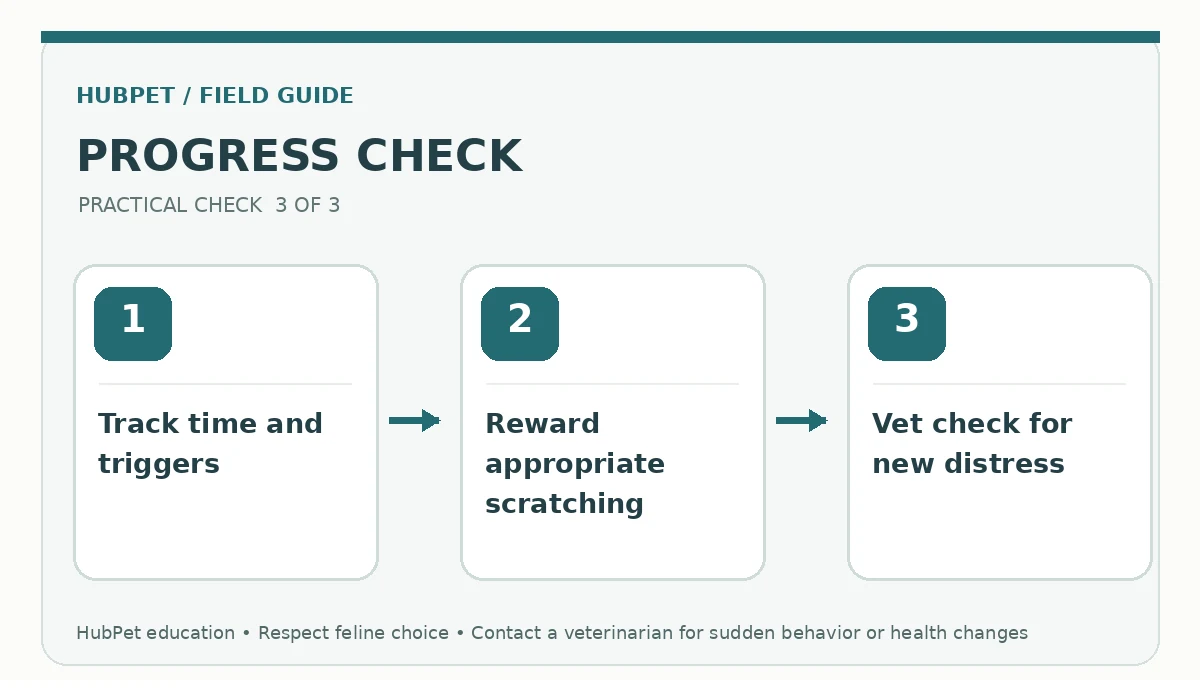
Record the night, the time scratching began, access to resources and what changed that evening. Make one environmental adjustment at a time so you can tell whether it helped. Photograph the door surface to monitor physical damage rather than judging only by the noise. A calm reduction in episodes is meaningful progress; an apparently quiet cat that now hides all evening is not. Continue to offer appealing scratching surfaces even once the door survives a week. The goal is a workable household routine and a comfortable cat, not suppressing all normal scratching.
Know when the plan needs professional help
Sudden night vocalization, confusion, unusual thirst, toileting changes, pain signs or major shifts in sleep and activity should prompt veterinary advice. Older cats may have health or sensory changes that alter their night behavior. If a cat injures its claws on the door, repeatedly damages its skin or seems distressed when separated, stop the home experiment and seek guidance. A veterinarian can help evaluate medical concerns and recommend a qualified behavior specialist when appropriate. No training tip can diagnose the cause from scratch marks alone.
How We Research
Our editorial review compared veterinary and animal-welfare guidance on feline scratching behavior, scratching-surface preferences, safe environmental redirection, household stress signals, and gentle training. We used published feline guidance as the basis for practical behavior guidance and contrasted it with the limitations of quick-fix marketing claims. We did not run controlled behavior trials, conduct product tests or endorse brands. Surface preference, behavior and household arrangements vary by cat and home; ask a veterinarian about persistent behavior changes. We last reviewed the sources on October 27, 2026. Read about our editorial process on the About HubPet page.
Sources
Ohio State Indoor Pet Initiative: Scratching and suitable surfaces. Accessed October 27, 2026.
San Francisco SPCA: Scratching posts and preferences. Accessed October 27, 2026.
Cats Protection: Cats at night: routines and enrichment. Accessed October 27, 2026.
Cornell Feline Health Center: Destructive behavior in cats. Accessed October 27, 2026.
The closed door may predict loss of access, attention or a familiar resting place. Check basic needs and track what happens before the scratching rather than assuming one motive.
First address urgent needs and welfare. For an otherwise comfortable cat, pick a consistent access plan so opening the door does not become the only predictable consequence of scratching.
Not automatically. A securely mounted surface may help a cat that enjoys vertical scratching, but banging attachments can amplify noise and a cat seeking access may continue.
Avoid frightening devices near a trapped threshold. Improve the nearby scratching options and environment first; ask a behavior professional before using an aversive tool.
Seek advice for sudden onset, persistent distress, injury, toileting changes, disorientation or major behavior shifts, especially in a senior cat.