
A cat that scratches the walls or rim of a litter box after digging may be performing a normal covering sequence, searching for a different surface, or responding to cramped space. You may hear a long series of loud plastic taps even after waste has been covered. The sound itself does not diagnose a problem. Start with the cat’s posture, the usable box size, the litter texture, and whether urination and defecation appear normal. Do not treat the litter box as a training surface or punish a cat for trying to cover waste. This is general behavior and environment guidance, not a diagnosis. Sudden behavior change or signs of pain deserve veterinary advice. See our veterinary disclaimer.

Describe the behavior rather than guessing the cause
Watch from a comfortable distance without interrupting the cat. Does it rake the actual litter and then scrape a vertical side, or avoid the litter and paw at the rim from the start? Is the motion brief or unusually repetitive? A cat may also scratch the floor next to the box rather than inside it. These variations help distinguish a normal covering attempt from an uncomfortable setup. Record any new hesitation, entering and exiting without elimination, unusual vocalization, or changes in output. Those signs deserve more attention than the number of scratches alone.
Measure the usable inner length and width
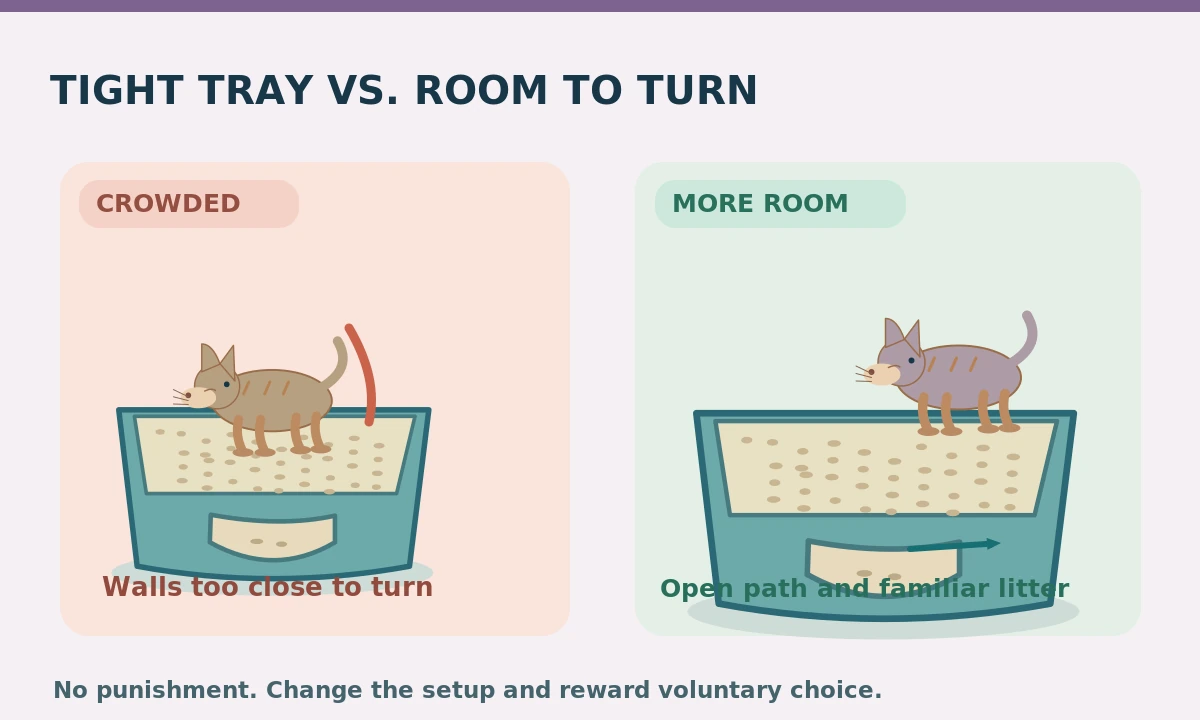
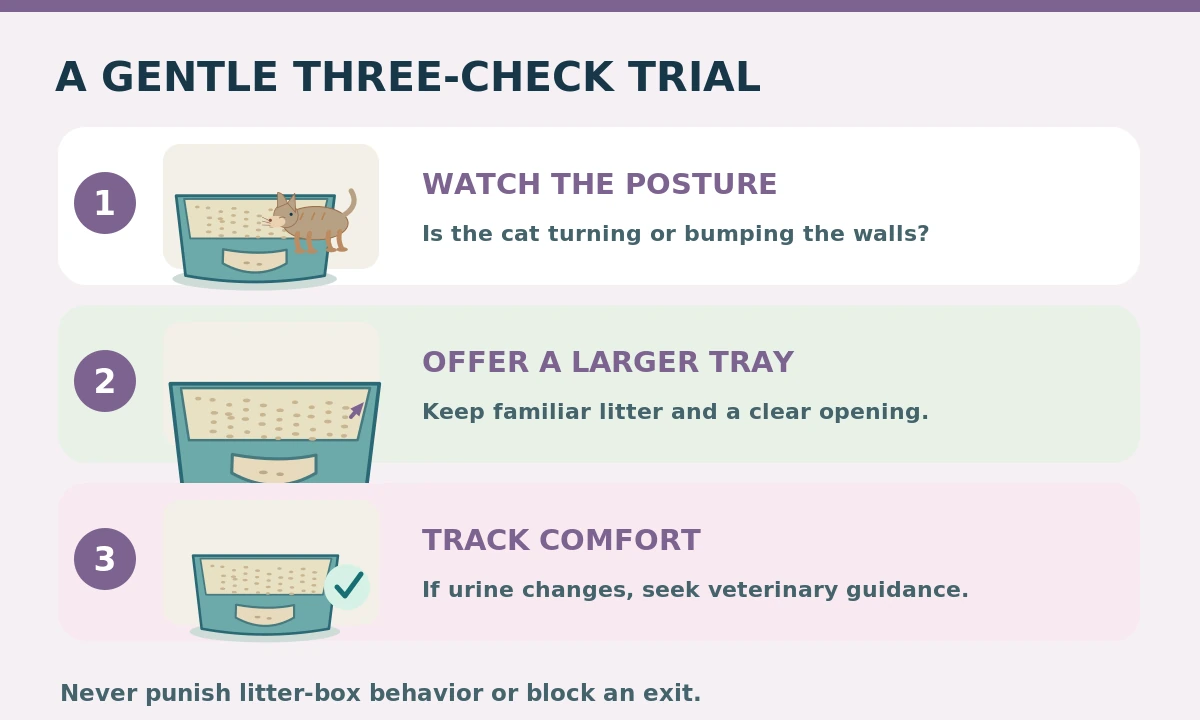
A large-looking tray can have thick walls, a sloped base, or a narrow doorway that leaves little turning room. Measure the floor where the cat actually stands, not only the package dimensions. The cat should be able to enter, turn around, squat, and dig without repeatedly bumping its body against the sides. For many adult cats, a generous open tray is easier to navigate than a cramped covered enclosure. If scratching clusters at a wall behind the cat, try a roomier open box while keeping the old setup available during the transition. Avoid changing too many variables at once.
Check litter depth and the feel under paws
Different litter textures create different feedback when a cat digs or tries to cover waste. If the layer is very shallow, the cat may reach the plastic floor immediately. If the cat strongly dislikes a new grain or fragrance, it might avoid moving litter around. Maintain a consistent depth appropriate to the chosen litter and cat preference rather than filling the box to the rim. Introduce changes slowly alongside the familiar option. Avoid highly scented products and dusty powders intended to mask odor. Comfort matters more than forcing a specific covering style, and no single litter type suits every cat.
Look at sides, liners, guards, and lids
A tall wall or splash guard may prevent some scatter, but a cat that needs easy entry can find the opening restrictive. Check whether a liner wrinkles, claws catch at a seam, or an accessory moves when the cat digs. Loose bag edges are not a harmless chew or scratch toy. If the box has a lid, test a large open alternative with a clear exit. Do not force the cat into a covered box to reduce household noise. Avoid improvised hard shields with sharp corners. A larger, simpler tray may be more useful than adding another plastic attachment.
Keep the box clean and well placed
Scoop waste regularly and replace litter or clean the tray as recommended for the material and household. A box next to a loud appliance, busy doorway, or a resource-guarding pet may feel less secure. The AAFP/ISFM feline environmental guidance recommends several separated, accessible resources, including toileting stations. In a multi-cat home, adjacent boxes may not function as genuinely independent choices. Place options in separate quiet locations with clear exits. If the cat begins scratching the sides only after a box move, review the approach and privacy before buying accessories.
Give normal scratching a separate destination
Plastic box scraping is not necessarily a sign that the cat needs a taller scratching post. Still, all cats benefit from appropriate scratching resources elsewhere in the home. Offer a stable upright post and a horizontal pad outside the toilet area so the cat can scratch, stretch, and mark voluntarily. Do not put the scratcher inside the litter box, where it would become soiled. Reward use of the separate station without interrupting toileting. If the cat routinely scratches a rug outside the box, check that the floor covering stays flat and does not trap claws.
Know which changes need prompt veterinary help
Straining to urinate, repeated unproductive visits, visible blood, crying in the box, or marked discomfort require veterinary guidance. Inability to pass urine can be an emergency, especially in male cats. Sudden elimination outside the box, painful posture, constipation signs, or major changes in frequency also merit assessment. Do not assume these signs are a preference issue and do not attempt home medication or dosing. A cat can scrape plastic and be healthy, but the behavior must be interpreted alongside actual urine, stool, mobility, appetite, and general comfort.
Make a one-change-at-a-time trial
Set up a second generously sized open tray with the familiar litter at the usual depth, ideally in an accessible quiet location. Keep the original box so the cat can choose. Observe for several days whether turning, digging, and covering change, and whether elimination remains normal. If the new tray improves ease of movement, keep it and gradually simplify the setup. If wall scraping continues without other signs, it may be an individual habit rather than a defect. Never physically move the cat’s paws or punish sounds from the box; the priority is comfortable, reliable toileting.
How We Research
Our editorial approach uses veterinary and animal-welfare guidance from Cornell, ASPCA, VCA, and AAFP/ISFM. Documented principles on normal scratching, resource access, surface preference, and low-stress handling inform specific home checks. The illustrations explain design and behavior; they do not represent clinical trials or independent product tests. If pain, urinary changes, wounds, or abrupt behavior changes occur, veterinary assessment takes priority. Read our editorial approach and research method.
Sources
ASPCA — Destructive Scratching — background on feline scratching, enrichment, safe choice, and humane redirection.
Cornell Feline Health Center — Feline Behavior Problems: Destructive Behavior — background on feline scratching, enrichment, safe choice, and humane redirection.
AAFP/ISFM — Feline Environmental Needs Guidelines — background on feline scratching, enrichment, safe choice, and humane redirection.
VCA — Why cats scratch furniture — background on feline scratching, enrichment, safe choice, and humane redirection.
No. It can be part of the covering sequence. Evaluate box space, litter preferences, and whether elimination is comfortable.
Not necessarily. Keep a comfortable, consistent depth and avoid abruptly changing the litter type.
It can reduce turning space for some cats. Offering a larger open box lets you observe preference.
No. Provide separate clean scratching surfaces away from the toilet area.
Repeated attempts to urinate with little or no output, marked pain, or other urinary warning signs require prompt veterinary care.