
Puppy barking is communication, not evidence that a young dog is stubborn or trying to dominate you. A bark at a door, a bark beside an empty water bowl, and a bark during rough play may sound similar while calling for very different responses. Your first job is to notice what happened immediately beforehand. Is the puppy looking toward a noise, shifting at the exit, following you with a toy, or backing away from someone? The practical target is not a completely silent dog. It is a puppy whose needs get met and who gradually learns an easier, quieter way to ask.
Run a quick needs check before training
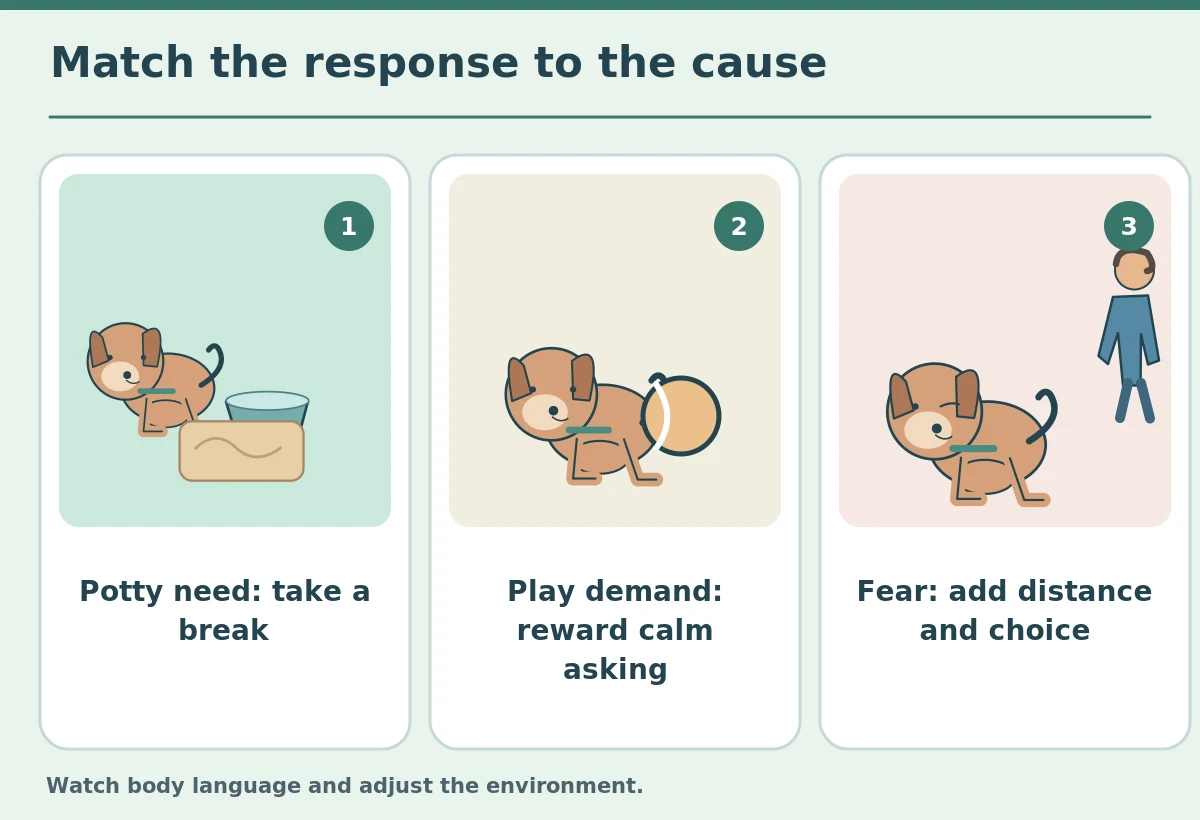
Check whether the puppy has had an appropriate potty opportunity, fresh water, food on their normal schedule, rest, and a safe place away from bustle. Young puppies can bark more when overtired, overstimulated, or frustrated by confinement. If the puppy is barking at an exercise-pen gate, look for signs of genuine distress rather than assuming every vocalization is a demand for attention. Provide age-appropriate companionship and predictable rest breaks. Note when the barking began relative to naps and meals. When a need is urgent, respond to the need; do not withhold a potty trip to make a theoretical point about ignoring noise.
Keep a two-day barking map
Make a simple chart with four columns: time, what happened just before barking, the puppy’s body language, and what happened after. Record a few representative episodes rather than filming every minute. For example, “6:20 PM; footsteps in hall; ears forward, body loose; barked twice, then followed family to kitchen.” A second entry might read, “9:10 PM; alone behind gate; pacing and repeated barking; quieted when caregiver returned.” Those are different problems. The first may respond to a quiet-pause reward; the second calls for a gradual comfort plan. A pattern beats speculation.

Reward the behavior you want to see more often
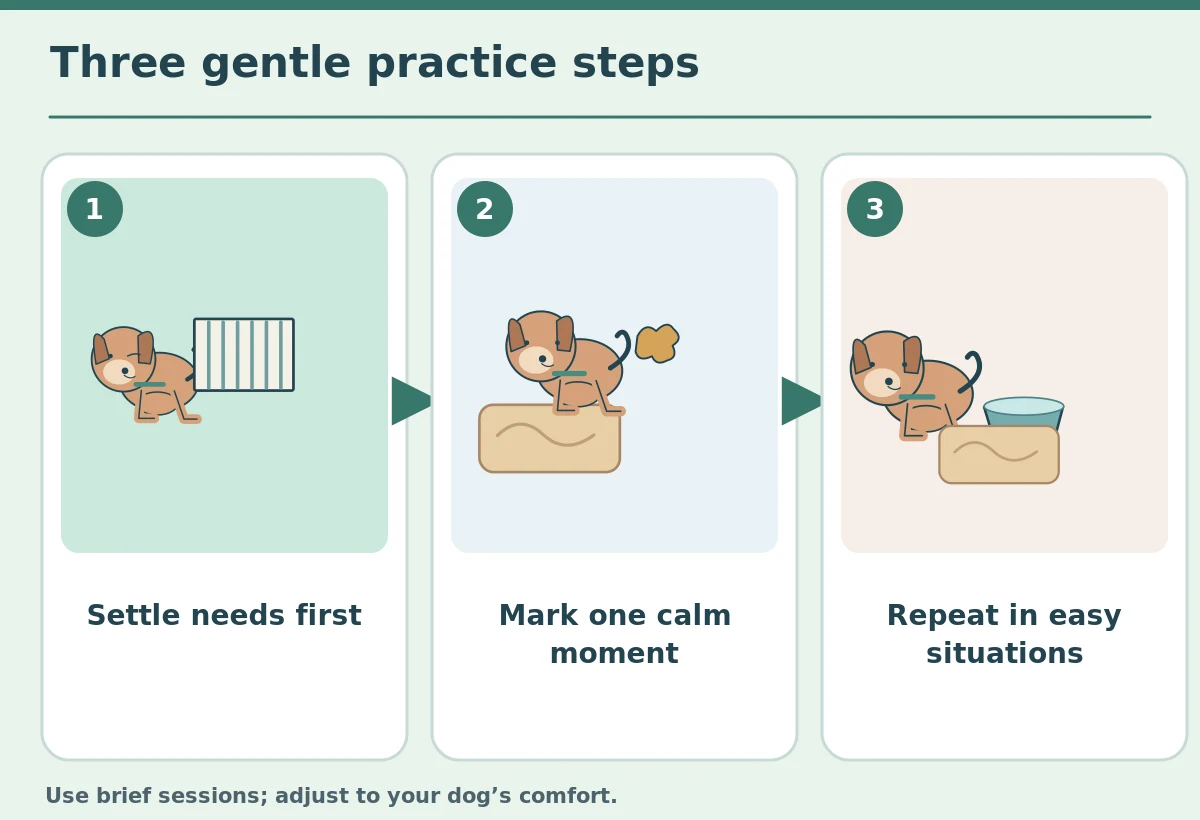
Prepare a few tiny treats from the puppy’s daily food allowance. When the puppy naturally pauses, looks toward you softly, lies on the mat, or watches a mild noise without barking, mark that moment with a gentle “yes” and deliver a reward. Do not insist on a long silent interval at the start. Give feedback for a single manageable success, then gradually ask for a little more. The marker should describe a calm moment, not interrupt loud barking with a startling sound. Rewarding settled behavior outside problem moments also helps the puppy discover that quiet choices are worth making.
Avoid accidentally creating a bark-then-treat routine
If you produce a treat only after a long barking episode and the puppy pauses to eat, the sequence can become bark, pause, reward. Instead, use your two-day map to reward before predictable triggers whenever possible. When barking has already begun, make the environment easier: step farther from a stimulus, close a curtain, or guide the puppy to a calm area without a confrontation. Wait for genuine softening and reinforce it. For attention-seeking play requests, teach a simpler replacement such as bringing a toy and sitting. Reinforce that replacement generously when it happens unprompted.
Give scary sights a larger safety margin
A puppy who moves backward, freezes, tucks the tail, refuses food, or tries to hide may be frightened. Don’t lure the puppy closer to a stranger or sound just to prove there is no danger. Increase distance until they can observe and still move and eat comfortably. Pair mild exposure with pleasant things, then leave while the puppy is coping. Repeated flooding can make a negative association stronger. Introduce unfamiliar experiences in manageable pieces and let the puppy choose whether to approach. If a puppy growls, treat that as useful information and increase space rather than correcting the warning.
Practice calm attention in very easy places
Begin in a quiet room. Place a comfortable mat near you and reward looking toward you, sniffing the mat, and short moments of rest. Add one ordinary household movement, such as walking slowly across the room. If the puppy stays relaxed, mark and reward; if barking or frantic movement starts, simplify. Keep practice short enough that the puppy remains engaged and can nap afterward. Only after the easy version works should you try the routine near a distant hallway sound or an open doorway. Real progress is a calmer response at the same difficulty, not a louder cue from the person.
Teach a clear way to request play or access
Puppies sometimes bark because barking quickly gets a human to open a door or start a game. Decide on a replacement that suits your household: touching a hand target, sitting beside a toy, or standing calmly at the gate. Prompt the replacement before the puppy becomes agitated, then immediately provide what is appropriate. Never delay a potty break while practicing. For play, stop briefly before the puppy gets wild and resume when the body loosens. Everyone in the household should answer the same calm request in approximately the same way. Consistency reduces confusion without punishing communication.
Build a routine that can survive busy days
Plan predictable windows for meals, potty trips, sniffing, training, chewing, and sleep. Spread stimulation through the day instead of letting activity build until the puppy cannot settle. A rest space should be comfortable, appropriately sized, and introduced positively; it is not an isolation penalty. If external noises trigger barking, close blinds or add distance during naps. Review the barking map weekly and change only one major variable at a time. If the puppy becomes calmer after an earlier nap, you have learned something useful. The goal is a practical home rhythm, not constant monitoring.
Recognize when barking needs extra support
Contact a veterinarian if barking changes suddenly, comes with signs of pain or illness, or appears alongside unusual confusion. Ask a qualified, reward-based behavior professional for help with panic when alone, repeated fear responses, guarding, or escalating lunging. A young dog is learning rapidly; intervention is easier when you do not wait for extreme episodes. Describe the trigger chart and share short, safe videos if requested by the professional. Avoid shock, ultrasonic, spray, and other aversive corrections: silencing a warning does not resolve its cause. Responsible progress means improving welfare as well as sound levels.
How We Research
We separated needs-based vocalizing, attention-seeking, and fear-related barking using veterinary behavior guidance. The recommended exercises prioritize measurable relaxed behavior rather than forced silence. We did not test commercial devices or diagnose individual dogs. Learn more about our editorial approach at About HubPet.
Sources
American Veterinary Society of Animal Behavior — Humane Dog Training Position Statement: Read the source. Accessed October 27, 2026.
VCA Animal Hospitals — Puppy Behavior and Training: Read the source. Accessed October 27, 2026.
Cornell University College of Veterinary Medicine — Excessive Barking: Read the source. Accessed October 27, 2026.
VCA Animal Hospitals — Tips to Quiet Barking: Read the source. Accessed October 27, 2026.
Safety note: New or markedly changed barking, suspected discomfort, fear, or dangerous reactions warrant veterinary assessment or individualized support from a qualified, reward-based behavior professional. This article does not provide a medical diagnosis; see the HubPet veterinary disclaimer.
No. First check essential needs and signs of fear or distress. For learned attention requests, reward an appropriate quieter alternative instead of using a blanket ignore-everything rule.
Yes, some puppies become more vocal and easily frustrated when they need rest. Log sleep and noisy periods and support a calm, predictable rest routine.
Notice easy, natural pauses and relaxed moments before predictable triggers. Mark the quiet choice clearly and give a small reward before increasing difficulty.
Aversive devices can add fear or discomfort and do not teach the puppy what to do instead. Use needs-based management and reward-based training.
Seek veterinary advice for sudden changes or possible discomfort, and reward-based behavior support for panic, persistent fear, or barking with threatening lunges.