
An evaporative dog cooling vest can feel cooler as clean water evaporates, but it cannot make dangerous heat safe or replace shade, fresh water, and rest. Its usefulness varies with humidity, ventilation, fabric, and your dog’s tolerance. This guide covers material checks, wetting directions, placement, and the clear limits of cooling apparel rather than promising a specific temperature drop. This article explains equipment checks, not veterinary treatment. If your pet has an injury, persistent discomfort, or a medical concern, consult your veterinarian and see our veterinary disclaimer.

Treat a vest as comfort gear, never heatstroke protection
The AVMA recommends avoiding strenuous activity during the hottest hours and providing shade, water, and frequent breaks. A cooling vest is not an excuse for outdoor exercise when pavement and air temperatures are unsafe. Dogs depend heavily on panting, and some dogs, including short-nosed, very young, older, or medically vulnerable pets, may be at higher heat risk. Seek veterinary advice about individual limitations. If the dog shows excessive panting, weakness, heavy drooling, confusion, stumbling, or collapse, move to a cooler place and seek emergency veterinary care. Do not focus on rewetting gear while an emergency is developing.
Understand the wet fabric and evaporation cycle
Some cooling vests use an absorbent inner layer, a mesh outer face, or a reflective panel. Follow the manufacturer’s instructions about wetting, squeezing, and where water should be placed. Evaporation needs airflow, so a soaked garment under another heavy coat may work poorly. Humid conditions slow evaporation, and the amount of cooling cannot be assumed from a product photo. Touch the inside and outside surfaces during use to see whether the material has become warm, dry, or heavy with water. The goal is comfort on an appropriate outing, not a wearable substitute for shelter.
Measure around the chest and leave the shoulders free
With the dog standing, record back length and the widest chest girth. Inspect the exact garment size chart because stretch and wrap styles vary. The front edge must not press onto the throat when the dog lowers the head, and the armpits need room for a full stride. A vest that is too loose can rotate, while tight elastic panels may rub on wet fur. Check that the belly opening allows normal bathroom movements. Always test the fit first when the garment is dry, then repeat when wet and heavier; some fabrics change shape after absorbing water.
Check the leash and harness combination
Fit the dog’s normal harness independently. If a vest is designed to sit beneath a harness, inspect whether the extra fabric changes the harness adjustment; if it sits over a harness, ensure a proper leash opening exists. Do not clip the leash to an ornamental loop on the vest. Water can make hook-and-loop tabs or straps behave differently, so check their hold after wetting. A dog should be able to turn and sniff without tugging the vest toward one shoulder. If the clothing interferes with safe handling, choose a simpler heat-management plan without it.
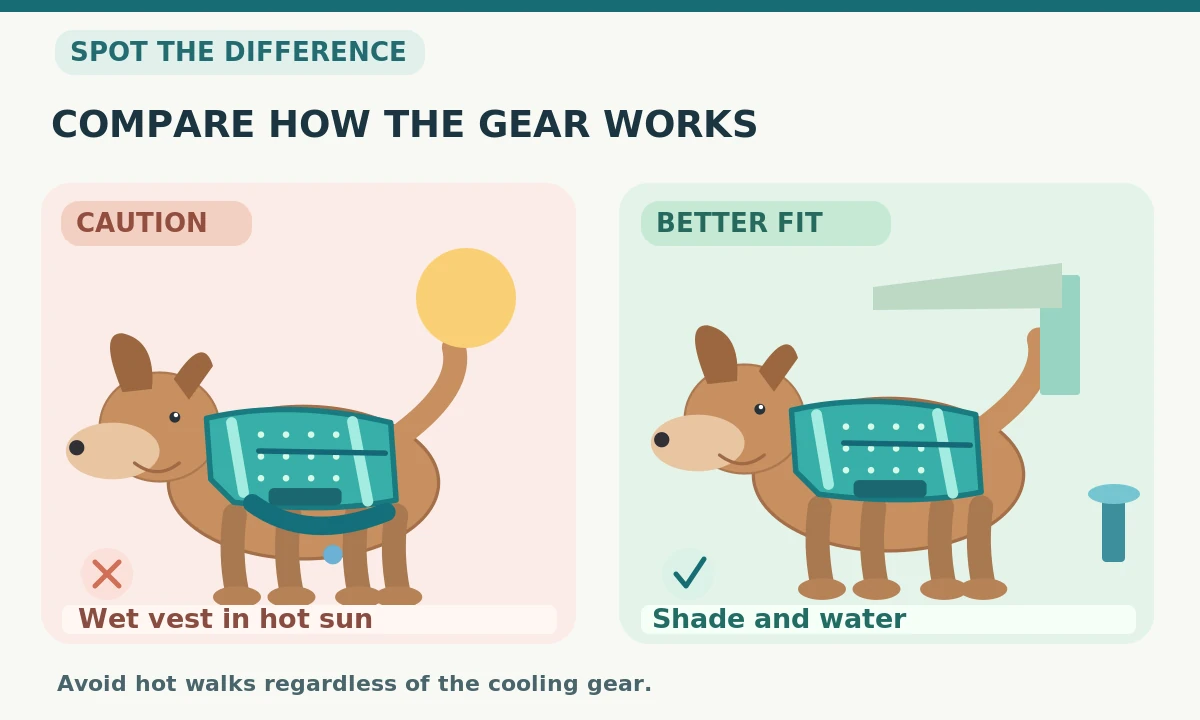
Wet the vest using clean water and the label
Use clean water and the specific product directions instead of adding oils, sprays, or other substances to the fabric. Squeeze or adjust saturation as instructed; a garment that drips constantly may be uncomfortable and create slippery indoor floors. Test a short, supervised period in a cool space before a real outing. Watch for a dog rubbing the fabric, refusing to move, or trying to chew it. Rewet only if that is part of the design and the outing is otherwise safe. Do not put a frozen stiff garment directly against the dog’s body.
Choose routes with shade and safe ground
Walk in cooler parts of the day and test walking surfaces before taking the dog onto sun-warmed pavement. Provide frequent opportunities to drink and rest. Even with a vest, stop when the dog becomes uncomfortable or struggles to recover after brief activity. Avoid rough trails where wet cloth may gather burrs or chafe the belly. Keep the dog under close observation, especially during the first trial. The vest may dry quickly in hot wind or remain saturated on a humid day; neither condition tells you that the dog’s core temperature is safe.
Monitor skin, coat, and signs of discomfort
After several minutes, feel the vest edges and check the underlying fur around the neck, armpits, and chest. Look for rubbing, matting, and persistent dampness. Wet fabric left on after returning home can cause discomfort rather than benefit. A dog may pant for many reasons, but unusual or escalating panting during heat exposure warrants immediate action, not a longer test. Contact a veterinarian if the dog has recurring heat intolerance or skin trouble. A cooling garment should always be removable quickly, including when the dog is wet and tired.

Rinse, dry, and maintain the material
Rinse or wash as the maker directs to remove dirt, salt, and body oils. Hang the vest open so its thickest sections dry all the way through before storage. Inspect seams, elastic, and mesh for damage that could scratch skin or leave loose fibers. If the vest smells musty, stays damp between uses, or loses its shape, reassess the materials or replace it. Never leave a wet vest in a sealed bag for days. Proper storage improves hygiene, but neither careful cleaning nor a premium label changes the basic need to avoid unsafe outdoor heat.
How We Research
Our editorial approach draws on veterinary associations, animal-welfare guidance, and established dog-care education, alongside practical checks of garment shape, fit, materials, and maintenance. Product features described here are inspection criteria, not independently tested safety ratings. We did not laboratory-test brands, verify individual manufacturer performance claims, or guarantee safety. Compare any product with its own instructions and your dog’s needs. Learn about our editorial approach.
Sources
American Veterinary Medical Association — Warm Weather Pet Safety — reference guidance for safe use, fit, and relevant environmental limits.
ASPCA — Hot Weather Safety Tips — reference guidance for safe use, fit, and relevant environmental limits.
American Kennel Club — Do Dogs Sweat? — reference guidance for safe use, fit, and relevant environmental limits.
American Kennel Club — Helping Your Dog Get Comfortable Wearing Clothes — reference guidance for safe use, fit, and relevant environmental limits.
No. It cannot make hot weather safe. Shade, water, shorter activity, observation, and prompt veterinary care for heat-stress signs remain essential.
Evaporation is often slower when humidity is high. Do not assume a vest provides a reliable temperature reduction in every climate.
Use only the manufacturer’s instructions. Do not put a rigid frozen fabric or ice-cold layer directly against the dog.
Follow the design instructions and verify that the harness still fits securely. Never attach a leash to a non-rated decorative loop.
Escalating heavy panting, excessive drooling, weakness, unusual gums, disorientation, or collapse require stopping and urgent veterinary assessment.