
A reflective vest is designed to return light toward its source, helping a dog stand out when a lamp or headlight reaches the material. It is not a substitute for a leash, attentive road crossings, or a safe walking route. Placement and coverage matter because fur, harness straps, and the dog’s position can hide the reflective panels. Check visibility from several directions without putting the dog in traffic. These are general equipment and home-care considerations, not individualized veterinary care. If a dog has pain, injury, or ongoing skin problems, contact a veterinarian and read our veterinary disclaimer.
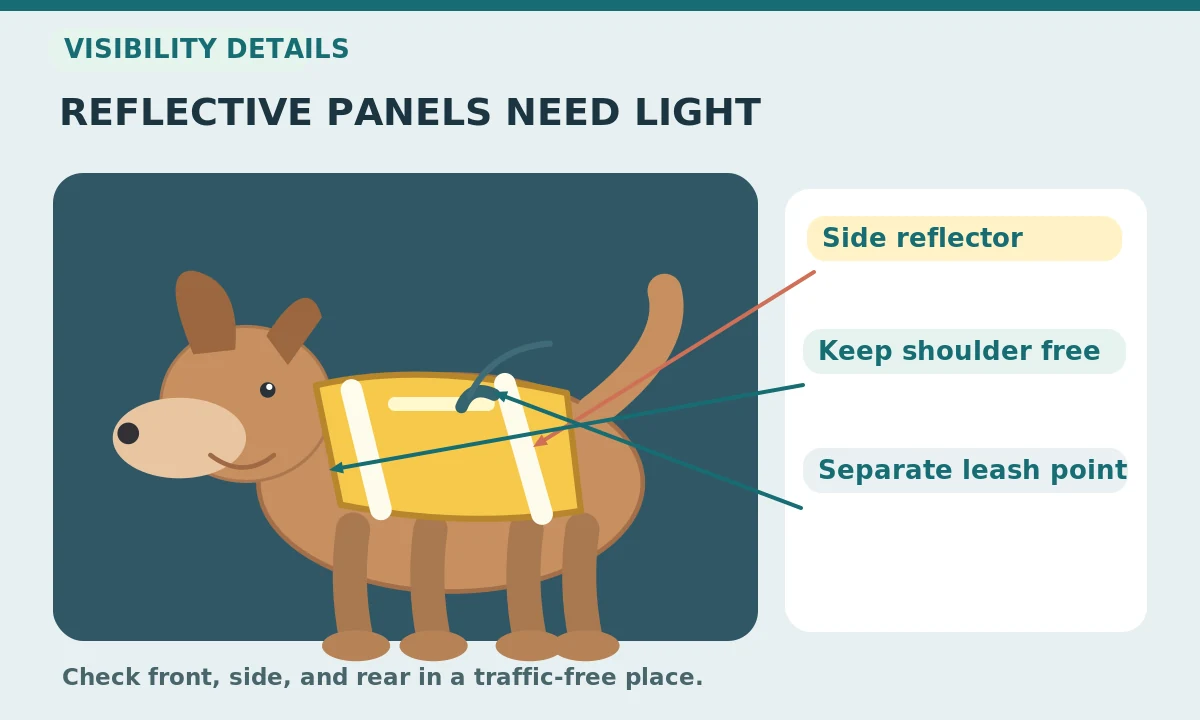
Understand the difference between reflective and lit gear
Reflective bands become noticeable when external light shines toward them. They are different from an active light that produces its own illumination. A reflective vest may look bright under a camera flash while remaining hard to see from an unlit angle. Test at dusk on private property with another adult and a flashlight. Check the side, front, and rear of the moving dog. Do not turn visibility testing into a roadside experiment. Reflective material can support recognition; it cannot ensure that a driver notices the dog or stops in time.
Look for panels visible from more than one angle
A narrow stripe on the back may disappear when the dog faces a vehicle or stands behind a shrub. Choose placement that offers useful visibility from the side and rear without covering the face or restricting movement. Notice where the chest, flank, and rump panels sit when the dog walks. Dark fur does not make one particular color automatically safe; reflectivity depends on material and incident light. A vest should not flip over or twist when the dog turns. Avoid loose hanging reflective tabs that can snag or look like chew toys.
Fit around the chest without crowding shoulders
Measure the standing dog’s chest girth and back length, then compare them with the garment’s size chart. The front opening should stay clear of the shoulder swing and the throat. A very tight vest can limit reach, while an oversized one can rotate over the ribs. Check fabric beneath the armpits for rubbing after a short trial. Have your dog walk, sit, sniff, and turn while you observe the closure. Make sure the vest does not cover the tail base or interfere with elimination. Comfort matters as much as apparent nighttime brightness.
Keep the harness attachment usable
Use a properly fitted walking harness or collar appropriate to the dog, independent of the vest. If the vest is meant to sit over a harness, verify that the leash opening lines up naturally with the attachment point. Do not clip a leash to a decorative seam or reflective patch. Some vests fit under an existing harness, but then harness straps may hide the brightest areas. Test the actual combination on your dog, not on a product photo. Check the leash angle when the dog lowers the head or changes direction.

Check wet-weather function separately
Reflective tape may be attached to a mesh, a shell, or a warm fabric. Those bases do not provide the same protection from rain or cold. A lightweight reflective vest can get wet quickly; a waterproof jacket may reflect light but fit differently. Read the labels for washing and drying before buying. Do not leave a damp vest on after returning home. Check the reflectors after laundering, since lifting edges or cracked panels can reduce their usefulness. Maintain a safe route even when the garment is clean and bright.
Do a simple, safe visibility walk-through
In a fenced yard or other traffic-free place, ask an adult to stand at a distance and shine a flashlight from a few angles. Move the dog gently in the vest while someone watches which panels remain visible. Check the dog at standing and walking height; do not aim a bright light into the eyes. If the leash, long fur, or a raincoat covers important panels, adjust or choose another vest. Then plan to walk on sidewalks, use crossings, and stay attentive. A vest helps others see the dog only when its reflective face receives light.
Introduce the vest with short positive sessions
Leave the vest on the floor for a calm sniff, then reward any voluntary approach. Practice touching the vest to the shoulders without fastening it. Add closures one at a time and follow with a brief indoor walk on a nonslip floor. Stop if the dog stiffens, scratches persistently, or refuses to move. Do not force clothing on a fearful dog simply to finish a nighttime outing. Consider a different visibility accessory combined with safe routing and close leash control. Remove the vest after practice and store it away from chewing.

Inspect the reflective finish and hardware
After each outing, look for loose stitching, peeling reflective strips, rough closure edges, and twisted elastic. Clean only as directed by the maker; aggressive scrubbing or high heat can damage some finishes. Dry the vest fully with its panels exposed before putting it away. Replace a vest that no longer stays oriented or has panels that are substantially worn. Recheck the fit over time if your dog changes weight or wears a different harness. Keep visibility gear as one layer of a broader careful walking routine.
How We Research
Our editors use established veterinary and animal-welfare guidance about clothing fit, paw safety, gentle handling, visibility, and cleaning. Product dimensions, physical diagrams, and material checks are inspection criteria. They are not independent laboratory ratings, medical endorsements, or promises that any specific product prevents harm. We do not claim to have tested or ranked named brands. Read more about HubPet.
Sources
RSPCA — Keep Pets Safe in Cold Weather — professional guidance informing the selection, safe-use, or hygiene checks above.
American Kennel Club — Dog Apparel Measuring Guide — professional guidance informing the selection, safe-use, or hygiene checks above.
AAHA — Cold Safety for Pets — professional guidance informing the selection, safe-use, or hygiene checks above.
American Kennel Club — Does Your Dog Need a Raincoat? — professional guidance informing the selection, safe-use, or hygiene checks above.
Reflective material needs an external light source. It does not glow independently in complete darkness.
Only if a manufacturer explicitly provides a suitable load-bearing attachment. Normally use a separate correctly fitted harness or collar.
No. Use sidewalks and crossings, maintain leash control, and stay alert. Reflective material is an aid, not a safety guarantee.
Sometimes, if both garments fit without rubbing and the harness connection remains clear. Test the actual layers before a walk.
Replace it when closures fail, seams split, material twists repeatedly, or reflective areas peel and wear noticeably.