
A dog sun shirt may cover exposed skin on hairless or thin-coated dogs, but fabric is not a free pass for long, hot outings. Start with your veterinarian’s advice about sun sensitivity, then assess how the shirt covers the back and shoulders while leaving the dog able to move and cool normally. A shirt cannot protect uncovered ears and nose, and it cannot prevent overheating. This article explains equipment checks, not veterinary treatment. If your pet has an injury, persistent discomfort, or a medical concern, consult your veterinarian and see our veterinary disclaimer.
Identify dogs that need special skin protection
Hairless breeds and dogs with sparse, light, or recently clipped coats may have exposed skin that is vulnerable to sunlight. The AKC notes that American Hairless Terriers need sun protection, while ASPCA guidance emphasizes shade and limited peak-hour exposure. Ask a veterinarian about individual skin sensitivity, suspicious lesions, or whether a protective shirt is appropriate. The amount of exposed skin differs greatly between dogs, so a generic size or breed label is not enough. Choose a safe outdoor schedule before considering any clothing; midday heat may call for staying indoors regardless of sun coverage.
Map the skin a shirt actually covers
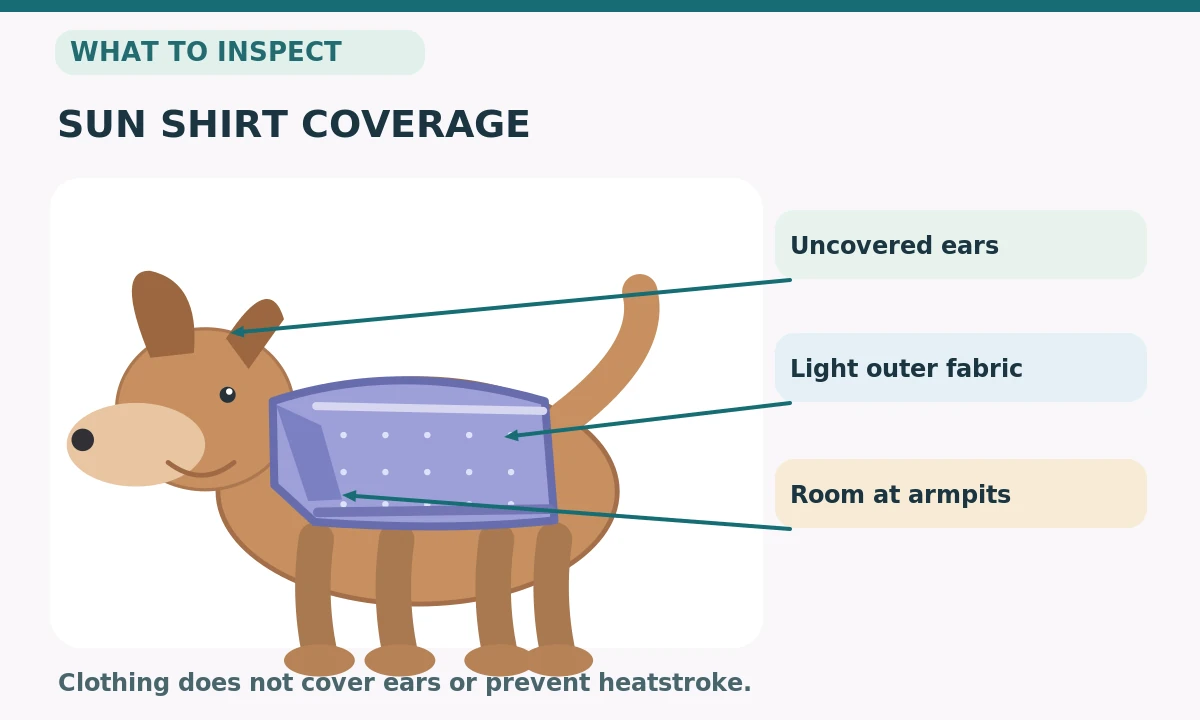
Look at the garment laid flat and then on the dog. Identify the covered areas: upper back, shoulders, chest, and sometimes upper legs. The face, ears, feet, lower belly, and much of the neck often remain uncovered. Do not assume a short shirt gives whole-body ultraviolet protection. If a product lists a fabric protection rating, look for clearly described material testing and remember that stretching, wear, and fabric coverage can affect performance. Avoid unverified promises of complete UV blocking. For sensitive exposed areas outside the fabric, ask your veterinarian about dog-appropriate protection.
Measure without making the shirt restrictive
Take chest girth, neck size, and back length while the dog stands. A sun shirt should not pull hard across the shoulders or under the front legs, especially when the dog sniffs the ground. Stretch fabric may still create pressure at seams or roll upward during movement. Check the hem at the belly so normal bathroom activities remain clear. A garment that slides backward or tangles around a leg may be the wrong cut even if it matches the size chart. Test walking, turning, sitting, and resting before a long supervised outing.
Prioritize ventilation and realistic heat management
Dogs lose heat differently from people, with panting doing much of the work. A sun shirt can add fabric around the body, so avoid heavy, non-breathable layers or multiple garments on a warm day. Watch for escalating panting, unusual drooling, restlessness, weakness, or any difficulty moving. The AVMA advises shade, water, avoiding hot surfaces, and choosing cooler walking hours. A shirt cannot prevent heatstroke. Remove the garment if it appears to make the dog warmer or uncomfortable. Never keep the dog outside longer simply because a product advertises sun or heat protection.

Inspect seams, leg openings, and fabric condition
Touch the inside seam allowances around the armpits and throat, and look for protruding labels or abrasive stitching. Lightweight material should be smooth, but very open mesh may have a different coverage effect from dense fabric. Confirm that hooks, zippers, and snaps do not pinch bare skin. Avoid decorative cords and small parts on dogs prone to chewing. A wet shirt may feel different, stick to the body, or shift during movement. Check skin after a short supervised trial, especially when the dog is hairless or already sensitive to rubbing.
Avoid improvising with human sunscreen or chemicals
Do not spray a shirt with household chemicals in an attempt to improve protection. Human sunscreens can contain ingredients that are harmful if a pet licks them, and veterinary guidance recommends choosing products specifically appropriate for animals. Ask your veterinarian before using topical sunscreen on exposed dog skin. Protecting the ears and muzzle is a separate decision from choosing a torso shirt. No garment makes intense sunlight or hot pavement harmless. A shorter shaded outing is usually the simpler safety control when conditions are unfavorable.
Introduce clothing using voluntary short sessions
Let the dog sniff the dry shirt, reward relaxed interest, and gently practice slipping the neckline over the head. Pause after each step and remove the shirt if the dog shows concern. Some dogs dislike having a person guide their legs through sleeves; choose a simpler cut or skip clothing if needed. Watch for normal walking and comfortable breathing rather than holding the dog still to make the shirt look neat. Do not leave a new garment on unattended, particularly around rough play, crates, or toys where fabric might snag.
Keep the shirt clean and monitor the skin underneath
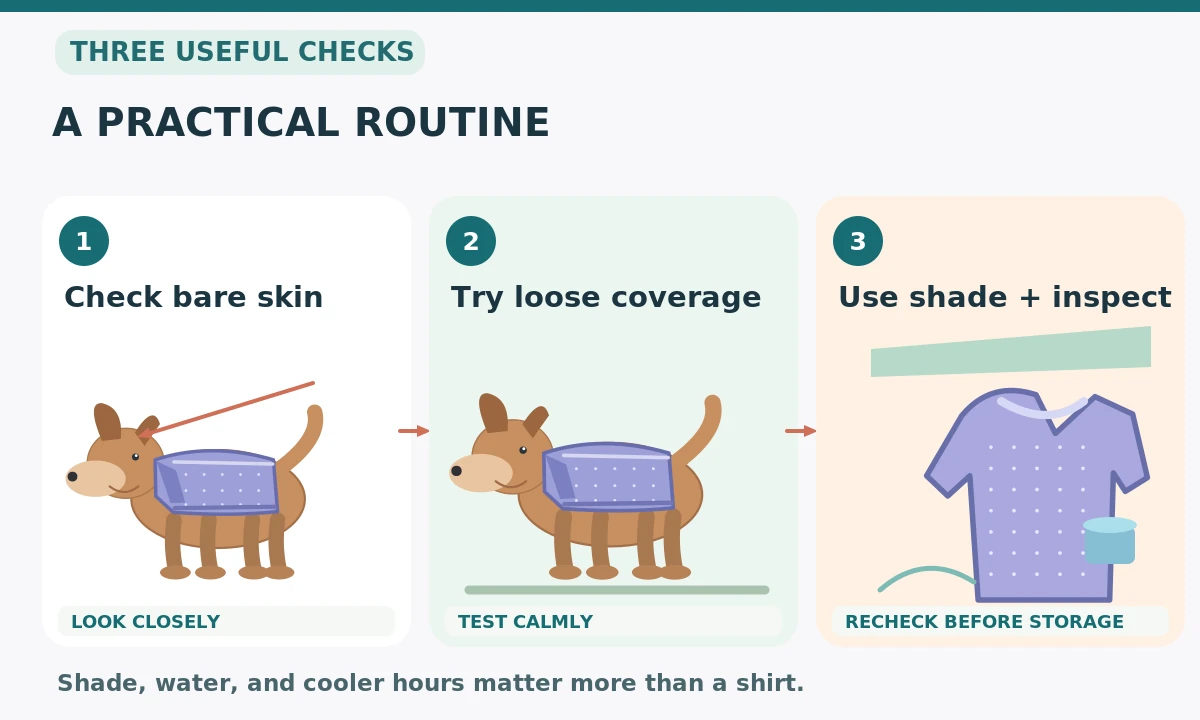
After an outdoor outing, remove the shirt and inspect the covered skin for redness, rub marks, damp folds, or debris. Wash and dry the garment using the instructions on its label. Salt, sand, and sweat residue can make the inside uncomfortable over repeated use. Replace stretched-out neckbands or garments with holes that defeat their intended coverage. Do not cover an active rash or painful wound with a shirt without veterinary advice. Store dry fabric neatly, then repeat a brief fit check before the next use because washing can change stretch and shape.
How We Research
Our editorial approach draws on veterinary associations, animal-welfare guidance, and established dog-care education, alongside practical checks of garment shape, fit, materials, and maintenance. Product features described here are inspection criteria, not independently tested safety ratings. We did not laboratory-test brands, verify individual manufacturer performance claims, or guarantee safety. Compare any product with its own instructions and your dog’s needs. Learn about our editorial approach.
Sources
American Kennel Club — The Bald and Beautiful American Hairless Terrier — reference guidance for safe use, fit, and relevant environmental limits.
ASPCA — Hot Weather Safety Tips — reference guidance for safe use, fit, and relevant environmental limits.
ASPCA — Boating Safety for Pets — reference guidance for safe use, fit, and relevant environmental limits.
VCA Animal Hospitals — Personal Care Products and Your Pet — reference guidance for safe use, fit, and relevant environmental limits.
American Veterinary Medical Association — Warm Weather Pet Safety — reference guidance for safe use, fit, and relevant environmental limits.
Some hairless, thin-coated, or light-skinned dogs may need extra skin protection. Ask your veterinarian about individual risks and appropriate coverage.
No. Clothing can add warmth, and heatstroke remains a serious risk. Provide shade, fresh water, and shorter outings in cooler hours.
Usually not. Those areas remain exposed. Seek veterinary guidance about protecting uncovered skin rather than improvising with human sunscreen.
No. Shade and avoiding intense midday sun remain essential even if the shirt has a fabric protection claim.
Look for redness, pressure lines, reluctance to move, or fabric rolling at the armpits and neck after a short supervised trial.