
Step-in dog harnesses can be easier for dogs that dislike having equipment moved over their heads. That convenience does not guarantee a secure or comfortable walking fit. Many models form two leg openings with a chest panel or webbing bridge, and the position of each strap changes how the dog can move. The practical question is whether the dog can step in calmly, move its shoulders normally, and remain safely contained if it changes direction. VCA advises choosing harnesses that avoid chafing and leave shoulder joints free, while RSPCA recommends checking stride after fitting. Use the following hands-on checks before relying on a step-in harness outside.
Map the leg openings before putting it on
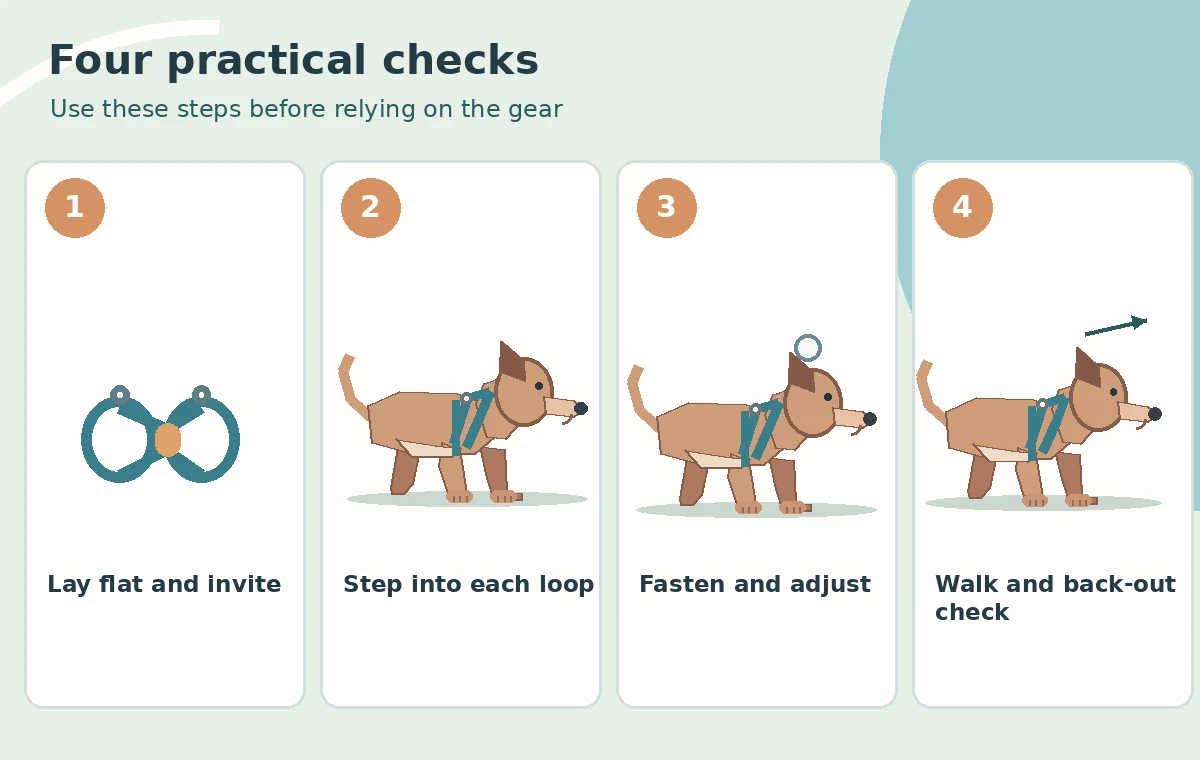
Place the harness on the floor and identify the two front-leg loops, chest section, and attachment ring. Some step-in designs cross between the legs; others have a broader padded piece beneath the chest. Work out which edge faces forward before approaching the dog. A twisted strap can make an apparently correct size pinch one armpit. Check that both openings are symmetrical and that adjusting one strap does not accidentally shorten the other. Keep the leash detached while fitting. Invite the dog toward the equipment with small rewards and allow a pause if the dog hesitates. Step-in should describe the design, not a demand to force the paws through the loops.
Measure at the actual girth
Measure around the widest part of the chest behind the front legs according to the maker’s sizing method, then cross-check the neck opening or front panel dimensions. Do not assume that two dogs weighing the same amount need the same size. A lean dog may have more room to reverse out of a loose chest ring; a broad-chested dog may need different strap angles. Fit the harness while the dog stands normally rather than sitting curled up. You should be able to place fingers under the webbing without leaving dangling loops. Check after adjustment that no slider sits directly in an armpit or on a bony shoulder point.

Keep the shoulder joint clear
Watch the dog take several steps toward a reward with the harness on and then briefly without it. A clear chest arrangement generally leaves the point of the shoulder and the front of the legs unobstructed. A straight band crossing high across the shoulder can shorten the forward stride on some dogs. Look for rubbing behind the elbows and red or flattened hair where fabric edges meet the body. If the dog shifts weight, shortens steps, or repeatedly scratches the strap, stop and recheck the geometry instead of tightening everything. Extra padding does not fix a poorly placed band.
Check where the leash load travels
Find the sewn loop or metal ring intended for the leash. It should sit near the prescribed attachment area when the dog stands, not slide far down one side after a gentle pull. Some step-in harnesses have two metal rings that must both enter the leash clasp; others have a single welded D-ring. Follow the exact model instructions. Examine stitching around the ring, especially where multiple layers join. A harness that pivots when a dog changes direction can create a pressure point under one front leg. Try a short indoor walk, then inspect every strap before moving to a busy sidewalk.

Run a calm reverse-direction escape check
Dogs sometimes back away from a frightening sound or a narrow doorway. In a fenced, quiet area with a second safe means of control, allow the dog to take one slow backward step while the harness is gently held in the normal leash direction. Observe whether the chest panel rises over the shoulders or an elbow slips into a leg loop. This is a visual fit check, not an invitation to jerk the dog or test an escape with force. If the design can be backed out of, choose a better-fitting or additional-strap harness before outdoor use. Never assume that a snug belly strap alone solves an escape issue.
Introduce the equipment in tiny sessions
Place the open harness on a non-slip floor. Let the dog investigate, then reward approaching, placing one paw near the opening, and standing briefly while you handle a strap. Some dogs need several sessions before voluntarily stepping into both loops. Fasten the buckle away from skin and keep sessions short enough that the dog still appears curious. Do not chase a reluctant dog with the harness. A calm introduction makes fit assessment more honest: a dog frozen by fear cannot show a normal walking stride. If handling paws is painful or unusually upsetting, seek appropriate veterinary or reward-based behavior help.
Inspect friction and hardware after real walks
Remove the harness after the trial and look under both front legs for dampness, rubbed skin, tangled fur, or pressure marks. Wash and dry the item by its care instructions; grit in seams and buckle teeth can create new problems over time. Confirm that the buckle fully clicks closed and that adjustment sliders hold their settings. Check webbing for fraying, cut edges, and weakened stitching. If the dog’s weight or coat length changes, redo the fit check. No harness should be treated as permanent clothing to wear unsupervised around household obstacles.
Decide whether step-in is the right design
Choose step-in when the dog accepts paw handling and the specific model stays balanced during ordinary movement. A dog that dislikes feet being lifted may do better with an overhead or side-buckle style, even if the step-in looks simpler in a product photograph. An escape-prone dog with a narrow waist may need a three-strap safety harness instead. Test at home, check real movement, and return a poor fit rather than modifying straps with knots or clips. For pulling or reactivity, combine suitable gear with gentle training; a harness cannot teach loose-leash skills by itself.
How We Research
Our editorial review uses first-party animal welfare and veterinary guidance to check equipment fit, movement, attachment, and handling risks. We evaluated product construction and observable use criteria, not untested brand rankings or invented laboratory results. Illustrations explain principles; they do not represent product certifications or veterinary examination. Sources reviewed October 27, 2026. Learn more at About HubPet.
Sources
VCA Animal Hospitals — Collar and Harness Options for Dogs. Read source. Accessed October 27, 2026.
RSPCA South Australia — How to Fit Your Dog’s Walking Harness. Read source. Accessed October 27, 2026.
VCA Animal Hospitals — Controlling Pulling on Walks. Read source. Accessed October 27, 2026.
Edmonton Humane Society — Selecting Walking Gear. Read source. Accessed October 27, 2026.
Safety note: This guide provides general equipment information, not a diagnosis or an individualized behavior or medical plan. Stop using gear if your dog shows pain, coughing, breathing difficulty, or persistent distress. Contact a veterinarian for health concerns and consult a qualified reward-based trainer for difficult walking behavior. See our veterinary disclaimer.
Neither format is automatically safer; correct strap placement, secure buckles, free shoulder movement, and escape resistance matter more than how it goes on.
It should sit securely without digging into skin or leaving large loose loops; follow the maker’s fit guidance and watch the dog move naturally.
Yes, some dogs can reverse out if the chest opening or leg loops are loose. Test calmly in a secure place and change designs if needed.
Only when that exact harness design requires it. Read the manufacturer instructions because single-ring and double-ring constructions differ.
Remove walking gear when it is no longer needed and supervise use, since straps and hardware can catch on household objects.