
A winter coat may help a thin-coated or cold-sensitive dog stay comfortable on a brief outing, but thickness alone does not make a jacket suitable. Compare usable back coverage, chest fit, lining, closures, and leash access before judging how warm a garment looks. A fitted coat is only one part of a safer cold-weather plan: outdoor time, weather, body condition, and your dog’s behavior still matter. This article explains equipment checks, not veterinary treatment. If your pet has an injury, persistent discomfort, or a medical concern, consult your veterinarian and see our veterinary disclaimer.
Decide whether your dog actually benefits from a coat
Small, elderly, short-coated, lean, and some hairless dogs may get cold sooner than a healthy dog with a dense insulating coat. The American Kennel Club notes that breed, age, activity, and climate all affect the need for winter clothing. Start with the dog and the conditions rather than a temperature number from a product listing. A lively walk produces more heat than standing still; wind and wet snow make the experience different again. If your dog trembles, repeatedly lifts paws, slows down, or seeks shelter, end the outing. A coat should never extend a walk beyond what the dog can comfortably handle.
Measure body length and chest girth separately
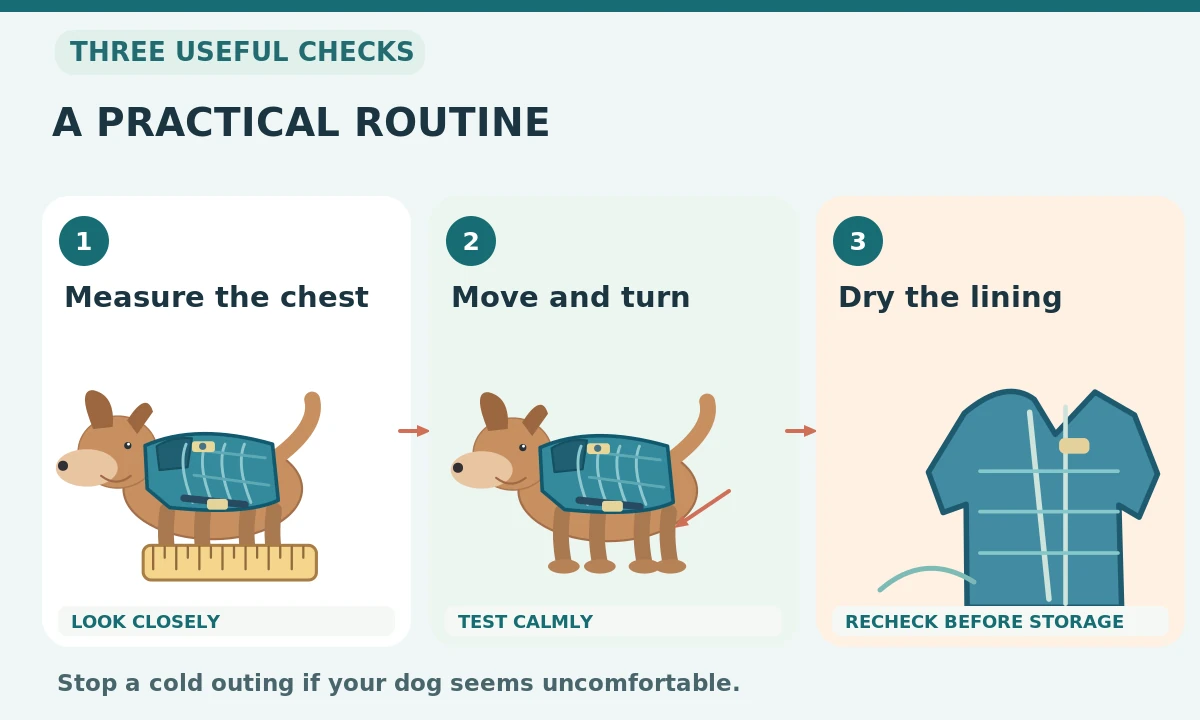
While the dog stands on a level surface, measure from the neck base to the tail base, around the widest part of the rib cage, and around the neck where fabric will rest. Check those measurements against the particular manufacturer’s size chart. A jacket that fits the length may still squeeze the rib cage or swing around the body. Leave space for natural breathing and turning, while avoiding loose straps that could snag. Inspect the coat from above and underneath. The hem should not interfere with the tail, leg stride, or bathroom position. Recheck fit if the dog grows or changes weight.
Look closely at the insulation and inside surface
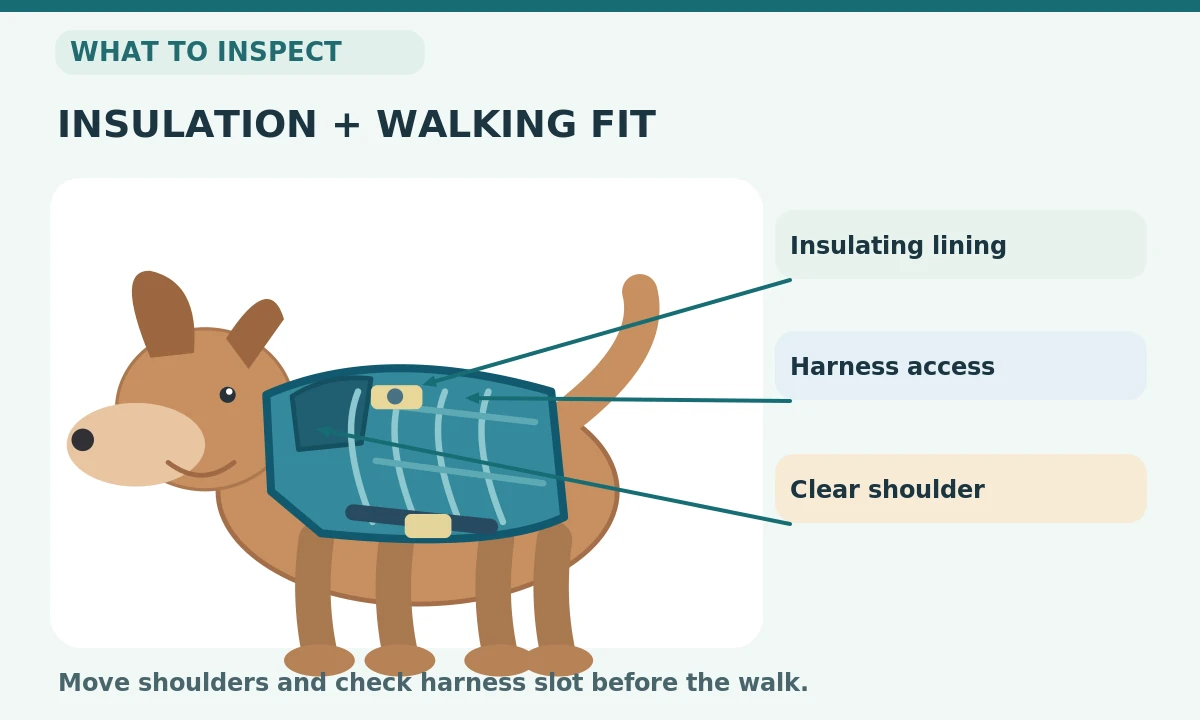
Quilted fill, fleece, and other linings feel different against fur and skin. Run a hand inside the jacket to find rough seam allowances, exposed labels, damp areas, or scratchy edging. Thick insulation that bunches near the armpits can rub during every stride. Check whether the inner surface holds moisture after a short trial: trapped dampness is not the same as useful warmth. For a dog that wears a harness, pay attention to the combined bulk of harness, liner, and shell. An easy-to-dry jacket can be more useful than one whose padding stays damp between walks.
Test shoulder movement and the belly opening
Fasten the coat indoors without tightening straps to the maximum. Watch the dog walk, sniff the ground, sit, turn, and step over a low obstacle. The front edge should not climb into the throat when the head lowers. The shoulders should move freely rather than pushing stiff fabric forward. A belly panel can reduce splashes, but it must not brush the legs or block elimination. If the dog freezes or repeatedly paws the jacket, remove it and try an easier introduction. A poor cut will not be corrected by selecting a larger size if that creates loose fabric elsewhere.

Use the harness opening only as designed
Fit your normal walking harness first, then check whether the coat is designed to sit over it. A leash slot should line up with the actual attachment point without pulling the coat backward or exposing a wide gap in the lining. Do not treat decorative fabric loops as secure leash anchors. If the opening cannot accommodate the correct harness connection, look for a different coat design instead of forcing the leash through a seam. Examine how the leash behaves when the dog turns. Buckles and hook-and-loop tabs should remain away from the moving legs and should not pinch fur.
Introduce the coat in small, voluntary steps
Put the jacket on the floor and reward the dog for investigating it. Offer a brief drape over the back, then remove it before the dog becomes worried. Gradually practice one closure at a time, allowing the dog to move away. A normal, relaxed walk indoors is a better sign of acceptance than standing motionless for a photograph. Start with short outings and check for rubbing immediately afterward. Do not leave a new coat on a dog unattended, especially when fasteners, loose hems, or chewing are concerns. Some dogs simply prefer a shorter outing without clothing.
Choose the outing, not the product claim
A jacket is not a substitute for shelter, dry paws, or supervision in severe weather. Cold pavement, ice-melting products, wind, and wet fur may still require a shorter route or a complete change of plans. If the weather is unpleasant, take more frequent brief breaks instead of one long walk. Watch the dog rather than relying on a blanket claim that a coat works at a certain temperature. For any dog with health concerns or unusual sensitivity to cold, ask a veterinarian about appropriate exposure. Return indoors promptly if the dog becomes distressed or uncomfortable.
Dry the lining and inspect seams after each use
Open the coat fully when you get home. Check the chest and underside for damp fur, road grit, rubbing, or red marks. Allow both lining and shell to dry before folding the garment away. Wash according to the label; high heat can damage some synthetic fills and water-resistant finishes. Brush debris from hook-and-loop closures and inspect stitching where the straps join the shell. Replace a jacket if its buckles no longer hold securely or padding forms hard lumps. Store the clean coat beyond the reach of dogs that like to chew clothing.
How We Research
Our editorial approach draws on veterinary associations, animal-welfare guidance, and established dog-care education, alongside practical checks of garment shape, fit, materials, and maintenance. Product features described here are inspection criteria, not independently tested safety ratings. We did not laboratory-test brands, verify individual manufacturer performance claims, or guarantee safety. Compare any product with its own instructions and your dog’s needs. Learn about our editorial approach.
Sources
American Kennel Club — Does My Dog Need a Winter Coat? — reference guidance for safe use, fit, and relevant environmental limits.
ASPCA — Cold Weather Safety Tips — reference guidance for safe use, fit, and relevant environmental limits.
American Kennel Club — Does Your Dog Need a Sweater? — reference guidance for safe use, fit, and relevant environmental limits.
American Kennel Club — Helping Your Dog Get Comfortable Wearing Clothes — reference guidance for safe use, fit, and relevant environmental limits.
No. Coat density, body size, age, health, activity, and weather differ. Many thick-coated dogs do not need additional insulation for brief cold-weather walks.
Only if its design provides a safe leash route while the harness remains correctly fitted. Never attach a leash to a decorative fabric tab.
Watch for a shortened stride, rubbing at the armpits, pressure at the throat, difficulty sitting, or a dog that refuses to move normally.
No. Icy ground, wind, and cold stress remain concerns. Reduce outdoor time and come inside if the dog seems uncomfortable.
Follow the garment care label, clean closures, inspect the fill and seams, and ensure the lining is completely dry before storing.