
A dog ramp can make a bed, car or porch easier to reach, but its length matters as much as its stated weight rating. A steep ramp with a slick surface can create a different obstacle from the jump it was meant to replace. This guide shows how to measure your space, compare useful surfaces and decide whether a particular setup works for your dog. Read our veterinary disclaimer if mobility or pain is a concern.
The goal is a route that a dog can use calmly in both directions. An older dog may hesitate for reasons that a product cannot fix, including joint discomfort, poor vision or fear of a shifting platform. See our senior dog comfort guide for complementary home changes; the advice here focuses on ramp selection and safe trial use.
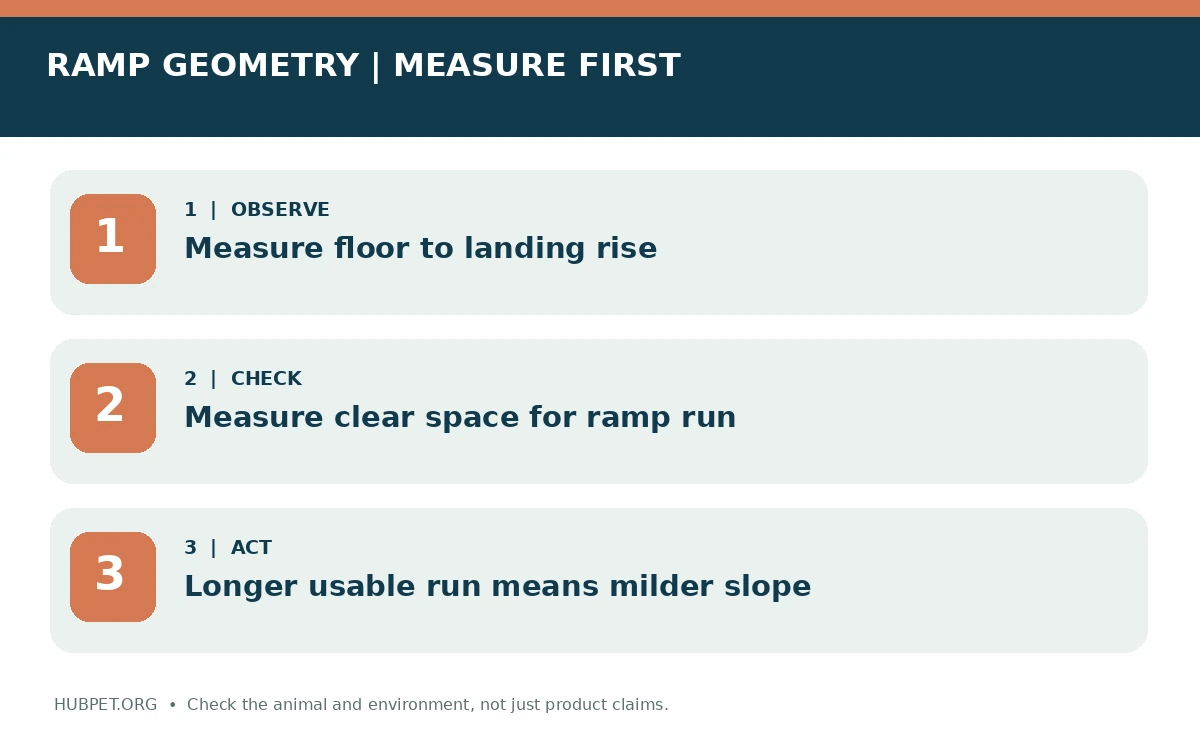
Measure the vertical rise and available floor space
Start at the exact destination: the top of a mattress, the vehicle cargo threshold or the porch landing. Measure vertically from the floor or ground to where the dog will step off. Then measure the clear horizontal distance available for the ramp. Include the space needed for your dog to approach and turn without backing toward a hazard.
Record those two measurements before comparing products. A long ramp may create a gentler approach but fail to fit a tight bedroom. A compact ramp may fit physically yet feel too steep to use. In a car, check whether the ramp can unfold completely without reaching into moving traffic or leaving its foot on unstable ground.
Understand why length changes the slope
For the same landing height, a longer usable ramp reduces the incline. A short ramp forces more effort and may make downward movement especially difficult. Do not assume a manufacturer’s generic length recommendation suits every dog: measure the actual usable walkway, not the folded storage dimensions or decorative outer frame.
You can make a rough comparison by calculating rise divided by horizontal run; a lower ratio usually means a gentler route. This is not a veterinary prescription or a universal angle limit. Dogs differ in strength, confidence and limb function. If the dog has a diagnosed orthopedic or spinal condition, ask a veterinarian or rehabilitation professional what incline is appropriate.
Choose a gripping surface that works with the paws
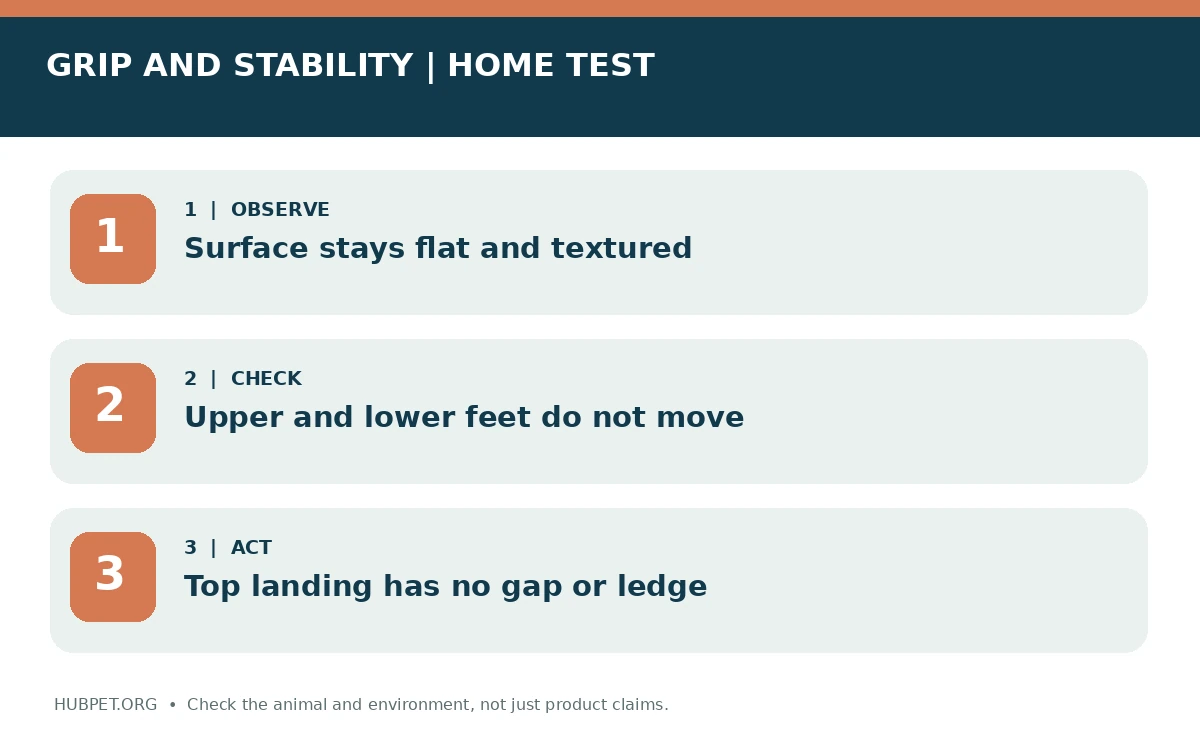
Look for tread that lets paws gain purchase without forcing nails into a rough abrasive coating. Firm textured rubber or a securely fitted, low-pile traction layer may help. Test a sample with dry hands, then consider whether damp paws would slide. Avoid a thick fluffy cover that bunches and moves under the dog’s weight.
Grip should extend through the entry and exit zones, not stop before the lip where the dog changes direction. Trim any loose fabric edges and inspect surface fastening points. If cleaning loosens a removable mat, reattach it before use. Our paw-cleaning guide helps reduce slippery dirt carried indoors.
Check width and side guidance without crowding the dog
Measure the dog’s comfortable stance and watch how the hind feet track during an unhurried walk. The usable walking width should accommodate the body and natural small side-to-side movement. Avoid choosing width solely by breed or by the product photograph. A dog who turns a little while descending needs margin at the edges.
Low side rails may provide a visual boundary, but they cannot make a narrow or steep ramp safe. Check whether the rails snag a leash or reduce the walking width. A very tall rail may alarm an animal that dislikes enclosed spaces. For a nervous dog, a wider flat ramp can feel easier than a narrow chute.
Verify stability at the top and bottom
A ramp must stay planted when a dog shifts weight onto the lower end. Inspect rubber feet, anti-slip pads, locking joints and the top contact point. On hardwood or tile, a foot that grips outdoors may skate across smooth flooring. If the platform is hinged, verify that the locking mechanism is fully engaged.
The top must land flush against a sound, stable surface rather than balancing on upholstery or a rounded bumper. Never brace a portable ramp with your own foot while inviting the dog to cross. That creates a moving target. Test an unloaded setup, then add gentle hand pressure in several places before introducing your pet.
Match capacity to both the dog and dynamic movement
A manufacturer’s capacity rating applies to a specific design in the conditions stated by its maker. Compare that rating with your dog’s current weight, but also look at platform deflection and the stability of supporting legs. A dog may shift or land with more force than a static load of the same weight.
Avoid assuming that a high rating makes a narrow ramp suitable for a large dog. Check connection hardware, frame flex and hinge clearance. An unstable structure can frighten the dog even without collapsing. If the surface bows noticeably during a supervised trial, stop and review the product rather than asking the dog to adapt.
Plan the upper landing and the way down
Many owners test a ramp only for climbing up. Yet descending may require more confidence and controlled braking. Confirm that the dog can place all four paws at the upper landing without an awkward final jump. Remove nearby clutter, slippery throw rugs and tight turns that force the dog to pivot on the slope.
For vehicle access, think about tailgate height, parked-ground slope and traffic exposure. Never let a dog exit straight into a road or jump off an unfamiliar ramp. In a bedroom, leave enough open floor beside the bottom so the dog can step away. Read our senior-friendly home guide for broader layout considerations.
Introduce the ramp with reward-based steps
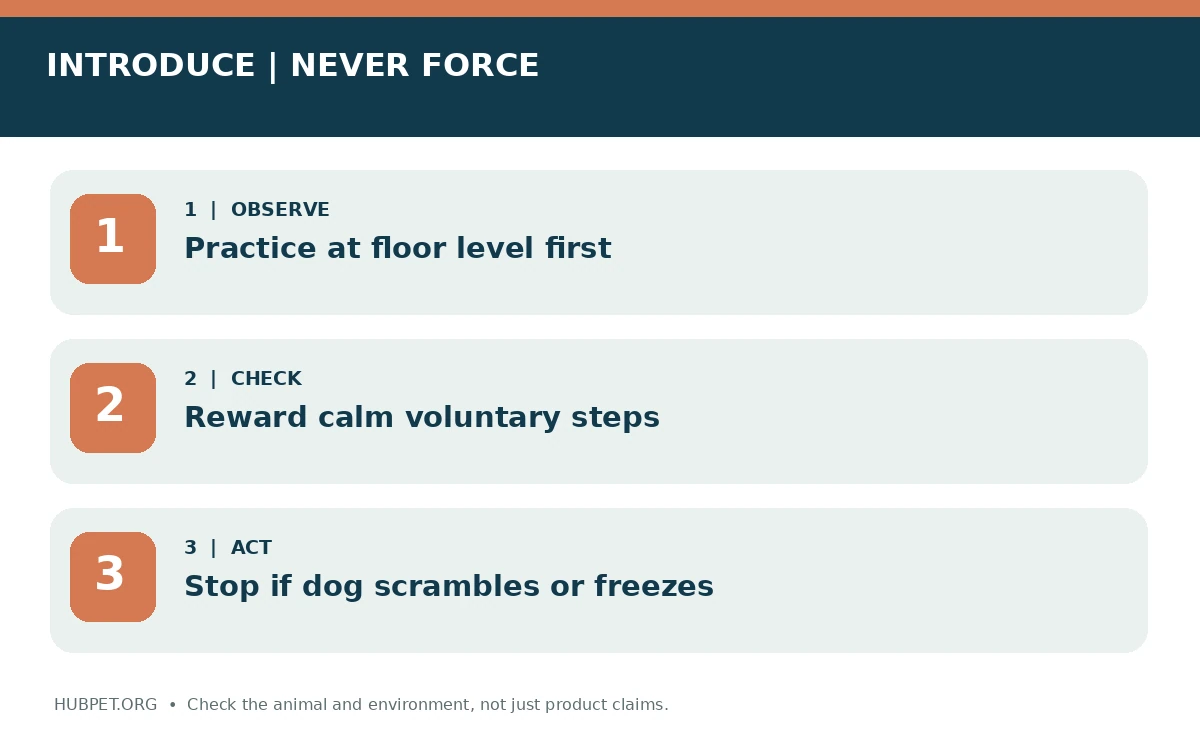
Place the ramp flat on the floor first, if the design permits, and allow the dog to sniff it. Reward voluntary paws on the surface without pulling the collar. Gradually raise the incline only when the dog appears relaxed. Keep sessions brief; a reluctant dog may need several low-stakes practices before using a raised setup.
Use small food rewards from the dog’s normal allowance or a familiar toy if appropriate. Stand alongside and prevent slips without lifting by the harness. Never force an animal across by tugging a leash. A dog who freezes, scrambles or tries to leap away is communicating that the task is too difficult; make it easier.
Know when a veterinarian should guide the decision
New stumbling, yelping, limping or refusal to use furniture deserves medical attention instead of a quick equipment fix. Likewise, a dog recovering from surgery may have movement restrictions that a generic ramp cannot address. Ask the treating veterinary team before changing access to beds, cars or stairs.
A ramp is an environmental aid, not a treatment for arthritis or a substitute for pain assessment. After professional advice, you may need a different height, another room layout or a supervised transfer rather than a ramp. Avoid claiming that a particular material or incline can prevent joint disease.
Use a practical purchase and maintenance checklist
Write down the rise, available floor run, walking width, storage limits and the dog’s measured weight. Compare those facts with the maker’s specifications. Then inspect traction, top support, hinge locks, edge stability, cleaning instructions and return terms. A photograph of a calm dog on a ramp is not evidence of safe fit in your home.
After purchase, repeat stability checks before use and inspect grips for wear each week during regular use. Put the ramp away securely so it cannot collapse against a pet. A good setup makes both climbing and descending predictable. If the dog continues avoiding it, ask why rather than repeatedly urging another attempt.
How We Research
We prepared this guide using animal welfare guidance and practical questions owners can ask about size, materials, supervision, fit and safe use. We did not purchase or independently test products, and we do not rank brands or claim veterinary endorsement. On October 26, 2026, our editorial review considered these sources. Learn more about HubPet and our editorial approach. This material does not replace advice for a specific animal from its veterinarian.
Sources
PetMD: Does My Dog Need Dog Stairs or a Dog Ramp?. Accessed October 26, 2026.
American Kennel Club: Dog Stairs and Ramps. Accessed October 26, 2026.
Measure the actual landing height and available horizontal space. Compare ramp incline and usable length, then watch a calm supervised trial for hesitation or slipping.
Look for a secure, paw-friendly gripping layer that does not bunch or slide, with traction extending to the entry and exit areas.
A ramp can avoid the repeated step-up action, but suitability depends on the dog, incline and diagnosis. Ask your veterinarian when pain or mobility changes are present.
Yes, sometimes. Begin with a flat platform, reward voluntary exploration and increase the challenge in tiny steps. Never pull a frightened dog onto the slope.
No. Capacity matters, but stable landings, usable width, grip, slope and frame flex also affect real-world safety.