
Outdoor dog ramps for steps face different conditions from bedroom or vehicle ramps. Rain, loose soil, shifting pavers and frost can change traction and stability between uses. A porch route also needs room for doors to swing and for people to walk without tripping over the ramp. Before purchasing or installing anything, determine whether you need a temporary, manufacturer-approved pet ramp or a permanent structure that requires professional design and local code review. This guide offers safe planning questions rather than DIY structural instructions. Veterinary mobility guidance supports stable, non-slip access adapted to the dog. If climbing becomes suddenly difficult, seek veterinary advice and review the HubPet veterinary disclaimer.
Map every step and the door swing
Start with a simple sketch of the porch, landing, individual steps, path edges and door opening. Measure from the stable lower surface to the upper walking surface, not just the nominal height of one step. Note where the porch door swings and whether a screen door or handrail narrows the route. Do not let a ramp obstruct an emergency exit or create a new fall hazard for people. Leave enough level space at both ends for the dog to pause and turn. If multiple animals use the entrance, avoid a bottleneck where one can block another. A narrow route that fits on paper may fail in daily use.
Think about weather before slope
Outdoor traction changes quickly with wet leaves, frost, mud and algae. Choose walking material specified for outdoor exposure and inspect it in the actual conditions where you plan to use it. Slick decorative boards or indoor carpet can become hazardous when soaked. A deeply grooved surface may drain water but trap grit and catch nails if poorly designed. Consider whether snow removal will damage the coating. Do not rely on a thin anti-slip mat to fix an unstable structural base. If weather makes the ramp unsafe, keep a different supported access plan. A ramp does not make icy ground safe simply by covering the steps.

Check both ends for stable support
The lower feet may land on soil, mulch or pavers that shift after rain. The upper end may rest against a lip too narrow for the manufacturer’s mounting method. Check whether you can secure the ramp exactly as its instructions require without modifying porch railings or blocking drainage. Never place the lower end on loose bricks or stacked wood as a makeshift foundation. A temporary unit is not a substitute for a properly designed permanent walkway. For permanent alterations, discuss load, drainage, code and accessibility needs with a qualified local professional. Do not assume pet products can support people.
Use a width that gives room for careful movement
Dogs may approach an outdoor ramp while excited about leaving the yard, making wide, calm footing important. Compare the actual tread width with the dog’s natural stance and turning needs. A narrow board perched across two steps leaves little margin for hesitation. Side barriers can reduce the temptation to step off, but only when integrated into a product designed for the use. Avoid exposed nails, splinters or projections near nose and paws. Look at the return route as well: the dog must turn toward the house without stepping directly into a door edge. A wider ramp still requires supervision and a secure landing.
Plan drainage and housekeeping
Water pooling at the base can form mud or ice, making the first step as risky as the ramp itself. Choose an installation that allows drainage away from the building and avoids directing runoff toward a doorway. Clear leaves, snow and grit with tools permitted by the manufacturer; scraping can damage protective tread. After storms, check for debris trapped under supports, softened soil and missing anti-slip pads. If cleaning requires lifting a heavy unit, decide whether household caregivers can do it safely. Daily practicality matters: a ramp that cannot be kept dry and clear is unlikely to be a dependable route through changing seasons.
Decide between portable and permanent use
A portable ramp can be useful for occasional supervised access if the manufacturer approves the porch height and support arrangement. Never leave a light folding unit outdoors indefinitely unless its instructions expressly allow it. Weather can weaken components and repeated movement may misalign landings. A permanent, anchored structure creates other obligations, including local construction requirements and pedestrian safety. Do not attach it to railings, steps or a wall with improvised hardware based on a generic online guide. Seek professional advice for structural changes. Aim for a stable pet route that leaves the household entrance and exit safe.
Teach calm use before a busy exit
Introduce any movable ramp flat and secure when allowed, away from the busy doorway. Reward sniffing and voluntary steps, then work gradually toward the porch configuration. Do not push a reluctant dog from behind or drag it upward with a leash. Dogs that sprint to the yard may need separate practice at pausing before exiting; a ramp is not a speed-control device. On the way back, let the dog walk rather than leap sideways to the porch. AKC emphasizes calm reward-based introduction to ramps. Stop the session if a dog slips, becomes frightened or shows signs of pain.
Protect children, guests and deliveries
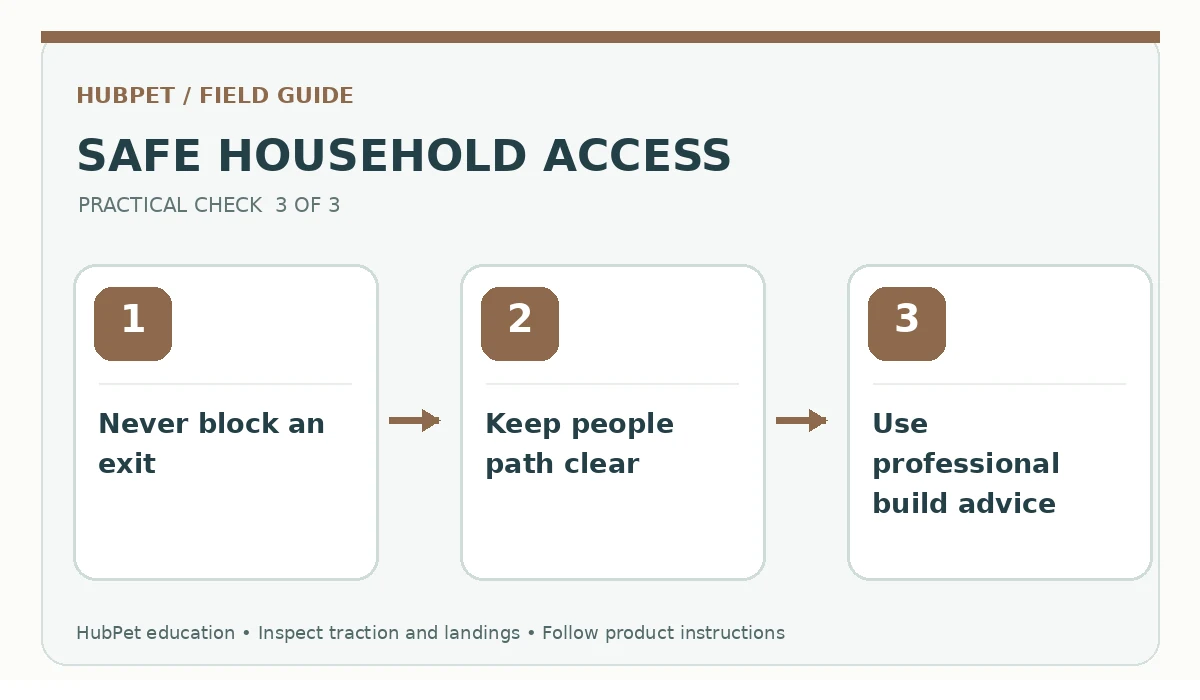
A ramp projecting into a shared pathway can trip visitors who do not expect it. Keep the entry well lit and clearly visible, including after dark. Do not place a temporary ramp across a public sidewalk, shared exit or accessibility route. Consider delivery access and how wheelchair users or people carrying bags will pass. An outdoor pet ramp is not the same as a code-compliant human accessibility ramp, and its load rating may not cover people. If the only safe pet location would block a required exit, choose another route or obtain professional design help. Household safety includes everyone who uses the entrance.
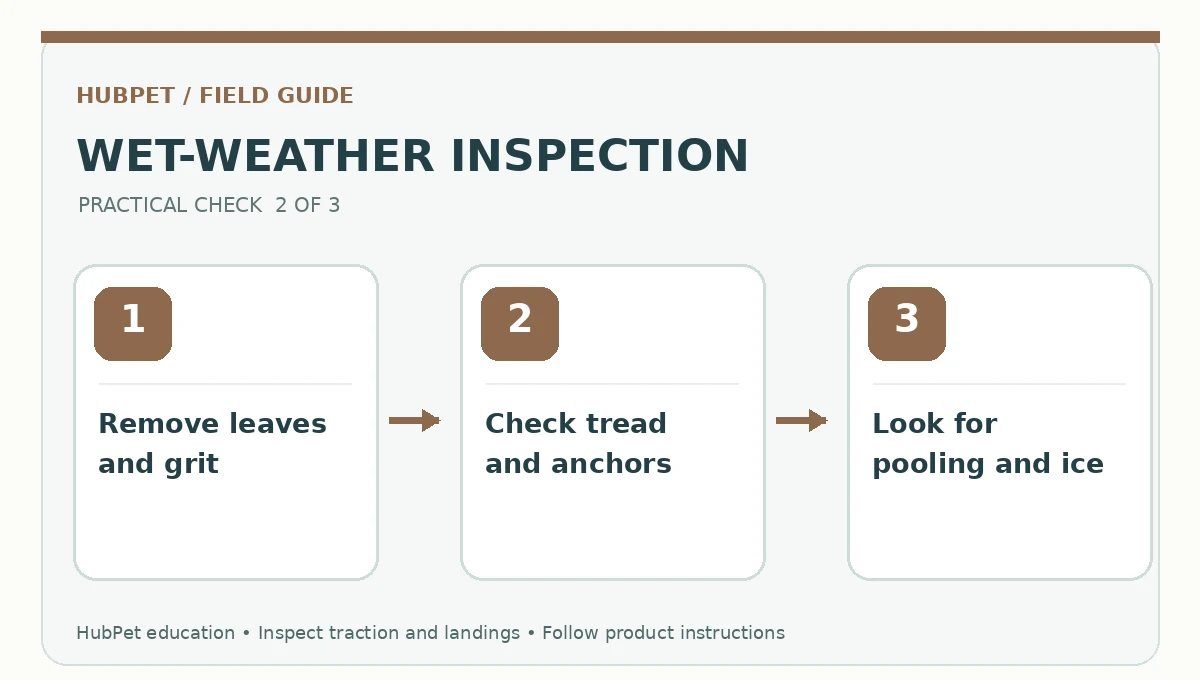
Inspect before every use in poor weather
Look for loose supports, soft ground, wet tread, sharp hardware, structural cracks and standing water. Check the upper attachment and lower landing without placing a dog on the ramp. After freezing weather, test whether the surface is clear rather than assuming a dark texture is ice-free. If you cannot resolve an issue safely, keep the dog inside and choose another supervised route. For older dogs, VCA recommends improving traction around the home and consulting a veterinarian about mobility needs. Do not ask a dog to attempt an uncertain surface just because it used the ramp successfully yesterday.
Choose the least complicated reliable route
In some homes, an appropriate alternate doorway with fewer steps may be safer than an elaborate ramp. For a dog that only uses the porch briefly, supervised assistance guided by a veterinarian might be more suitable. When choosing equipment, document total height, available run, upper and lower landing, weather exposure, cleaning duties and who will handle deployment. Compare every point with the manufacturer’s actual instructions. If the route cannot be made stable without blocking an exit or modifying a building, treat that as a stop sign and seek qualified help. A good outdoor ramp should reduce uncertainty for the dog and caregivers, not create a new structural risk.
How We Research
Our editorial review compared animal-welfare recommendations with consumer safety guidance for pet drinking stations, material safety, cleaning routines, and equipment reliability. Each source supports the specific safety context named above; water circulation and filters do not replace fresh drinking water or cleaning. We did not test specific products in laboratory conditions, certify filtration claims, or receive manufacturer endorsements. Follow equipment manuals and seek veterinary advice when a pet’s drinking pattern changes. We reviewed these sources on October 27, 2026. Read about our editorial standards on the About HubPet page.
Sources
American Kennel Club: Dog stairs versus ramps: selection, stability, grip, and introduction. Accessed October 27, 2026.
Canine Arthritis Resources and Education: Home and vehicle accessibility changes for dogs. Accessed October 27, 2026.
VCA Animal Hospitals: Helping dogs with osteoarthritis at home. Accessed October 27, 2026.
PetMD, reviewed by a veterinarian: When a dog may benefit from stairs or a ramp. Accessed October 27, 2026.
Only if the manufacturer approves that outdoor installation and support configuration. Wet ground and weather can make an indoor product unsuitable.
Not by itself. You still need stable supports, proper drainage, intact tread and a safe landing. Wet fabric can become slippery or degrade.
No. Pet products are not automatically built or rated for people or subject to the same design standards. Consult a professional for permanent structural access.
Follow the maker’s weather-exposure and storage instructions. Many portable products are not designed for continuous outdoor installation.
Do not use a configuration that obstructs safe entry, exit or the required human pathway. Select another route or get professional layout advice.