
This is general pet-care and product-fit information, not a diagnosis. A pet with pain, weakness, falls, or sudden difficulty jumping needs veterinary advice. Follow the exact product instructions and never force a frightened pet to climb. Read the veterinary disclaimer.
A telescoping dog ramp slides one section inside another to change its working length. That sliding mechanism saves storage space, but it introduces rails, overlap, end feet and a storage latch that deserve inspection. Some designs use no locking pin while deployed; others have different retention systems, so the manufacturer’s manual—not a generic diagram—controls how a particular model should be set up. PetSafe’s guidance also emphasizes secure support at both ends and training on a flat ramp before elevated use.
Identify which pieces actually lock
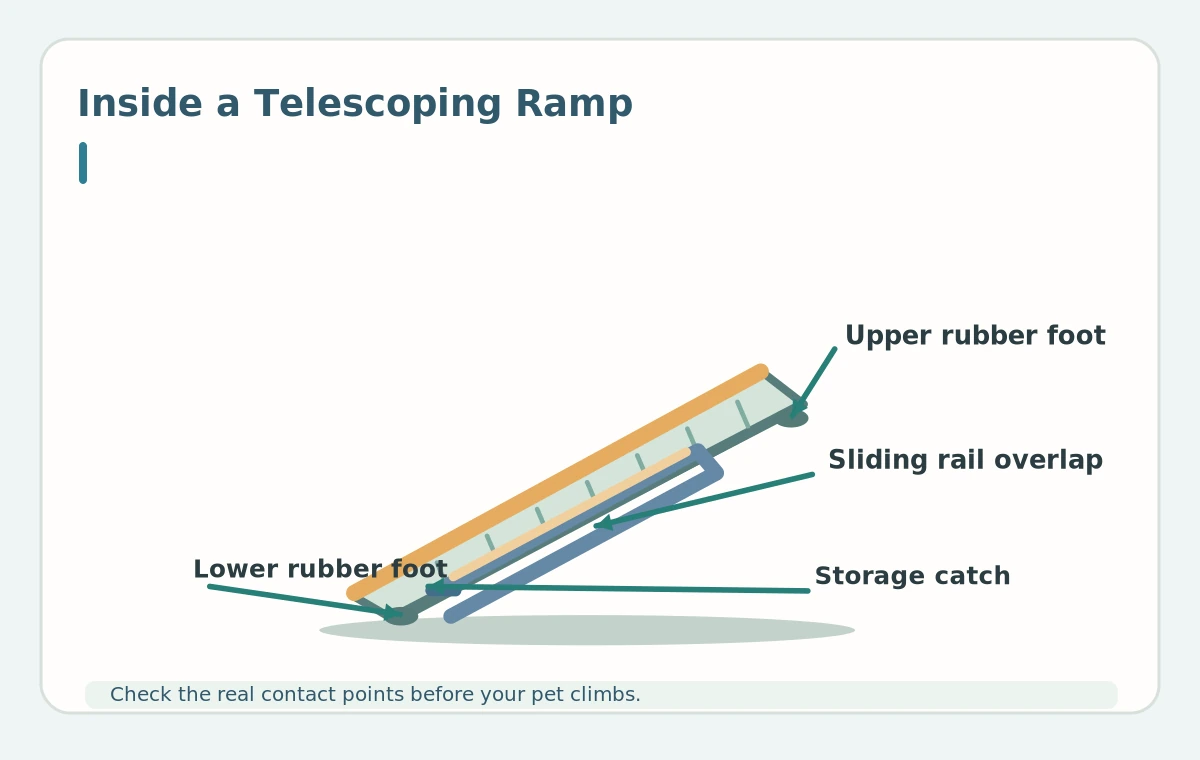
Find the inner slide, outer rails, lower feet, upper contact edge, and carry or storage catch. The visible strap may secure the ramp only when closed; it must not be described as a deployed locking brake unless the instructions say so. Check how your specific model reaches usable length and how much overlap its manual requires. Contact the manufacturer if markings or instructions are missing instead of guessing. Never drill new lock holes or push improvised pins through sliding parts.
Test the sliding track before going outside
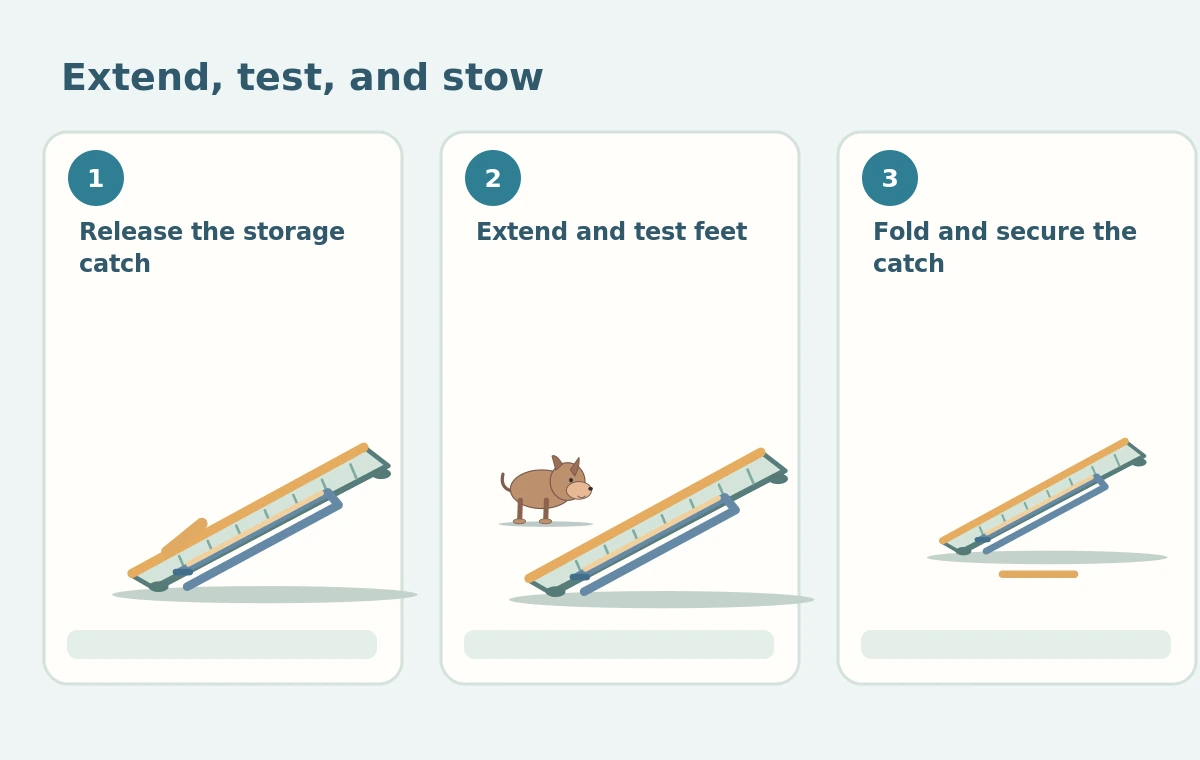
Lay the ramp on its side on a clear floor. Open the storage catch and extend slowly with fingers away from the overlap and edges. Movement should be controlled, not jerky. Inspect rails for dents, sharp edges, trapped gravel, and unusual play between sections. A sticking track can encourage users to jerk the ramp and lose control. Follow approved cleaning instructions, and avoid adding lubricants unless the maker explicitly permits them; some products rely on specified sliding materials and surfaces.
Check length against the real landing height
Measure the vehicle or platform height and verify the horizontal space available for a full ramp. Shorter extension creates a steeper path, even if the product technically supports that length. Check manufacturer instructions for permitted positions and edge contact. Some vehicle openings, especially side doors, need compatible adaptors. Do not balance a rear hatch ramp against a window frame or flexible bumper trim. The working angle should permit calm, controlled walking in both directions.
Place every support foot on stable material
Many sliding ramps need upper and lower rubber feet resting squarely on solid surfaces. PetSafe directs users to verify all four rubber feet on its applicable telescoping models. Look from the side and from above: a foot hanging partly off the bumper or sitting on gravel can let the ramp pivot. Press lightly on the ramp before use while keeping hands away from hinges. If the top moves or the lower feet creep, reposition or stop. Do not assume the pet’s weight will stabilize a poor setup.
Inspect the walking surface and side boundaries
The surface needs sufficient traction from the lower entry to the top landing. Check that traction strips or panels are secure across sliding section transitions. Raised side rails may provide a useful visual boundary, but paws still need adequate walking width. Avoid damaged abrasive material, exposed metal, or loose fasteners that could catch nails. After rain or a muddy trip, clean and dry the walkway as directed. Never cover the sliding joint with a thick loose blanket.

Teach a low-stress first crossing
Before vehicle use, put the ramp flat on the ground and reward voluntary steps across it. Move to a gentle supported slope only when the dog seems comfortable and the ramp is secure. Use a comfortable harness for guidance if necessary, keeping the dog’s head and body aligned with the ramp. Do not stand on a pet ramp yourself or push from behind. PetSafe explicitly warns against forcing or pulling a pet up the structure. Return to easier practice when the dog hesitates.
Manage lowering and folding safely
After the pet is safely restrained inside the vehicle, remove the ramp and bring it to the ground before collapsing it. Keep fingers outside sliding pinch areas, retract the inner section carefully, and secure the specified storage strap or latch. A ramp that opens suddenly while carried is hazardous. Check the catch before lifting it vertically. Store it where a shifting load cannot hit people or animals during sudden stops. Never leave an extended ramp unattended in pedestrian traffic.
Check the ramp after wear or impact
Look for bent rails, loosened end pieces, worn rubber caps, gaps between overlapping parts, and tread sections that have peeled back. Verify the manufacturer’s weight rating and intended use, including any prohibition on human use. Retire a damaged unit until approved repairs are available. A similar-looking replacement foot or screw from a hardware store may not carry the correct load. Structural reliability matters more than cosmetic appearance or a very high advertised capacity.
Know when to choose another access method
A long ramp may not fit a short parking space, an uneven driveway or a narrow vehicle opening. If you cannot create reliable support at both ends, do not improvise. A different entry location, approved adaptor, sturdy vehicle steps, or help from a veterinary mobility professional may be safer. Ask a veterinarian for advice if pain, weakness, or poor balance makes your dog reluctant. Training is helpful only when the underlying equipment and route are sound.
How We Research
We compared veterinary mobility guidance and manufacturer setup instructions, focusing on support points, landing security, paw traction, and voluntary learning. These are selection and fit checks rather than hands-on product test results. We have not examined your pet or tested the model you own. We reviewed independent animal welfare advice alongside model-specific directions and avoided universal claims about weight ratings, angles, or clinical benefits. Learn about HubPet editorial research.
Sources
PetSafe — How to Set Up a Telescoping Ramp
PetSafe — Acclimate and Train Your Pet to Use a Telescoping Ramp
VCA Animal Hospitals — Creating a Comfortable Home for Your Mobility Compromised Dog
No. Designs differ, and some use an overlap system rather than a deployed locking pin. Check your exact model manual; the storage catch may only secure the collapsed ramp.
Only when the maker approves that arrangement or compatible adaptor and the upper and lower feet contact firm surfaces.
No. Practice on level ground and build the incline gradually with voluntary steps and rewards. Never drag a pet up a ramp.
Retract it on the ground, close the storage catch, and keep fingers clear of sliding sections. Confirm the latch before lifting.
Stop using the ramp until you obtain the correct approved part. A missing support can allow the structure to shift or pivot.