
A dog crate is not just a box with a door. A wire model that works well for supervised rest at home may offer little crash protection in a car, while a rigid travel carrier may not fit an apartment layout. Begin with how you intend to use the crate and how your dog responds to enclosure, not a photograph of a popular size.
VCA advises sufficient room for a dog to lie comfortably, stretch, and stand without striking the roof. Crates should never be punishment or a substitute for meeting social and bathroom needs. For a dog that panics or injures themselves in confinement, consult a professional rather than seeking a stronger lock. See our veterinary information disclaimer.
Decide what job the crate needs to do
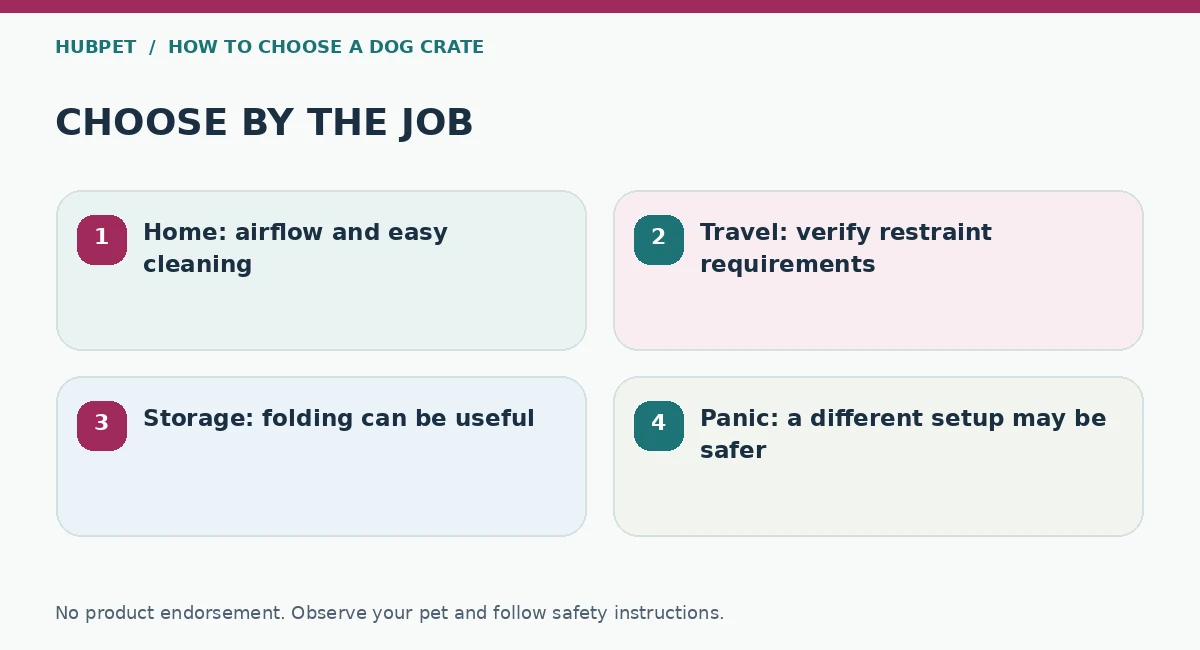
List your actual uses before comparing listings: short home rests, a predictable safe space during household activity, a familiar place at boarding, or transport. Each task has different requirements. Home crates prioritize access, visibility, and comfort; vehicle and airline use bring separate safety rules and carrier requirements.
Do not assume a crate labeled travel is tested for crash protection. Travel approval depends on the mode, vehicle setup, and the relevant transport provider. If you travel by air, check the airline’s current exact dimensions and construction rules before buying. For routine home use, focus on safe entry, cleaning, and calm voluntary rest.
Compare wire, rigid plastic, and furniture-style models
Collapsible wire crates offer airflow and visibility and often store flat. However, bar spacing, protrusions, latch security, and chewing risk deserve attention. A rigid plastic crate may feel more sheltered and hold messes inside, but can be bulkier and offer less visibility. VCA outlines these common trade-offs in its confinement guidance.
Furniture-style crates blend with a room but may use wood or decorative surfaces that dogs can chew. Soft fabric crates are unsuitable for a dog likely to scratch out or bite through the sides. Choose the safest functional construction for your dog, and reject decorative details that restrict ventilation or create snag points.
Check ventilation, door access, and hardware
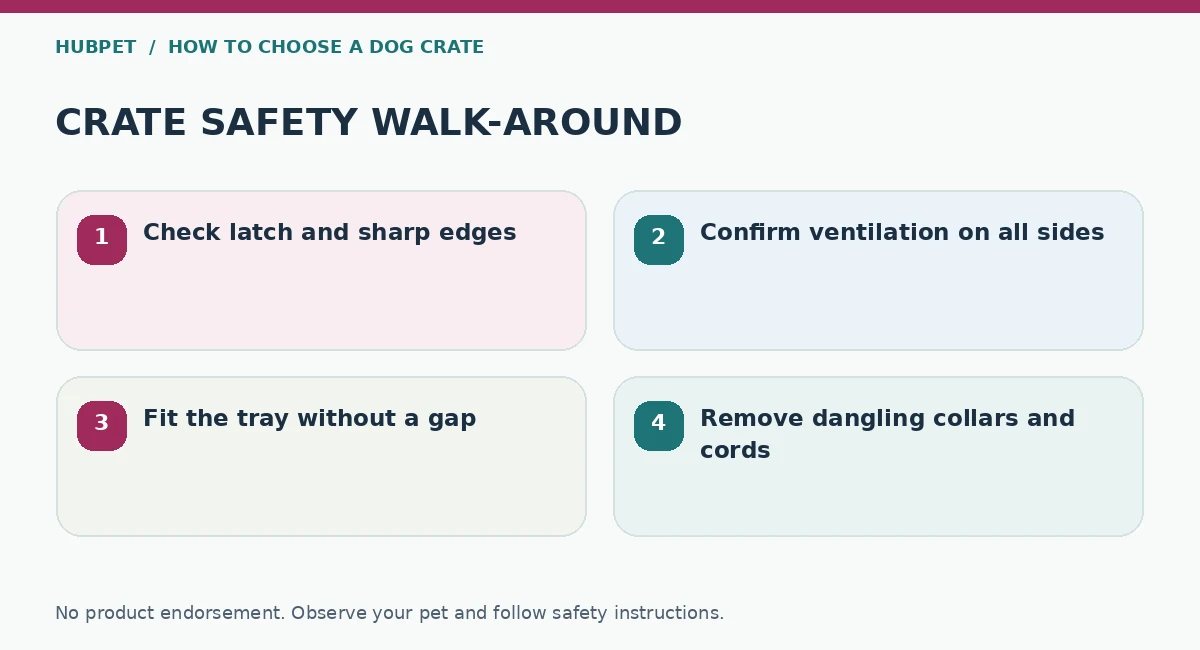
A door must open smoothly and secure reliably without pinching paws. Inspect latches, welds, corners, and the position of the hinges. Two-door layouts can help in small rooms but only if both openings can be secured as directed. Keep ventilation openings free of bedding or draped covers that block airflow.
Look for enough circulation for the room temperature. A crate cover may reduce visual distractions for some dogs, but it should never overheat the space or obscure essential ventilation. Any cover must stay away from bars that the dog can pull or chew. Observe your dog’s actual comfort rather than assuming darkness is soothing.
Get the size right before choosing a brand
Measure your dog standing and lying in a relaxed position. The crate should allow comfortable standing without head contact, turning, and stretching out. Brand size labels such as medium are not measurements. Check usable inside length, width, and height; thick trays or fitted accessories can reduce interior space.
A puppy may need a larger crate later. Some models have an adjustable divider, but that does not justify giving a growing dog too little room. For a detailed fit check, compare interior dimensions with how your dog stands, turns, and rests. Avoid choosing a crate based only on breed charts.
Place the crate where rest is realistic
A sensible home spot is out of strong sunlight, drafts, and noisy foot traffic while still allowing comfortable household proximity. Check the route to the doorway and ensure the open door cannot swing into a walkway. Keep cords, curtains, and dangling items beyond reach of the dog through any openings.
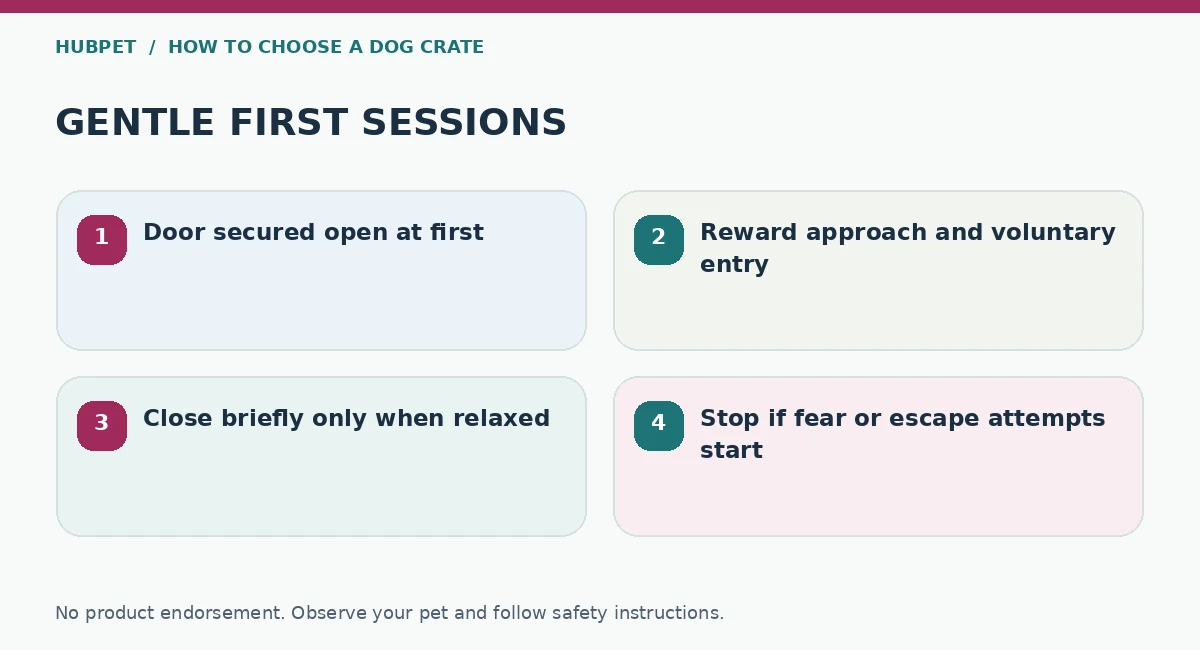
VCA notes that crates can sit in a room where the household spends time, because dogs are social. Still, each dog differs. During initial sessions, leave the door secured fully open and reward voluntary approaches. Our crate and carrier comfort guide provides a gentle starting point.
Choose a floor and resting surface you can maintain
A removable tray can simplify cleaning, but it must fit securely and have no sharp corners. Inspect whether the dog slips when entering or turning. Bedding should be appropriate for the individual dog; a puppy that swallows fabric is not safe with loose, fluffy padding merely because the product photograph includes it.
Wash surfaces according to instructions and dry everything thoroughly. Do not leave strings, collars, tags, or harness attachments that can snag on bars while the dog is confined. AKC advises removing collars in a crate as part of basic safety. Check the floor after every repair or reassembly.
Know when a crate is the wrong management tool
If a dog becomes frantic, repeatedly drools, screams, bites bars, or injures themselves while trying to leave, stop increasing confinement and consult your veterinarian or a qualified reward-based behavior specialist. Stronger hardware is not treatment for separation-related panic. VCA specifically cautions against using crating as an anxiety solution.
A secure puppy-proofed room, an exercise pen, or a gate may fit some dogs better. These options still require assessment of climbing, chewing, and access to water. Our separation-anxiety article explains why forced confinement can worsen distress.
Introduce the crate with choice and rewards
Set the crate up and let the dog investigate with its door open. Toss a small reward near the entrance, then slightly farther inside if the dog is comfortable. Invite but never push. Offer meals or quiet enrichment nearby. Begin closing the door only after the dog chooses to enter and remains relaxed.
Start with brief closures while you are present, reopen before distress builds, and vary easy sessions with slightly longer ones. Every dog has a different learning pace. Crating is not a way to keep a dog confined all workday; plan exercise, bathroom opportunities, social time, and a safe alternative if you are away for long periods.
A practical pre-purchase checklist
Record your dog’s body dimensions, the usable internal space, crate purpose, available floor area, door swing, ventilation, cleaning method, and available spare parts. Confirm the maker’s assembly directions and whether latches work with the intended setup. For travel, check specific transport standards instead of assuming a home crate will suffice.
If buying secondhand, inspect every bar, seam, fastener, latch, and tray for corrosion or damage. Set the empty crate on a level floor to check wobble. Do not accept a model that pinches, collapses unexpectedly, or has a damaged door. Paying less is not a benefit if the basic enclosure is unsafe.
The crate should serve the dog, not the schedule
A suitable crate can become a useful optional resting place or a short-term safety tool. It still depends on correct sizing, thoughtful location, gradual positive introduction, and the dog’s daily needs. Choosing a sturdy item is only the first part of the process.
If your dog avoids the crate or shows distress, adjust the training plan before extending time inside. A pen or room may be a better choice. The best purchase is one that matches both the task and the dog’s welfare, not one that merely fits a corner of your home.
How We Research
We compared animal-welfare and veterinary guidance with practical construction and use-case criteria. We checked the linked sources on October 26, 2026, and kept shopping observations separate from clinical advice. HubPet did not test, rank, or endorse individual products. Learn more at About HubPet.
Sources
VCA Animal Hospitals: Life Skills: Crate Training and Confinement. Accessed October 26, 2026.
VCA Animal Hospitals: To Crate or Not to Crate?. Accessed October 26, 2026.
American Kennel Club: Step-by-Step Crate Training for Your Dog. Accessed October 26, 2026.
Wire often provides visibility and folding storage; plastic can offer a more sheltered feel. Compare the dog’s behavior, ventilation, cleaning, hardware, and how the crate will be used.
A soft-sided model is not a safe escape-proof solution for a dog that bites or scratches through fabric. Seek veterinary and behavior guidance when confinement causes panic.
No. Dogs need exercise, interaction, bathroom opportunities, and appropriate breaks. Crating for long stretches should not replace a safe, humane daily care plan.
Some dogs prefer fewer visual distractions, but a cover can block airflow or become a chewing hazard. Follow the maker’s instructions and monitor the dog’s comfort.
Not automatically. Home crates may not protect dogs during a vehicle crash. Check vehicle restraint requirements and documented transport testing for the intended use.