
Pet steps can help some dogs reach a couch or bed without jumping. Yet a staircase that is too steep, narrow or slippery may introduce another problem. This guide explains how to measure the destination and assess tread depth, traction and stability. If your dog has pain, weak legs or recent surgery, read the HubPet veterinary disclaimer and ask a veterinarian before choosing mobility equipment.
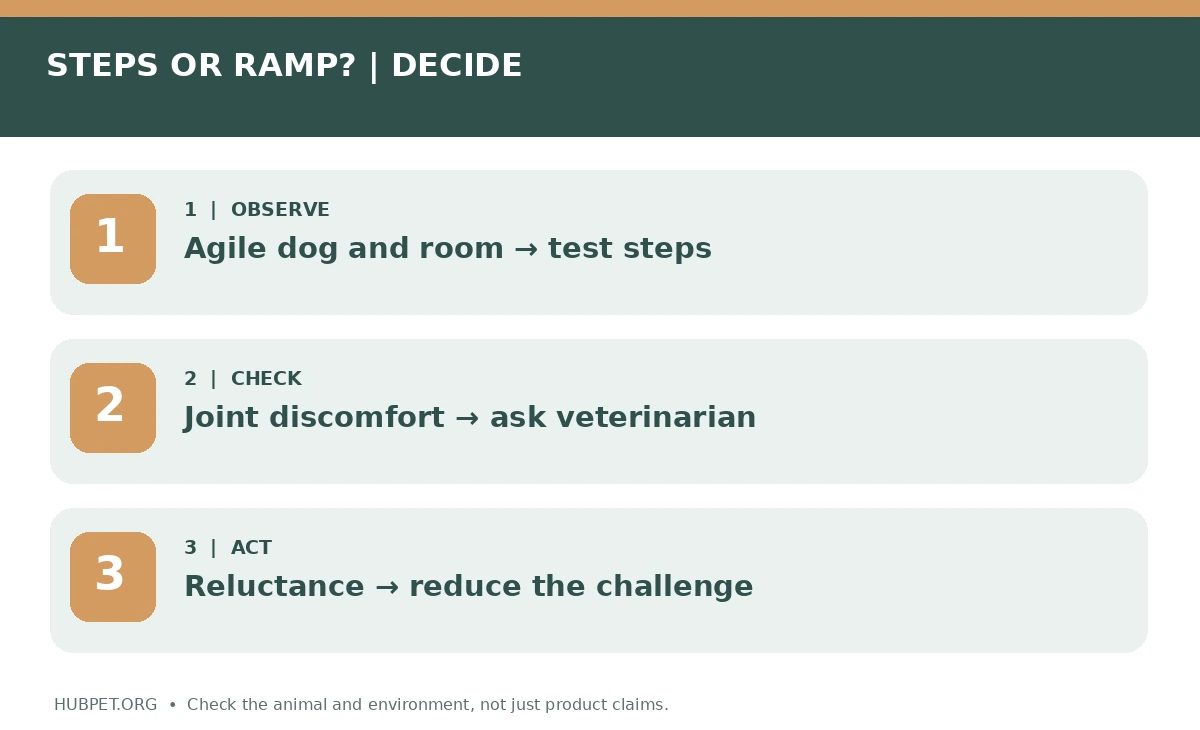
A small agile dog may enjoy steady stairs, while a dog with arthritis or back discomfort may need a gentle ramp instead. Never assume steps suit every older pet. Our senior dog comfort guide covers additional household adjustments such as secure flooring and easy resting spots.
Measure the target furniture first
Measure vertically from the floor to the place your dog needs to land, such as the top of a sofa cushion under normal use. Cushions can compress, so check the height while the furniture is in its everyday position. Then note how much floor space you can dedicate to the stair unit.
Compare the total stair height with that destination. A short gap at the top can force an awkward final jump, while a unit that rises above the cushion may create a stumble. Therefore, do not use the number of steps alone as a size guide. Use actual rise and landing alignment.
Calculate step rise without guessing
Step rise is the vertical distance from one tread to the next. Measure it on the product, not from marketing pictures. A dog with short legs may struggle even when the total stairs look compact. Ask whether each step permits a normal, unhurried lift of the forefeet and hindfeet.
Consider a simple comparison: a two-step unit spanning a tall bed may have steep individual rises. A deeper unit with additional low steps may feel easier, but only if the tread depth also allows stable footing. For a dog with pain, consult the veterinarian about a ramp before asking it to climb.

Check tread depth and width
Tread depth is the front-to-back surface where a paw lands. A narrow ledge can cause hurried climbing or hesitation. For a long-bodied dog, watch whether the dog can place its paws on one step without immediately launching to the next. Wider stairs allow extra room for turning and alignment.
Measure the width across the usable walking surface, not the exterior rails. A wide dog may need more room than a small breed even at the same furniture height. Next, check whether the dog can approach in a straight line. Tight corners can make an adequately sized staircase hard to use.
Choose traction before decorative fabric
A textured, secure tread helps paws grip during ascent and descent. Slick plastic or loose covers may slide beneath the dog, especially on the way down. Run your hand across the surface and see whether the material stays attached. Also examine how the stair base contacts wood or tile.
If the unit rocks or shifts during a gentle hand test, do not encourage the dog to climb it. A nonslip base or stable placement may improve handling, but an unstable product may need replacing. For fearful dogs, smooth and quiet footing matters as much as appearance.
Compare foam, plastic and wood constructions
Foam stairs can feel light and soft, though soft edges may deform when a heavier dog steps on them. Plastic units may wipe clean easily but need careful traction checks. Wood can provide rigid support yet adds weight and may have sharp corners. None of these materials guarantees the right fit by itself.
Check the rated capacity using the manufacturer’s current specification. Then look beyond the number: press on individual treads and inspect whether the sides twist. A stable weight rating cannot compensate for a step that feels too small. Consider how easily you can move or store the unit without damage.

Know when a ramp makes more sense
A ramp may reduce the need to climb a series of rises, which can matter for dogs with joint or back concerns. However, a ramp also needs adequate length, grip and a manageable slope. PetMD notes that mobility needs differ and recommends veterinary input for dogs with existing conditions.
If your dog hesitates on stairs, do not push it to prove the purchase works. Instead, compare a low-angle ramp or a lower resting surface. Use a nonslip pathway to the aid. For broader accessibility ideas, see our senior-friendly home setup.
Practice an approach and exit route
Put the stairs flush against the furniture on a stable surface. Ensure that the dog has room to walk toward the first tread without twisting. For bed use, consider a landing area that does not lead directly to an unguarded edge. Do not block the dog into climbing.
The exit route matters just as much as the climb. Many dogs descend quickly when excited. Encourage a slow approach while the room stays quiet. If the dog skips the final steps and leaps anyway, the unit may not meet its needs or its habits may need more reward-based practice.
Introduce steps with voluntary rewards
Begin by rewarding interest in the stairs while the dog stays on the floor. Next, reward a paw touching the first tread. Gradually encourage one calm step at a time without pulling a collar or lifting the dog onto a high level. Make descent part of the lesson rather than focusing only on getting up.
Keep the first sessions short. If the dog trembles, slips or tries to leap away, stop and reassess the surface or dimensions. Never force a reluctant dog up or down. Positive experiences help the dog learn that the route is predictable, and a low single step can serve as an easier starting point.
Inspect stairs during regular use
Over time, fabrics loosen and rubber feet wear. Check the base weekly, especially after moving the unit or cleaning the floor. Verify that cushions and the top landing still line up. If the product folds, confirm that every lock stays fully engaged before a dog approaches.
Remove grit or wet patches that could reduce traction. Examine foam for compression and rigid frames for cracks. A small shift may cause the dog to reject the steps or jump sideways. Therefore, treat maintenance as part of mobility support, not as cosmetic housekeeping.
Use a final size-and-safety checklist
Write down destination height, available floor depth, your dog’s body length, the needed tread width and the material of the flooring. Then compare step rise, usable tread depth, anti-slip features and return terms. Check both up and down routes with the unit against the real furniture.
If the dog shows new reluctance to climb, stiffness or obvious discomfort, ask a veterinarian rather than changing equipment repeatedly. Our senior pet support checklist can help you review surrounding hazards. The right choice makes the route calmer, not merely shorter.
How We Research
We developed this guide by comparing veterinary welfare guidance with product-design questions an owner can check at home. We evaluated fit, handling, supervision, cleaning and reasons to stop use instead of ranking brands or claiming hands-on product tests. Sources were reviewed on October 26, 2026. Learn more about HubPet and our editorial approach. This material does not replace advice for a specific animal from its veterinarian.
Sources
PetMD: Does My Dog Need Dog Stairs or a Dog Ramp?. Accessed October 26, 2026.
American Kennel Club: Dog Stairs vs. Ramps. Accessed October 26, 2026.
VCA Animal Hospitals: Senior Pet Cognitive Dysfunction: Home Access. Accessed October 26, 2026.
Measure from the floor to the actual landing surface. Choose steps that align with the destination without creating an extra final jump.
No. Extra steps may lower rise, but treads must also offer enough depth and the unit must stay stable during use.
A ramp may be more comfortable for some dogs. Ask your veterinarian because pain, joint function and the available slope affect the decision.
Only if the specific product supports your dog’s weight and stays firm and stable under each step. Check deflection and tread grip.
Start at floor level, reward voluntary investigation and progress one step at a time. Never pull, lift or force a frightened dog upward.