
Pet fur on a washed sweatshirt is frustrating, but a gadget that claims to capture every hair in the drum deserves skepticism. Laundry hair removers work at different stages: before washing, inside a permitted wash cycle, or during postwash cleanup. Their performance depends on fabric, hair length, load size, and machine design. For household chemical concerns, see the veterinary information disclaimer.
This guide explains where to remove hair first, how to evaluate reusable hair catchers without risking a machine, and why the dryer lint system matters. No single ball or disc can guarantee hair-free fabric. A safe routine starts with garment labels and the washer or dryer manual, not a dramatic advertisement.
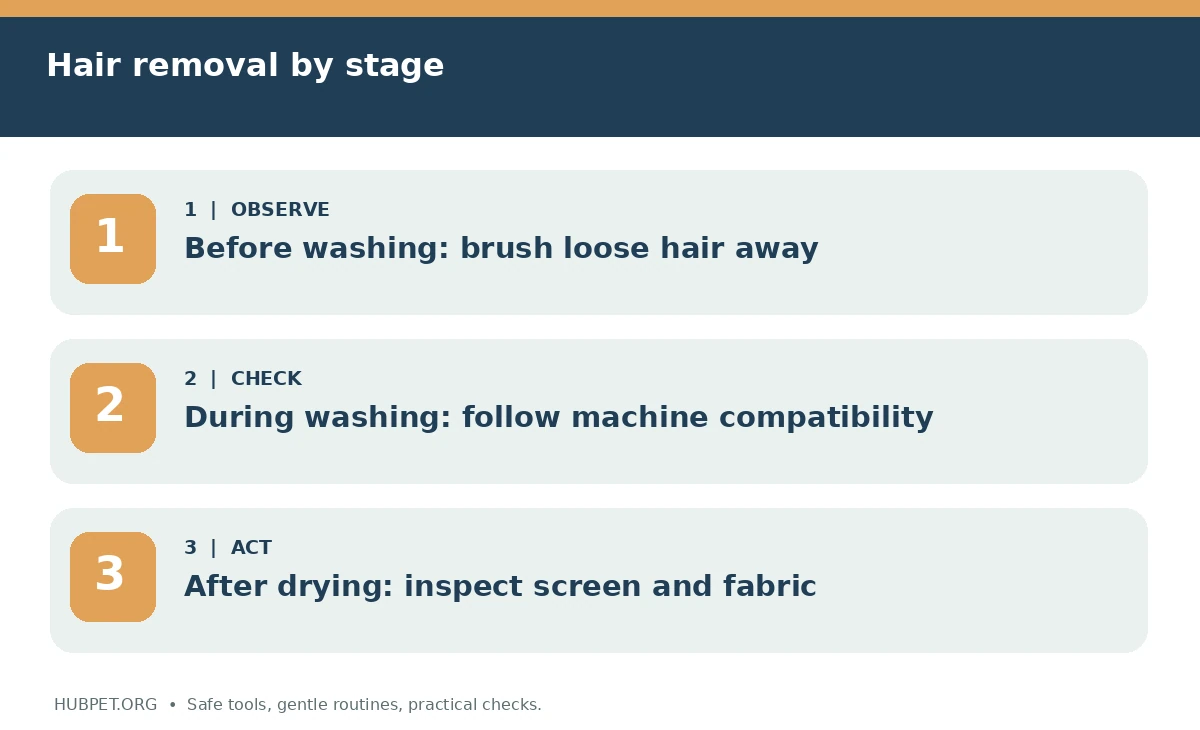
Remove the loose hair before the washer
Shake washable pet blankets outdoors where practical, and collect the biggest clumps with a lint brush or rubber tool suited to the fabric. On clothing, test any adhesive roller on a hidden seam before working across delicate knits. Removing visible hair before the load can reduce what the wash water and machine must handle.
Avoid rubbing aggressively at fleece, cashmere, or loosely woven fabric. A damp microfiber cloth may lift hairs without intense friction on some textiles, but let the item dry as its care label requires. If a blanket has embedded soil, treat that hygiene problem separately; a hair remover does not clean contamination.
Understand washer hair catchers and their limits
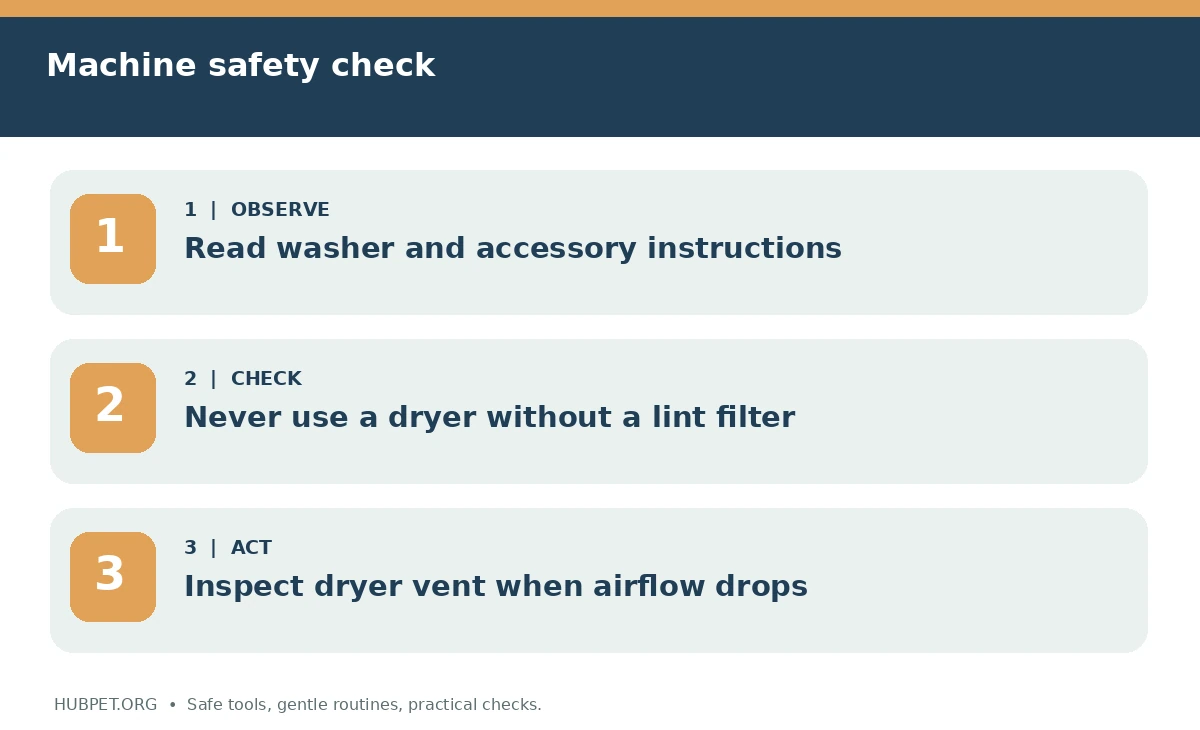
Reusable floating disks, mesh catchers, and textured balls promise to intercept hair as water moves. Their effectiveness varies by drum style, fabric mix, water level, and how freely items circulate. A product designed for a top-loading agitator may be unsuitable for a high-efficiency front loader. Read both the accessory directions and machine manual.
Reject products that can break into small pieces or shed abrasive fragments. Inspect before and after each use, and never force an accessory into a machine that prohibits it. The ability to trap a few hairs during a demonstration does not establish reliable performance across different laundry loads.
Separate washing from hair removal claims
Detergent loosens dirt and oils, while mechanical agitation may release some hair. Neither process guarantees that fur will leave every fiber. Choose detergent amounts and wash temperature according to the garment and machine. The CDC recommends following pet bedding care labels and recognizes the washer as a way to clean suitable soft pet items.
Do not add vinegar, essential oils, solvents, or improvised chemicals simply to “dissolve” fur. These claims may be unsupported, could affect equipment, and can create avoidable exposure risks. Store laundry products where pets cannot reach them, especially concentrated pods and softener sheets.
Keep the dryer lint screen and vent clear
Fabric and loose hair can load the lint screen quickly. Clean it before or after every drying cycle, following the manufacturer’s directions. An overfilled filter can restrict airflow; a blocked exhaust path creates a fire hazard. Check whether an unusually long drying time calls for service rather than running the dryer again without inspection.
Inspect the venting system periodically and arrange qualified maintenance when airflow is poor. Never run the dryer without its lint filter. These precautions matter even when a marketed dryer ball seems to gather fur. The accessory is not a substitute for an unobstructed screen, drum, and vent.
Compare balls, rollers, and postdry tools fairly
Silicone or textured balls can tumble with some loads if their labels permit it, but compatibility with heat and delicate fabric must be verified. A reusable lint roller acts after drying and lets you target a sleeve or cushion cover. A washable fabric brush removes collected hair without putting another object inside the machine.
Match the tool to the specific chore. A ball that damages a fine sweater is a poor choice even if it captures hair. A strong adhesive roller can leave residue or snag loops. Prefer clear cleaning instructions and replace damaged accessories rather than relying on a claimed number of reuse cycles.
Avoid dryer sheets as a pet-hair shortcut
Some online tips propose wiping pets, pet beds, or laundry with dryer sheets. That mixes a household-cleaning task with animal exposure. ASPCA warns that dryer sheets and many fabric softeners can contain cationic detergents, and swallowed sheets can cause serious injury or obstruction. Keep them inaccessible to pets.
Never rub a chemical sheet on a dog or cat to control loose fur. If your pet chews or swallows laundry supplies, contact a veterinarian or animal poison-control service promptly. Do not improvise a remedy based on a household cleaning hack.
Adapt the routine to blankets and clothing
A washable dog blanket can often tolerate more frequent care than a delicate work shirt. Separate heavily fur-covered items when practical, but follow material and color-care directions rather than relying on a universal wash setting. Large bedding needs room to circulate; an overloaded drum may rinse poorly and hold hair inside folds.
After washing, check seams and pockets before drying. Remove remaining clumps by hand, then use the permitted drying method. Pet bedding should return to the animal completely dry. For fragile fabric, air drying and a gentle postdry brush can be safer than experimenting with high heat or abrasive accessories.
Protect the washer and organize maintenance
Inspect drum seals, washer filters if the model has an owner-serviceable one, and accessible surfaces according to your manual. Do not dismantle a machine to retrieve fur from hidden components. If the machine fails to drain or leaves debris in repeated loads, arrange appropriate maintenance.
Keep reusable hair catchers clean and dry between loads so they do not become a source of odor. Store small balls or discs out of reach of chewing pets. A cracked catcher is a discard item, not something to glue and put back into the spinning drum.

Use a simple performance test before buying more
Try a controlled comparison on two similar loads with and without a permitted accessory. Record visible hair left on a dark garment, the hair caught by the tool, and any fabric pilling or washer noise. One test cannot prove a universal result, but it can reveal whether a gadget earns a place in your routine.
If you notice little improvement, focus on prewash hair removal, sensible load size, and aftercare. Avoid piling multiple accessories into the drum because a product page promises stronger results. Maintenance and realistic expectations will matter longer than novelty claims.
How We Research
Our editorial process compares animal-welfare, veterinary, government, and consumer-safety guidance relevant to pet hair removers for laundry. We separate supported safety principles from marketing claims and review practical use, maintenance, and limits. This is independent desk research, not hands-on product testing or veterinary endorsement. Sources were reviewed on October 26, 2026. Read more about HubPet and our editorial approach. This guide does not replace veterinary advice for your individual animal.
Sources
CDC: About Cleaning and Disinfecting Pet Supplies. Accessed October 26, 2026.
U.S. Consumer Product Safety Commission: Overheated Clothes Dryers Can Cause Fires. Accessed October 26, 2026.
ASPCA: What Pet Parents Need To Know About Corrosive Household Products. Accessed October 26, 2026.
No. Performance depends on the item, washer, and type of hair. Check machine compatibility and use the catcher only as directed.
Yes. Clean the lint screen before or after each load and check the vent system according to the appliance instructions. Do not run the dryer without its filter.
No. Dryer sheets are household chemical products, not grooming supplies. ASPCA warns that chewing or swallowing them can be harmful; keep them away from animals.
Try a gentle fabric-safe roller or brush before washing, follow the care label, and avoid abrasive tools or unsupported high-heat shortcuts.
More detergent does not guarantee hair removal and may leave residue. Use the amount recommended by the manufacturer for the load and water conditions.