
This article provides general vehicle-accessory and pet-care information, not a crash-test certification or veterinary advice. Follow your vehicle and restraint manufacturer instructions. For individual pet health or travel concerns, consult your veterinarian. Read our veterinary disclaimer.
A rear-seat window shade can reduce direct sunlight on a resting dog, yet it cannot make a parked vehicle safe in hot weather. Your dog still needs a properly fitted restraint, fresh airflow, and a temperature-conscious travel plan. Start with the vehicle window shape and a driver-visibility check, not a promise on a product label. This guide separates mesh shades from roller and static-cling styles, then explains how to check them for loose edges, obstructed views, and misleading cooling claims.
Identify which rear windows need shade
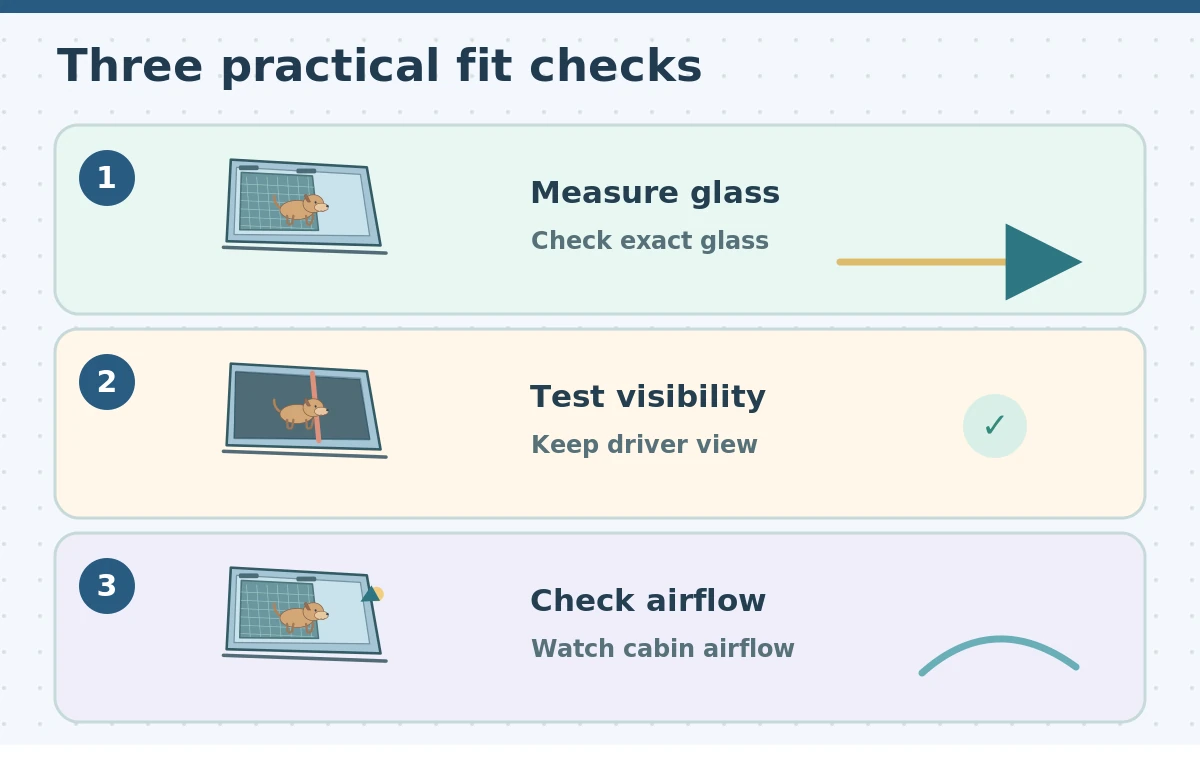
Observe the sun through each rear door window on a typical route, with the vehicle parked. Check the small quarter window and the main moving pane separately. A shade fitted to the wrong panel may block a useful driver view while leaving the dog in direct sunlight. Measure the visible glass area, including tapered corners, and compare it with the manufacturer’s mounting dimensions. Do not place a large opaque shade merely because it covers more glass; safe visibility remains necessary for every occupant.
Differentiate cling, suction, and roller designs
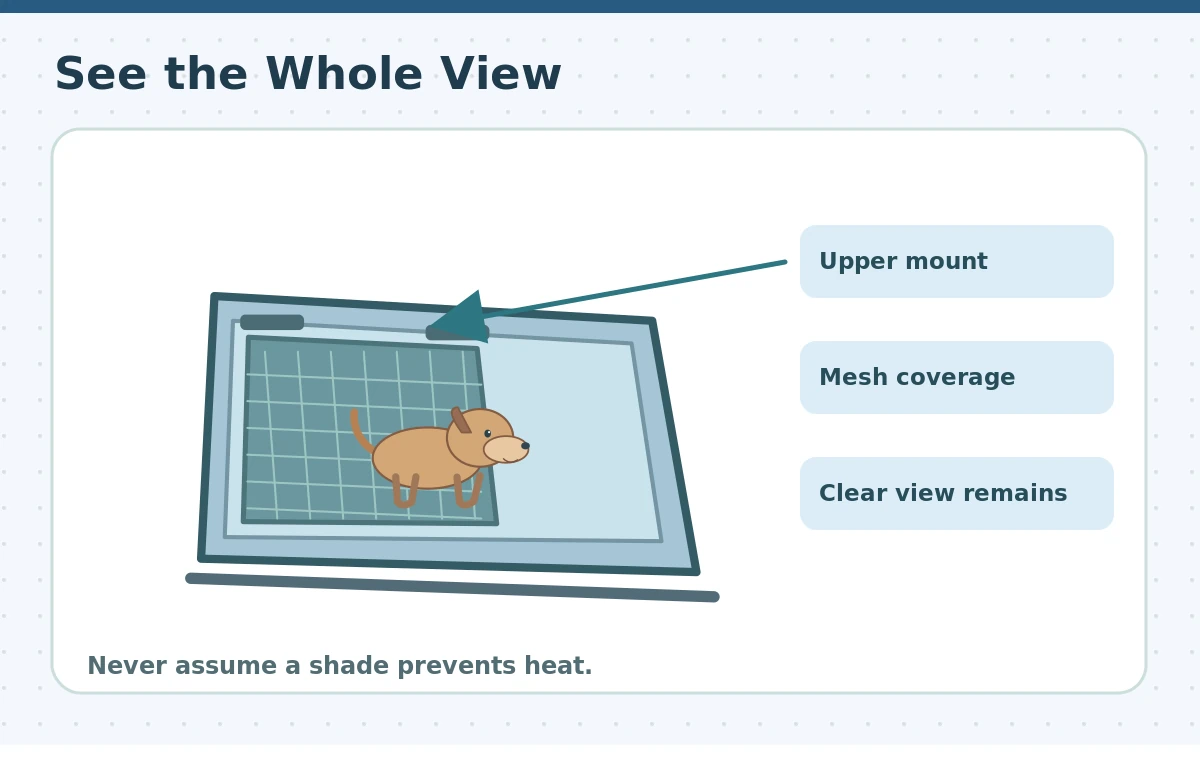
Static-cling panels attach directly to glass and usually remove without hardware. Suction shades use several small cups that can loosen with heat or dust. Roller shades need a top mount and lower holding point, which adds hardware near the window. Some full-window mesh socks fit over an open door and may interfere with seals or window movement. Each design has different failure points. Choose the one your vehicle allows, then follow both instruction sets rather than mixing mounts.
Check sightlines from the driver seat
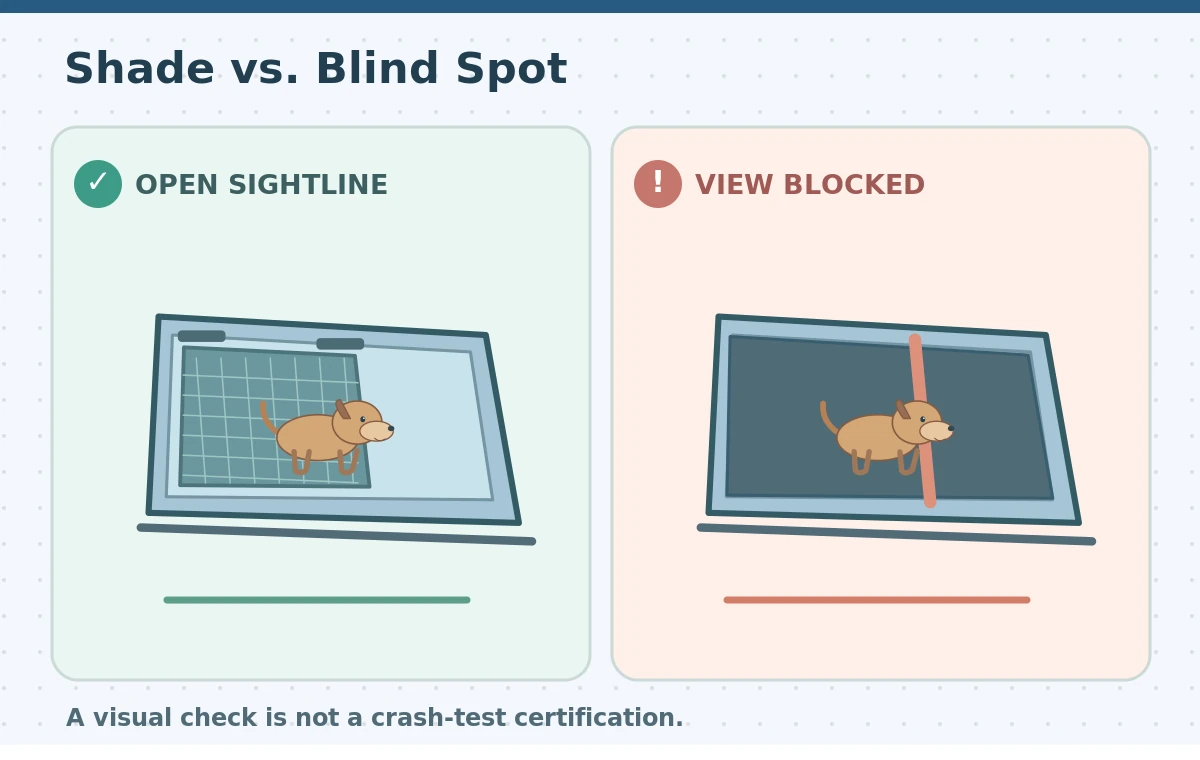
Before fitting any window shade, sit in the driver’s position and check rear side visibility, reversing sightlines, and mirrors. Repeat with the shade installed, doors closed, and headrests in their normal positions. Do not obscure camera views, warning markings, or any window where visibility rules require an unobstructed view. State tint and vehicle rules vary; check local requirements when selecting a darker shade. If a shade creates a blind area, remove it. Protecting a pet from glare cannot justify compromised driving safety.
Test window movement and child locks
A shade near the glass track can catch as a window moves. With the car parked, an adult should slowly test operation and watch the mount. Stop if the fabric, suction cup, cord, or roller bar shifts into the window path. Keep pull cords and dangling straps out of a dog’s reach. Use the car’s child lock settings when needed; a shade does not prevent a pet from activating a switch. Confirm the door still closes fully and weather stripping remains seated.
Understand the strict limit of shade for heat
AVMA warns that cars can overheat dangerously even with cracked windows or shade. A mesh screen may reduce sun glare on one patch of fur but cannot replace ventilation, cooling, water breaks, or a safe destination plan. Never leave a pet unattended in a parked vehicle. The exact temperature inside changes with sun, time, car design, and weather. No universal shade can promise to hold the cabin at a safe temperature. Plan trips to avoid heat exposure in the first place.
Confirm airflow reaches the pet
A blocked vent, covered carrier mesh panel, or deeply enclosed seat area can remain stuffy even behind a shade. Assess airflow where the secured dog actually rests, not only at the dashboard. Keep HVAC outlets and crate ventilation unobstructed. If the shade flutters into a vent or creates a pocket trapping heat against a carrier, change its position. Dogs with breathing issues or heat sensitivity need individualized veterinary advice before long or hot journeys; a sunshade is not medical protection.
Evaluate material and attachment durability
Check the hem, fabric tension, roller spring, and small plastic clips for rough edges and loose pieces. A dog might paw or chew exposed hardware, creating a swallowing hazard. Use a material that withstands routine cleaning and does not leave adhesive on interior film or tint. Check the vehicle manual before applying cling or adhesive to specialized glazing. Test each suction cup after temperature changes. Anything that drops into the footwell should be removed before driving.
Avoid risky combinations with pet seating
A dog must not ride on the driver’s lap or lean out of an open window. Merck Veterinary Manual and AVMA recommend restraint and discourage head-out-window riding. Fit the shade after the travel carrier or harness so that the cover does not hide buckle access or an exit route. If a window shade requires an open window for installation, confirm this will not allow the pet to approach the opening. Do not tie the shade to the dog or to restraint straps.
Create a two-minute pre-trip check
Check that every attachment is seated and every shade edge is outside window mechanisms. Confirm rearward visibility and the dog’s secure travel position. Turn on ventilation and assess how direct sun falls on the dog at the planned departure time. Keep drinking water ready for travel breaks. On arrival remove any loose panel before opening doors so that it cannot fall or distract another occupant. A quick test on each trip is more reliable than a one-time installation.
Know when skipping the shade is wiser
If tint rules, sightline needs, narrow glass, or unstable mounting make the shade unsuitable, leave it off. Instead plan routes and departure times, position a properly secured carrier away from direct sun when permitted, and maintain effective cabin cooling. A mesh shade is one comfort accessory among many. It does not carry crash-test protection, guarantee climate control, or make an unattended car safe. Follow veterinary advice when your dog is particularly vulnerable to overheating.
How We Research
HubPet compared recommendations from veterinary and animal-welfare organizations, along with principles of vehicle compatibility and ordinary accessory upkeep. We distinguish upholstery protection, sun reduction, and surface grip from devices intended to restrain a pet during a vehicle crash. Specific routing, fit, allowable attachment points, and safety equipment depend on the vehicle and product manuals. This article does not independently crash-test accessories or certify any brand. Our original illustrations demonstrate inspection concepts, not a universal vehicle installation. Read more about our editorial research approach.
Sources
AVMA: Traveling with your dog or cat — source guidance on secure pet travel, ventilation, or restraint limitations.
ASPCA: Travel safety recommendations for pets — source guidance on secure pet travel, ventilation, or restraint limitations.
Merck Veterinary Manual: Traveling by Car With Pets — source guidance on secure pet travel, ventilation, or restraint limitations.
AKC: Dog Car Safety Training — source guidance on secure pet travel, ventilation, or restraint limitations.
American Red Cross: Pet Travel Safety — source guidance on secure pet travel, ventilation, or restraint limitations.
No. Never leave a pet unattended in a parked vehicle. Shades do not prevent dangerous cabin heating.
Only if the vehicle and shade instructions expressly allow that configuration. Test every window function while parked.
No. Coverage, mounting, visibility, laws, and ventilation all matter. Darker material can create unsafe blind areas.
They can loosen with heat, dirt, and repeated use. Inspect each cup and replace a shade that will not hold securely.
Take heat stress seriously. Move to a safe cool place and contact a veterinarian promptly about concerning signs rather than trusting the shade.