
Compare crunchy, soft and lickable feline snacks with a practical label and portion checklist. For individualized nutrition restrictions or health concerns, follow your veterinarian’s guidance and see the veterinary information disclaimer.
Start with the job the treat needs to do
A cat treat might reward a calm carrier approach, make a grooming session easier, or offer a small moment of play. Those are different jobs. Before comparing flavors, decide whether you need a tiny repeatable training reward, a spreadable lickable snack or a crunchy piece that can be placed inside an enrichment toy. For a cat that refuses hard pieces, choosing a smaller soft texture matters more than a fancy ingredient list. Treats should support the regular diet rather than become the main meal.
Read calories before counting pieces
A pouch of feline snacks can look lightweight while still supplying a meaningful share of the day’s energy. Look for calories per piece, per tube or per package, then work out what you actually plan to give. The VCA veterinary nutrition guidance places treats and extras within roughly ten percent of daily calories, not ten percent of food by volume. That ceiling is not a prescription for every cat. Ask your veterinarian for an individual allowance if weight, age or a prescribed diet makes the calculation unclear.
Compare textures with the way your cat eats
Crunchy pillows, soft bites, freeze-dried pieces and smooth pastes behave differently in a cat’s mouth. Watch whether the animal chews comfortably, drops pieces, bolts food or avoids an unfamiliar texture. A hard piece may be unsuitable for a cat with oral pain, while sticky paste can leave residue on furniture and fur. Never assume a treat cleans teeth simply because it crunches. For suspected dental discomfort, get veterinary advice instead of testing progressively harder snacks.
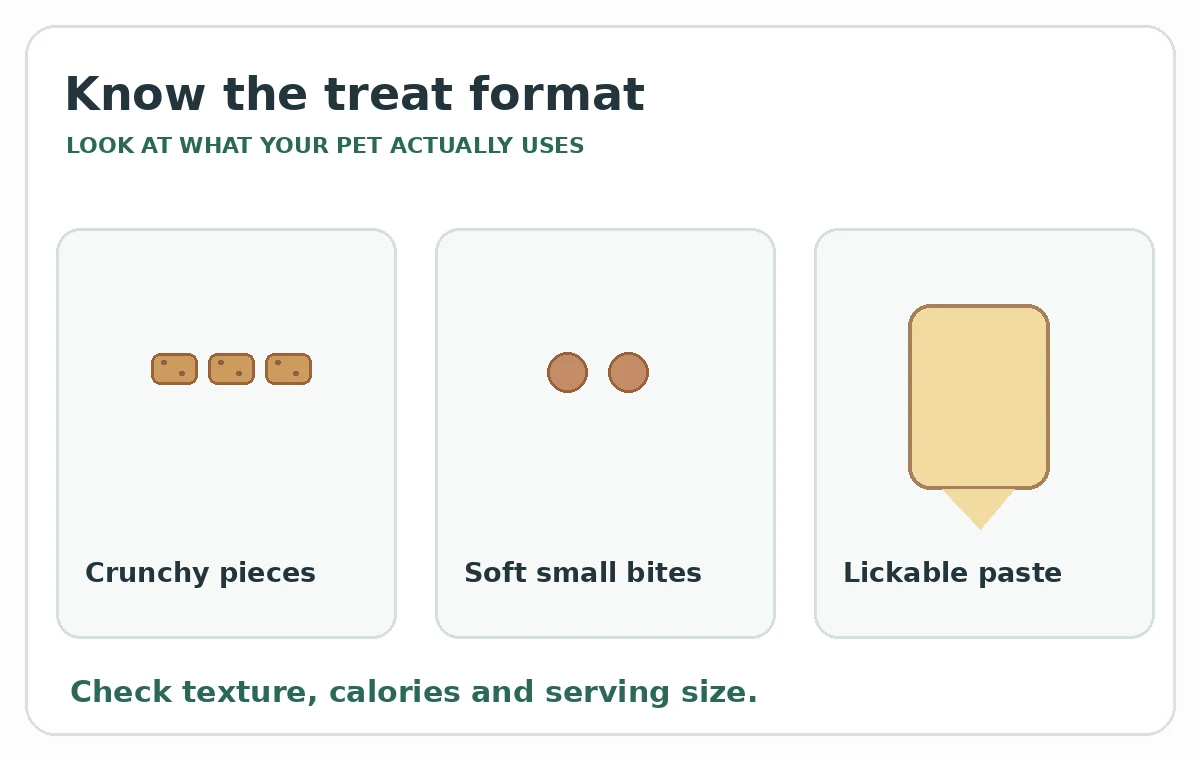
Separate ingredient claims from real information
Labels may feature words such as natural, premium or limited ingredient, but those terms do not explain the actual portion size or calorie contribution. Read the ingredient statement and the feeding directions rather than relying on imagery. Identify any ingredients your cat must avoid under its individual veterinary plan. A single-protein label is not proof that a treat works for a food allergy. When a cat needs an elimination diet, ask the veterinary team before adding any treat, flavored supplement or oral reward.
Use lickable treats without encouraging bites
For a paste in a tube, dispense a small amount onto a clean dish or spoon rather than squeezing the packet into a cat’s mouth. This keeps fingers away from excited teeth and makes portions visible. Offer the cat the option to step away. Do not let children force contact during feeding. If you spread paste on a lick mat, inspect the surface for damage and wash it immediately afterward. Shared tubes can also pass saliva between cats, so a separate portion for each animal is simpler.
Make treats count during training
For a short training session, break a soft treat into tiny portions and reward one clear action at a time. A cat may respond better to a choice of location or a favorite toy than another bite of food. Keep training under the animal’s comfort threshold and stop if the tail lashes, ears flatten or the cat walks away. Using a portion of the usual complete food can sometimes make the calorie budget easier. Never withhold the normal meal to pressure a reluctant cat to train.

Avoid competition in multi-cat homes
Two cats beside one treat bag do not necessarily share willingly. Give each cat a separate station, maintain distance and distribute portions in predictable order. If one cat rushes across the room to steal food, close a door or provide a visual barrier for brief supervised treat sessions. Do not toss food between cats that already guard resources. Treats should lower pressure, not create a daily confrontation. Observe which cat actually swallowed each piece before recording the portion.
Store the bag and keep its identity
Close dry treat packaging tightly and store it in a cool, dry place the cat cannot enter. FDA advises retaining original labels and lot information because those details matter during recalls or product complaints. Refrigerate opened wet or paste products according to their own label and discard uneaten portions promptly. Keep the serving spoon clean. Do not combine the last crumbs from several different bags into an unmarked jar; this makes ingredients, freshness and feeding amounts difficult to track.
Build a practical label comparison
When choosing between two treats, write down serving form, calories per piece or tube, ingredient restrictions, texture, storage after opening and the number of rewards you can reasonably use. Ignore marketing claims that cannot be checked against a label or veterinary advice. Start with one small sample instead of buying a large bag of a new product. A cat that eagerly eats a trial piece may still develop digestive upset with a sudden large serving. Gradual changes make cause and effect easier to observe.
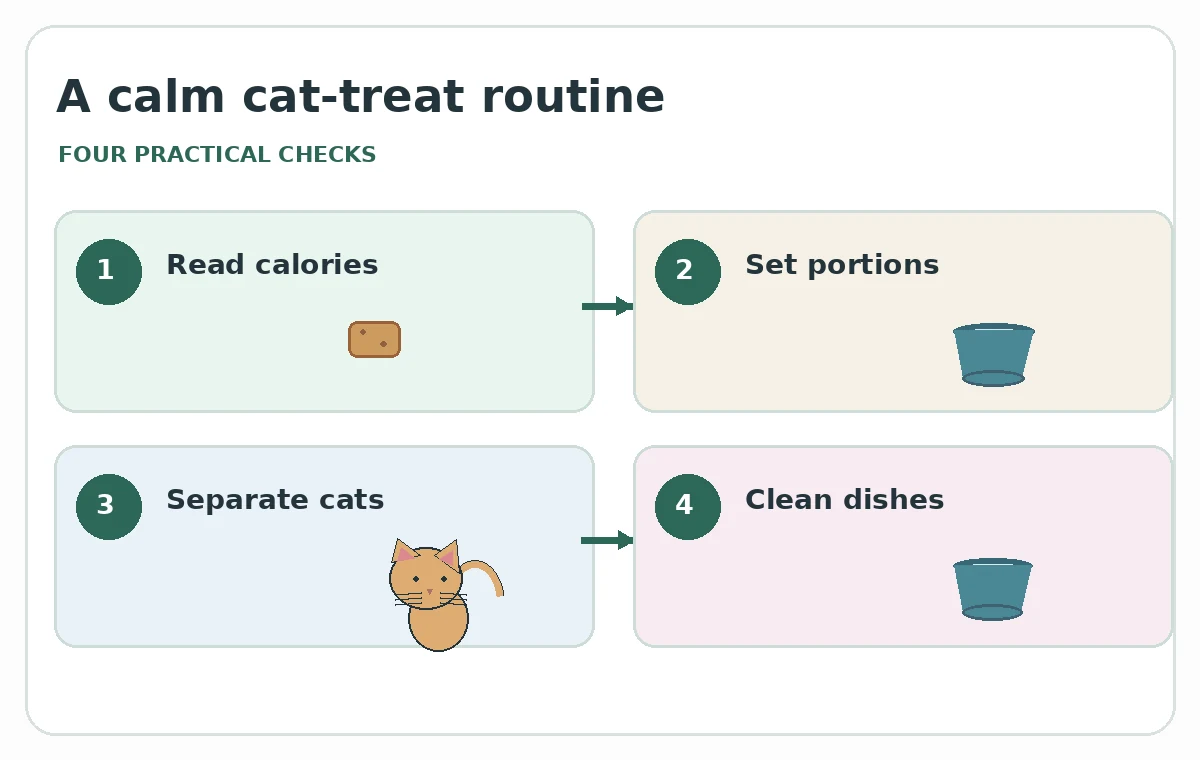
Know when a snack should stop
Stop offering a new treat if vomiting, diarrhea, coughing, gagging or marked food avoidance follows. Check that there is no damaged wrapper or access to a whole bag. A sudden change in appetite or painful chewing warrants veterinary attention rather than another flavor experiment. If a cat is receiving a prescription diet or has a chronic condition, treat selection belongs in the nutrition plan. The best treat is one that the cat enjoys, tolerates comfortably and receives in an appropriate amount.
How We Research
We evaluated feline snacks through veterinary nutrition, public-health, and manufacturer-agnostic safety guidance listed below. The review compares observable labels, practical handling, predictable risks and real household use rather than claiming personal laboratory tests or endorsements. We did not diagnose individual animals, certify retail products, or assign untested performance scores. Product instructions and your veterinary team’s dietary advice take priority. Read our editorial approach. Sources reviewed October 28, 2026.
Sources
VCA Animal Hospitals, feline snacks. Read original guidance. Accessed October 28, 2026.
VCA Animal Hospitals, Weight Management for Pets with Activity Restriction. Read original guidance. Accessed October 28, 2026.
FDA, Proper Storage of Pet Food & Treats. Read original guidance. Accessed October 28, 2026.
FDA, Tips for Safe Handling of Pet Food and Treats. Read original guidance. Accessed October 28, 2026.
Safety note: Treats and food puzzles are optional enrichment, not substitutes for complete nutrition or veterinary care. Stop use if choking, oral injury, distress or suspected toxicity appears; seek urgent veterinary assistance for emergencies.
No. Most treats are not complete and balanced, so they should remain a small addition to appropriate regular meals.
Choose a texture your cat handles comfortably, then compare calories, ingredient restrictions and storage needs.
Separate small portions onto individual clean dishes to monitor each cat’s intake and avoid competition or shared saliva.
Do not replace regular meals with snacks. Reduce treat opportunities and ask a veterinarian about persistent appetite changes.
Follow the package directions, retain the label and lot number, and refrigerate opened wet products when instructed.