
This guide provides general pet travel and product information, not veterinary or airline approval advice. Contact the operating airline for current rules. If a pet is ill, in pain, or struggling to breathe, consult a veterinarian. See our veterinary disclaimer.
Underseat dog carriers have two separate jobs: provide a suitable enclosed space for a small dog and meet the space and handling rules of a particular flight. A bag that matches a shopping listing’s dimensions can still fail because handles, stiff trim, and the real space below a specific seat differ. The opposite shortcut is also risky: choosing an extremely small bag simply to fit the aircraft. Start with the dog’s natural resting posture, measure the carrier both inside and outside, and ask the airline about the booked route and seat. This is a cabin-carrier guide, not a checklist for animals traveling in the cargo hold.
Start with the airline and the booked seat
The FAA does not publish one universal underseat carrier size for every commercial flight. Instead, airlines set their cabin pet policies, and carriers must be small enough to stow under the seat without blocking the aisle. Before buying, contact the operating airline, not just the company printed on a booking confirmation. Ask about pet reservations, eligible seating positions, carrier dimensions, permitted carrier construction, and whether a connecting flight uses a different aircraft or operator. Keep the current written guidance available. Do not assume that an accessory labeled airline-approved overrides the actual carrier policy or a flight attendant’s instructions.
Measure the outer bag with everything attached
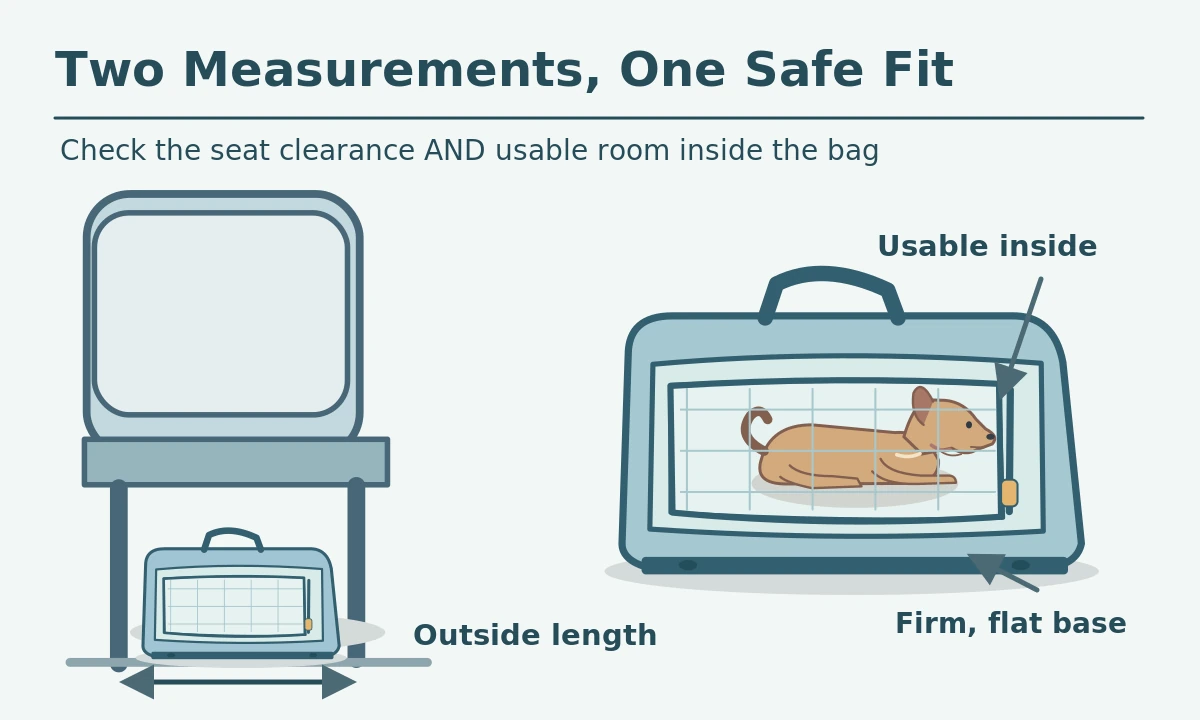
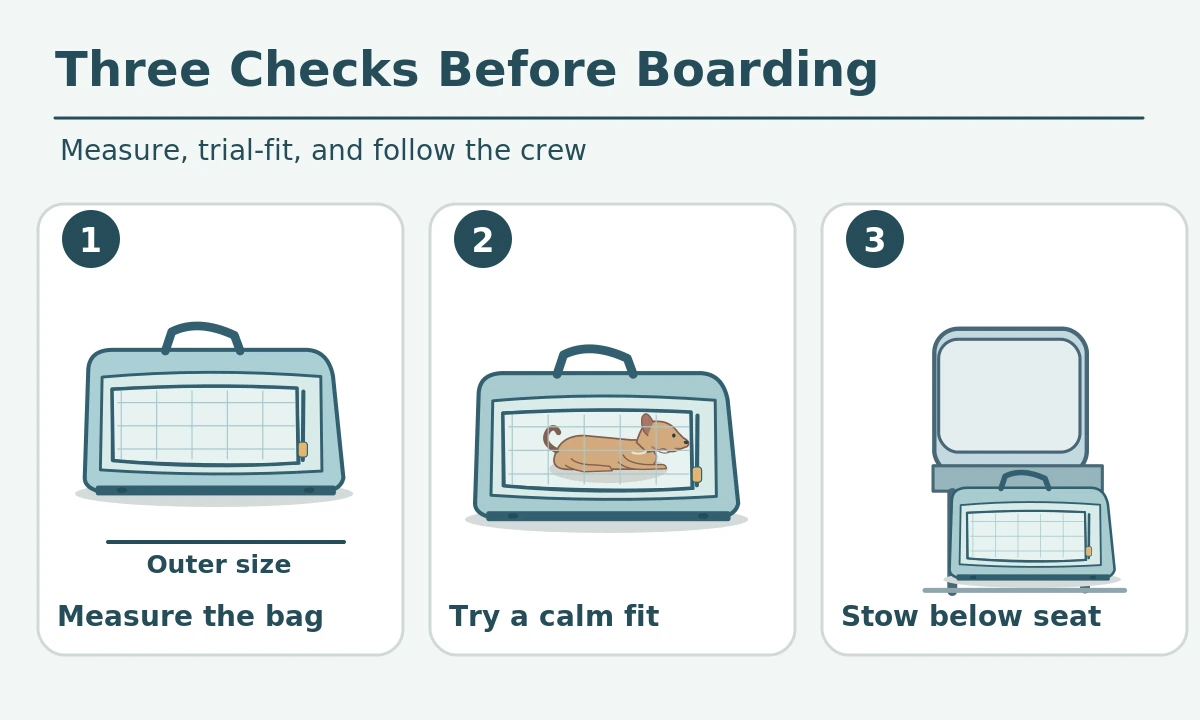
Measure length, width, and height with the carrier standing as it will travel. Include a rigid base, frames, side pockets that cannot be flattened, protruding feet, and handles if they change the stowed shape. Check any permitted flexible compression carefully; a mesh roof that bows inward against the dog is not useful flexibility. Put the empty carrier beside a ruler or tape and record the maximum exterior dimensions. Different aircraft rows can have different obstructions beneath a seat. If the airline cannot confirm your setup, do not plan on squeezing an oversized carrier into the space.
Check usable interior space separately
The dimensions advertised by a seller usually describe the outside, not the area available for the dog. Thick padding, curved corners, a suspended bottom, and a domed roof reduce the interior. Invite the dog into the open carrier at home, then observe whether it can settle naturally and reposition without pressing hard against fabric walls. The dog should not need to curl into an unusually tight shape just to close the zipper. If fitting the aircraft requires an unsuitable space for the animal, discuss another travel arrangement with your veterinarian and airline rather than forcing the fit.
Understand proper underseat stowage
The FAA treats an allowed cabin pet carrier as carry-on baggage. It has to fit fully beneath the seat without interfering with access to the aisle, and crew must ensure proper stowage during ground movement, takeoff, and landing. Follow crew instructions throughout the flight and the airline’s requirements for keeping the animal inside. An illustration of a carrier tucked under a seat is a layout concept, not a guarantee about a particular row. Never place a carrier in a walkway or leave part of it protruding where someone could catch a foot.
Choose a base that stays level
A carrier that folds inward under its own weight may be easy to pack yet uncomfortable and unstable when occupied. Look for a base panel that supports the floor evenly when lifted by the designated handles. Place the loaded carrier on a level surface and check that the bottom does not sag into a deep hammock or twist at one corner. Test handles and shoulder straps without swinging the dog. A removable pad should lie flat, not roll up over the doorway. Never add a homemade rigid brace that creates sharp edges or compromises a folding mechanism.

Inspect mesh, access, and closure details
Keep breathable openings clear when you set the carrier against nearby surfaces in its expected orientation. Inspect the mesh for broken fibers or openings large enough for claws to snag. Run each zipper from end to end several times; make sure corners meet without leaving a gap near the dog’s nose. Reinforced corners and secure zipper pulls are useful only if they function on the actual carrier. A side entry can be easier for a reluctant dog at home, but all openings must stay securely closed while traveling. Never cover all ventilation with a privacy cloth.
Plan for the dog, not a product rating
Weight limits matter, but weight alone does not determine a fit. Two dogs of the same weight may have very different leg length, chest depth, head shape, and preferred resting postures. Measure while the dog stands naturally, compare those observations with the usable floor and height, and check how the dog chooses to lie down. Dogs with breathing problems, painful joints, travel distress, or a short muzzle warrant veterinary discussion before a flight. A larger, better-ventilated bag is not medical protection, and never use sedation to make a poor fit possible.
Rehearse at home with short sessions
Leave the carrier available in a calm room, door secured open, and allow the dog to investigate voluntarily. Reward easy approaches, then brief moments standing and resting inside before you close the doorway for a very short interval. Gradually practice lifting and setting the carrier down while keeping it level. Stop if the dog struggles or becomes unusually distressed; return to easier steps. Do not try the first fully closed practice during the drive to the airport. The AVMA recommends helping pets become familiar with the travel carrier in advance.
Make a final departure-day fit check
A day or two before traveling, reconfirm the airline’s current requirements and any pet reservation. Recheck the zipper, handles, mesh panels, base, and absorbent liner. Pack identification and relevant veterinary paperwork based on the route rather than assuming every destination asks for the same documents. On travel day, check that the dog can rest naturally inside before you leave home. At boarding, place the carrier exactly where crew directs and ensure no panel folds into the dog’s space. If the pet becomes ill or struggles to breathe, seek professional help immediately.
How We Research
We compared the FAA rules for in-cabin pet containers with travel and carrier-familiarity guidance from the American Veterinary Medical Association. Where relevant, we reviewed USDA APHIS information about air travel equipment and the travel-security preparation notes identified in Sources. We then translated these requirements into dimensions, physical parts, inspection steps, and practical limits for the particular carrier topic. Product-specific construction, measurements, approved seating, and destination paperwork require current manufacturer and airline confirmation. No carrier was laboratory tested or certified by HubPet. Learn about our approach at About HubPet.
Sources
FAA, Flying with Pets. Read the guidance.
FAA, Cabin Safety: Pets FAQ. Read the guidance.
AVMA, Traveling with Your Dog or Cat. Read the guidance.
Safety note: Never place a live animal on a security X-ray conveyor or leave a pet in a closed carrier exposed to heat. Keep ventilation clear and closure hardware intact. Contact your veterinarian before air travel if breathing issues, medical conditions, or severe distress are concerns; never use sedatives without veterinary advice. Airline size and handling requirements can change.
No. The FAA allows airlines to set cabin pet policies. Check the operating airline and the specific seat and aircraft rather than relying on a universal size label.
No. Weight does not describe body length, shoulder height, or the room needed to rest. Check usable interior dimensions and the dog’s natural posture.
Only within the airline’s permitted limits and never if compression presses on the dog or blocks ventilation. Flexible material does not create more internal room.
No. A marketing label does not replace the airline’s current pet policy, reservation rules, or cabin crew instructions.
Do not force the dog into an undersized bag. Speak with your veterinarian and the airline about an appropriate alternative travel plan.