
This article is general information, not veterinary advice. If your pet seems unwell, is in pain or may have eaten something harmful, contact your vet or an animal poison control line right away. Read our vet disclaimer. A leash harness and collar set promises matching equipment in one package, but a coordinated color is not evidence of a safe fit. The leash, body harness and collar do different jobs, and each has its own measurements and mechanical limits. A set can be convenient when the dog falls within all three size ranges; it can be the wrong purchase if the collar fits but the chest straps rub, or the harness fits but the leash hardware is far too heavy. Compare the components as separate products before deciding whether the bundle saves money or creates compromises.
The short answer: measure the dog’s neck and chest girth, locate the manufacturer’s exact bundled-size mapping, then check the included leash length, clip and webbing. Choose an adjustable, non-tightening harness that allows shoulder motion, a comfortable flat identification collar and a fixed leash you can handle. If one piece fails the fit test, buy the pieces separately rather than forcing the dog into a matching set.
Check three fit questions, not one size label
A dog’s neck circumference does not predict chest girth reliably. Measure both while the dog stands naturally, using the same positions shown on the manufacturer’s chart. Some three-piece sets pair a harness size with a differently labeled collar size, and the mapping may vary among models. Therefore a generic claim such as medium set equals medium collar plus medium harness can be false. Verify the actual measurement ranges for each included piece and allow adjustment room; breed and weight labels are only rough shopping aids.
| Component | Measurement or inspection | Reject the set if |
|---|---|---|
| Harness | Chest girth, neck opening if specified; shoulder and elbow clearance | Straps press across moving shoulders or dog can reverse out |
| Flat collar | Actual neck circumference and comfortable two-finger check | Too loose to retain ID, or pinches the neck |
| Fixed leash | Usable length, width, grip, safe clip and weight | Clip fails to shut or leash is unwieldy for dog |
| Whole bundle | Independent size ranges, replacement/return policy, material quality | One item does not fit and cannot be exchanged |
What a matching set should—and should not—include
A practical collar usually holds identification while the body harness takes the walking connection. Look for a leash with a working gate and sturdy stitched attachment, adjustable harness straps that lie flat, and a collar buckle that closes positively. A bundled poop-bag holder or bow does not compensate for poor hardware. Check for obvious sharp edges, fraying, decorative parts the dog can chew, and labels that state material and care requirements. Match leash width and clip weight to the dog rather than assuming the seller’s size letters apply across all three pieces.
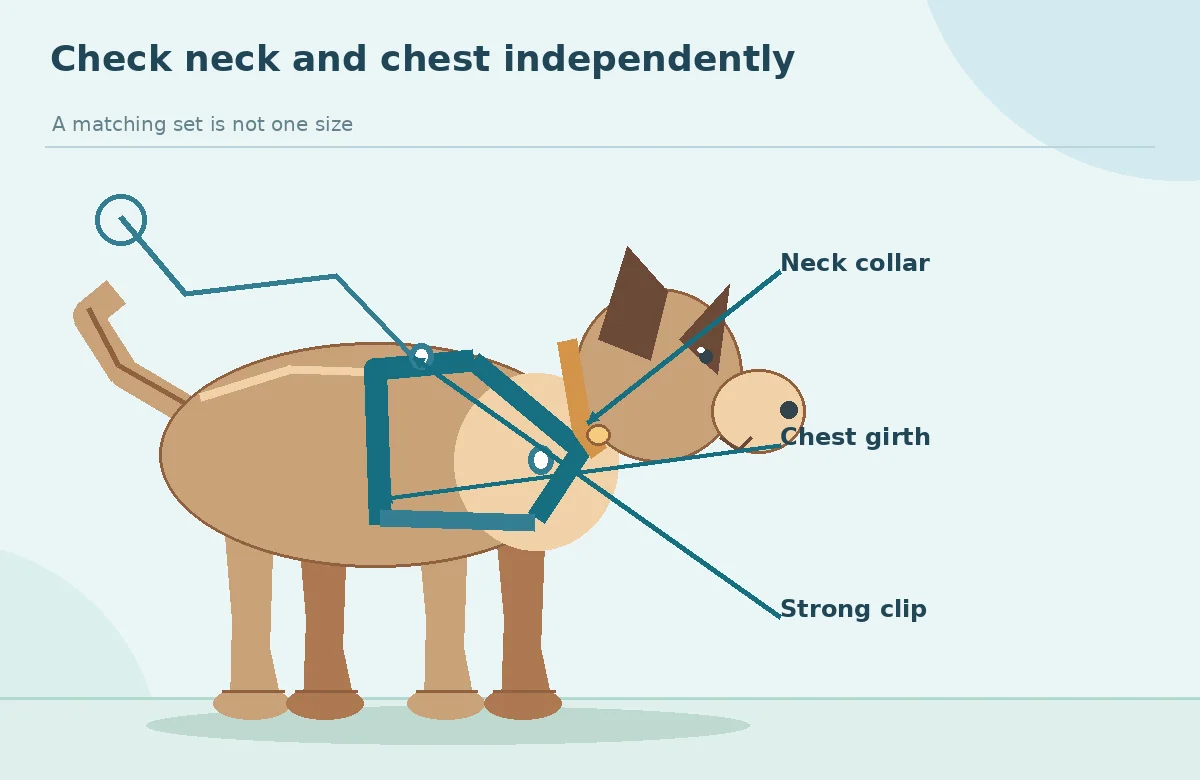
Choose the leash length for the walking setting, not just the bundle photograph. A fixed four- to six-foot lead suits many ordinary walks and basic skills; longer fixed lines are for appropriate open-space recall training. A retractable leash is not a drop-in replacement for a normal short lead. If the bundled lead is too heavy for a puppy or too flimsy to manage a large dog, separate components may be better. Pair the set with a real loose-leash walking plan instead of treating matching accessories as a training aid.
Try the kit on your dog in a calm order
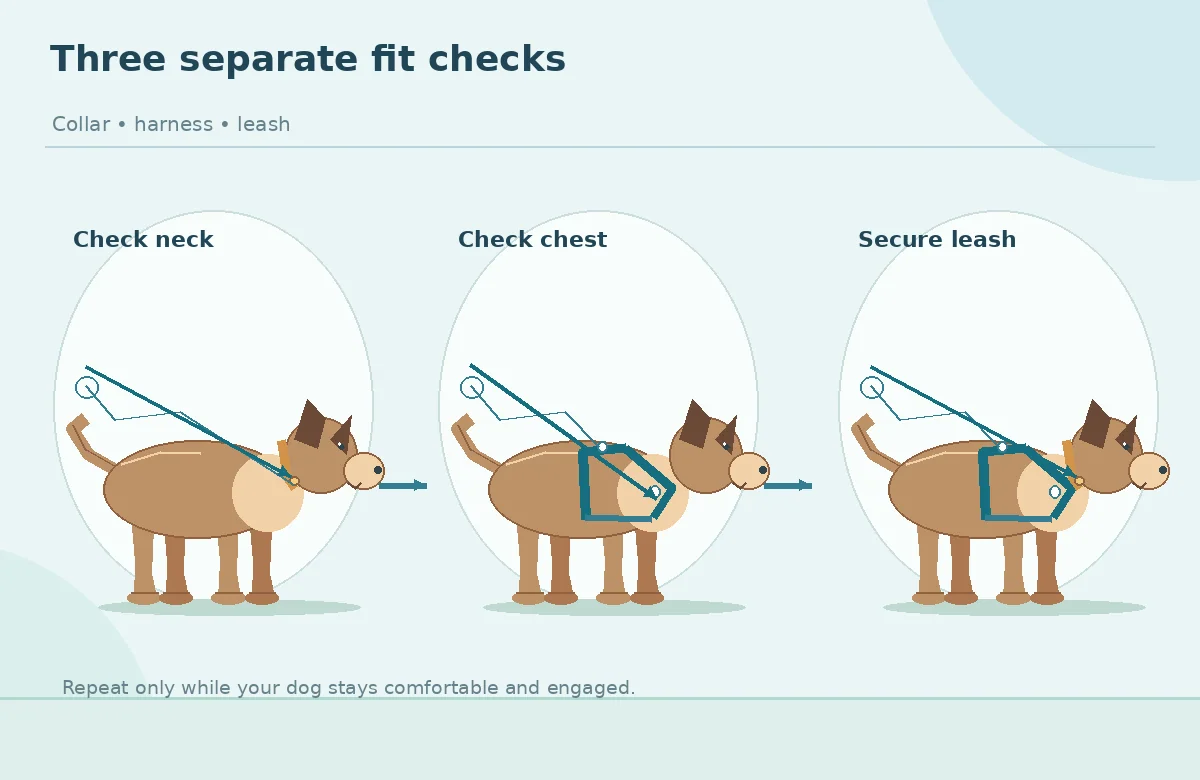
- Write down neck and chest measurements; verify each against the seller’s separate collar and harness chart.
- Let the dog sniff the harness and collar; reward calm approach and voluntary cooperation.
- Fit the flat collar for ID, then adjust harness straps so shoulders move freely and the dog cannot easily back out.
- Check the leash clasp, ring compatibility and a gentle hand tug before stepping outside.
- Take a brief low-distraction walk and recheck rubbing, movement and signs of discomfort before keeping the set.
Size is not a one-time decision for growing puppies, changing coat thickness or weight variation. Repeat measurements periodically and after a growth spurt. Do not tighten a harness simply to stop pulling: an overly tight strap may alter gait or rub skin. A nervous dog may need several very short positive sessions with the gear before the first outdoor walk. If your dog already dislikes handling, make the introduction gentler and consult the reward-based training reference for how to build positive associations.
A buy-or-skip matrix for common set problems
| What you discover | Better choice | Why |
|---|---|---|
| Harness fits but collar is far too loose | Find a different bundle or buy separately | Collar sizing is independent |
| Collar fits; harness blocks shoulder movement | Choose another harness cut | Matching colors cannot fix a bad pattern |
| Leash has unreliable clip or frayed edges | Reject/replace the leash | Clip security is a basic safety requirement |
| All pieces fit and can be serviced or returned | Consider the set | Convenience without compromising safety |
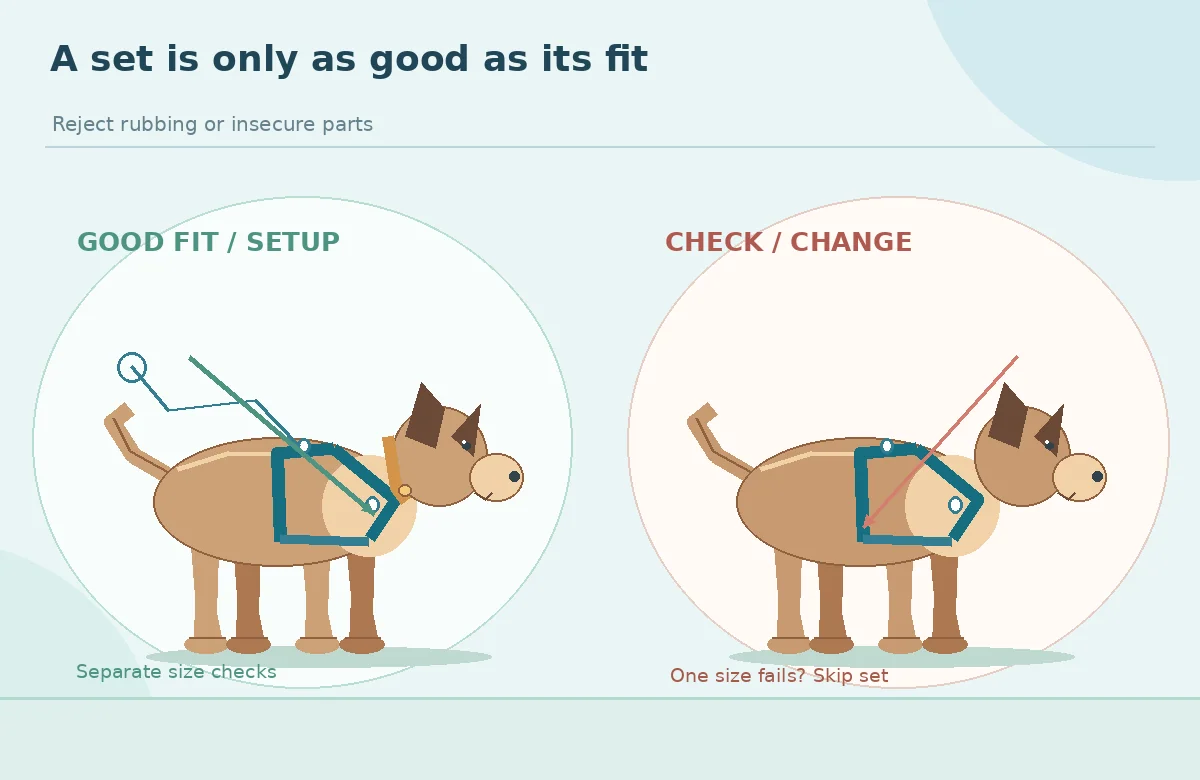
For escape-prone dogs, do a calm backward-fit check in a safe enclosed area before trusting the harness outside. A collar alone may be easy to slip, particularly when a dog has a narrower head than neck. Check that the set’s harness includes a securely positioned leash ring and that stitching around the load-bearing attachment is sound. If a second safety attachment is advised by a professional, choose compatible equipment rather than improvising a risky setup. Consult a veterinarian about discomfort, rubbing sores, coughs on collar pressure or mobility difficulties.
The value question: will you use all three pieces?
Calculate value per usable component, not simply by comparing a three-piece price with three separate sticker prices. A set with a poor collar fit effectively contains an unusable collar. A leash that is too short or too heavy will need replacing. Consider the ease of cleaning, spare parts, return policy and whether the harness will remain adjustable as the dog grows. Matching aesthetics are fine after fit, function and handling have been checked. The goal is a secure dog who moves normally and a handler who can manage a predictable loose lead.
How We Research
We compared VCA and Tufts veterinary equipment advice with a manufacturer’s example three-piece size chart, which illustrates that bundle size labels and included collar labels need not match. We use a maker chart only as evidence of how product sizing can vary, not as endorsement of a brand. Our decision matrix prioritizes fit, freedom of movement, clip security and reward-based introduction over appearance or unsupported value claims. For the general editing standards behind our content, read How We Research at HubPet. Shopping-category links in this article are navigation routes, not statements of sponsorship or partner approval.
Sources
VCA: Collar and Harness Options; Tufts Cummings School: Dog Collars and Harnesses; Example manufacturer: Three-Piece Set Fit Guide; AKC: Choosing the Right Dog Leash; Battersea: Introducing a Collar, Lead or Harness. We use these references for practical fit, handling, and humane-training precautions; their advice does not substitute for an in-person fitting.
Not necessarily. Bundles sometimes pair differently labeled sizes. Read the actual neck and chest measurement ranges for each component.
A suitable collar can hold identification, but for a pulling dog a well-fitted harness generally reduces neck loading during walks.
It can be if each piece currently fits and has adjustment room. Recheck measurements often and replace outgrown gear promptly.
A predictable fixed leash around four to six feet is useful for many everyday walks; select length for the specific environment and local rules.
Do not force the third piece. Exchange it if possible, select another set or buy separate components that each fit correctly.