
A cat may solicit attention, accept a few strokes, then catch a person’s hand with a claw. This is not the same as scratching furniture, and it is not proof that the cat is being spiteful. Some cats have a short tolerance for touch, some become excited by fast movement, and some react because a body area hurts. The safest response is to notice subtle early signals, allow the cat to choose when contact starts and stops, and avoid teaching that grabbing hands is a game. This is general behavior and environment guidance, not a diagnosis. Sudden behavior change or signs of pain deserve veterinary advice. See our veterinary disclaimer.

Read the signals before a scratch
Watch the whole cat, not only the purr. A tail beginning to swish, ears rotating backward, skin rippling along the back, stiffening, turning the head quickly toward the hand, or moving away can mean the interaction should end. Some cats give only a small pause before swatting. Veterinary and welfare guidance emphasize respecting individual preferences and avoiding forced contact. If the cat approaches but turns away as the hand reaches down, do not pursue it. A scratch is often a late signal after earlier, quieter cues have been missed.
Let the cat initiate and set the duration
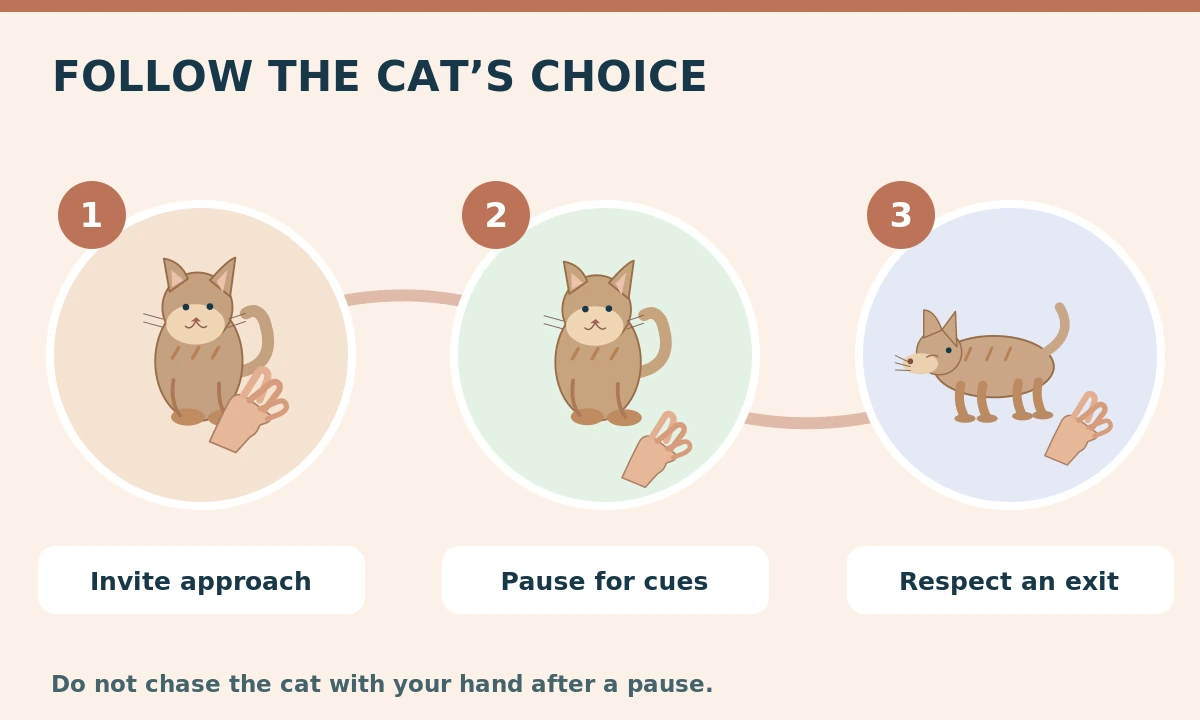
Hold a relaxed hand nearby. Let the cat approach or rub against it. Begin with one or two gentle strokes on a preferred area, often the cheeks or head. Preferences vary between cats. Pause and see whether the cat leans back in. If it walks away, turns its head sharply, or stiffens, stop. This short consent check is more meaningful than counting a fixed number of strokes. Avoid reaching into a hiding spot, holding the cat in place, or lifting it only to complete a petting session.
Change where and how you touch
Avoid repeatedly stroking sensitive areas such as the belly, tail base, paws, or lower back unless the individual cat clearly seeks that contact. Head strokes may be welcome even when long passes along the spine are not. Use a still, open hand rather than tapping, patting, or chasing the cat with moving fingers. Do not touch while the cat is eating, using the litter box, hiding, or sleeping deeply. Teach children to stop as soon as the cat turns away. Keep faces away from paws during close contact.
Make a simple pause-and-choice routine
Approach only while the cat is relaxed and has an easy exit. Offer a brief stroke, pause for a moment, and ask with your body language whether the cat wants more. Reward calm voluntary contact with gentle attention rather than insisting on a treat every time. If the cat leaves, allow the session to end naturally. Practice in a quiet room without competing pets or sudden noise. Do not measure progress by how long you can hold the cat still; measure whether the cat comes back willingly and stays loose-bodied. This protects trust while helping people recognize the earliest stop signals.

Keep hands out of chase and wrestling games
A cat may grab the hand because fingers are moving like prey after a stroke. Do not waggle fingers, tease with sleeves, or turn the interaction into a wrestling contest. Keep play separate and use an appropriate wand or toss toy during supervised sessions. Put strings and small detachable pieces away afterward. When the cat swats, calmly withdraw once it releases rather than yanking or shouting; sudden pulling may worsen scratches. If paws make contact, stop petting and give the cat space. Avoid punishment or restraint that might suppress the cat’s warning signals.
Arrange safe exits and predictable human behavior
Touch is easier to tolerate when the cat can walk off a sofa, bed, or lap without being blocked. Avoid leaning over the cat or trapping it in a corner. In multi-pet homes, check that another animal is not approaching and creating tension during contact. Agree as a household that a tail swish or head turn means the person stops. If a guest or child cannot recognize signals reliably, use a calm, pet-free greeting area rather than asking the cat to tolerate handling. Provide resting spaces where no one pets the cat without invitation.
Consider pain or sudden changes seriously
Sudden scratching during formerly pleasant petting can signal pain, skin sensitivity, or injury. Other health concerns are also possible. Veterinary assessment is appropriate for new aggression, vocalizing on touch, limping, overgrooming, or significant changes in behavior. Do not try to locate a painful area by repeatedly pressing on it. A clinician can help distinguish medical contributors from a handling problem. If scratches break human skin, wash promptly with soap and water and seek medical advice based on wound severity and infection risk. Protect yourself without blaming the cat for communicating discomfort.
Build a lasting routine around voluntary contact
Keep sessions short enough that they usually end before the cat becomes tense. Offer play, scratching stations, and quiet resting areas so petting is one of several ways to interact. Track the situations where scratching occurred: location, body area, duration, and other animals nearby. As you learn the pattern, adjust gently rather than testing the limit repeatedly. A qualified, reward-based behavior professional can support persistent cases after veterinary concerns are assessed. The goal is not to make every cat tolerate hugs or long cuddles. A respectful routine gives the cat a real choice and keeps hands safer.
How We Research
Our editorial approach uses veterinary and animal-welfare guidance from Cornell, ASPCA, VCA, and AAFP/ISFM. Documented principles on normal scratching, resource access, surface preference, and low-stress handling inform specific home checks. The illustrations explain design and behavior; they do not represent clinical trials or independent product tests. If pain, urinary changes, wounds, or abrupt behavior changes occur, veterinary assessment takes priority. Read our editorial approach and research method.
Sources
ASPCA — Destructive Scratching — background on feline scratching, enrichment, safe choice, and humane redirection.
Cornell Feline Health Center — Feline Behavior Problems: Destructive Behavior — background on feline scratching, enrichment, safe choice, and humane redirection.
AAFP/ISFM — Feline Environmental Needs Guidelines — background on feline scratching, enrichment, safe choice, and humane redirection.
VCA — Why cats scratch furniture — background on feline scratching, enrichment, safe choice, and humane redirection.
The cat may want brief contact but become uncomfortable or overstimulated. Notice the first stop signals.
No. Consider the cat’s posture, tail, ears, facial expression, and whether it chooses to stay.
Stay calm, stop moving rapidly, let the cat release, and end the contact without punishment.
With close supervision, they can learn brief consent-based contact; give the cat an easy exit and avoid forced handling.
Sudden touch intolerance, pain, limping, skin changes, or newly escalating aggression warrant veterinary assessment.