
Cat litter box furniture can make a bathroom corner look tidy, but the cabinet is not the bathroom. Your cat still needs an appropriately sized tray, fresh air, a usable entrance, and a safe way to leave. A pretty enclosure that crowds the box or discourages cleaning creates a new problem. See our veterinary information disclaimer for unexpected changes in toileting.
This guide separates ordinary room furniture from cat-friendly litter accommodation. Rather than listing branded cabinets, it provides a tray-first sizing method, an access and maintenance audit, and a reversible trial. AAFP/ISFM guidance emphasizes toileting access and appropriately distributed resources across a home.
Begin with the tray your cat already uses
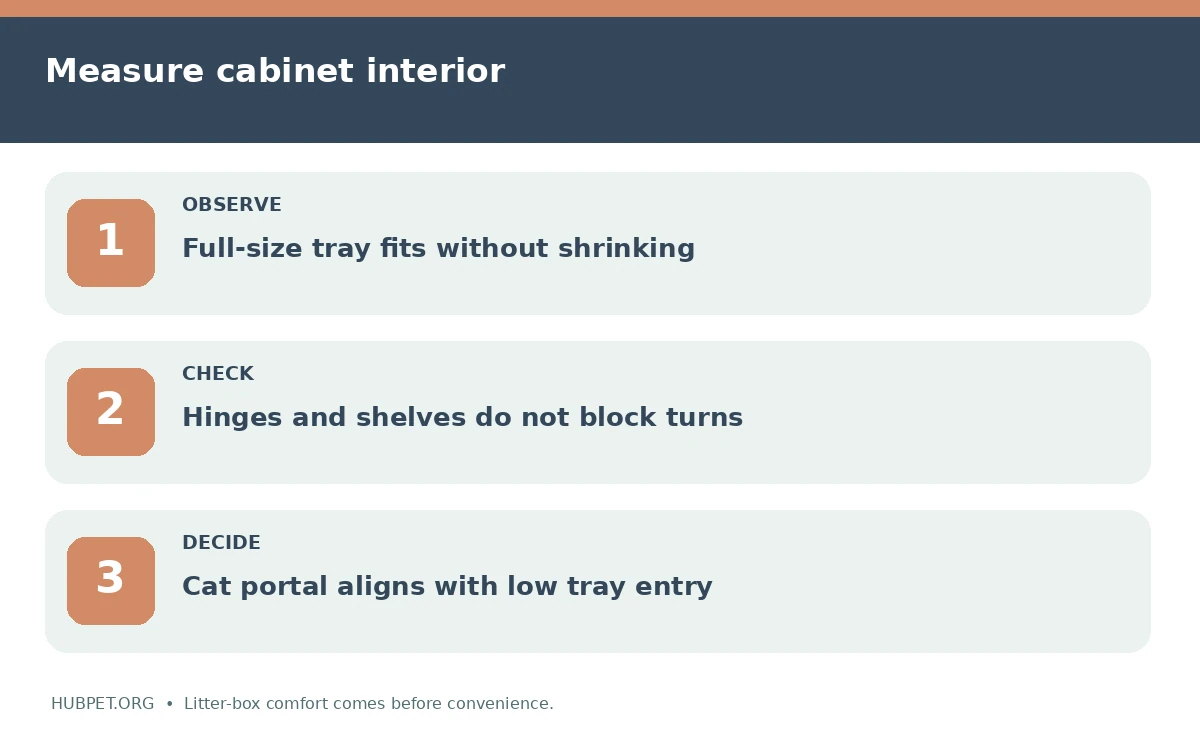
Measure the full outside length and width of the tray, including handles and any rim, before selecting a cabinet. More importantly, confirm that the actual tray gives your cat space to turn and dig. A cabinet should house an adequately large box; never shrink the tray merely to fit an attractive piece of furniture.
Set the tray on the floor inside the proposed cabinet dimensions and imagine a cat entering, turning, and leaving. Hinges, wall braces, litter-scoop storage, and decorative dividers can take away real space. Record the usable internal floor measurements after every obstruction, not the dimensions on the outer furniture listing.
Check the route through both openings
An enclosure creates two entrances: one into the cabinet and another into the tray. Align them so the cat does not need to squeeze sideways across a tight corner. Look for a wide, permanently open cat portal and a low threshold. An older cat should not need to jump over a cabinet lip before facing another step into the litter.
Avoid complex maze passages marketed as litter-tracking systems if the route feels narrow or hard to navigate. Cats need to be able to reverse course if startled. Ensure the opening does not face a closed wall or a route that other pets can block. Test visibility and clearance from the cat’s eye level.
Allow standing height and turning space
A large tray becomes cramped if a shelf hangs over it or a sloped roof reduces usable headroom. Measure from the litter surface to the nearest solid panel, not just the cabinet floor to the top. The cat must stand and adopt a normal toileting posture without brushing its back or whiskers on the housing.
If the cabinet only accommodates a small tray, choose a different cabinet or keep an open box. The AAFP/ISFM guidelines emphasize the importance of generous litter-box proportions. A room-saving solution that limits the cat’s movements is a poor trade even if it controls visible litter scatter.
Treat ventilation as part of the design
Odors rise more quickly when a dirty tray stays behind doors. Side ventilation gaps may help air move, but do not assume a charcoal pad or a small grille neutralizes the whole space. Check that vents remain open after you place the cabinet against a wall. Strong scents near the entrance can discourage a cat from entering.
If you smell waste when the door opens, the cat may have encountered that concentrated odor sooner. Increase cleaning frequency rather than covering the smell with fragrance. The Ohio State Indoor Pet Initiative highlights regular scooping, washing, and suitable litter as core hygiene practices, regardless of the furniture around the tray.
Make daily scooping easy enough to sustain
Open the cabinet’s service door and mimic the full scooping motion. Can you see every corner, lift the tray, and clean a spill without scraping your arm against a hinge? Choose broad service access and surfaces that tolerate cleaning according to the furniture instructions. A tiny door may make the cabinet look neat but discourage maintenance.
Look for raised seams that trap litter dust, untreated absorbent particleboard near the floor, and fabric liners that stay damp. Keep a washable floor layer under the box where appropriate. Remove residues promptly and let the cabinet dry before closing it. A sealed finish can assist wiping, but it never makes a dirty tray safe.

Check stability, tipping, and nearby hazards
A cabinet should stand firmly on level flooring. If the cat jumps onto its top, a lightweight structure may tip or shift the tray inside. Follow the furniture maker’s wall-anchoring guidance and keep cords, cleaning bottles, and small hardware away from curious pets. Never assume a product is child-safe merely because a cat door looks narrow.
Check door magnets and soft-close hinges for pinch points. Avoid loose decorations that can fall into the entrance. If another pet pushes its nose through the opening, do not make the tunnel smaller at the expense of the cat. Adjust household management and give the cat independent access to an additional litter box.
Place it where a cat would choose to toilet
A cabinet does not make a noisy laundry corner, crowded hallway, or food-preparation area automatically appropriate. Choose a calm, accessible location separated from food and water. Avoid places where a closing door or heavy traffic can interrupt the cat. Make sure anyone living in the home knows that the cabinet contains a daily-care resource.
In multi-cat homes, distribute litter boxes across separate areas. A row of decorative cabinets in one utility room may offer less genuine choice than several open trays in distinct locations. Watch for guarding behavior and remember that a cat should never have to pass an unfriendly housemate to reach every available box.
Introduce a cabinet in reversible stages
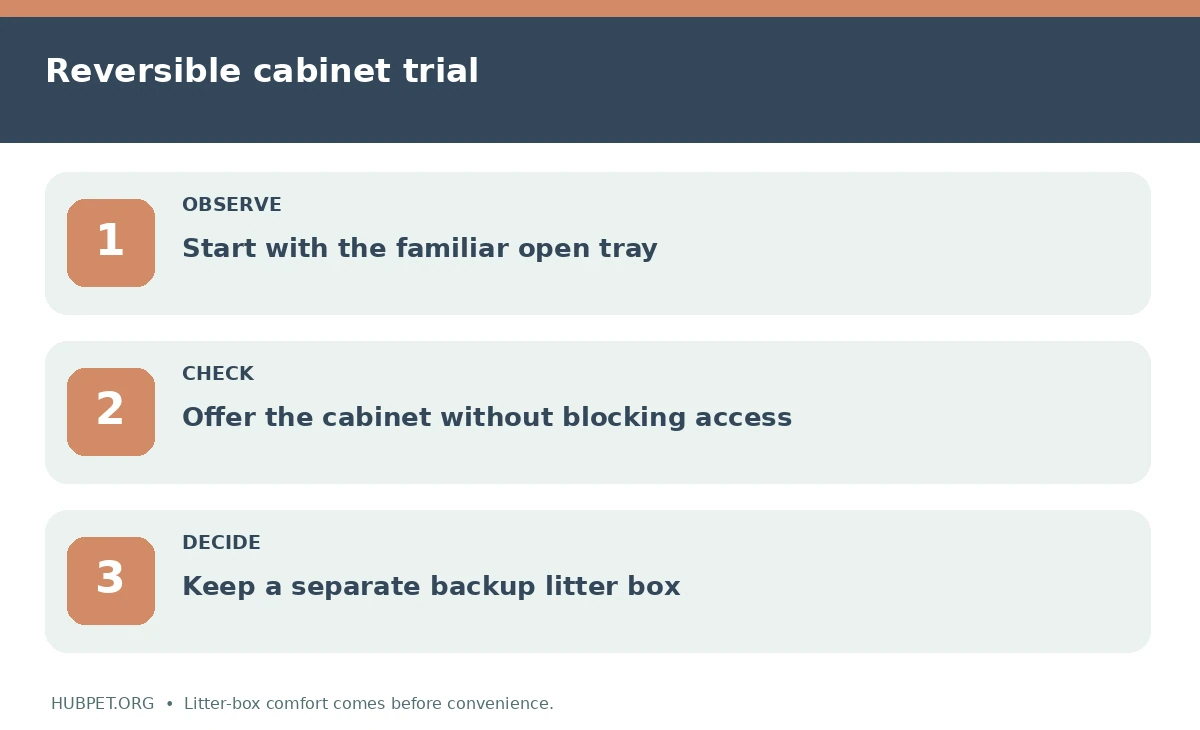
First let the cat use the familiar tray in its normal position. Next position the open-front enclosure around or near it if the design permits, keeping access unobstructed. Only close decorative service panels after the cat has demonstrated comfort. Maintain another familiar open tray throughout the test rather than moving the only resource behind furniture.
Record which box the cat uses, whether it hesitates at the portal, and whether odors or maintenance demands increase. If use drops, reverse the change immediately. This trial cannot rule out medical issues, so seek veterinary guidance for persistent accidents or new discomfort. A furniture purchase should never dictate your cat’s toilet choices.
Make a purchase decision with four tests
Before buying, check interior tray fit, cat entrance clearance, ventilation, and human cleaning access. Reject designs that fail any one test even if the photos match your room. Compare real dimensions and return policies instead of relying on claims such as “odor free” or “universal fit.” This is a functional setup, not a decorative contest.
A simple open litter box behind a visual screen may provide a better result for your home. It can offer more air circulation and easier daily care with fewer obstacles. The winning design leaves your cat comfortable and gives you a routine you can keep, not the most hidden waste container.
How We Research
HubPet reviewed veterinary guidance, cat welfare recommendations, and practical cleaning information relevant to cat litter box furniture. We distinguished expert advice about litter-box comfort from product-design claims that lack independent testing. This is desk research, not hands-on evaluation of individual products or veterinary endorsement. Sources were reviewed on October 26, 2026. Read about HubPet and our editorial approach. General information cannot replace veterinary guidance for an individual cat.
Sources
AAFP and ISFM: Guidelines for Diagnosing and Solving House-Soiling Behavior in Cats. Accessed October 26, 2026.
Ohio State University Indoor Pet Initiative: Litter Boxes. Accessed October 26, 2026.
Merck Veterinary Manual: Providing a Litter Box for a Cat (reviewed July 2025). Accessed October 26, 2026.
Cats Protection: Elderly Cats: Care Guide for Older Cats. Accessed October 26, 2026.
No. Measure the usable inside cabinet space after hinges and dividers, and confirm that your existing cat-sized tray fits with clear entry space.
No. Cabinets can hide odor from view while concentrating it inside. Scoop daily, clean regularly, and keep airflow openings unobstructed.
They require careful planning. A narrow entrance can become a guarding point, so provide additional litter boxes in distinct accessible places.
Often not. Low thresholds, wide passageways, adequate turning space, and easy exits are especially important for cats with limited mobility.
Restore the familiar open access, keep an alternative tray available, and do not force entry. Ask a veterinarian about sudden or ongoing toileting changes.