
Sisal rope feels different from woven fabric; secure wraps and regular inspection matter more than a rough-looking label. The goal is to support ordinary scratching without fear, punishment or forced paw handling. For animal comfort and safety boundaries, see our veterinary information disclaimer.
Understand why rope and fabric feel different
Sisal rope usually winds around a shaft in horizontal turns. Woven sisal fabric instead presents an interlaced surface that can provide a more continuous downward claw path. Neither arrangement suits every cat. Observe whether the animal hooks claws into visible gaps or prefers to rake down a broad grain. The SF SPCA lists sisal among useful scratching surfaces, while the ASPCA advises offering different textures. A rough label does not tell you how securely the material attaches or how a cat will use it. Let texture preference guide the decision.
Inspect the winding from top to bottom
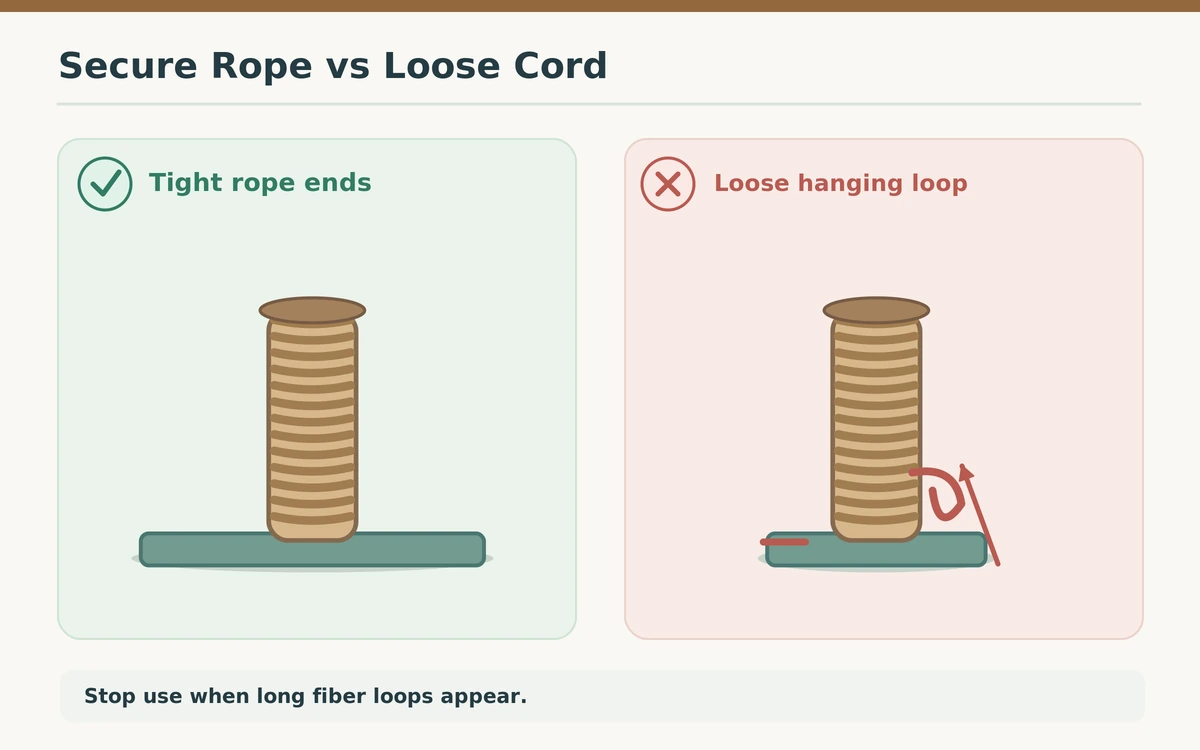
Look along the entire textured shaft. Rope turns should sit closely together without deep exposed gaps, sharp cut ends or large loose loops. Run your hand near the surface with care; the goal is to spot hanging pieces rather than prove the rope is soft. Check both terminal ends, since a small untucked end can unravel during regular pulling. Visible glue blobs, staples and fasteners near the scratching path deserve caution. A pet can catch a claw on damaged loops. Choose a post whose maker explains its construction and repair options clearly.
Check the useful height and direction of the pull
Even good rope cannot help if a post ends at the cat’s shoulder or stands on a tipping base. Watch the animal stretch upward with paws apart, then pull down. Does the rope offer traction through the whole reach? Compare the covered length, shaft width and base stability before judging the material. On short, thick shafts, the cat may have to angle its wrists or shift position. A broad wall panel or tall woven surface can suit cats that dislike a narrow rope cylinder. Provide a horizontal pad too when the cat regularly scratches low surfaces.

Look for fibers that create handling hazards
Natural rope sheds small fibers during wear; light fuzz is not the same as a dangerous loose cord. Inspect for long dangling lengths, loops big enough to catch a paw and tufts that the cat repeatedly chews. Stop access if the cat starts swallowing material, the outer wrap opens or the core becomes exposed with sharp fasteners. Avoid adding household fragrance, essential oils or sticky deterrents to the rope. Clean up shed fragments around the base and watch normal cat behavior. Persistent vomiting, pain or suspected ingestion needs veterinary advice.
Compare a tight rope spiral with a woven panel
An intact rope spiral can provide distinct ridges and resistance, but the repeated ridges may steer claws sideways. A woven panel can offer a flatter textured plane, although some products contain loops that catch claws. Examine close-up photographs of both materials and check how the cat uses an existing scratcher. Do not claim that one construction is safer or more attractive for every cat. A well-built post should support a full stretch, hold steady and allow ordinary scratching without trapped nails. Give the cat an escape route if a claw briefly catches.
Decide whether a worn post needs new rope
Light fuzz and familiar scent can make a post appealing. If its shaft remains firm, the cat may continue using it long after it stops looking new. Consider repair when sections unwind, the core becomes exposed, or long fibers drag onto the floor. Use only materials and attachment methods the manufacturer considers compatible. Ordinary string or unknown twine may unravel differently. For a new wrap, keep the cat away from the work area until the rope sits flat and any approved adhesives dry according to their labels. Never leave loose tools nearby.
Avoid unsafe shortcuts with staples and glue
A staple hidden under the rope can become exposed as the covering wears. Strong-smelling or unknown glue may also be inappropriate where a cat can lick and claw. If you repair a post, follow maker guidance or replace the scratching module instead of improvising fasteners in the contact zone. Inspect both ends after any work and test the post’s stability before reopening the area. Do not wrap rope tightly over cracked wood or a loose shaft; a fresh covering does not fix structural damage. A replacement post is safer when the base or core fails.
Match placement to the reason the cat scratches
Put the rope post next to a favorite sofa corner, resting area or traffic route. Normal scratching helps cats stretch and leave visual and scent marks; burying the post in an unused room can lower interest. Offer the cat a reward for approaching or touching it voluntarily. Avoid forcing paws into the surface or spraying the cat for choosing furniture. The ASPCA recommends suitable alternatives and warns that forced post use may frighten animals. A temporary furniture cover can help while the rope station becomes familiar. Move the post gradually only after reliable use.
Keep the surrounding floor and attachments simple
Place the rope post where the base lies flat and the cat can back away without colliding with a shelf. Remove dangling toys if they tempt the animal to climb a structure not designed for climbing. Pick up separated rope strands and inspect the floor for tiny fasteners after repairs. In multi-cat homes, offer different textures and positions rather than assuming everyone likes the same spiral. If one cat guards the area, place a second scratcher along a different route. A practical setup is easy to inspect and supports calm independent use.

A repeatable monthly inspection routine
Record how the covering looked when new, then check the wrap seam, rope ends, shaft fasteners and base during ordinary cleaning. Compare photographs if you cannot tell whether the spiral is opening. Test for wobble before rewarding a vigorous session. If the cat starts avoiding a formerly popular post, inspect the texture and surrounding environment before assuming stubbornness. Replace worn surfaces or damaged hardware rather than waiting for a snagging incident. The goal is durable traction with no loose cord paths, not a scratcher that always looks unused.
How We Research
We reviewed the feline welfare and veterinary behavior sources linked below for sisal rope cat scratching post. This guide compares observable scratching preferences, construction details, safety checks, and owner-managed setup choices. We did not run laboratory abrasion tests, measure brand durability, certify mounts, endorse an individual product, or diagnose a cat from a single behavior. Follow maker instructions and an individual cat’s comfort, and consult an appropriate veterinary professional for sudden behavioral change or injury. See our editorial approach. Reviewed October 28, 2026.
Sources
San Francisco SPCA, Scratching Posts. Read the original guidance. Accessed October 28, 2026.
ASPCA, Destructive Scratching. Read the original guidance. Accessed October 28, 2026.
Cornell Feline Health Center, Feline Behavior Problems: Destructive Behavior. Read the original guidance. Accessed October 28, 2026.
Humane World for Animals, How to Help Your Cat Scratch in the Right Places. Read the original guidance. Accessed October 28, 2026.
Safety note: Stop use when a scratcher tips, shifts, exposes sharp hardware, traps claws or sheds pieces that the cat chews. For bleeding, persistent limping, possible swallowed objects or a sudden change in scratching with other symptoms, seek veterinary guidance. Never declaw a cat to solve furniture scratching.
No. Rope has prominent ridges while woven fabric creates a different claw path. Offer a preferred texture and watch the cat rather than treating one material as universally superior.
No. Minor fuzz may be ordinary wear, but exposed staples, loose long strands, large loops and failing joints require repair or replacement.
Only if you can follow safe material and attachment guidance, keep fasteners outside the claw path and confirm a solid core. Replacing the module may be simpler.
Placement, wobble, texture preference or insufficient height may make another surface more attractive. Move the post closer and reward voluntary use.
Avoid harsh scented chemicals on a surface cats claw and may lick. Follow the product instructions, remove loose debris and let any permitted cleaning fully dry.