
Choosing dog nail clippers is less about finding the most popular model and more about controlling a clean, tiny cut. A sharp tool that fits the nail, your hand, and the dog’s tolerance is more useful than a long feature list. Scissor-style, guillotine-style, and grinding tools feel different and have different maintenance needs. See the HubPet veterinary disclaimer for the limits of general grooming advice.
First learn where the quick sits and how your dog responds to paw handling. The quick contains nerves and blood vessels. On dark nails, its boundary can be difficult to see, so professional instruction matters. If a nail grows into the paw, a dog limps, or the foot hurts, consult a veterinarian before using any trimming tool.
Separate nail-care skill from clipper choice
A good clipper cannot tell you where the living part of a nail begins. Ask your veterinarian or groomer to demonstrate safe positioning and small trims on your own dog. Practice touching paws without a tool first. Then learn to hold one toe gently while the dog stays relaxed instead of forcing all nails into one session.
For example, if your dog jerks when you touch a toe, buying a quieter clipper will not solve the handling issue. Work on short voluntary paw interactions first. Our cooperative handling practice can help you prepare.
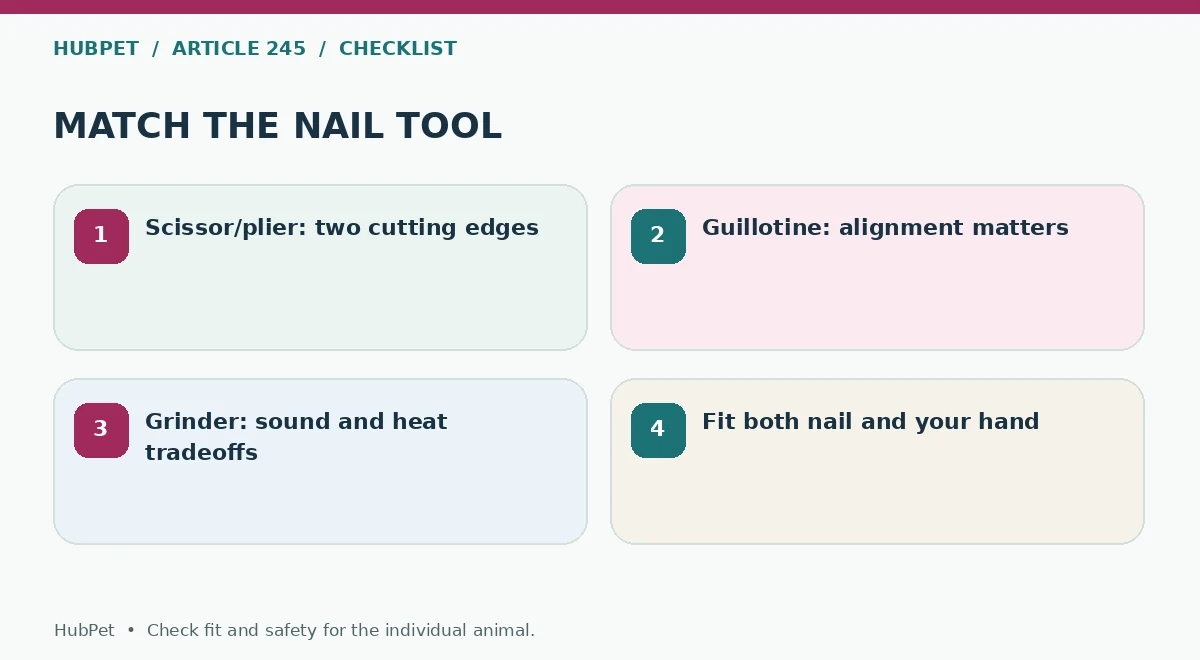
Scissor and plier-style nail clippers
These tools bring two cutting edges together. Check that the blades meet cleanly, the handles are easy to squeeze, and the opening fits the nail without a struggle. A rubber grip may help, but a bulky handle can reduce control for a smaller hand. Test the mechanism without the dog present before buying or using it.
VCA describes crossing-blade scissor or plier tools as a useful option, but an individual veterinarian may recommend another safe design for a particular dog. The practical question is whether you can see the nail tip, place it accurately, and make a smooth tiny cut without crushing or twisting.
Guillotine-style clippers: benefits and limits
A guillotine design holds the nail through an opening while one moving blade crosses it. Some owners prefer the fixed hole for positioning, while others find it hard to align on curved or thick nails. Opinions among veterinary guidance vary; do not present this style as universally best or universally unsafe.
If you consider one, inspect sharpness, blade replacement, and whether your dog’s nail passes through without bending. Stop if the tool crushes or splinters the tip. Ask a groomer to demonstrate the position before you use a design that feels unfamiliar.
Grinders offer a different set of tradeoffs
A powered grinder removes small amounts of nail through abrasion and may smooth a rough edge. It also adds sound, vibration, and friction heat. Some dogs prefer gradual grinding, while others find the noise alarming. A grinder is an alternative, not a universal replacement for a clipper.
Start by letting the dog hear the device away from the paw and reward calm behavior. Never hold the grinding head in place for an extended period. Keep fur and loose fibers clear of rotating parts and follow the maker’s instructions. If the dog objects, stop and try an easier introduction another day.
Match the opening and grip to the nail
Select a tool that lets you see the end you intend to cut. A tiny opening may pinch a larger nail, while an oversized cutting head can obscure small nails. Choose a handle that feels secure when your hands are dry and when you wear any needed protective gear. Always test the cutting action on a safe practice object first.
Instead of shopping by a vague small, medium, or large label, check the manufacturer’s stated fit and compare it with advice from your veterinary team. A nail that curves sharply or grows abnormally needs veterinary judgment rather than simply a larger clipper.
Build a two-stage calm-handling routine
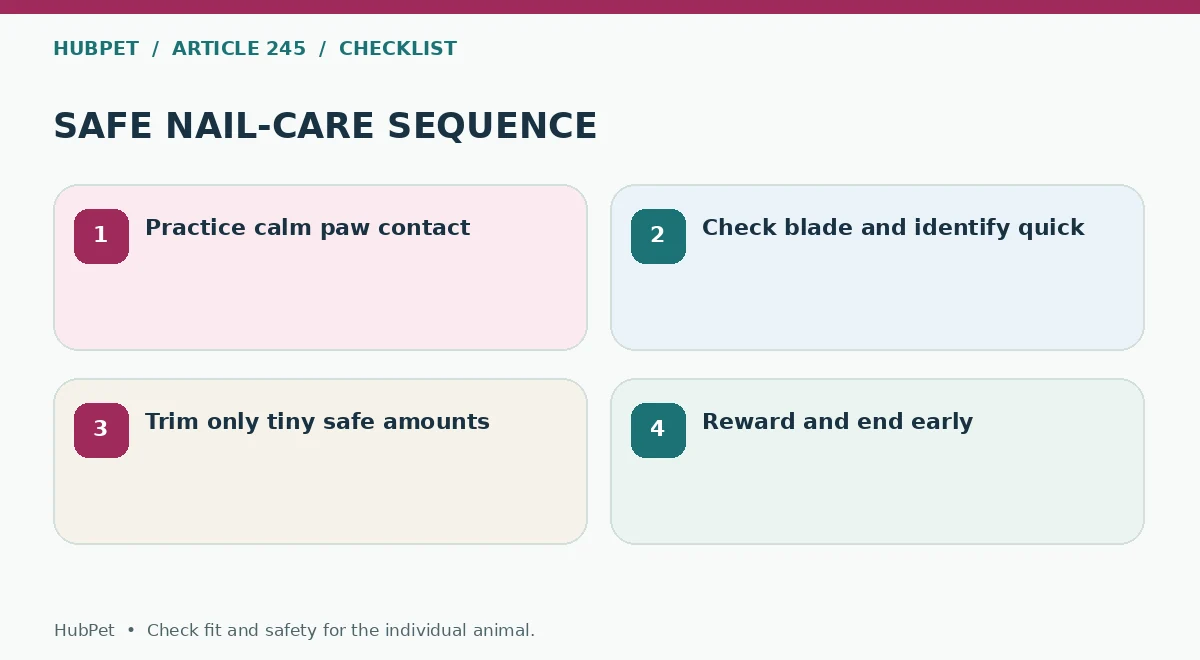
Before trimming, practice paw contact and clipping sounds as separate tasks. Reward the dog for a brief touch, release the paw, and finish early. On another day, bring the tool near the paw without using it. These sessions let you learn when your dog is comfortable instead of taking stillness as proof of consent.
Once your dog accepts handling, perform only the small trim demonstrated by a professional. Stop if the dog pulls away, pants anxiously, growls, or freezes. The companion safe dog nail trimming guide covers how to create a step-by-step home routine.
Check the quick before every cut
On light nails, the quick may be easier to see; on dark nails, it may not be obvious. Never assume a previous cut length is safe for the next nail. Make conservative small trims under guidance and keep a suitable styptic product available. If you cannot identify a safe cutting area, stop and seek help.
If you accidentally nick the quick, end the session and follow veterinary first-aid guidance for minor bleeding. Contact a veterinarian if bleeding does not stop promptly, pain persists, or the injury seems more than superficial. Do not continue clipping a frightened dog after an incident.
Inspect build quality, sharpness, and cleaning
Check the pivot, blades, closure, and any safety latch. The cutting edges should align rather than leave a ragged notch. A dull clipper can squeeze or split a nail. Avoid continuing with a tool that binds, rusts, or feels loose. A guard can help with some designs, but it does not reliably locate the quick.
After use, remove debris and clean according to the instructions. Keep moving parts dry and out of reach of pets and children. Replace worn parts when the manufacturer supports replacement; otherwise choose a safe new tool instead of forcing a dull blade to work.
Know when a vet or groomer is the safer choice
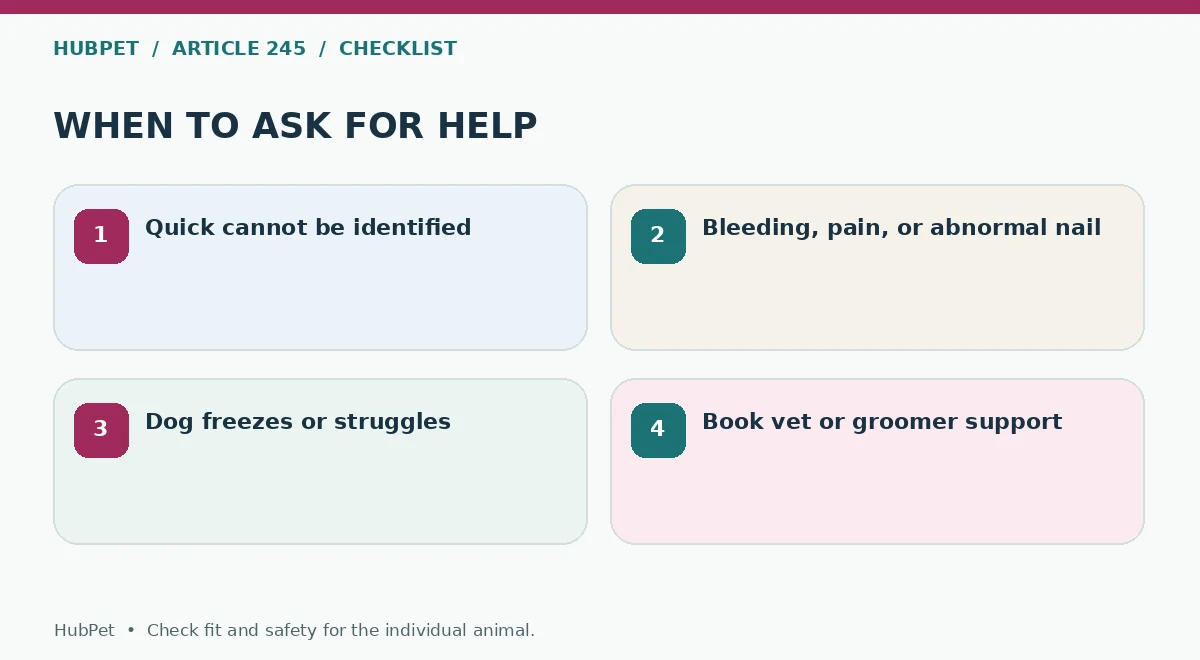
A dog with painful feet, an abnormal nail, or fear that prevents calm handling may need a professional nail-care plan. Senior dogs and those with movement problems may require an adapted position or a veterinary evaluation. You do not need to complete a full trim at home to provide good care.
Ask a professional to observe your hand position and your dog’s response. They can help you decide whether clipping, grinding, or a different handling routine fits better. Also ask about dewclaws, which may not contact the ground and can require special attention.
Finish with a five-point buying checklist
Confirm tool design, nail fit, comfortable grip, clean blade action, and maintenance support. Then consider your dog’s tolerance for handling, sound, and vibration. Do not treat a built-in light or depth guard as a medical safety system. Those features cannot reveal the quick in every nail or replace careful technique.
Finally, plan for small, calm maintenance rather than one dramatic trim. Inspect nails regularly and ask your veterinarian about the right interval for your dog. For routine monitoring alongside paws and skin, revisit the daily dog care checklist.
How We Research
We compared this article’s choices with current veterinary, animal-welfare, and transport guidance, checking the cited sources on October 26, 2026. Recommendations focus on observable fit, safe handling, and real-world limits rather than unverified brand claims. Product specifications and travel rules can change, so confirm them with the provider and your veterinary team. We have not purchased, laboratory-tested, ranked, or endorsed individual models. Read more at About HubPet.
Sources
VCA Animal Hospitals: How to Trim a Dog’s Nails. Accessed October 26, 2026.
VCA Animal Hospitals: Handling Exercises for Trimming Nails and Brushing Teeth. Accessed October 26, 2026.
ASPCA: Dog Grooming Tips. Accessed October 26, 2026.
There is no universal answer. Veterinary resources discuss both designs, and guidance can differ. Choose a sharp tool you control well with advice from your veterinarian or groomer.
No. A guard cannot reliably show where the quick begins, particularly on dark or unusual nails. Learn nail anatomy and make conservative trims.
A grinder adds motor sound and vibration, while a clipper makes a brief cutting sound. Your dog’s response determines which tool is easier to introduce.
Stop rather than guessing at a deep cut. Ask a veterinarian or trained groomer to show you how to approach that dog’s nails safely.
No. Short, calm sessions can protect trust and give you better control. Stop when your dog becomes uncomfortable and finish another day or with professional support.