
Dog grooming clippers are not a shortcut to professional coat care. A motor that handles hair well can still leave an uneven finish or nick skin when the coat is tangled or the dog moves. This buyer guide helps you compare clipper features without assuming that a more powerful or expensive machine suits your dog. See the HubPet veterinary disclaimer for the limits of general grooming advice.
Before choosing a clipper, decide whether home clipping is appropriate. A short sanitary touch-up, a full body trim, and removing a tight mat carry different risks. The AKC recommends professional training before clipping and warns about injury near sensitive areas. For severe tangles, painful skin, or an anxious dog, choose a veterinarian or qualified groomer instead.
Decide whether you need clippers at all
Start by identifying the task, not the device. Brushing and combing may handle routine loose fur. Some coat types need specialized techniques, and shaving can change how a coat functions or grows. Ask your groomer what maintenance is appropriate before removing length, especially on dense double coats or a dog with medical skin concerns.
For example, trimming a small area after training differs from giving a full haircut. If you do not know how to manage skin folds, paw pads, or clipping direction, do not experiment on your pet. The general dog grooming guide covers lower-risk coat care that you can practice first.
Assess coat density and the tool workload
Fine hair, dense curls, and thick undercoat place different demands on a blade. The product should describe which coat jobs it can handle and how to maintain performance, not just quote a speed number. Consider whether a professional recommends a particular clipper system for your individual dog and whether you can obtain replacement parts.
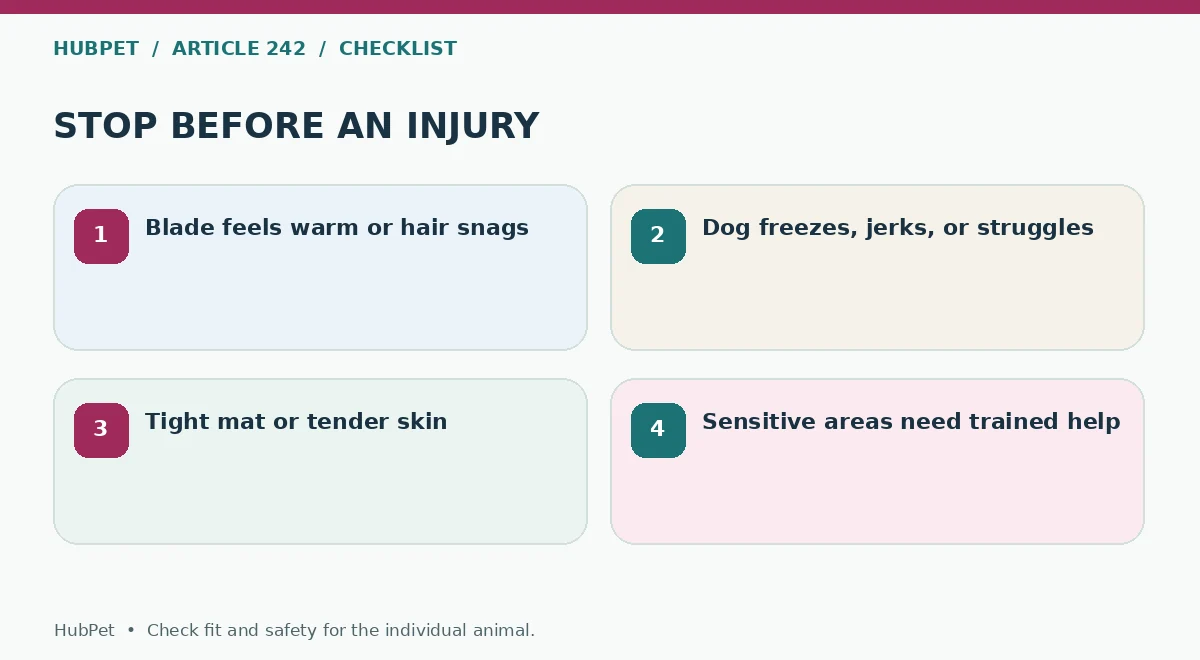
A machine that stalls or tugs is a poor match even when its motor sounds strong. Stop if it catches rather than pulling harder through fur. Also, never use clipper power to push through a tight mat without training; mats can draw thin skin into unpredictable folds and conceal an irritated area.

Understand blade sizes before buying
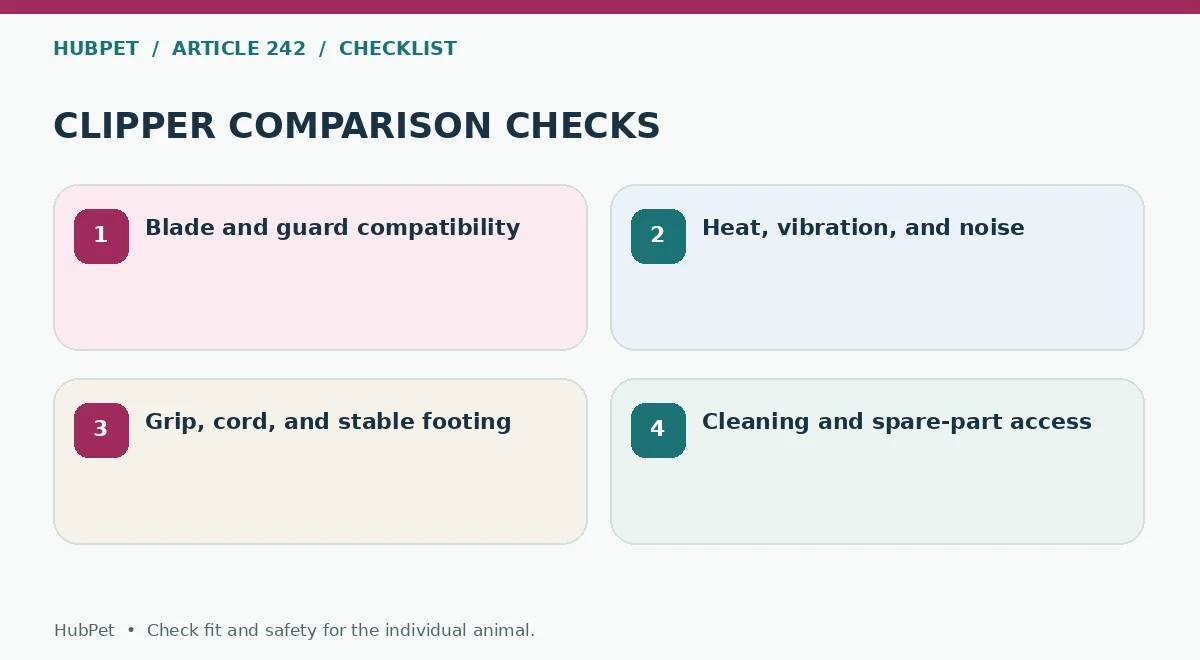
Blade numbering and guard comb lengths differ by clipper system. Do not assume that every attachment fits or creates the same cut on different brands. A shorter cut can expose skin and increase the risk of contact in uneven areas. Ask a groomer to demonstrate the appropriate length for the task before cutting.
For safety, keep a written note of the blade and attachment they recommend, and confirm compatibility in the maker’s documentation. Avoid treating a plastic guard as protection from moving skin. Near the ears, armpits, groin, and skin folds, professional control matters more than owning a precision blade.
Compare heat, vibration, and noise
Motors and blades can warm during work. Check the manufacturer’s care instructions and stop to assess temperature before returning a blade to the coat. Never place a hot blade against skin. Vibration and sound also matter because a frightened dog may jerk suddenly, creating a cutting hazard.
Introduce the device while it is off. Reward calm investigation and gradually expose your dog to a brief sound at a comfortable distance. If the dog tries to escape, freezes, or becomes distressed, go back to easier steps. Our gentle handling practice offers a useful starting point.
Look for grip, balance, and cord management
A clipper should feel stable in your hand without forcing the wrist into an awkward angle. Consider how long you can hold it and whether the on-off switch is easy to reach without changing grip. A slippery handle or a dangling cord adds risk when your dog moves across the grooming space.
Cordless tools reduce cord tangles but still require sufficient charge and careful storage. Corded clippers avoid battery limits yet need a protected cable route. In either case, set up a non-slip floor and keep the device away from water, curious mouths, and children.
Prepare coat and skin before any clipping
Inspect the coat under good light and use a comb to locate tangles. Note sores, redness, bumps, and tenderness; these need a veterinary assessment rather than an unplanned trim. Detangle gently only when possible without pain. Do not bathe a heavily matted coat as a quick fix before clipping.
Ask a trained groomer to handle severe mats. If a tight patch sits close to skin, household scissors are especially dangerous because skin may rise into the hair. Our guide to tangled dog fur explains when to stop at-home work.
Make blade hygiene part of the purchase decision
Look for clear instructions on brushing hair from the cutting head, safely lubricating the mechanism, disinfecting where appropriate, and replacing worn blades. Follow the exact manufacturer procedure. A dirty or dull blade may catch hair, and residue from unsuitable cleaners can affect the device or the animal.
Keep grooming tools dry when you store them and check the cutting head for damage before every use. Do not share equipment across pets with suspected skin infections without veterinary cleaning advice. A model with obtainable compatible replacement blades may be more useful than one with an impressive feature list but poor maintenance support.
Set a practical professional-help threshold
Choose professional grooming when the coat has tight matting, the intended trim involves sensitive anatomy, or you cannot manage the dog safely without force. Senior dogs, dogs with painful joints, and animals with skin lesions may need a modified plan or veterinary care. This is a safety decision, not a personal failure.
Then ask the groomer what you can maintain between appointments. Simple brushing, a coat check, and voluntary handling practice may provide more benefit than trying to recreate a salon trim. When your dog becomes upset by clipper noise, focus on gradual desensitization instead of finishing the haircut.
Use a comparison worksheet in the store
Write down your coat type, intended trim, and the expert-recommended blade system. Then compare grip, blade compatibility, cleaning steps, temperature precautions, sound, battery or cord, and replacement availability. Mark any feature you cannot confirm rather than assuming it exists from a marketing image.
An adjustable setting is valuable only when you understand its effect. Likewise, quieter operation matters only if your dog tolerates that particular sound. Do not rely on a seller’s promise of a pain-free trim, universal coat suitability, or zero risk of cuts. No home clipper can make unsafe handling safe.
Choose a low-pressure first session
Begin with equipment familiarization, not a full haircut. Give the dog a chance to move away, show the switched-off tool, and reward brief calm contact. Next, practice sound exposure without touching the coat. Arrange a professional demonstration before you attempt live clipping, and keep your practice tasks tiny.
Finally, record which sounds and handling steps your dog accepts. Stop with any flinch, heat concern, skin problem, or snag. A competent groomer can advise on coat length and safe maintenance between trims; your veterinary team can assess painful or damaged skin.
How We Research
We compared this article’s choices with current veterinary, animal-welfare, and transport guidance, checking the cited sources on October 26, 2026. Recommendations focus on observable fit, safe handling, and real-world limits rather than unverified brand claims. Product specifications and travel rules can change, so confirm them with the provider and your veterinary team. We have not purchased, laboratory-tested, ranked, or endorsed individual models. Read more at About HubPet.
Sources
American Kennel Club: Dog Grooming at Home: The Dos and Don’ts. Accessed October 26, 2026.
VCA Animal Hospitals: Grooming and Coat Care for Your Dog. Accessed October 26, 2026.
ASPCA: Dog Grooming Tips. Accessed October 26, 2026.
Not necessarily. The safest option depends on your dog’s coat and the specific trim. Ask a qualified groomer to demonstrate technique before trying to clip at home.
Yes. Monitor blade temperature and follow maker instructions for maintenance and cooling. Stop the session before any warm blade touches sensitive skin.
A severe mat can hide and pull skin into folds. Seek an experienced groomer or veterinarian rather than testing clippers or scissors on a painful area.
Neither power format removes the main risks of movement, blade contact, and heat. Choose the arrangement you can manage safely and protect cables from pets.
Start with the device off, reward voluntary investigation, and build comfort with brief sounds at a distance. Stop or step back if your dog shows distress.