
A cat litter mat only catches granules that reach it. If your cat leaps past the mat, dislikes its texture, or begins to avoid the litter box, even an impressive-looking grid adds little value. This guide starts with the cat’s exit route and compares real maintenance trade-offs rather than declaring one surface best. For sudden toileting changes, see our veterinary information disclaimer.
A mat is an optional floor-care accessory, not a replacement for a roomy, clean, accessible litter box. Ohio State University emphasizes hygiene, size, substrate, and location as the basic elements of a comfortable litter area. Measure and observe those elements before paying for a more complicated mat.
Map where loose granules actually land
Sweep the area around the litter box, then observe the first several exits over a normal day. Some cats step directly forward; others turn to one side or jump to a nearby surface. Put a temporary paper outline where the cat actually lands. This small observation gives you a more useful mat footprint than the exterior dimensions on a product label.
Separate tracked granules from litter that flies out during vigorous digging. A mat can catch some particles from paws, but it cannot reliably block material thrown above the rim. If the mess starts at the box wall, review the box’s size or side design first. Keep paths open; do not use a mat to narrow the only comfortable exit.
Choose a footprint that follows the exit path
Measure the clear floor area in front of the entrance and along the preferred route. A narrow decorative strip may catch the first pawprint but miss the second and third steps. A wider mat can help if it lies flat and does not invade a doorway. Check the space with the actual litter box in position rather than trusting a catalog photograph.
Avoid pushing a mat under a door that swings over it, beneath a wobbly box, or across a walking route where people might trip. For a corner box, an L-shaped layout using two smaller washable mats may work better than one oversize sheet. Leave enough room to pull the box out for daily scooping and a full wash.

Compare flat, textured, and two-layer designs
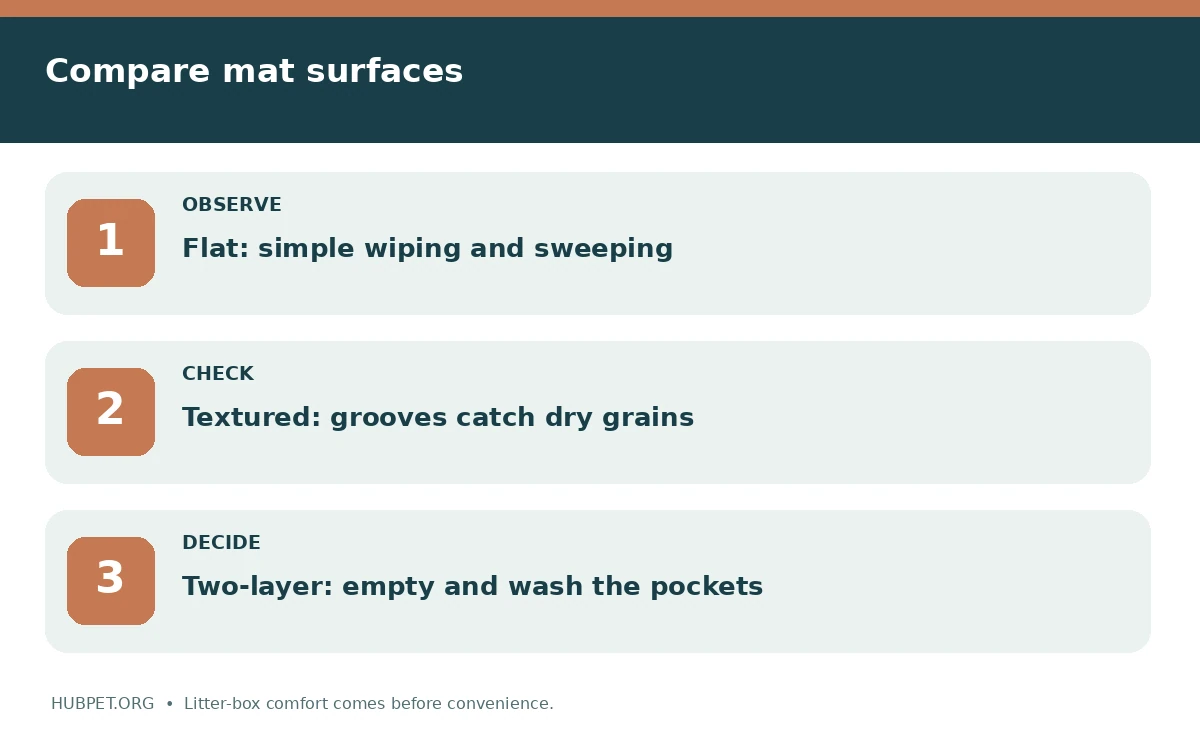
Flat washable mats make sweeping and wiping simple, but fine litter may remain on top. Ribbed or looped surfaces offer more places for loose granules to settle. Two-layer grids can collect particles below the top sheet, although seams and pockets may make wet cleanup slower. These are design mechanisms, not measured performance guarantees across brands.
Use your cat’s litter type when judging openings and grooves. Large pellets and fine clumping grains travel differently; a mesh that catches one can fail to retain the other. Try pouring a small amount of clean litter across an inexpensive sample or removable corner. Do not interpret advertised percentages as independent comparative evidence unless the company publishes a suitable test method.
Put paw comfort ahead of aggressive texture
Watch the cat approach a new surface without coaxing, blocking, or carrying it onto the mat. A smooth path into the box should remain available throughout the trial. Hesitation, paw-shaking, jumping over a textured area, or taking an unusually long detour may signal that the surface feels unpleasant. Cats with sore feet or limited mobility may especially need a flatter option.
Do not turn the litter entrance into an obstacle course to force contact with a mat. If the cat avoids the area, remove the accessory and restore the familiar route immediately. The AAFP/ISFM guidelines stress that comfort, access, and a pleasant litter-box experience matter more than the owner’s preferred appearance. Protect that experience first.
Test grip, edge shape, and floor protection
A mat that slides can startle a cat and create a household slip risk. On tile or laminate, check the manufacturer’s compatible flooring list and confirm that the backing does not shift during a gentle hand test. Inspect raised borders: they may capture small liquid spills, but a tall ridge can trip a kitten or a cat with reduced joint mobility.
“Waterproof” may describe a coating, not the edges or seams. For an occasional wet accident, look for a continuous base you can inspect and disinfect according to the maker’s instructions. Never leave urine-soaked material in place because the top surface looks dry. Persistent accidents require veterinary evaluation instead of a more expensive absorption claim.
Plan a clean-out routine before buying
Before purchase, check whether the mat can open fully, bend without cracking, and release dry granules into a trash bag. Choose a manageable weight if you clean the area every day. Deep honeycomb pockets may retain litter effectively but trap wet residue and hair; thin fabric may wash easily but dry slowly. The lowest-effort option varies by home.
Empty and clean a mat away from the cat’s food and water. Follow the care label for detergents, temperature, and complete drying. Avoid strong perfume sprays around the litter zone because odor can discourage box use. Maintain daily litter scooping regardless of how clean the surrounding floor appears.
Keep safety and durability visible
Check new material for loose loops, brittle foam, adhesive odor, and curling corners. Cats that chew rubber or pull at the edges need a different design or no mat at all. Remove damaged pieces promptly, especially if the animal might swallow them. A cut-to-fit sheet should have smooth, secured edges with no loose backing strips.
If your household includes mobility aids, walkers, or small children, test the mat as a floor accessory as well as a pet accessory. It should not bunch near a doorway or create an unseen step. Do not choose a thick mat merely to hide a rough floor; the entire route into the box must remain stable and easy to cross.
Run a simple seven-day comparison
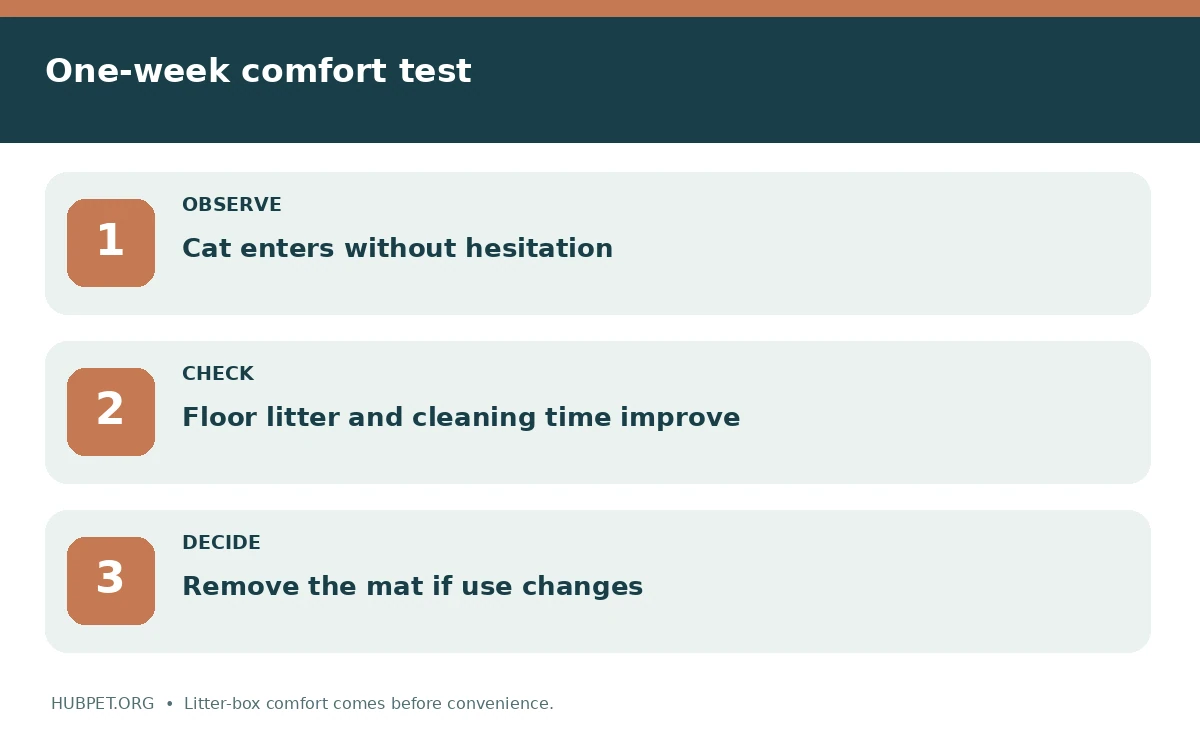
Leave the existing litter and box unchanged while you introduce a mat. Each day, note the litter that reaches nearby flooring, how willingly your cat enters, and how long cleaning takes. Observe at least several exits rather than deciding from one dramatic spill. Photos from the same angle can reveal whether granules move from the floor to the mat.
A useful mat reduces your cleanup burden without slowing or frightening the cat. If the cat regularly avoids it, prioritize a different shape or a simpler flat surface. When toileting changes coincide with the trial, remove the mat and contact a veterinarian for persistent changes or accompanying signs of discomfort.
Know when a mat is not the answer
Litter outside the box can come from a too-small tray, awkward entry, poor placement, substrate dislike, or a medical problem. A mat cannot solve these underlying issues. Ohio State recommends a generously sized box and frequent cleaning; do not compensate for inadequate space by surrounding a cramped tray with tracking accessories.
In a multi-cat home, one large mat over two adjacent boxes may look efficient but leave both resources vulnerable to blocking by another cat. Separate trays in distinct locations when possible. Revisit our internal litter-box problem guide if accidents or avoidance continue, and ask a veterinarian to assess a sudden change.
How We Research
HubPet reviewed veterinary guidance, cat welfare recommendations, and practical cleaning information relevant to cat litter mat. We distinguished expert advice about litter-box comfort from product-design claims that lack independent testing. This is desk research, not hands-on evaluation of individual products or veterinary endorsement. Sources were reviewed on October 26, 2026. Read about HubPet and our editorial approach. General information cannot replace veterinary guidance for an individual cat.
Sources
Ohio State University Indoor Pet Initiative: Litter Boxes. Accessed October 26, 2026.
Merck Veterinary Manual: Providing a Litter Box for a Cat (reviewed July 2025). Accessed October 26, 2026.
AAFP and ISFM: Guidelines for Diagnosing and Solving House-Soiling Behavior in Cats. Accessed October 26, 2026.
Cats Protection: Elderly Cats: Care Guide for Older Cats. Accessed October 26, 2026.
No. A mat catches only the granules that reach its surface. Granules thrown over the rim or carried beyond the mat still require cleaning.
No. They can trap dry grains in a lower pocket, but some are harder to clean after moisture gets inside and some cats avoid the texture.
Observe where your cat steps after exiting. Choose a flat footprint that covers that path while keeping a safe, unrestricted route to the litter box.
Only if the box remains stable and you can clean the mat easily. Do not let texture or raised edges make entry difficult for the cat.
Remove the mat, restore the familiar setup, and assess other signs. Sudden or persistent avoidance deserves a prompt veterinary discussion.