
Paper cat litter is commonly made from processed paper fibers pressed into granules or pellets. Some products emphasize absorbency or low dust, while others market soft texture or easier cleanup. Those claims depend on the exact formula, and no material suits every cat. Paper pellets often behave differently from fine clumping clay: they can swell, break apart or leave damp areas that need a different removal routine. This guide helps you compare those details while keeping an acceptable litter box available. Consult a veterinarian about painful paws or changed elimination habits, and see HubPet’s veterinary disclaimer.
Start with pellet texture, not recycled claims
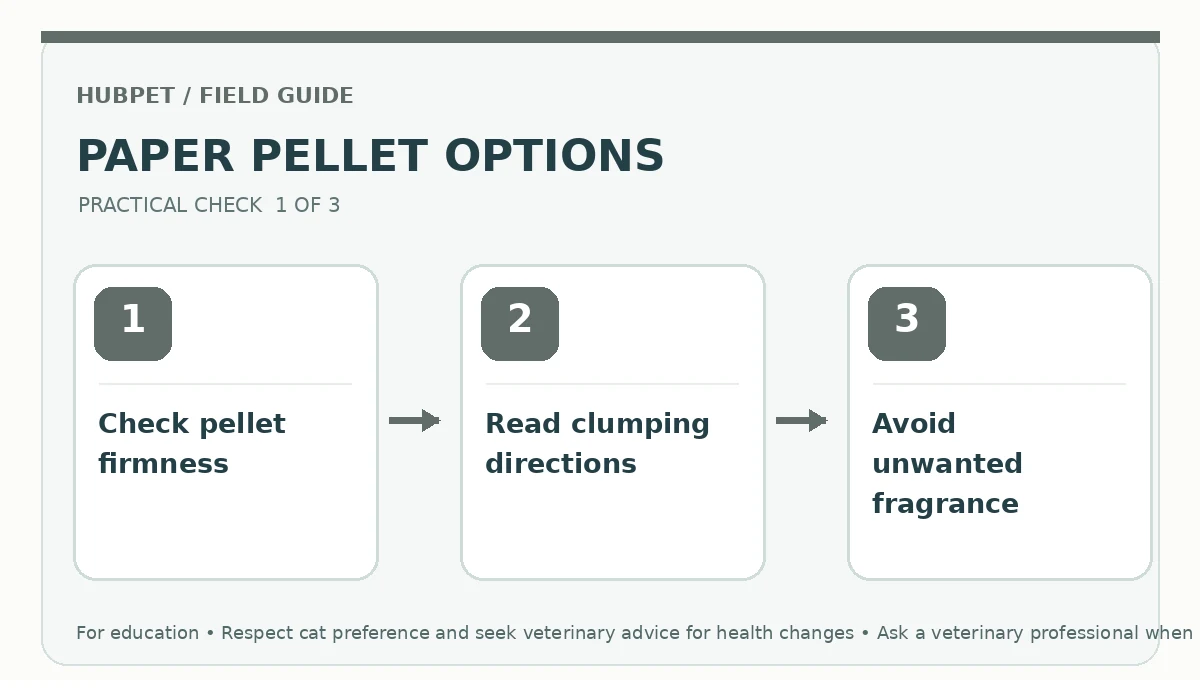
Paper-based litter varies from soft-looking crumbs to firm cylinders. Next, recycled content can be relevant for a purchasing decision, but it does not tell you whether the grains feel comfortable under your cat’s paws. Pour a handful into a clean shallow dish and examine the firmness, thickness and any rough edges. Cats Protection notes that some cats prefer finer material and may reject unfamiliar pellets. A senior cat or a cat with tender feet may be particularly sensitive to large grains. Instead of making assumptions, offer a separate box and watch the cat dig, turn and eliminate without hesitation.
Know whether the litter clumps or absorbs
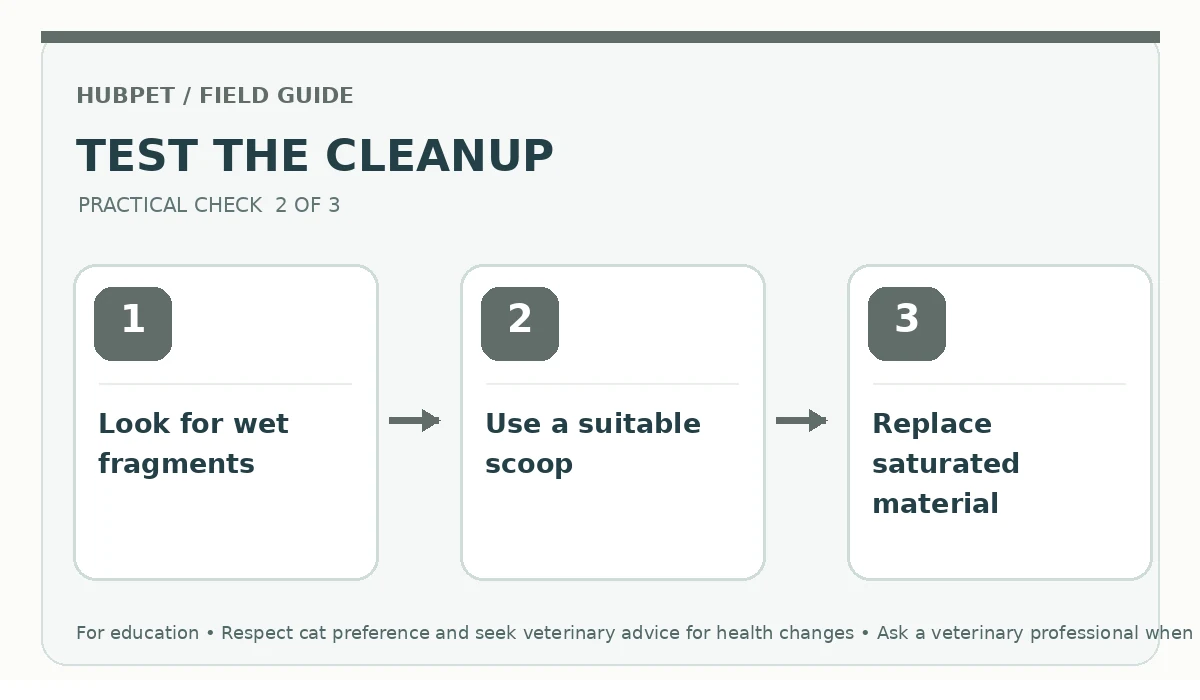
A non-clumping paper product absorbs moisture into fibers rather than forming a firm lump that lifts out with a scoop. As a result, it may need frequent removal of damp areas and scheduled complete replacement. Other formulas include ingredients designed to clump, so read the exact label. Never assume that a general scoop-and-top-up routine is enough for a tray with saturated pellets. Test how grains change after moisture and whether they turn into crumbly material that falls through your scoop. Remove feces daily in every case. A clean-looking surface is not proof that dampness has disappeared underneath.
Compare dust before and after pellets break down
A bag marketed as low dust may release relatively little when first poured, yet use, shipping or scratching can produce fibers and fines. By contrast, look for a visible layer of particles at the bottom and note whether sweeping becomes more frequent as the tray ages. Do not shake dusty litter indoors to test it. If your cat shows coughing, sneezing or persistent eye irritation, ask your veterinarian to investigate rather than relying on a different marketing claim. Provide decent room ventilation without a strong air stream passing over the box. A quiet, clean litter area supports normal use regardless of the material.
Treat fragrance and additives as separate choices
Paper alone does not guarantee an odorless or fragrance-free product. For example, look for perfumes, deodorizing agents and other additions on the bag. Some cats reject a smell that people scarcely notice. The AAFP/ISFM house-soiling guidance highlights that scented litter and deodorizers can reduce acceptance. Begin with an unscented option when possible and make cleanliness your odor-control plan. Scoop feces and wet material as directed, then wash the pan before refilling. Strong household sprays near the tray can undo the benefit of choosing an unscented formula. Keep air fresheners away from the cat’s usual toilet area.
Offer familiar litter alongside the new pellets
A gradual trial works best as a choice rather than a forced replacement. However, keep one clean, easy-to-reach box of the litter your cat already uses, and place a second accessible box containing paper litter. Observe both normal daytime use and quieter night visits. A cat may investigate a new texture once without preferring it long term. If the animal uses the paper box voluntarily and comfortably, continue monitoring; if it avoids that tray, retain the familiar litter. Changing the substrate, box and location simultaneously makes the result hard to interpret. Let the cat’s behavior supply the evidence.
Choose a scoop and emptying schedule that work
Check the gap width of your current scoop against the paper pellets. In addition, intact pieces may be trapped while wet fragments fall through, so you may need a different screen or a solid scoop for removing a damp section. Follow directions for full replacement and use the real smell and moisture level as signals rather than stretching intervals to save product. Wash the emptied pan with hot water or mild unscented soap, rinse and dry completely. Avoid mixing fresh paper pellets into wet debris. Record how often the entire tray needs replacement to compare monthly costs fairly.
Keep the setup accessible for sensitive cats
Use a roomy tray with an easy entrance and enough depth to let the cat turn and cover waste. Meanwhile, pellets stacked too deeply may shift underfoot, while too little litter may expose the bottom after one dig. Keep the exit unobstructed and place the box away from feeding stations. In homes with older cats, favor locations that do not require stairs or leaps. Multiple cats may need separate boxes in different areas to avoid blocking and conflict. A cat that seems reluctant to stand on the paper pellets should have an alternative immediately. Material alone cannot solve poor access or box placement.
Decide how to store and discard used material
Paper-based does not mean safe to flush. Therefore, used litter contains animal waste, so follow local collection and disposal rules rather than relying on a biodegradability slogan. Store unused bags in a dry place and reseal opened packages to reduce premature moisture absorption. Keep spilled pellets away from pets that investigate by chewing. If a young cat or another pet eats substantial litter, discuss the exposure with a veterinary professional. Always wash hands after handling used litter or cleaning a pan. A tidy storage plan makes the daily routine easier without adding fragrance or extra chemicals.
Use preference and effort as the final test
Compare three outcomes after a realistic trial: whether the cat freely uses the box, whether moisture stays manageable and whether your cleanup workload improves. Instead, a paper litter can be valuable for a particular cat or household, but switching is not essential when the current substrate works well. Stop the trial if the cat shows distress or begins eliminating elsewhere. Straining or inability to urinate can be an emergency; seek veterinary help promptly. Bring your litter and cleaning observations to the appointment if changes continue. Your cat’s comfortable, reliable toileting matters more than a sustainability or convenience slogan.

How We Research
Our editorial review compared veterinary and animal-welfare guidance on cat litter materials, feline substrate preference, accessible box placement, hygiene, and signs that warrant veterinary evaluation. We used published feline guidance as the basis for practical owner choices and contrasted it with the limitations of packaging claims. We did not run comparative laboratory absorption tests, conduct product trials or endorse brands. Texture tolerance, accessible boxes and cleaning routines vary by animal and household; ask a veterinarian about persistent behavior changes. We last reviewed the sources on October 27, 2026. Read about our editorial process on the About HubPet page.
Sources
Cats Protection: How to choose the best cat litter for your cat. Accessed October 27, 2026.
AAFP/ISFM: Guidelines for house-soiling behavior in cats. Accessed October 27, 2026.
AAHA: General litter box considerations. Accessed October 27, 2026.
Many paper pellet litters absorb moisture without firm clumps, though formulas vary. Check the package and the actual wet-material behavior.
Not necessarily. Firm or large pellets may feel unfamiliar or uncomfortable to some cats, particularly those with sensitive feet.
No. Fibers and fine particles can appear during pouring and as pellets break apart, so check the specific bag.
Do not assume it can. Follow local disposal guidance and keep cat feces and used litter out of the toilet.
Offer it in a second clean box while keeping familiar litter available. Watch voluntary use and stop if the cat begins avoiding the tray.