
Dog hair woven into car upholstery can be harder to collect than fur on a couch. Seat seams, textured carpeting, narrow footwells, and different fabric finishes each need a slightly different tool. An aggressive scraper can make a seat look cleaner while damaging fibers or seams. For individual pet safety information, see the veterinary information disclaimer.
This guide focuses on interior cleaning rather than transporting an animal. A seat cover protects upholstery but is not a crash restraint. Choose a car-hair remover for the surface it touches, inspect hidden areas first, and keep cleaning tools away from seat-belt hardware and safety equipment.
Map the surfaces before cleaning
Inspect the seats, cargo liner, carpets, and door fabric separately. Smooth leather or synthetic leather usually needs different handling from woven cloth. A thick cargo carpet can hold loose fur deeply, while a delicate headliner may be damaged by even light scraping. Check the vehicle owner’s manual and upholstery-care instructions.
Look for seat airbag markings, electrical controls, heated-seat features, and exposed seams. Cleaning should not involve taking apart restraint hardware or pushing a tool into a seat mechanism. When interior materials are unfamiliar, use a gentle vacuum attachment before testing friction tools.
Choose a vacuum attachment for crevices
A compact crevice nozzle reaches where the seat back meets the cushion and along floor-mat edges. A small upholstery brush can loosen hair from sturdy cloth, provided the bristles do not snag. Suction claims are hard to compare across brands, so test whether the tool actually retrieves fur from your seat material.
Use a dry upholstery nozzle unless the vehicle and cleaner explicitly permit moisture. Avoid drawing coins, sharp debris, or broken toy parts through delicate brush heads. Check the vacuum filter and hose for clogs after cleanup; blocked airflow can reduce pickup despite a motor that sounds powerful.
Use rubber tools only on compatible fabrics
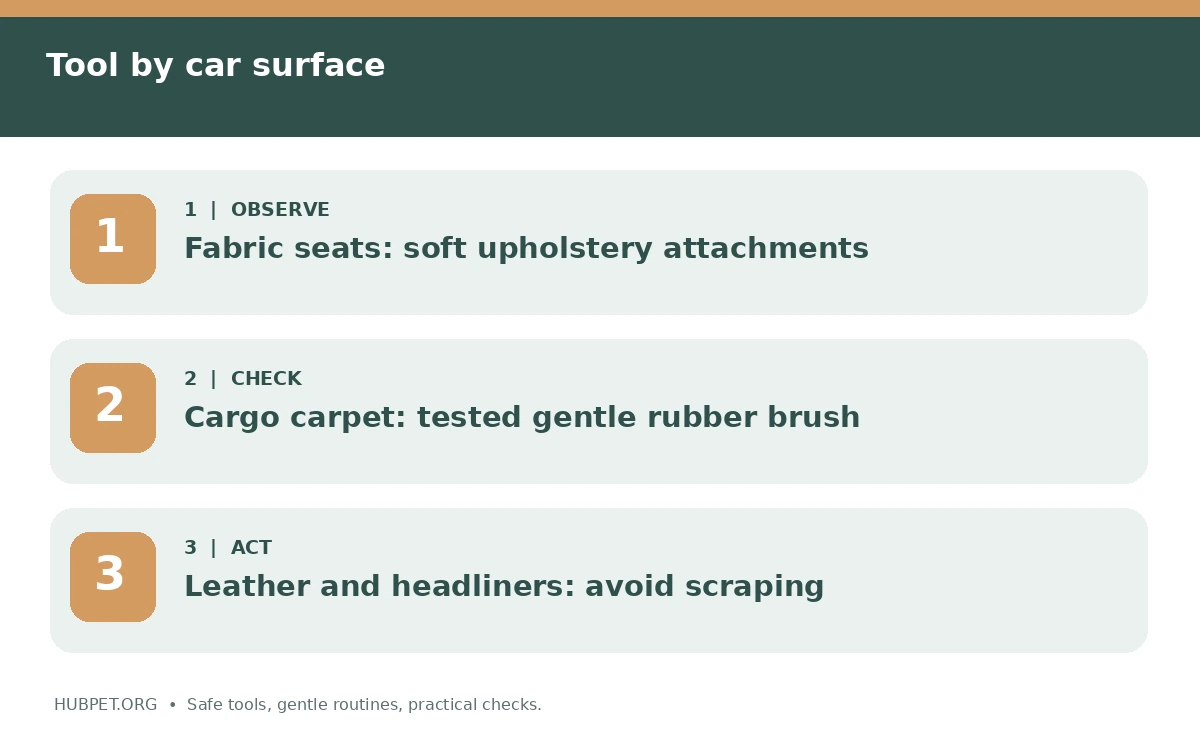
Soft rubber squeegees and specialty rubber brushes may gather fur into visible rolls on some fabric seats. Start in an out-of-sight area with a short gentle pass. Never assume that a rubber edge is harmless on perforated leather, peeling synthetic material, loose stitching, or a delicate woven surface.
Stop if the tool pulls fibers, leaves rubber marks, or catches in seams. Do not scrape against seat-belt webbing or the plastic openings through which the belt moves. A removable cargo mat can often be cleaned more safely outside the vehicle after checking its care label.
Distinguish lint rollers from upholstery scrapers
An adhesive lint roller can lift surface hair from cloth inserts and seat covers, but sticky residue is possible. Use a hidden-spot test, especially on dark fabric and delicate coatings. A reusable hair brush may reduce disposable sheets, yet its textured surface can snag loose stitching if pressed too hard.
Metal scrapers advertised as fast pet-hair removers can be particularly risky on headliners and fragile trim. Judge a tool by its compatibility instructions and controlled performance, not a dramatic before-and-after video. For a new or leased car, consider fabric-approved professional cleaning when uncertainty is high.
Follow a top-to-bottom cleaning sequence
Remove the pet and all loose toys before beginning. Open doors for ventilation where appropriate, then pick up big clumps from seat surfaces. Vacuum higher seat areas and seams before the floor so loosened hair lands where you will clean next. Follow with a gentle fabric-safe tool only on stubborn patches.
Work toward an accessible collection point instead of spreading hair into every crevice. Use a narrow nozzle around tracks without inserting rigid parts into moving mechanisms. Finish by examining the floor and seat-belt anchor areas for hidden tool pieces that could create a problem later.

Respect restraint and airbag zones
Never cover, tape, or modify seat-belt latches, anchorages, side-airbag deployment seams, child-seat anchor points, or their labels to make hair cleanup easier. A stray dog-hair brush should not remain loose near a foot pedal or seat control. Vehicle safety equipment takes priority over cosmetic cleaning.
If you use a dog seat cover, ensure that its design and placement do not obstruct belts or airbags; consult the vehicle and product instructions. Seat covers are not substitutes for independently evaluated pet restraints. Transport choices belong in a separate safety decision, not a claim on a fur-removal product page.
Wash removable covers and mats correctly
Check whether a cover is machine washable, line-dry only, or unsuitable for heat. Remove it from the vehicle before washing if directions call for that. Shake loose hair, use an appropriate detergent, and let the material dry completely before reinstalling it. Damp fabric can lead to odor and potentially cause problems with adjacent upholstery.
The CDC advises following cleaning instructions for soft pet items. Do not substitute a strong fragrance for real cleaning. Avoid leaving laundry pods, sprays, or loose dryer sheets in a car where a curious pet might chew them during the next trip.
Manage recurring car hair at the source
A washable cargo liner or correctly fitting cover may make cleanup easier in areas the pet uses, as long as it does not interfere with vehicle safety features. Give the dog a gentle brushing session before some trips when practical. Keep a small lint tool and collection bag where they cannot become projectiles during driving.
If hair accumulation suddenly accelerates together with scratching or bald spots, do not treat the vehicle as the central problem. Changes in the animal’s coat may deserve veterinary evaluation. Routine grooming can reduce loose hair in the cabin but cannot prevent natural shedding altogether.

Test the tool before committing to the full interior
Choose a small inconspicuous seat patch. Compare light vacuuming with the proposed remover and inspect both hair pickup and surface condition under good lighting. Keep a record of which tools work on fabric seats versus cargo carpet. One safe tool for each material beats a harsh universal scraper.
If you notice pulled loops, seam stress, fading, or adhesive residue, stop and consult the vehicle-care instructions. Recheck seat-belt operation and remove all cleaning materials before allowing the pet back in. A tidy interior should also remain a safe place for passengers.
How We Research
Our editorial process compares animal-welfare, veterinary, government, and consumer-safety guidance relevant to pet hair removers for cars. We separate supported safety principles from marketing claims and review practical use, maintenance, and limits. This is independent desk research, not hands-on product testing or veterinary endorsement. Sources were reviewed on October 26, 2026. Read more about HubPet and our editorial approach. This guide does not replace veterinary advice for your individual animal.
Sources
U.S. Environmental Protection Agency: Sources of Indoor Particulate Matter. Accessed October 26, 2026.
CDC: About Cleaning and Disinfecting Pet Supplies. Accessed October 26, 2026.
Consumer Reports: Best Vacuums for Pet Hair, Tested and Reviewed. Accessed October 26, 2026.
NHTSA: Vehicle Air Bags and Injury Prevention. Accessed October 26, 2026.
A fabric-approved upholstery vacuum brush or gentle rubber tool may lift embedded fur. Always test an unseen patch first and avoid damaging seams or fibers.
Do not assume it is suitable. Metal edges can snag delicate fabrics or headliners, so follow your vehicle care guide and select a gentler alternative when unsure.
No. A cover protects the upholstery from mess; it is not a tested crash restraint. Follow vehicle guidance and assess animal travel restraints separately.
Only when its care label permits it. Remove excess hair first, follow washing instructions, and return the cover completely dry.
Use a gentle accessible-surface method and avoid disturbing belts, latches, anchors, or airbag seams. Consult a qualified vehicle-care professional if access is difficult.