
High-sided litter boxes appeal to owners who find litter on the floor or urine near a wall. Taller walls can help in some households, but the same wall that catches scatter may make entry difficult for kittens, seniors, and cats with painful joints. A sensible choice pairs protective sides with a genuinely low, stable entrance. Review our veterinary information disclaimer if litter habits or mobility change suddenly.
Instead of ranking models by height alone, this guide compares wall shape, entrance geometry, room to turn, and how easily you can scoop. It treats the cat’s willingness to use the box as the final test. The AAFP/ISFM house-soiling guidelines describe high sides as a practical option for some cats, not a universal fix.
Identify the particular mess you want to contain
Scatter from digging looks different from urine that travels above the rim. Watch discreetly from a distance and examine the clean floor after normal litter-box use. Granules scattered across the rear wall may respond to higher back and side panels. A single narrow stream outside the box can point to an unusual posture, an entrance gap, or a health concern instead.
Do not assume a cat acts deliberately to make a mess. A tense stance, repeated attempts, straining, or new accidents can indicate discomfort that equipment alone cannot solve. If the change is sudden, painful, or persistent, contact a veterinarian. Keep the former accessible box available while you test an alternative.
Measure the cat before measuring the wall
The interior floor should allow a full turn, natural digging, and comfortable posturing. A tall outer rim does not make a narrow tray roomy. AAFP/ISFM guidance favors generous proportions, commonly about one and a half times the cat’s nose-to-tail-base length for length. Focus on usable floor space, not the manufacturer’s outside dimensions.
Bring a tape measure when comparing models. Check the bottom interior width where walls taper, the distance from the lowest entry point to the floor, and the clear height around the body when the cat stands. Large cats may need a long storage-style tray with smooth edges more than an expensive high-wall model.

Choose a low entrance rather than an equally high front
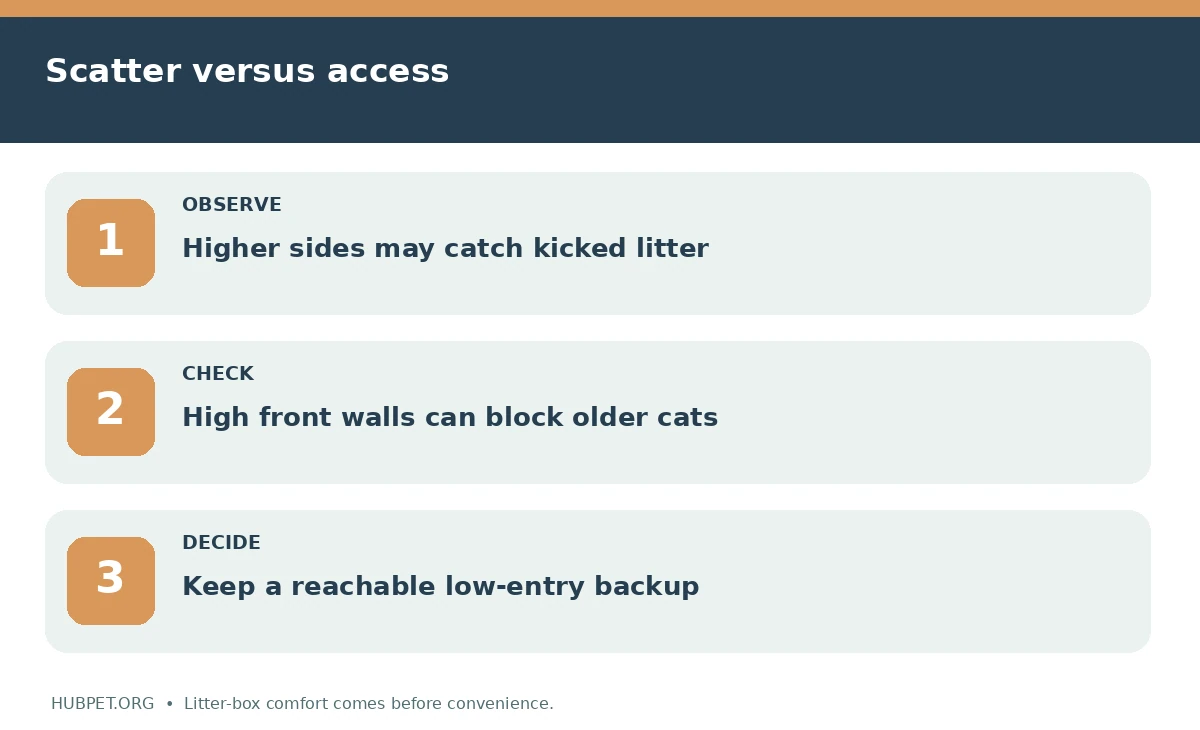
For some cats, a three-sided high wall with a low front notch makes more sense than a tray with the same tall wall on all four sides. Ideally, your cat should walk in, not leap or drag its belly over a threshold. Very young, aging, disabled, or recovering cats may require a much lower opening. Make access the nonnegotiable requirement.
Beware of decorative cutouts that appear low from the outside but still have a tall inner lip. Measure the real step. If the box has a removable rim, ensure it locks without pinching or sharp edges. An accessible backup tray should remain available during any transition, especially when a mobility change prompted the purchase.
Evaluate how high walls manage litter
Higher back panels can stop some kicked grains and some urine from reaching the wall. Angled, flared, or detachable panels change how material returns to the tray. However, no wall guarantees containment when a cat digs above the rim, faces a low doorway, or chooses to perch on the edge. Marketing photos seldom reflect every posture.
Compare a few simple observations: the wall the cat usually faces, where urine marks appear, and the position of the entrance. Place the tray on a cleanable floor protector if needed. If problems arise only at the entry notch, a different box location or orientation might help more than raising every other side.
Check cleaning access before buying
A tall-sided tray can make scooping awkward if the opening narrows toward the top. Try miming a full scoop movement from a comfortable standing position. Can you reach the far corners without tipping dirty litter toward the room? If a detachable rim hides residue, check how it comes apart and whether all seams allow washing.
Veterinary sources emphasize daily scooping and regular full cleaning with gentle products. Thick side panels do not cancel that need. Select smooth surfaces that release residue without abrasive scraping; rough scratches may trap odors over time. A lightweight tray may be simpler to lift, although it must remain stable under the cat.
Balance wall height with air and visibility
An open high-sided box usually provides overhead air circulation, unlike a fully hooded container. Make sure the walls do not turn the box into a cramped, hidden chute. Cats may prefer seeing an approaching person or animal while they use the tray. A tall opaque enclosure beside a wall can also create an uncomfortable dead end.
In multi-cat homes, give the cat a clear exit and use distinct litter-box locations when possible. Do not line up boxes with only one approach path and assume every cat can access them freely. If another cat guards the opening, changing the wall height will not resolve the underlying social pressure.
Introduce the new box without forcing a swap
Keep the familiar tray in place and put the new design nearby if space allows. Use the same unscented litter and comparable depth to avoid changing several variables at once. Let the cat explore freely. A reward near the area may create a pleasant association, but never place the cat inside or close off its preferred exit.
During the first days, track which box the cat chooses, whether paws catch at the entrance, and where any scatter occurs. Remove decorative flaps and awkward rims if they obstruct access. If the cat declines the new box, an open, lower-sided alternative remains a good solution rather than a training failure.
Protect floors without trapping the cat
A washable floor mat can collect grains that pass the entry notch, but it should not shift under the box or create a raised step. On slippery flooring, compare bases for stability and check the underside for rough feet. Place the box away from loud appliances and congested routes so the cat can toilet without startling events.
If you need wall protection, use a smooth washable surface behind the litter area while investigating why urine reaches that wall. Do not attach loose plastic sheets where a cat can chew or become entangled. Hygiene and access come first; visually hiding the mess can delay the recognition of a developing health problem.
Choose by real use, not by the tallest measurement
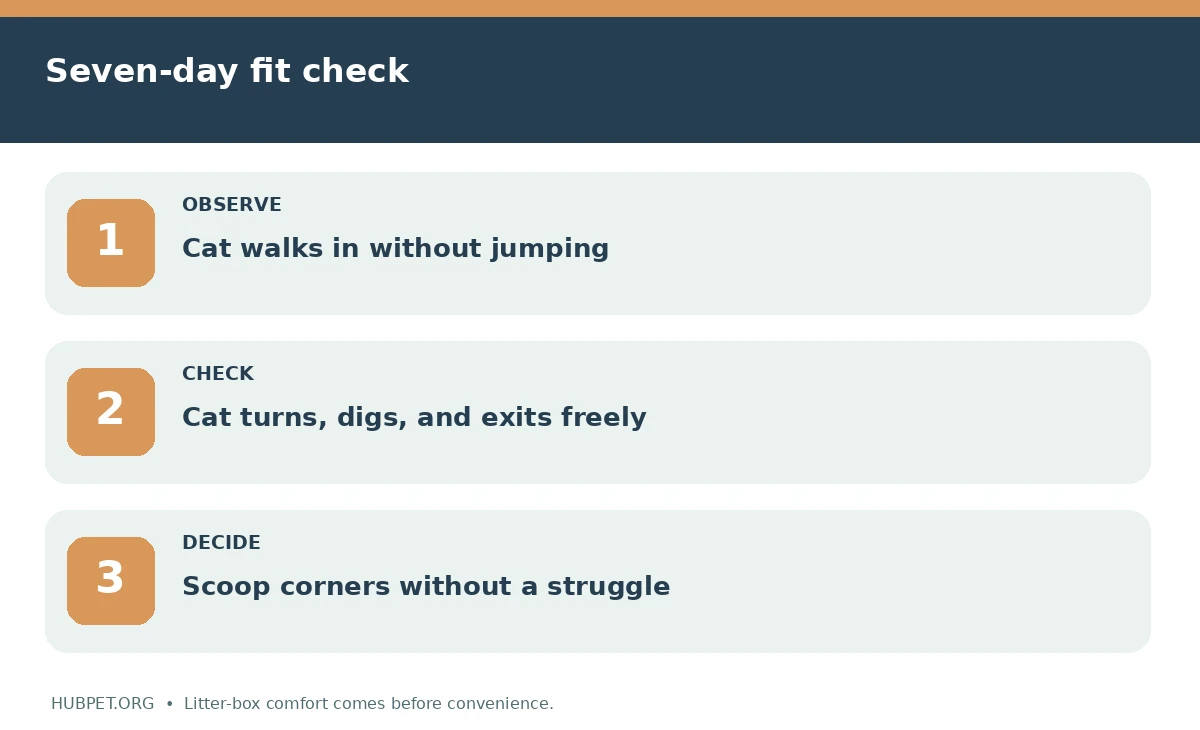
Write down four requirements: sufficient inside floor space, an accessible entrance, useful rear and side barriers, and a design you can clean every day. A low-entry high-sided tray that your cat uses willingly is more valuable than a tall box that causes hesitation. Check how the cat turns and digs, not only the outside dimensions.
For senior cats and kittens, the best answer may be a low-sided tray plus more floor cleaning. This is a reasonable accommodation, not a compromise in care. Review your choice after a week and whenever age, mobility, litter type, or household dynamics change.
How We Research
HubPet reviewed veterinary guidance, cat welfare recommendations, and practical cleaning information relevant to high sided litter box. We distinguished expert advice about litter-box comfort from product-design claims that lack independent testing. This is desk research, not hands-on evaluation of individual products or veterinary endorsement. Sources were reviewed on October 26, 2026. Read about HubPet and our editorial approach. General information cannot replace veterinary guidance for an individual cat.
Sources
AAFP and ISFM: Guidelines for Diagnosing and Solving House-Soiling Behavior in Cats. Accessed October 26, 2026.
Ohio State University Indoor Pet Initiative: Litter Boxes. Accessed October 26, 2026.
Cats Protection: Elderly Cats: Care Guide for Older Cats. Accessed October 26, 2026.
Merck Veterinary Manual: Providing a Litter Box for a Cat (reviewed July 2025). Accessed October 26, 2026.
They can catch some urine near the rim, but they do not identify or treat the reason for unusual urination. New or persistent changes warrant veterinary attention.
There is no universal safe threshold. Choose the lowest comfortable step your particular cat can walk over without jumping, hesitation, or pain.
Only when the kitten can enter and exit easily. A low-front tray or shallow temporary option often works better for a small kitten.
It depends on the cat. Open high sides usually provide more airflow and visibility, while a hood may trap odors or limit space.
Check the digging direction, entrance notch, box dimensions, and litter amount. A mat may help with tracked particles but will not fix a poor fit.