
Cat grooming at home should support the cat’s own cleaning routine rather than replace it. Healthy cats spend time maintaining their coats, and many need only gentle checks and occasional help. Long coats, limited mobility, and tangles can change that picture. This guide shows how to plan short sessions without trapping or frightening your cat.
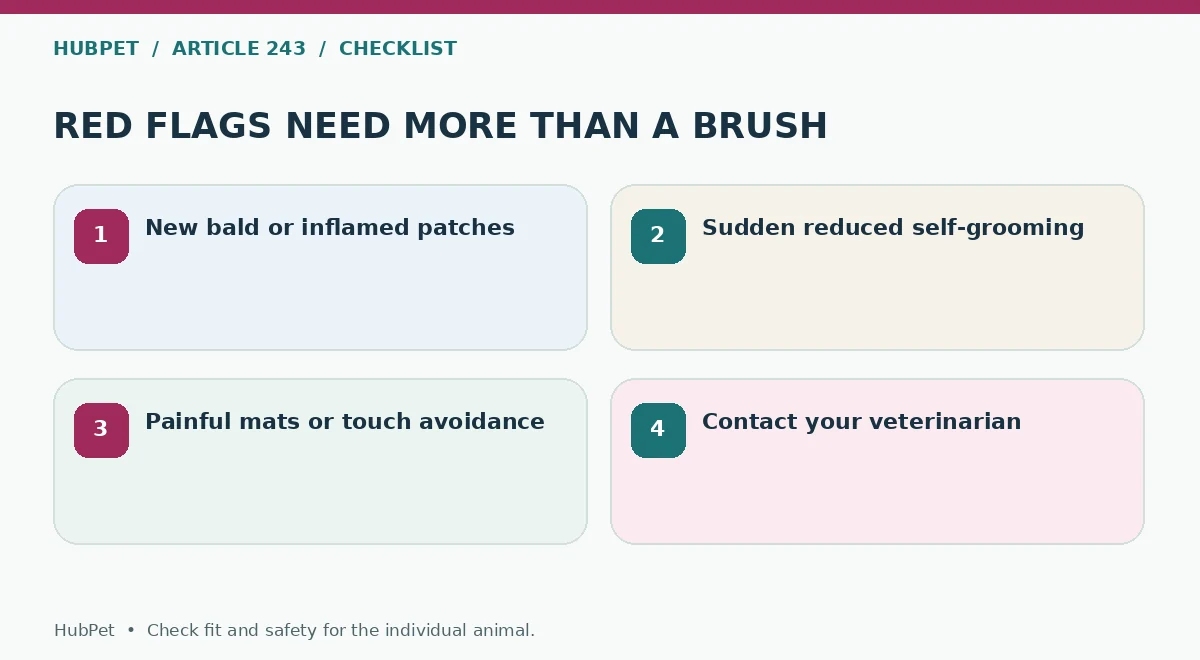
A sudden decline in self-grooming, painful matting, bald patches, or overgrooming deserves attention beyond a new brush. Skin or mobility problems can affect coat care. Do not diagnose the cause from appearance alone. If your cat seems painful or starts behaving differently, speak with a veterinarian and review the HubPet veterinary disclaimer.
Begin with a coat-and-behavior baseline
Look at the fur when the cat is relaxed. Notice whether it lies smoothly, whether patches clump, and whether the cat reaches all body areas during normal grooming. Check gently behind the ears, at the collar line, under the front legs, and along the back legs if your cat welcomes touch. Write down any changes.
Because cats often conceal discomfort, behavior matters as much as coat appearance. A cat that suddenly avoids touch, skips grooming, or repeatedly licks one patch may need a veterinary appointment. Do not force an inspection of a painful area. Start with observation and let the cat set the pace.
Prepare a safe place with an easy exit
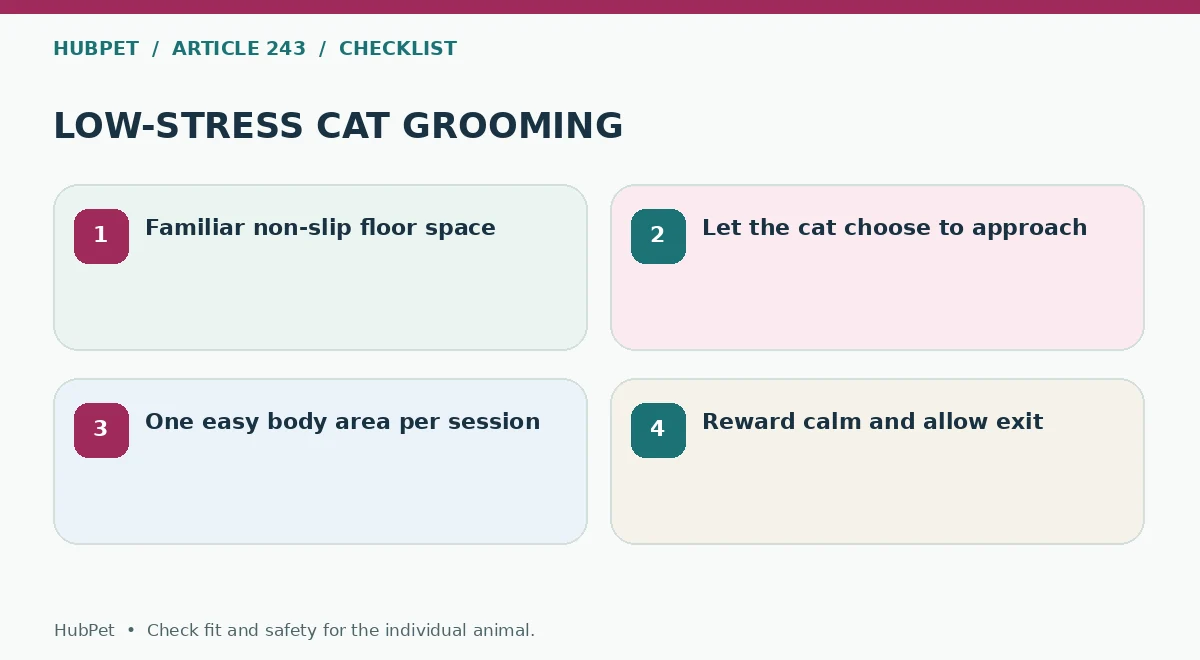
Choose a steady, familiar surface and avoid balancing the cat on a high table. Lay out a gentle brush, an appropriate comb, and a reward before you invite the cat closer. Keep doors and escape routes safe without cornering the animal. A short session on the floor can give you better control than a stressful grooming station.
First show the tool from a distance. If the cat approaches, reward that choice. Then touch a comfortable area briefly and pause. A tail swish, flattened ears, skin twitch, or departure may signal that you should stop. Our calm cat brushing lesson develops this approach in smaller steps.
Set different expectations for short and long hair
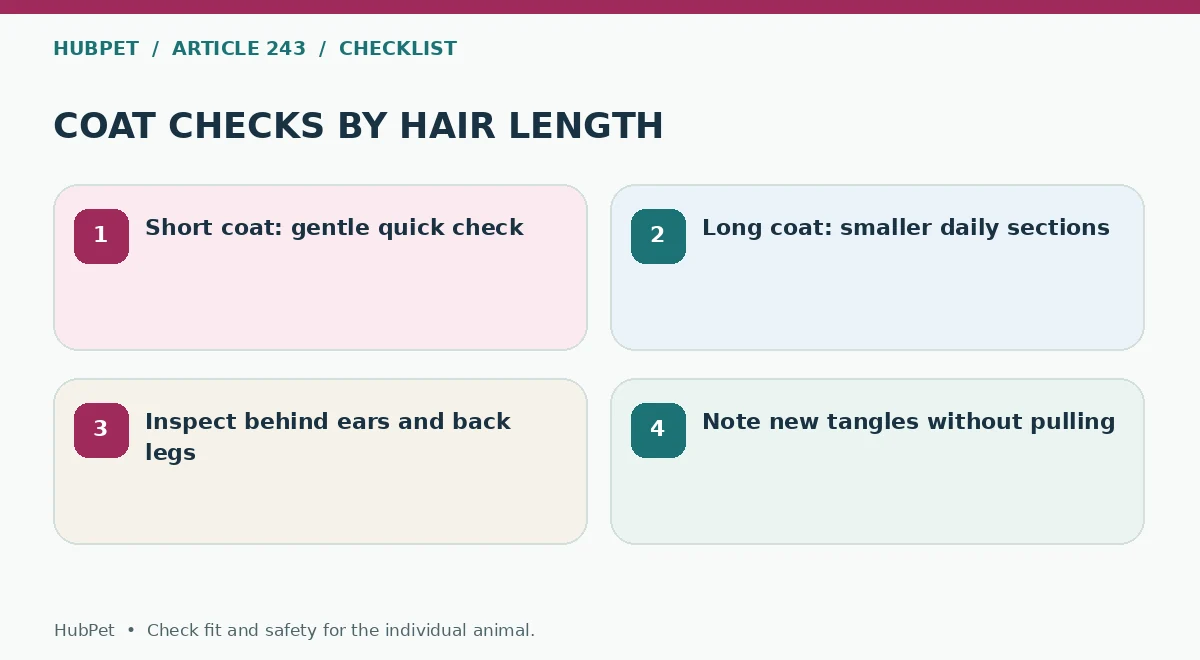
A short, healthy coat may need a gentle once-over and regular observation rather than a daily intensive session. Long hair can tangle more readily, especially behind the legs and near friction points. Cats Protection recommends adjusting grooming frequency to coat length and the individual cat. Do not rely on one fixed schedule.
For long hair, divide the coat into manageable areas across separate sessions. Use a suitable comb gently and avoid tugging knots. Instead of chasing a perfect finish, note which areas need attention before they form tight mats. A trained groomer can help create a realistic schedule for a sensitive cat.
Brush with the hair, then inspect the skin
Work along the natural direction of the coat. Begin with an area the cat already enjoys having touched, using light strokes. Check the brush for loose hair, but do not treat the amount collected as proof of success. If your cat pulls away, do not follow with the tool to finish a predetermined number of strokes.
After each small patch, part fur gently enough to glimpse the skin without scratching it. Look for new redness, scabs, parasites, damp patches, or bumps. Those findings may warrant a veterinarian rather than extra grooming. In addition, limit repeated strokes over one place to avoid tenderness.
Treat minor tangles differently from mats
A loose tangle may separate with careful fingers and a gentle comb if your cat stays comfortable. A dense mat can trap skin and cause pain. Do not cut it with household scissors because feline skin can fold beneath hair. If the clump feels tight or lies against skin, stop and contact a veterinarian or experienced cat groomer.
Cats that struggle with handling may need a professional plan before grooming continues. Never hold a cat down to finish a painful tangle. The mat-prevention guide covers why friction zones need regular monitoring, but prevention does not replace professional removal of established mats.
Decide whether a bath is necessary
Cats Protection and the ASPCA describe regular coat care as largely self-directed for healthy adult cats. Dirt on one small spot may need only a damp cloth, provided the substance is safe and your cat accepts touch. A full bath can cause considerable distress and is not an automatic solution to dull fur or shedding.
If a cat contacts a potentially toxic substance, do not wait for a routine grooming appointment; contact a veterinarian or poison-control service promptly for specific instructions. Never use dog-only or human products without veterinary approval. An older cat that cannot stay clean may need assessment for a health or mobility problem.
Keep nail care separate from fur care
Some cats accept a brush but strongly dislike paw handling. Practice touching a paw and releasing it before you bring out a nail clipper. Do not combine brushing, nail trimming, ear care, and bathing in one long session just because you have the supplies ready. Independent sessions make it easier to identify what worries your cat.
For nail trimming, use a purpose-built tool and learn to identify the quick. Trim only when the cat remains calm and you can see what you are doing. Our cat nail guide covers the process and safer alternatives when handling is difficult.
Adjust grooming for senior or less mobile cats
Aging cats may have difficulty reaching the lower back or rear. However, messy fur does not establish a diagnosis. Pain, dental problems, weight changes, and other conditions can affect grooming. Ask your veterinarian about a new inability to maintain the coat, particularly when it comes with reduced appetite or reluctance to move.
Meanwhile, offer shorter sessions on a padded non-slip surface and stop at any sensitive joint or skin area. Ask the veterinary team which brushes and handling positions the cat can tolerate. A professional groomer may be able to maintain difficult coat sections without a distressing home procedure.
Keep cleaning products and tools cat-safe
Brushes and combs should be clean, intact, and free of sharp ends. Avoid essential oils, strong perfumes, and human shampoos as routine coat products. An unfamiliar product may irritate skin or become a problem when the cat licks its fur. Ask your veterinarian before introducing medicated washes or specialized grooming solutions.
Store sharp tools securely and dry equipment after cleaning according to the maker’s instructions. If several pets share a home, do not pass a dirty brush from an animal with suspected skin disease to another pet. First seek veterinary advice about the cause and hygiene precautions.
Build a schedule that the cat can accept
Choose one small body area and end while the cat still seems comfortable. On the next day, check a different area or repeat the same gentle contact. Track changes in coat condition and willingness to participate. You can gradually extend a session, but stopping early is appropriate if the cat walks away.
Finally, review the pattern every week rather than judging one imperfect brushing. A maintained coat and a cat that remains willing to approach the tool are better goals than a flawless photo. Ask for expert help when mats return, the coat worsens, or handling becomes a struggle.
How We Research
We compared this article’s choices with current veterinary, animal-welfare, and transport guidance, checking the cited sources on October 26, 2026. Recommendations focus on observable fit, safe handling, and real-world limits rather than unverified brand claims. Product specifications and travel rules can change, so confirm them with the provider and your veterinary team. We have not purchased, laboratory-tested, ranked, or endorsed individual models. Read more at About HubPet.
Sources
VCA Animal Hospitals: Choose the Best Brush for Your Pet. Accessed October 26, 2026.
ASPCA: Cat Grooming Tips. Accessed October 26, 2026.
Cats Protection: Elderly Cats: Care Guide. Accessed October 26, 2026.
No. Coat length, shedding, mobility, and the individual cat matter. Short-haired cats may need occasional gentle brushing, while long-haired cats often require more attention.
Not automatically. Healthy cats generally clean themselves. Ask a veterinarian about persistent dirt, sudden coat changes, or any substance that may be toxic.
No. Skin can bunch beneath a tight mat and household scissors can cut it. Consult a veterinarian or qualified cat groomer about safe removal.
A change in mobility, pain, or another health issue could affect grooming. Arrange veterinary advice rather than assuming the cat simply needs more brushing.
Stop the session. Start again with the tool at a comfortable distance, reward voluntary interest, and gradually introduce gentle contact without restraint.