
Dog grooming at home works best as a repeatable care routine, not one exhausting session where you attempt to finish every task. Coat type, age, skin health, and comfort with touch all change what is reasonable. This guide organizes basic brushing, bathing decisions, paw checks, and nail care into short steps that you can adapt to your dog.
Grooming also gives you a chance to notice new lumps, sore skin, redness, or discomfort, but it cannot diagnose the cause. VCA recommends seeking professional help for severe mats, and ASPCA advises veterinary assessment for persistent skin changes. Stop any painful handling and follow the HubPet veterinary disclaimer when you suspect a health issue.
Make the space calm, grippy, and easy to leave
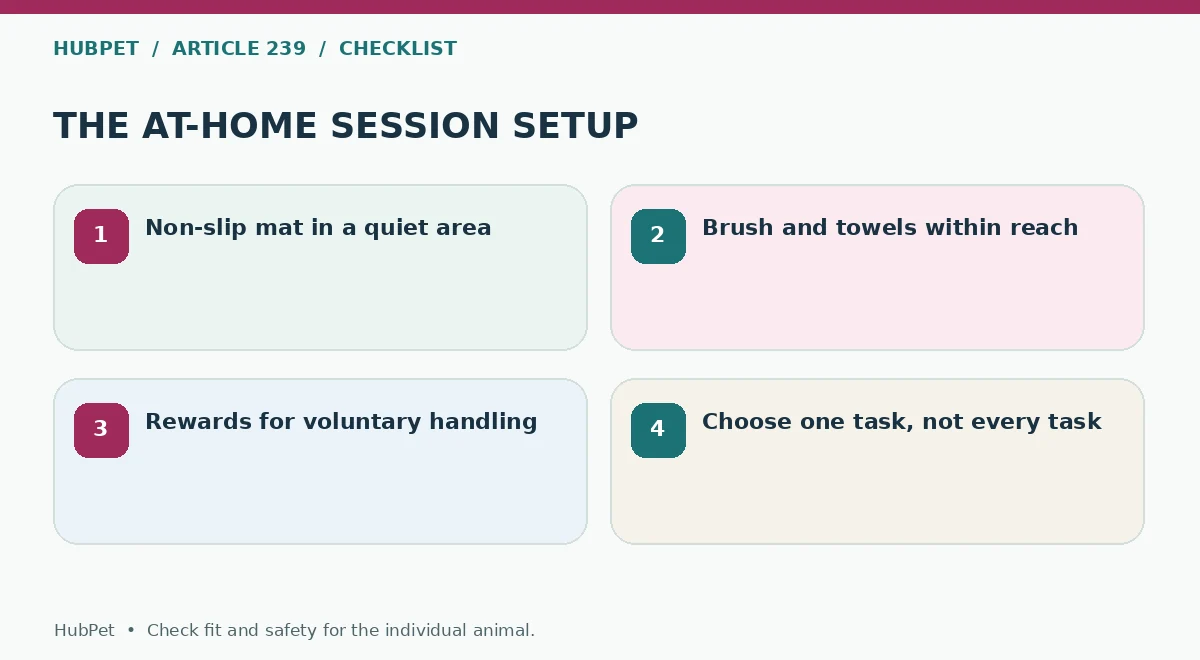
Choose a non-slip floor or mat with enough room for your dog to turn away. Put brushes, towels, rewards, and a trash bag within reach before inviting the dog over. Avoid balancing a nervous dog on a tall table. An unstable surface can lead to a fall before you finish the first brush stroke.
Keep the first session short and give the dog a choice to pause. If a second person helps, their role is to offer rewards and observe comfort, not pin the dog in place. Our cooperative handling routine describes gradual touch practice.
Map the coat and identify the high-friction spots
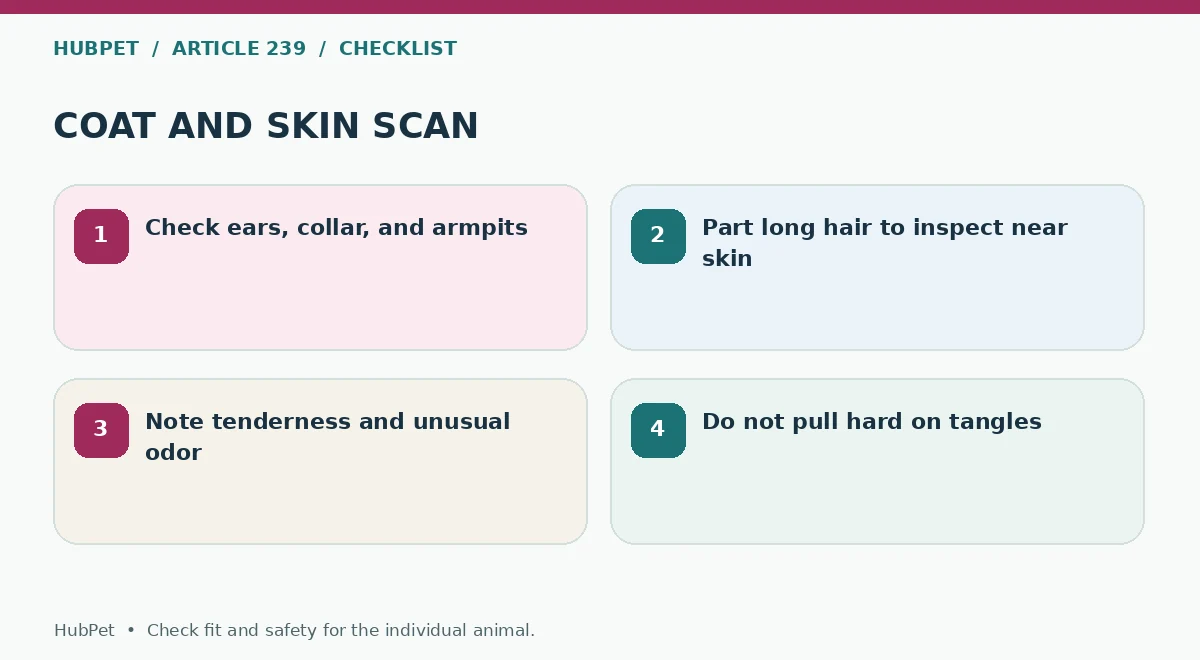
Start by feeling gently behind the ears, under the collar, beneath the front legs, and along the tail. These areas can mat when fur rubs together. Part the coat in small areas and look for tangles close to the skin, not only on the surface. A thick or curly coat may hide tight clumps.
Notice scratches, odors, parasites, wet areas, and tenderness without trying to diagnose them. A sudden change or an open sore warrants a veterinary call. Record trouble spots so the next appointment can focus on a few manageable areas rather than repeating an uncomfortable whole-body pass.
Use the correct brush pressure for the coat
A smooth short coat may respond well to a gentle rubber curry or soft bristle brush. Longer or dense coats may require a slicker or pin brush and a comb for checking tangles. Ask a groomer or veterinarian to demonstrate the best method for your dog’s particular coat. No single tool fits every breed.
Work in small sections and follow the direction of hair growth unless trained otherwise for a specific coat. Watch the skin beneath the brush. Repeated scraping and aggressive de-shedding can hurt. Stop when the dog flinches or pulls away rather than increasing pressure to finish faster.
Treat mats as a safety problem, not a race
A tight mat can pull on skin and conceal inflammation. VCA advises professional help for severe tangles and warns against using scissors close to skin because skin can be pulled into the mat. Do not cut into a tight clump at home just because it looks like ordinary hair.
You may gently separate minor loose tangles with appropriate tools while the dog remains comfortable. If a mat feels attached to skin, causes pain, or covers a large patch, arrange professional grooming or veterinary care. See our mat-care guide for safer decision points.
Decide whether a bath is actually needed
Bathing frequency depends on coat, activity, skin condition, and veterinary guidance. Too many baths can dry the skin for some dogs. Brush out loose debris and resolve tangles before wetting the coat. Prepare lukewarm water, a dog-specific shampoo, towels, and a non-slip washing surface in advance.
Keep the dog’s face out of the direct spray and avoid getting shampoo in eyes or ears. Rinse thoroughly because leftover product can irritate the skin. If the dog becomes frightened, pause and try a shorter, gentler approach next time. Our bathing-frequency article explains the factors involved.
Dry thoroughly without overheating
After a bath, blot water with towels rather than harsh rubbing that tangles long fur. Use a dryer only if the dog tolerates it and the device provides safe, cool or appropriately low heat. Keep the airflow moving and away from eyes, ears, and sensitive skin. Some dogs need a professional drying setup.
Check dense areas near the armpits, groin, and behind the ears for lingering dampness. Never leave a frightened dog restrained beneath a hot dryer. If you discover irritated skin or a strong unusual odor, contact your veterinarian rather than covering the problem with scented grooming products.
Check paws and nails before picking up clippers
Look between toes for debris, redness, and anything caught in the fur. Observe nails while the dog stands normally. Long nails can affect comfort, but the safe amount to trim depends on where the quick ends. Dark nails make that line difficult to see, so only trim when you understand the technique.
Practice touching a paw briefly before introducing a clipper or grinder. Reward calm cooperation and stop if the dog becomes frightened. Do not rush to complete four paws at once. For detailed steps, use our dog nail-trimming guide or ask a professional for a demonstration.
Observe ears and teeth without improvised treatment
While brushing, notice whether the dog is shaking its head, scratching the ears, or resisting touch on one side. These changes may need a veterinarian. Do not insert cotton swabs deeply into the ear canal or use medicated cleaners without direction. An ear with pain or discharge needs proper examination.
Grooming time can also include brief mouth-handling practice, but dental cleaning is a separate skill. Use dog-safe products recommended by your veterinary team. Human toothpaste may be unsuitable for pets. A dog with pain or persistent bad breath should receive veterinary advice rather than only a new grooming tool.
Build a sustainable weekly rotation
Split tasks across days according to tolerance. A short coat check might take only a few minutes; a longer coat may need more frequent gentle brushing. Reserve another short session for paws and handling practice. Track which areas are comfortable and which cause avoidance, then adjust the next session accordingly.
Use a simple note for date, skin observations, products used, and the dog’s behavior. Reward the end of each relaxed session so grooming becomes predictable. A schedule is a prompt for observation, not a reason to continue while the animal is overwhelmed or in pain.

Know when to call a groomer or veterinarian
Severe mats, difficult trims, frightened behavior, or complex coat care often call for a trained groomer. Skin lesions, persistent scratching, bald patches, painful ears, or a sudden intolerance of touch need a veterinarian. Do not force a full grooming session to make the dog look tidy if it creates injury risk.
For a new medical change, write down when you first noticed it and share photos with the clinic if requested. Keep maintenance care and health assessment separate. The aim of home grooming is comfort, hygiene, and early observation—not replacing treatment or expert handling.
How We Research
We compared this article’s choices with current veterinary, animal-welfare, and transport guidance, checking the cited sources on October 26, 2026. Recommendations focus on observable fit, safe handling, and real-world limits rather than unverified brand claims. Product specifications and travel rules can change, so confirm them with the provider and your veterinary team. We have not purchased, laboratory-tested, ranked, or endorsed individual models. Read more at About HubPet.
Sources
VCA Animal Hospitals: Grooming and Coat Care for Your Dog. Accessed October 26, 2026.
ASPCA: Dog Grooming Tips. Accessed October 26, 2026.
AKC: Dog Grooming at Home: Brushing, Bathing, and Nail Care. Accessed October 26, 2026.
Coat type and tangling risk matter more than one universal schedule. Smooth coats may need less work, while long or dense coats often need frequent gentle checks.
Avoid scissors near a mat because skin can be pulled into the clump. VCA recommends professional help for extensive or painful matting and veterinary care if skin is irritated.
Not automatically. Bathing needs vary by coat, environment, and skin health. Ask your veterinarian about frequent bathing or a medicated shampoo plan.
Break the task into voluntary handling steps and reward calm behavior. A groomer or veterinary team can show safe technique; do not restrain and force a frightened dog.
Pain, sores, persistent itching, unexpected bald spots, a strong new odor, or ear discharge require professional veterinary evaluation rather than cosmetic grooming alone.