
A grooming glove puts flexible nubs on the palm of your hand. Some cats find that familiar contact easier than a long-handled brush. However, a glove can still snag, overwhelm the cat, or miss tangles hidden under long fur. A good fit lets your fingers move naturally without loose fabric folding over the nails. Check the rubber surface for damaged nubs and use gentle strokes on areas your cat already likes you to touch. Treat the glove as an optional comfort tool, not a substitute for inspecting coat and skin.
Check glove size before judging the cat’s reaction
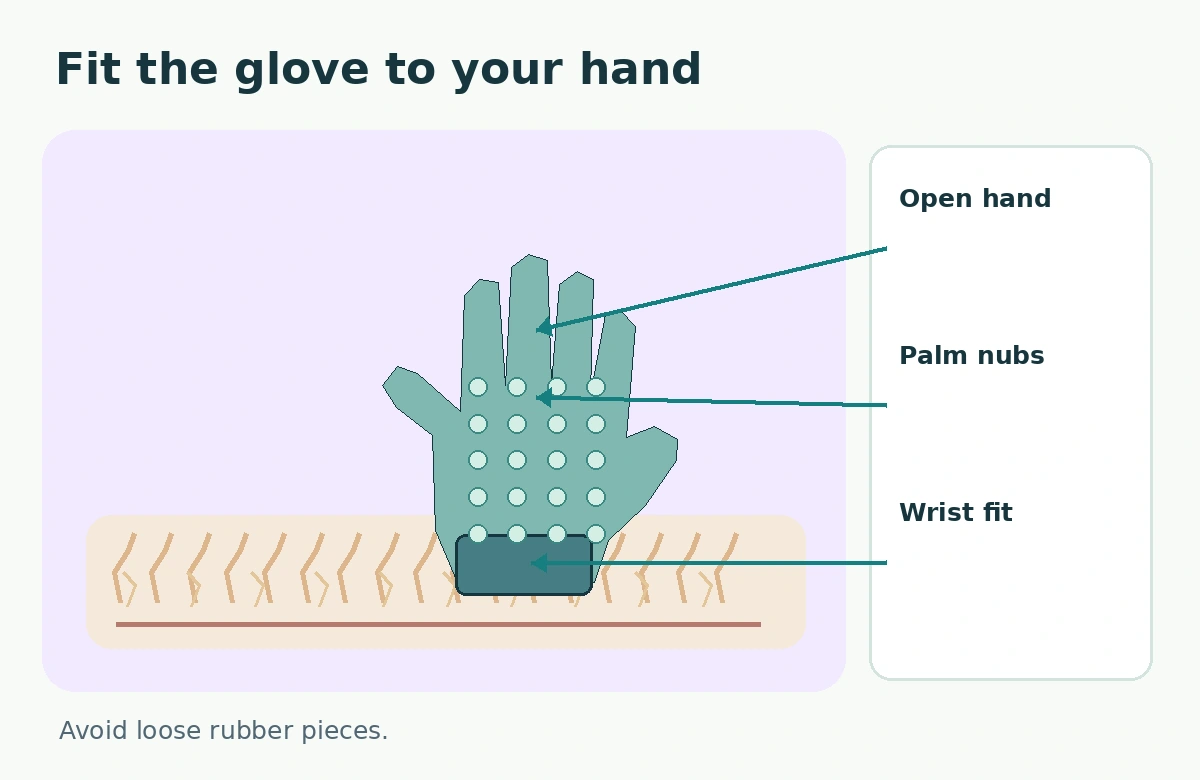
Slip your hand into the glove and close your fingers. The fabric should stay in place without bunching around the fingertips or squeezing the wrist. A loose glove can twist, making each stroke uneven. A glove that fits too tightly makes it harder to respond when the cat shifts. Adjustable wrist closures can help, but check that any hook-and-loop material does not snag fur. Test the glove while it is dry and clean, following its instructions. Choose a size you can remove immediately if the cat becomes uneasy.
Inspect the rubber nubs and stitched seams
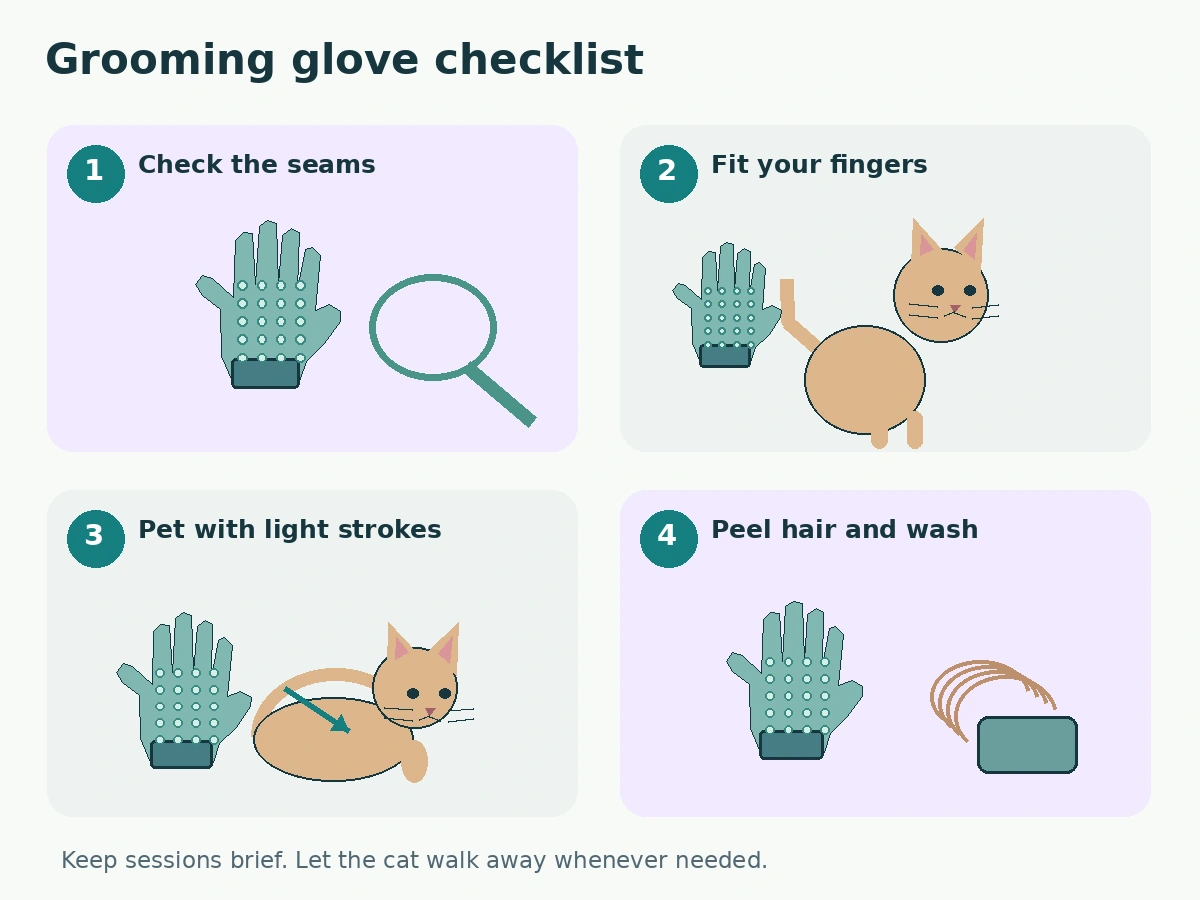
Turn the palm toward a bright light. Look for nubs with rounded ends, even attachment, and no torn pieces. Rub the surface lightly across your own forearm to check for scratchiness. Examine the seam where the textured panel meets the fabric, because a frayed edge can catch long hair. Replace a glove with peeling rubber or loose fragments. Do not allow a kitten to chew detached nubs; store the glove out of reach. These basic checks make the actual contact safer and more predictable.
Choose a stroke that resembles ordinary petting
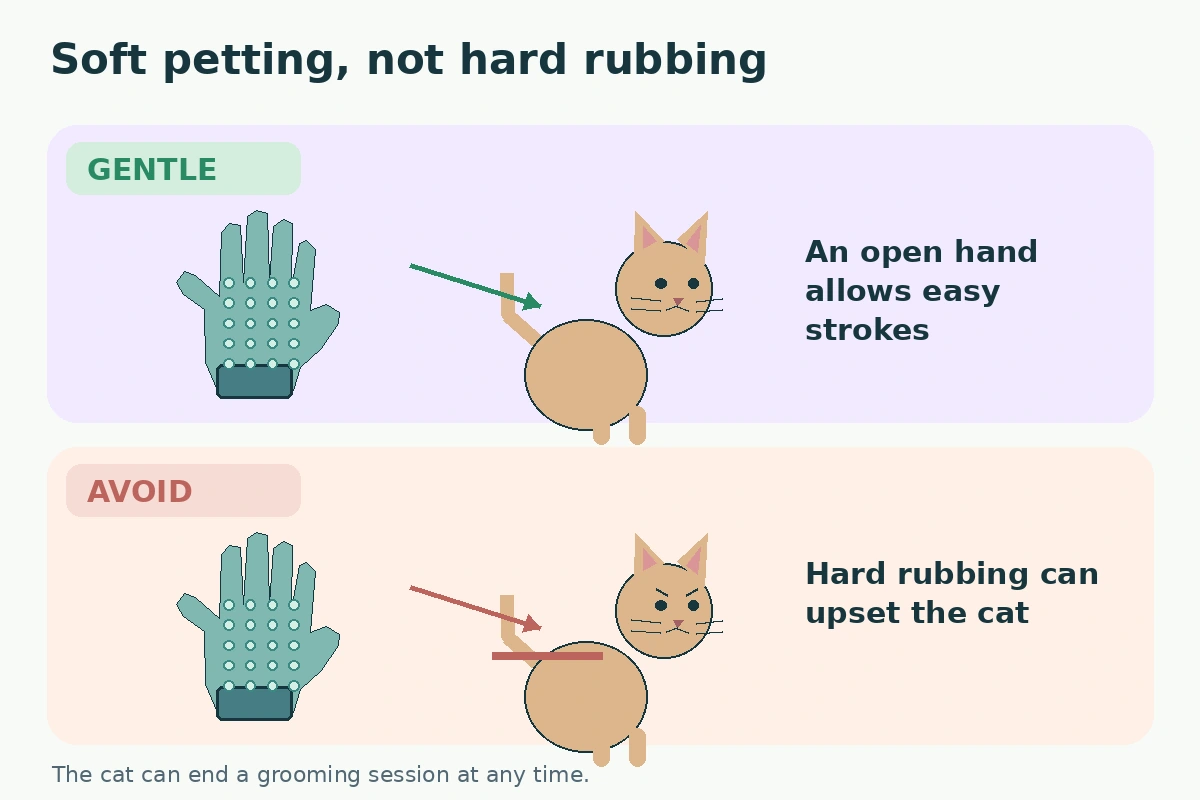
Begin at the shoulders or along the back where your cat usually accepts a hand. Keep your palm open and move with the direction of the hair. You do not need to rub in circles or press harder to fill the glove with fur. Lift your hand between passes so the nubs do not drag across a fold in skin. A single short stroke can be a successful session. Avoid patting sensitive areas simply because the tool covers your whole hand. If the cat leans away or turns sharply, stop.
Compare a glove with a short-coat brush
A grooming glove can collect loose surface fur and feel familiar on a smooth short coat. A soft brush may give you more control over a small area. Neither is ideal for removing a tight, skin-level mat. For long coats, the glove may smooth the top layer while knots remain close to the body. A wide comb check may still be needed when the cat is comfortable. The comparison picture shows where each tool touches the coat, not a claim that one removes more hair in every circumstance.
Keep the session short and easy to leave
Choose a low, stable surface and let your cat approach rather than bringing the glove toward a hiding place. Use a reward after an accepted stroke. If your cat walks away, let the session end. Do not pin the cat down with the other hand to continue. Watch the tail, ears, shoulders, and skin for tension. A glove does not automatically soothe every cat; some dislike the texture. Returning to a bare hand or a soft brush is an acceptable result.
Avoid brushing the face and delicate regions
Keep the textured palm away from eyes, ears, whisker pads, the genital area, and irritated skin. Short fur over a bony hip may need barely any pressure. Do not force an underarm or belly check by lifting the cat’s legs. If the cat volunteers a side, make a gentle pass there and stop before discomfort appears. A glove cannot tell you whether skin is healthy beneath a thick mat; look and part the fur separately, without tugging.
Remove collected hair between passes
A heavy film of loose fur can make the glove feel uneven and reduce your view of the nubs. Pause to peel hair away, away from the cat’s face and food area. Dispose of fur where pets cannot swallow it. Never leave clumps where a curious kitten can chew them. If the glove has a second cleaning side, follow the manufacturer’s instructions rather than scrubbing it against the cat. Check for any detached rubber before putting the glove back on.
Wash and dry the glove before storing
Read the label to determine whether the glove can be rinsed, hand washed, or machine washed. Use the product’s recommended cleaning method and dry it completely. Damp fabric left inside a closed container can develop an odor and irritate the cat’s experience. Avoid adding perfume or household disinfectant to the grooming surface without approved instructions. Do not share an uncleaned glove between animals with suspected skin issues. Prioritize a clean, intact tool over elaborate features.
Notice when a comb or professional is needed
If fur tangles under the armpits or behind the legs, the glove may simply flatten the surface. Do not keep rubbing a knot. Check gently with your fingers, and use a suitable comb only if the small tangle separates without pain. Tight mats, sores, and painful handling call for an experienced groomer or veterinarian. Household scissors are unsafe near cat skin. If the coat changes suddenly, contact a veterinarian instead of adding longer grooming sessions.
Make comfort your measure of success
A cat that chooses a few strokes, then walks away calm, has had a useful experience. You do not need to collect a full glove of fur. Record which areas the cat liked, whether the texture felt scratchy, and whether the glove stayed in place. On another day, repeat the easiest part. For an older or mobility-limited cat, request guidance if certain areas are no longer reachable or gentle touch causes pain. The glove is one optional tool in a broader care routine.
How We Research
We compared published guidance from veterinary hospitals and animal welfare organizations on coat types, grooming tools, gentle handling, and skin warning signs. This guide explains practical choices, not a diagnosis or a product test. Read our about page for the site background and our veterinary disclaimer for health-related limitations. Ask your veterinary team about painful or sudden coat changes.
Sources
Cats Protection: Grooming Your Cat — reference guidance on grooming choices, coat condition, and safe handling.
RSPCA: Grooming Your Cat — reference guidance on grooming choices, coat condition, and safe handling.
ASPCA: Cat Grooming Tips — reference guidance on grooming choices, coat condition, and safe handling.
They feel different, not universally better. Some short-haired cats prefer the petting-like contact, while long coats may still need comb checks.
No. A mitt may smooth outer fur but cannot safely remove compact mats near skin. Ask a professional about painful knots.
Follow the product instructions and avoid unnecessary wetting. Do not use scented or medicated liquids without veterinary guidance.
It should stay flat during a stroke while your fingers can flex freely. Check for bunching, slipping, and a closure that catches fur.
The texture, pressure, location, or timing may be unpleasant. Stop, return to easier contact, and seek veterinary advice for new tenderness.