
The best cat brush is the one that fits your cat’s coat and feels acceptable during a short session. A grooming mitt and a metal comb do different jobs; neither is an automatic upgrade. This guide compares useful tool categories, explains what to inspect before buying, and separates routine loose fur from mats that need trained help.
Start with the cat in front of you rather than a breed photo on a package. Look at hair length, coat density, tangling locations, and touch sensitivity. If you see bald skin, soreness, or a sudden change in grooming, contact your veterinarian instead of trying more aggressive tools. Our veterinary disclaimer explains the limits of general information.
Use a simple coat-and-task match
Smooth short fur may need loose-hair pickup and a brief skin check. Longer coats benefit from tools that can gently reveal tangles beneath the surface. Dense undercoats need careful handling because removing loose hair is not the same as stripping healthy coat. Decide whether you are maintaining, checking, or tackling a small loose knot.
For example, a soft mitt may please a touch-sensitive short-haired cat but struggle with a knot behind the ear. A metal comb can locate that knot, yet using it roughly could hurt. Ask a veterinarian or groomer to match the tool to the cat if you are uncertain.
Soft bristle brushes for light maintenance
A soft bristle brush distributes strokes over a broad surface and may suit easy coat checks. Inspect the bristles for sharp edges, shedding, and a rigid base that presses too firmly. It should feel gentle on your hand before you offer it to the cat, although human skin is not a perfect test for feline comfort.
Do not use a soft brush as proof that a long coat has no tangles. Its bristles may glide over the outer hair while a tight patch remains underneath. Instead, pair surface grooming with a careful inspection and, when appropriate, a suitable comb.

Grooming mitts for cats that prefer petting
A flexible mitt can turn a familiar hand motion into a grooming step. This may help a cat that likes strokes but avoids a narrow tool. Look for secure fingers, easy cleaning, and a surface without hard protrusions. Test a brief pass along a comfortable area and allow the cat to walk away.
However, mitts are not built to handle deep knots or tight mats. A mitt that removes loose hair from the back may leave the underside untouched. If you find an area that repeatedly tangles, ask about a comb or a professional grooming schedule rather than pulling harder with the mitt.
Metal combs for longer or tangling coats
A wide-spaced metal comb helps you check for catches in a long coat. Rounded, even teeth and a handle you can control matter more than decorative finishes. Start with a small section, avoid pressing into skin, and stop immediately if you meet firm resistance near the base of the hair.
Cats Protection identifies combs as useful for long-haired cats. The comb should slide through a prepared, comfortable section; it is not a lever for tearing through knots. If your cat twists, flinches, or vocalizes when you touch a particular area, pause and assess whether professional help is needed.
Slickers and fine pins require extra care
Slicker-style tools can collect loose hair from some coats, but fine pins increase the need for pressure control. Inspect the pad for bent pins, rough ends, and loose parts. A small head may help around awkward areas, yet do not repeatedly rake a sensitive patch to remove more fur.
Use short gentle strokes only when the cat accepts the tool. Avoid skin contact, especially over thin or irritated areas. A cat that walks away has ended the session. Our low-stress brushing guide shows how to build cooperation before a longer grooming routine.
De-shedding gadgets and sharp edges
Some products promise dramatic fur removal. Ask how the mechanism works and whether it catches coat or contacts skin. A large pile of loose hair does not prove the tool is safer or more effective. Overuse of a cutting or very aggressive head can damage a coat and make the cat resist future care.
If a product includes a hidden blade or a sharp edge, consult a professional before using it. Do not run such a tool over a matted or irritated area. When you cannot inspect the contact surface or identify a safe technique, choose a simpler method.
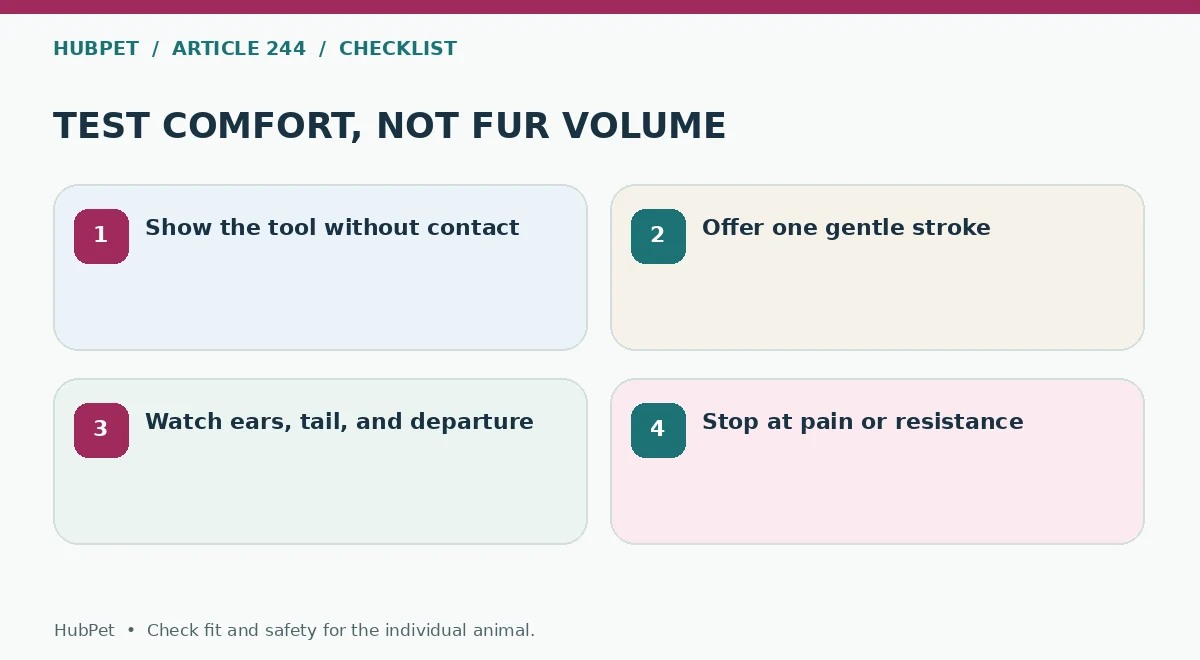
How to test a new brush without a struggle
Put the brush on the floor and let the cat approach voluntarily. Reward a sniff, move the tool away, and repeat later. Then offer a single light stroke on a favored spot. This staged introduction is more informative than restraining the cat and seeing how much hair you can collect.
Watch the ears, tail, posture, and willingness to return. One reluctant response may mean that the place, tool, or timing feels wrong. Try an easier step after a break. If touch seems painful rather than merely unfamiliar, contact a veterinarian rather than pressing on with training.
Choose materials you can clean and inspect
Fur release matters, particularly for fine-pin brushes that trap hair between rows. Check whether the brush rinses or wipes clean according to the maker’s instructions, and whether moisture stays hidden inside the pad. A cracked grip, rusty comb tooth, or protruding pin is a reason to replace a tool.
Keep brushes in a closed storage area so pets cannot chew them. Do not share a potentially contaminated tool with another cat. If you suspect mites, fungal disease, or infected skin, ask your veterinary team about hygiene and treatment before resuming normal grooming.
Do not confuse knots with removable loose fur
Loose hair comes away with light movement. A knot that tugs at skin needs a different response. If it is small and your cat remains comfortable, you may be able to separate a few strands gently. A tight mat needs a veterinarian or experienced groomer because scissors can catch skin concealed beneath it.
A recurring tangle may indicate a coat-care gap, pain, or reduced mobility. Our long-hair mat prevention guide helps you map friction areas. Still, prevention advice cannot safely resolve an existing painful knot.
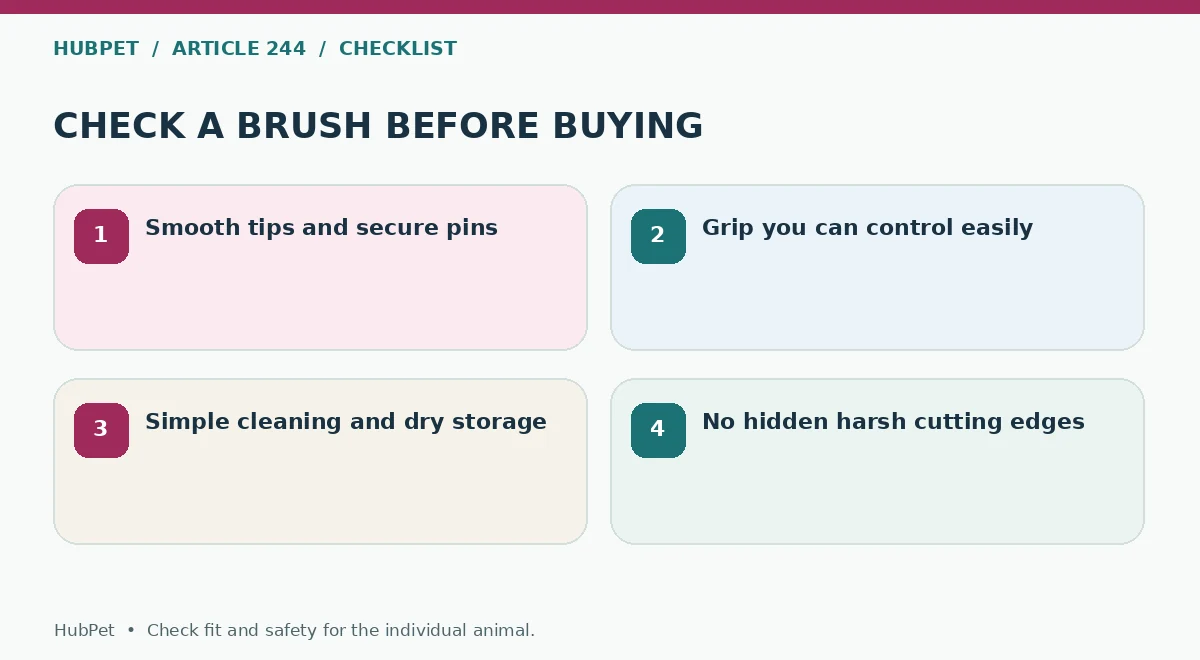
A decision checklist for the first purchase
Write down coat length, whether the cat tolerates strokes, and the location of tangles. Compare two suitable tool types rather than buying an entire set. Check tooth or pin finish, grip, cleaning method, and return policy. If the brush feels harsh, traps skin, or promises impossible results, leave it on the shelf.
Finally, plan a tiny introductory session instead of a full grooming day. A tool that you can use gently and consistently will likely be more helpful than an elaborate device the cat fears. Consult a groomer for persistent tangles and a veterinarian for new coat or skin changes.
How We Research
We compared this article’s choices with current veterinary, animal-welfare, and transport guidance, checking the cited sources on October 26, 2026. Recommendations focus on observable fit, safe handling, and real-world limits rather than unverified brand claims. Product specifications and travel rules can change, so confirm them with the provider and your veterinary team. We have not purchased, laboratory-tested, ranked, or endorsed individual models. Read more at About HubPet.
Sources
VCA Animal Hospitals: Choose the Best Brush for Your Pet. Accessed October 26, 2026.
ASPCA: Cat Grooming Tips. Accessed October 26, 2026.
A soft bristle brush or flexible grooming mitt may suit short fur. Choose a gentle tool your cat accepts and use it for loose hair and skin checks.
A suitable long-tooth comb can help reveal small tangles below the surface. Use it gently and ask a groomer for a technique matched to your cat’s coat.
They require care because fine pins can irritate skin when pressed or repeated too often. Stop with any discomfort and ask a groomer if the tool suits the coat.
No product should promise complete or permanent control of shedding. Prioritize gentle handling and coat condition rather than how much fur comes out at once.
Do not pull or cut the mat with household scissors. A veterinarian or experienced cat groomer can assess removal and check for underlying skin irritation.