
Educational information only, not veterinary diagnosis or individualized behavior treatment. Sudden behavior changes, pain signs, persistent distress, and bite risk warrant appropriate veterinary or qualified professional advice. Read our veterinary disclaimer.
Your cat sits beside you, sniffs a hand, and starts licking your wrist. Sometimes that is a brief friendly interaction; sometimes the same cat licks insistently or follows with a nip. A lick does not have one universal translation. Cats use grooming behavior in social relationships, learn which actions attract attention, and investigate unfamiliar tastes and smells. The useful question is not “Does every lick mean love?” but “What is happening around this particular lick?”
We focus here on cats licking people, rather than on self-grooming or wound care. If your cat is licking their own skin so much that fur is missing, seek veterinary guidance instead of treating the problem as a social signal. For the wider picture of feline choices and touch tolerance, see our guide to why cats bite during petting.
Five Common Reasons a Cat Licks a Person
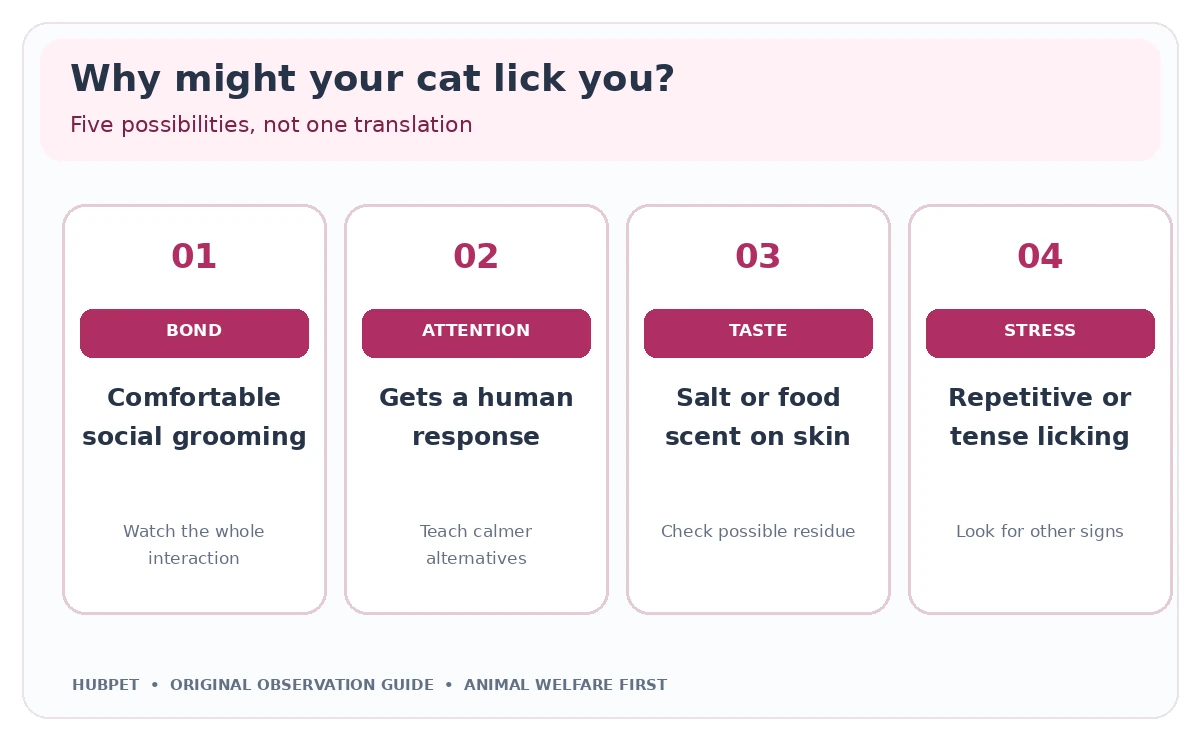
VCA identifies several plausible reasons, including social bonding, attention, appealing tastes or smells, and stress. Friendly social licking can resemble grooming interactions that cats perform with other familiar cats. A cat may also discover that licking gets you to turn, talk, or offer contact. Salty skin after exercise can attract investigation, as can traces of food. The exact motive is not something we can prove from the tongue movement alone.
Notice the setting. Is your cat curled beside you with a loose body and soft eyes, briefly licking after a gentle greeting? Or are they pacing, repeatedly licking the same spot, and showing tense movement? The first context may fit a comfortable social moment; the second deserves a closer look. Keep the cat free to leave either way.
Read the Body Before Assuming Affection
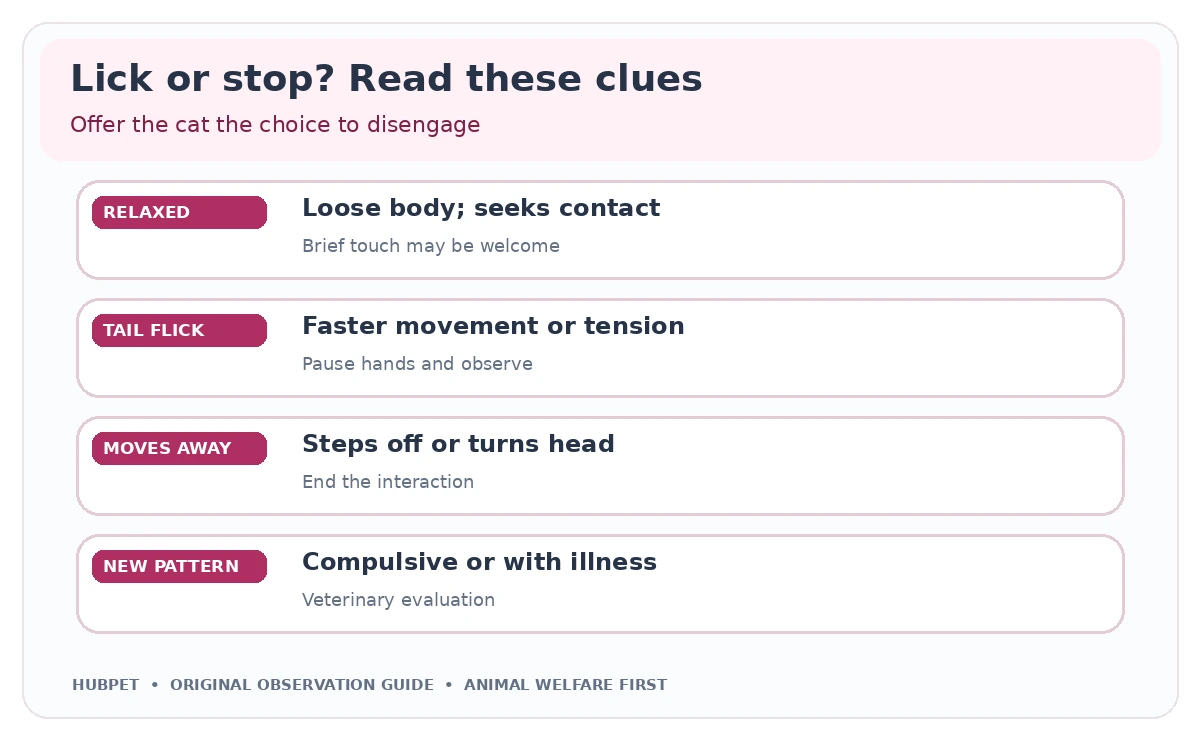
A relaxed cat may lean nearby, blink slowly, or maintain a comfortable distance while grooming. A cat that flicks the tail sharply, turns ears sideways, stiffens, or swats may be reaching a limit. Licking followed by biting does not necessarily mean the cat changed from happy to angry without warning; humans sometimes miss earlier signals that contact has become too much.
Pause petting after a few strokes and see whether the cat voluntarily asks for more. Do not hold the cat still, place your face close to their mouth, or insist that licking continue. If the cat moves away, let that end the interaction. This approach makes the animal’s preference clearer and helps prevent scratches or bites.
Pay Attention to Skin Products and Food Residues
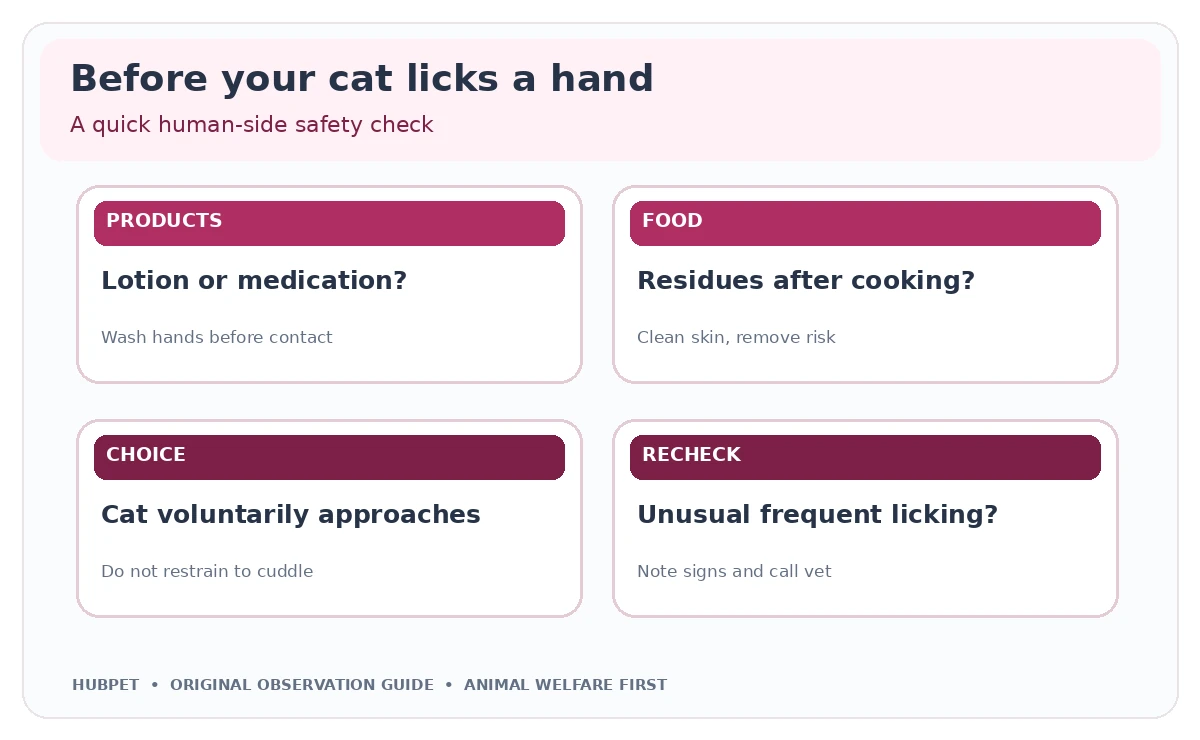
If licking follows hand lotion, shampoo, perfume, topical medication, or cooking, assume the product might be interesting rather than affectionate. Do not let a cat intentionally ingest cosmetics, medications, essential oils, cleaning substances, or unknown residues from skin. Some ingredients can harm animals, and there is no safe general rule that products applied to people are safe for pets to lick.
Wash your hands after using topical medicines or household chemicals and before handling your cat’s food. If you think your cat has licked a medication or toxic substance, contact your veterinarian or an animal poison-control service promptly and provide the product label. Do not induce vomiting or try a home remedy without professional advice.
Redirect Excessive Licking Without Punishment
If licking becomes irritating but the cat looks comfortable, gently end access to your hand and offer a suitable alternative such as a toy, brief play session, or resting place. Try to meet social and play needs earlier in the day rather than only reacting after persistent licking. Never spray, shout at, or physically punish your cat. That can create stress without revealing why the behavior started.
For a cat who licks just before meals, establish predictable feeding and enrichment routines so your response is not accidentally linked only to persistent licking. Our toy-rotation guide explains how to keep safe activities available without flooding the environment. The aim is to add choices, not to forbid normal feline communication.
When Licking Is a Change Worth Investigating
A sudden sharp rise in licking, especially alongside reduced appetite, hiding, restlessness, vomiting, sensitivity to touch, skin changes, or unusual self-grooming, warrants veterinary attention. Licking a person cannot diagnose stress, nausea, pain, or a specific disease; VCA notes that medical concerns can sometimes accompany unusual licking patterns. Describe the change and associated signs rather than guessing the condition.
Distinguish occasional social licking from a new repetitive behavior that seems difficult to interrupt. The second may need medical and behavioral review. Avoid applying bitter or irritating substances to your skin to stop licking; safer management starts with limiting exposure, offering alternatives, and seeking help when the pattern is new or extreme.
A Simple Four-Question Licking Check
Ask: what happened right before licking, what was on my skin, what did the cat’s body look like, and what did the cat do when I stopped contact? A short notebook entry might say: “After dinner prep; cat sniffed fingers; relaxed posture; walked away when I moved.” That suggests a different response from “Repeated licking at night with pacing and loss of appetite.”
You can acknowledge a comfortable cat with gentle attention while preserving their choice to disengage. If licking is unwelcome, it is reasonable to move your hand away calmly. A respectful boundary does not harm the relationship; consistent, low-stress interactions make communication easier for both of you.
How We Research
We reviewed the linked veterinary, animal welfare, and behavior resources on October 26, 2026, using the HubPet editorial approach. The cited organizations provide guidance, while the observation prompts and practical household examples are our own. Editorial checks addressed unsupported mind-reading of animals, aversive training suggestions, and advice that could delay necessary veterinary care. Our original diagrams serve as teaching tools, not diagnostic charts or findings from clinical studies. Individual animals differ: consider your pet’s usual behavior, age, medical history, and safe opportunity to disengage.
Sources
VCA Animal Hospitals: Why cats lick humans. Accessed October 26, 2026.
ASPCA: Aggression in cats: reading feline body language. Accessed October 26, 2026.
VCA Animal Hospitals: Signs of pain in cats. Accessed October 26, 2026.
Best Friends Animal Society: How to read cat body language and emotions. Accessed October 26, 2026.
Social grooming may be one reason, especially during a relaxed interaction, but taste, attention and stress can also play roles. Read body posture and context.
The cat may have reached a handling limit or become overstimulated. Pause touch, watch for tail flicking or body tension, and let the cat move away.
Do not encourage licking lotions, topical medicines, essential oils or unknown residues. Wash treated skin and ask a veterinary professional about any suspected ingestion.
Calmly limit access, offer suitable play or rest alternatives, and avoid punishment. If the change is sudden or repetitive, arrange a veterinary assessment.
Cats do perform social grooming, but a lick does not reveal a precise belief about human identity. Stick to what can be observed about the interaction and the cat’s comfort.