
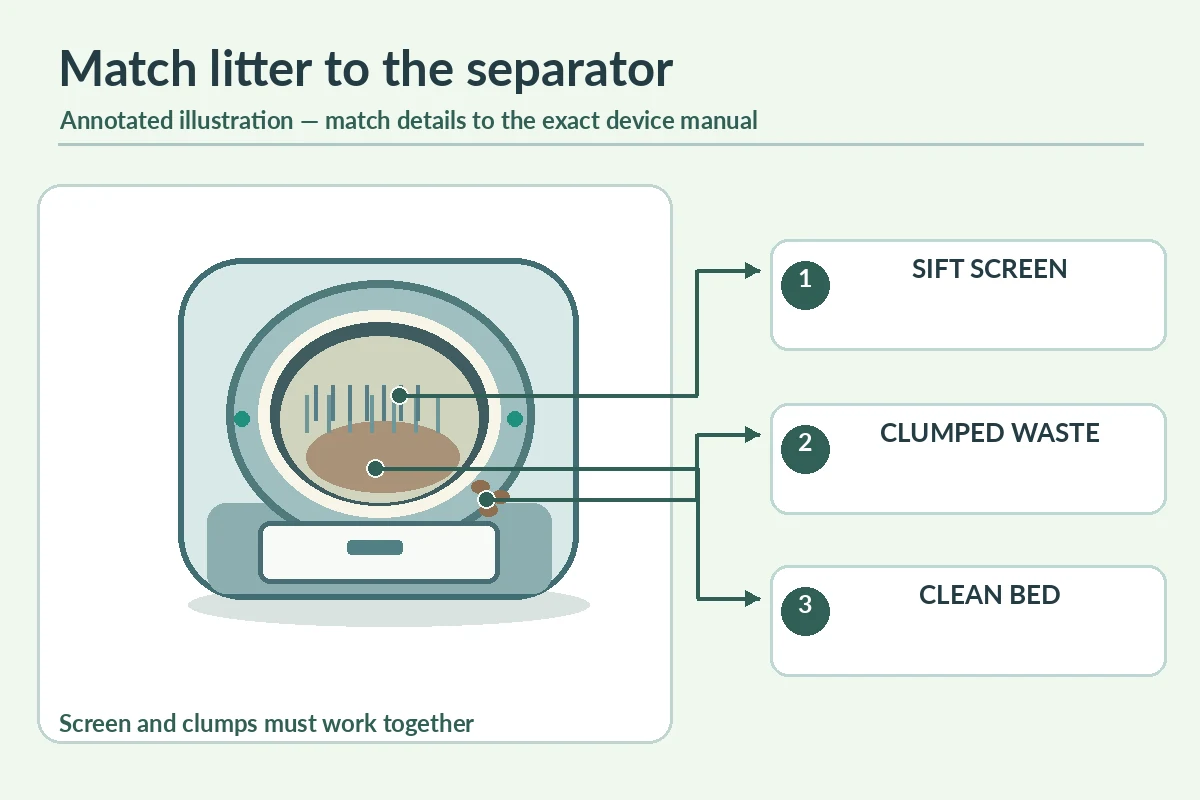
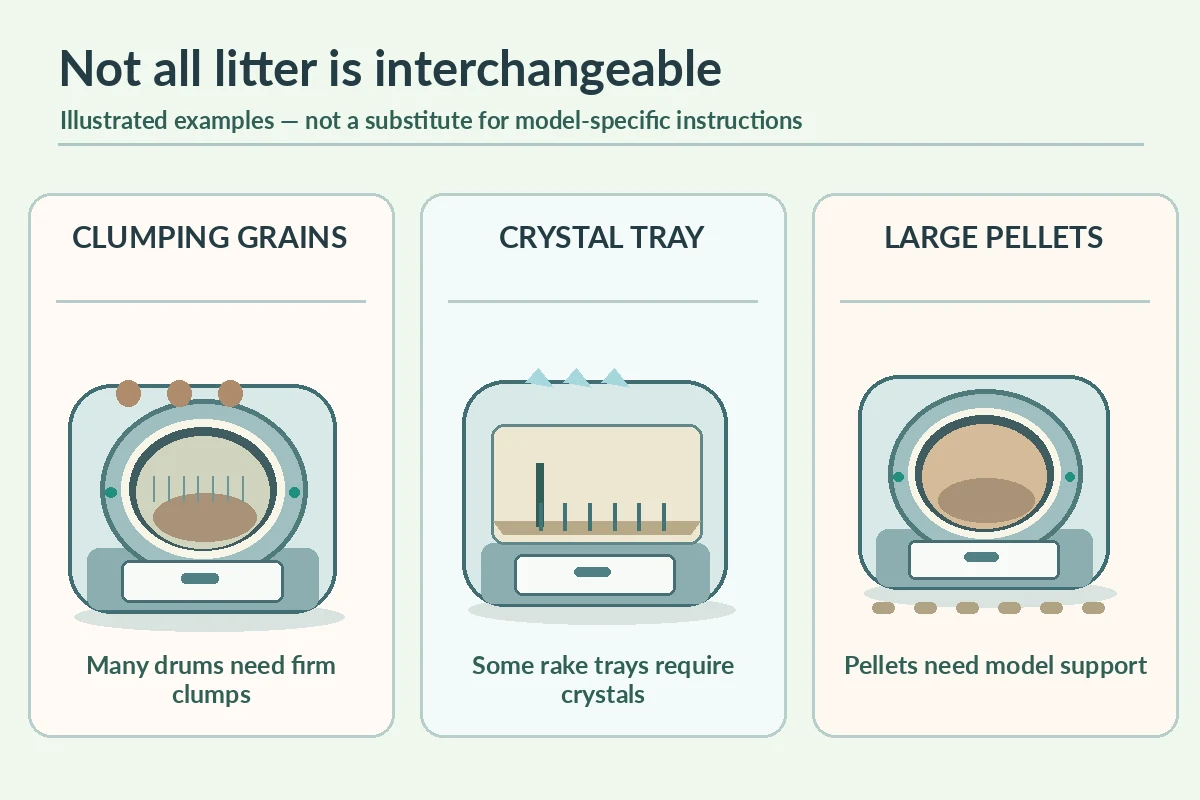
The right litter depends on the machine’s separating mechanism; mixing in an unsuitable substrate can defeat its cleaning system. Automatic boxes do not all clean in the same way. A rotating drum typically separates firm clumps through a sifting screen, while some raking trays push solids into a covered compartment and rely on absorbent crystals for urine. A material suitable for one system can fail in another. The Whisker Litter-Robot support pages discuss scoopable clumping litter; some PetSafe ScoopFree manuals specify proprietary crystal trays. Confirm the exact model name and user manual, not simply a search result containing the phrase “automatic litter box.” This one-minute check can prevent a messy expensive trial.
Understand what a rotating screen needs
Many drum-based machines rely on clumps holding together as granules pass through a sieve. A litter that forms fragile masses may leave wet fragments behind, while huge particles can remain where they should fall through. Extremely sticky litter can adhere to the rotating liner instead of dropping into the drawer. Compare litter grain size with the maker’s stated requirements. Do not invent a substitute screen or alter the mechanism to make a favorite litter work. The target is a clean remaining bed after a full cycle, without dust clouds or large chunks wedged in the chute.
Know why a crystal rake works differently
Rake-style crystal units may move solid waste forward while urine is absorbed into a disposable or reusable crystal-filled tray. They do not always need the firm clumps required by a drum. Some manufacturers specifically prohibit clay and natural litter in these designs, even when the materials seem visually similar. Use the manual’s approved tray and fill level. If you want a different substrate for paw comfort or cost, choose a device that explicitly supports it rather than assuming every rake works with any dry granule.
Be cautious with wood and paper pellets
Large pellets may not pass through a fine drum screen; some break into sawdust that behaves differently from clay clumps. Paper fibers or lightweight pellets may create debris at sensors or gears. Certain pellet systems need a two-tier sieve or different waste-removal method. Because both material and machine designs vary, it is inaccurate to label all pellets universally unsuitable. Read compatibility claims for the exact combination and keep a regular box with the cat’s familiar litter while evaluating alternatives. Never force a reluctant cat to use a rough or unfamiliar texture.
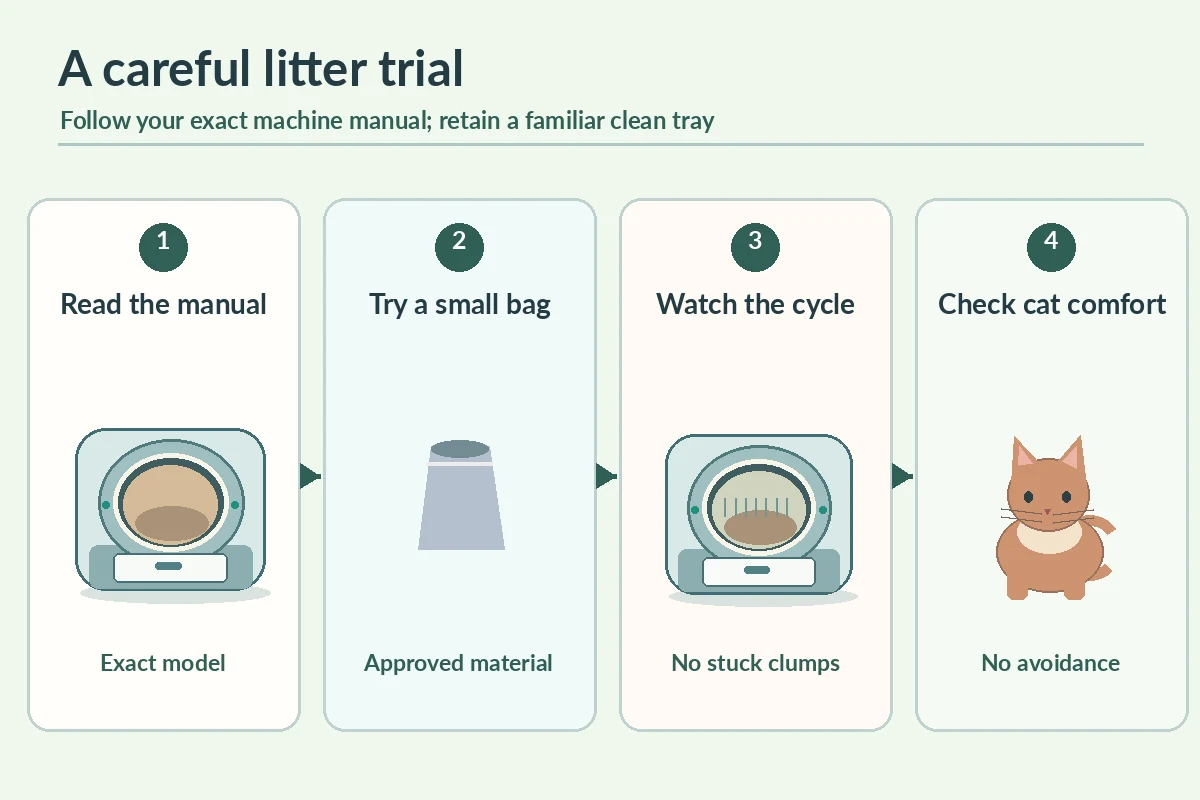
Test a small bag with a clean empty machine
Follow the machine’s filling instructions and never go above its indicated maximum. Add only the manufacturer-approved quantity, let your cat use the tray naturally, and observe a complete cleaning cycle from a safe distance. Look for intact waste transfer, remaining wet spots, stuck clumps, or dust accumulating around sensor openings. A single successful cycle does not prove the litter will work all week. Observe the result after several ordinary uses before investing in large bulk bags. Keep the original manual nearby in case a warning light or jam appears.
Balance cat preference against mechanical efficiency
Cats may prefer a particular grain texture, scent, or depth even when a machine works best with another material. AAHA notes individual substrate preferences and recommends offering separate choices when testing. Many cats favor unscented, fine-textured litter, but no statement fits every cat. Keep a familiar clean tray available while introducing a new automatic-compatible substrate. Observe relaxed entering, digging, covering, and leaving. If the cat refuses the new litter, do not punish or manually hold it in the box; choose a different compatible setup or retain conventional trays.
Account for dust, tracking, and humidity
Dust can interfere with sensors and collect in seals, while tracked granules can make the floor slippery or unpleasant. Humidity may affect how some litters clump or how crystals absorb moisture. Keep the appliance in a dry location allowed by its manual, away from splashes and unventilated damp rooms. Do not place scented chemicals inside electronic cavities to hide odors. Prioritize predictable cleaning and the cat’s comfort. A low-dust claim on the package does not guarantee compatibility with a specific screen, sensor, or waste-drawer opening.
Avoid blending incompatible systems
Mixing a small amount of old and new granular litter can help some conventional transitions, but an automatic sifting machine may need a uniform grain and clumping behavior to work. Adding crystal litter to clay or pellets to a clumping screen can create inconsistent waste separation. Follow the manual rather than copying a generic “gradual mix” recipe. If a cat needs a slower transition, offer a separate ordinary tray with the old substrate next to the new one for a time. Physical choice is often safer than altering the automatic machine’s specifications.
Judge the trial by both machine and cat
A workable combination leaves a usable litter bed, deposits waste where intended, produces no repeated error, and remains acceptable to the cat. Check the underside of the drum, waste chute, and sensor area at the intervals allowed by the manual. Make a short note of cost per refill, cleaning frequency, and whether the cat continues using the device without hesitating. A litter that technically cycles but causes avoidance is not a success. If accidents persist or toileting becomes painful or unusual, restore an accessible conventional box and ask a veterinarian for advice.
How We Research
For this HubPet guide, we compared automatic litter box litter compatibility against published feline welfare guidance and model-specific operating instructions. We separated a machine’s documented capabilities from general assumptions and prioritized a cat’s voluntary use, normal exit access, and low-stress toileting. The original diagrams are illustrative, not photographs, certifications, independent hardware stress tests, or endorsements. This guide does not claim that a particular product is risk-free. Compare the current manual for the exact device and consult your veterinarian about individual toileting concerns. Read more about our editorial approach on About HubPet.
Sources
Whisker, Litter-Robot Frequently Asked Questions (model-specific safety and litter): Read source. Reviewed October 27, 2026.
Whisker, Litter-Robot 4 Support: Kitten Sensor Limits and Litter Compatibility: Read source. Reviewed October 27, 2026.
PetSafe, ScoopFree Original Self-Cleaning Litter Box Manual (model-specific limits): Read source. Reviewed October 27, 2026.
AAHA/AAFP, General Litter Box Considerations: Read source. Reviewed October 27, 2026.
ISFM/AAFP, Cat Friendly Veterinary Environment Guidelines (litter access and texture): Read source. Reviewed October 27, 2026.
Safety note: If your cat strains, repeatedly attempts to urinate with little or no urine, shows pain, or suddenly stops normal toileting, seek prompt veterinary care. This is general education, not veterinary diagnosis. See our veterinary disclaimer.
No. Many rotating models support clumping litter, but some automatic rake-and-tray systems require specific crystal products. Check your manual.
No. Grain size and whether the crystals clump or merely absorb urine matter. Some systems accept certain crystals; others prohibit them.
They may clog an incompatible screen or break down in an unsuitable mechanism. Compatibility is model-specific, not a universal yes or no.
Clump strength, damp conditions, liner condition, fill depth, or an incorrect cycle delay may contribute. Follow the manufacturer’s troubleshooting guidance.
Keep a familiar manual tray available and offer the new litter in the automatic unit without pressure. Observe preference and avoid incompatible mixes.