
A small privacy screen can soften the look of a litter box in a shared room, but it can also hide a cat’s escape route. The question is not whether a screen looks private to people. It is whether the cat can approach, turn around, see hazards, and leave without being cornered by another pet. Review height, stability, cleaning clearance, and the sightlines from a cat’s eye level. Some cats prefer a completely open tray in a quiet location and do not need a decorative barrier at all. This article provides general pet-care information, not diagnosis. If your cat strains to pass urine, repeatedly visits the tray without producing urine, or seems painful, seek urgent veterinary guidance. See our veterinary disclaimer.
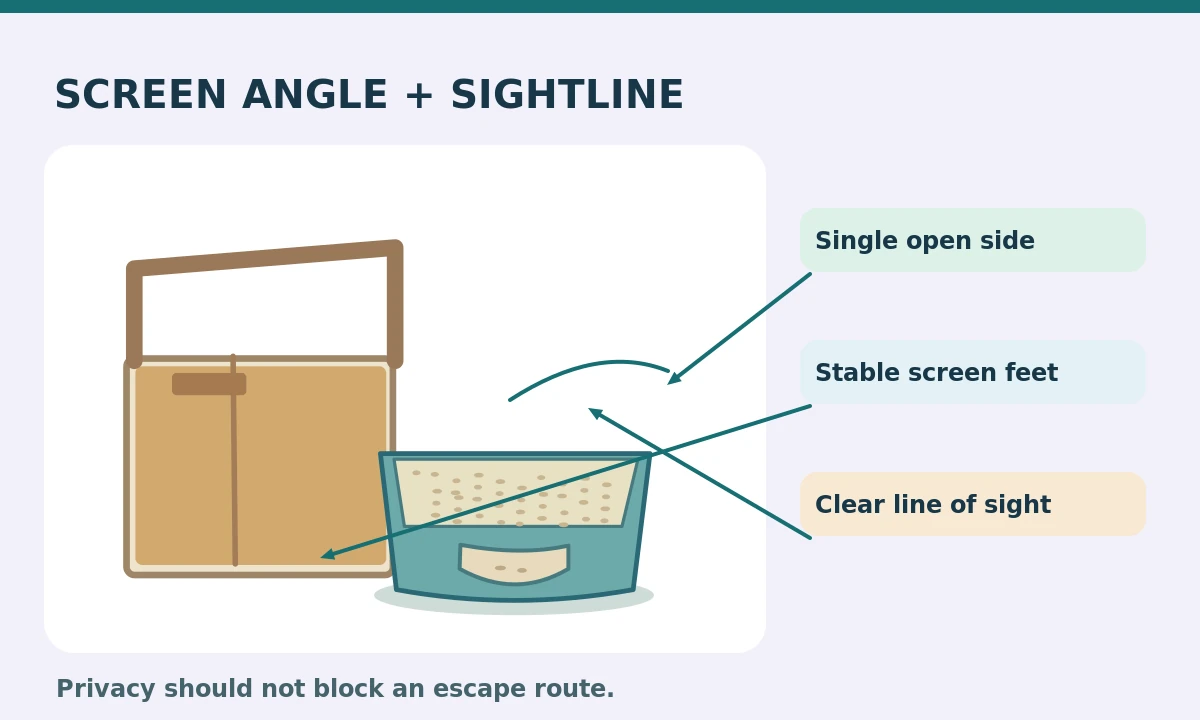
Clarify whose privacy the screen serves
Screens often solve a human problem: hiding litter from the entryway or guests. Cats have different priorities. According to AAFP/ISFM guidance, toileting resources should be accessible and separated from competing animals. A cat may appreciate a quiet corner yet dislike a hidden entrance where a dog can wait. Start with the box uncovered and observe how the cat uses it. If behavior is normal and the location is not disruptive, extra hardware may not be useful. Treat a screen as optional furniture, not as a device that fixes avoidance, odor, or an undersized tray.
Leave more than one comfortable path where possible
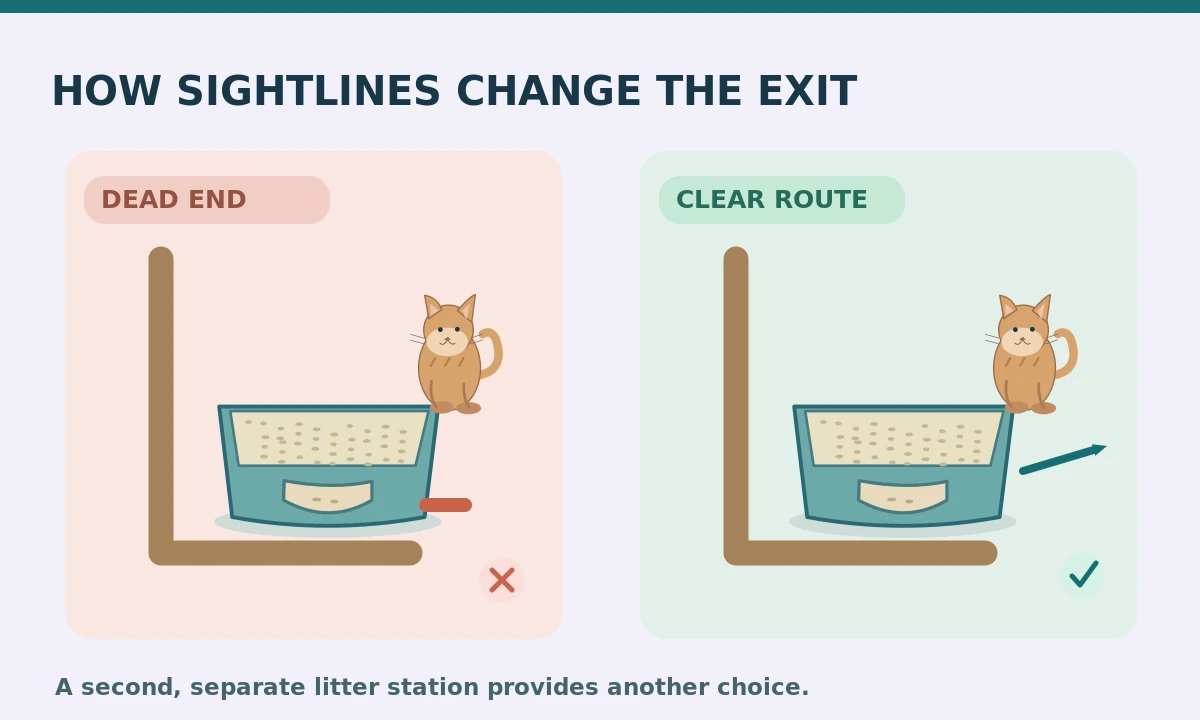
A full U-shaped screen around a tray can create an ambush alley. A single side panel or open L-shape may reduce the view from the room without blocking the cat’s exit. Position the opening so the cat can see the doorway or another pet approaching. Do not push the tray deep into a corner with the opening toward a wall. Use tape on the floor to mark the proposed screen before buying it, then walk the route and check all doors. The safe design depends on the specific room and pets, not a universal angle or a decorative product photo.
Test stability at paw and shoulder height
A lightweight divider can tip when brushed by a cat, a dog, or a vacuum. Look for a broad base, rounded edges, and panels that do not swing inward. Avoid exposed screws, small removable magnets, loose strings, sharp metal wire, or fabric the cat chews. Do not place a tall screen where it can fall onto a tray. If attaching anything to a wall, follow suitable fixing instructions for that wall material; do not guess an anchor rating. A freestanding screen should remain upright when a household member bumps its outer edge in ordinary movement.
Keep the entire litter tray easy to reach
You still need room to scoop and wash. Position the screen far enough away that an adult can lift the litter tray without dragging it against a panel. Make sure the cat can turn and dig naturally, especially if the tray has tall sides. The OSU Indoor Pet Initiative explains that larger uncovered boxes are often preferred and that boxes need frequent maintenance. A barrier that makes daily scooping awkward is likely to lead to less cleaning. Keep the floor beneath the screen easy to wipe and use washable materials that do not soak up repeated splashes.
Think about noise, light, and air movement
A thin panel does not make a busy doorway quiet. If children, dogs, or visitors constantly pass the entrance, find a calmer location first. An opaque screen can block a nervous cat’s view of approaching animals, so test whether a lower panel or different orientation feels better. Avoid creating a sealed pocket of stagnant air or relying on scented sprays to cover odor. Fabric drapes can collect dust and litter and may be tempting for clawing. A smooth, removable screen surface is easier to maintain than upholstery near a litter tray.
Introduce the screen without changing the box
Place the screen nearby at first rather than moving the litter tray immediately. Let the cat notice it voluntarily and keep the usual exit open. When the cat continues to use the box comfortably, rotate or move one panel a little, then observe again. Avoid combining the screen trial with new litter, a new covered box, and a different room. If the cat hesitates, scratches at the panel, or stops using the tray, remove the screen and restore the familiar arrangement. A calm, reliable toilet routine is more valuable than a polished photograph.
Account for dogs, children, and other cats
A screen cannot substitute for a genuine safe route away from a dog or a cat that guards resources. In multi-pet homes, separate litter stations are often more useful than a single enclosed-looking corner. A small child may pull a folding panel or climb its feet, so the panel must not create an obvious toppling hazard. Keep toy cords, lamps, and household clutter outside the entrance. Monitor whether pets can see and approach one another around the screen. If ambushing continues, the better solution is often another room and an alternate litter box.

Recheck the screen during every cleaning cycle
Scoop waste daily and look at the base of the divider for urine marks, damp litter, damaged fasteners, and trapped dust. Pull it away for periodic floor cleaning, then return it to the same safe position. Check for warping after washing and for loose edges that have developed over time. If the cat begins missing the box, do not assume it needs a taller screen. Consider box size, health, litter preference, or an obstructed route. Seek veterinary advice about abrupt toileting changes, straining, or pain before redesigning the station again.
How We Research
Our approach starts with published feline-environment and veterinary guidance, particularly the Ohio State Indoor Pet Initiative and AAFP/ISFM recommendations on box size, locations, and access. We compare those principles with measurable product details and ordinary cleaning requirements. No particular product underwent hands-on testing or received an endorsement; room layouts are practical illustrations, not guarantees. When a litter-box change coincides with urinary symptoms or sudden avoidance, veterinary assessment matters more than accessory shopping. Review the How We Research method and editorial approach for more context.
Sources
Ohio State University Indoor Pet Initiative — Litter Boxes — professional guidance on litter station space, access, resource separation, and routine care.
AAFP/ISFM — Guidelines for Diagnosing and Solving House-Soiling Behavior in Cats — professional guidance on litter station space, access, resource separation, and routine care.
AAFP/ISFM — Feline Environmental Needs Guidelines — professional guidance on litter station space, access, resource separation, and routine care.
No. Many cats do well with an uncovered litter tray in a quiet accessible location. A screen should not be added automatically.
Not when it creates a narrow single exit that another pet can block. A more open layout may preserve better sightlines.
There is no universal ideal height. Prioritize secure stability, clear routes, and the cat’s ability to see approaching activity.
No. It can hide the box from view but does not remove waste or prevent odors from a dirty tray.
Remove the screen, restore the old layout, and investigate access, cleanliness, stress, and possible medical causes.