
This article is general information, not veterinary advice. If your pet seems unwell, is in pain or may have eaten something harmful, contact your vet or an animal poison control line right away. Read our vet disclaimer.
An animal urine remover is not a single universal liquid that works on carpet, sealed tile, untreated wood and patio concrete in the same way. A fresh puddle on a washable surface is a different job from a stale odor that has soaked into carpet padding. Start by identifying the species, material, age of the accident and any previous cleaning products. Then choose a product whose label explicitly permits that surface. This guide sorts cleaners by cleaning task, explains why an enzymatic pet-odor neutralizer may help with organic residue, and shows when an extractor or a flooring professional is a more realistic option. No product label should replace a patch test or safe handling around pets.
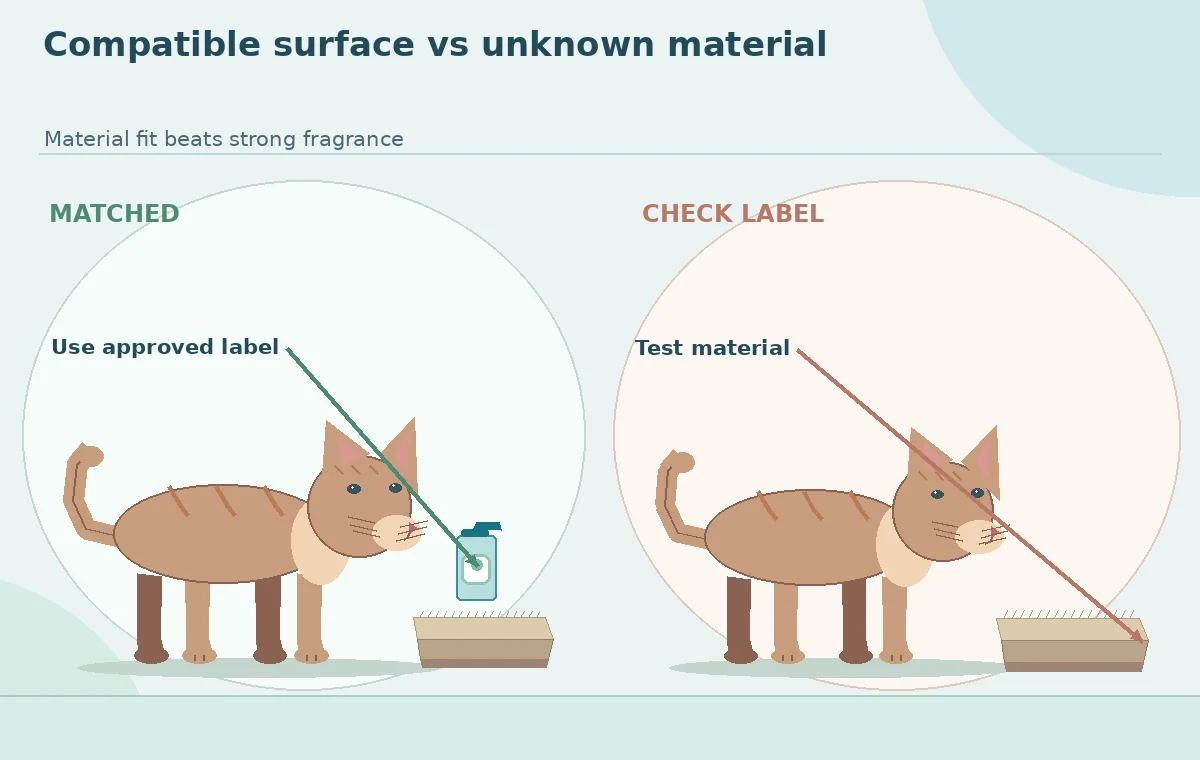
Match the animal urine remover to the material
Shopping by scent or a claim such as ‘extra strong’ skips the crucial question: what must the product penetrate? You can wipe and rinse smooth nonporous tile. However, a woven sofa can hide liquid in cushioning, and carpet may hold urine in its pad. A sealed floor also differs from unfinished wood. Read the entire compatibility panel, including exclusions, drying instructions and whether the product is a cleaner, deodorizer or disinfectant. A deodorizer that masks smell is not necessarily removing residue. For an older, repeatedly treated stain, you may need moisture extraction and professional evaluation before adding another cleaner. For practical prevention of future spills, pair cleaning with the floor-care measures in our pet-friendly floor routine.
| Surface | Good starting approach | Important limitation |
|---|---|---|
| Washable blanket | Launder per textile label; use pet-stain product if suitable | Avoid heat until odor is gone |
| Synthetic carpet | Blot or extract; use surface-approved urine neutralizer | Check underlay and adhesive |
| Sofa fabric | Inspect cleaning code; spot test and blot | Filling may hold residue |
| Sealed tile | Remove liquid; clean grout per label | Porous grout may retain odor |
| Finished wood | Use only finish-approved method; keep moisture low | Water can damage seams |
| Concrete or yard | Choose an outdoor-rated method; control runoff | Do not assume indoor spray works outdoors |

A label-reading checklist that prevents mismatches
Before using an animal urine remover, locate the surface list, required pre-cleaning, contact time, permitted rinse method and pet re-entry instructions. A formula described as enzymatic or bio-enzymatic may help break down organic material, but it still has a particular use range. Do not invent a soaking time; follow the manufacturer’s directions, especially on absorbent materials. Some products instead use oxidizing chemistry. Their suitability depends on the textile and its finish. Never mix the remover with bleach, ammonia, vinegar or a second cleaner. The US EPA recommends reading labels and using ventilation because combinations can produce dangerous vapors. Put bottles away before letting a curious dog or cat return.
- Photograph the cleaner label and record the exact textile or floor material before shopping; unknown fabric codes merit professional advice.
- Check if the product treats urine odor, visible discoloration, or both. Fragrance alone is not evidence that residue is gone.
- Look for the named surfaces, colorfastness or hidden-spot test, contact time and required rinsing or extraction steps.
- Keep pets and children away during treatment. Follow the product label for safe return to the area.
- If the smell returns after correct treatment, inspect cushion filling, carpet pad or floor seams rather than adding multiple products.

What to do when a fresh accident happens
Keep the process simple: separate the pet from the wet area, absorb visible urine with dry towels, and follow the surface’s cleaning and drying directions. For carpet and upholstery, the SPCA of Texas recommends thorough blotting, a cool-water rinse where appropriate, and an enzyme neutralizer used as directed. Avoid rubbing the stain into a wider area. If the wet patch reaches the backing or padding, a surface spray may not reach the entire affected area. With wood, laminate or furniture finishes, excess moisture can cause another form of damage. The right result is a dry surface without retained urine odor, not merely a strong cleaner perfume.
| Observation | Likely issue | Next decision |
|---|---|---|
| Odor returns after humidity | Residue may remain in an absorbent layer | Inspect backing or cushion filling |
| Color changes during test | Finish or dye is sensitive | Stop and obtain surface-specific advice |
| Foam stays wet | Overapplication or trapped moisture | Follow drying directions; seek extraction help |
| Multiple accidents in one corner | Old scent or unresolved elimination issue | Clean thoroughly and review potty routine |
| Heavy or widespread contamination | Residue may extend below accessible surface | Ask a qualified professional about replacement |
How to compare products without invented rankings
Compare four observable attributes rather than relying on ‘number one’ claims: approved substrates, application method, precise instructions, and your ability to dry the material afterward. For a fresh spot on sealed tile, a compatible household cleaning step may be sufficient. For an old cat urine patch in carpet, a targeted odor neutralizer and extraction may be necessary. A professional urine remover is not automatically stronger in a useful way: the label, surface and depth still determine fit. Do not assume outdoor urine products suit upholstery. A ‘natural’ label also cannot prove that a concentrated or swallowed product is harmless.
Cleaning the spot is only half of preventing repeats. Check whether a litter box is accessible, whether a dog needs more frequent outdoor breaks, or whether a new household stressor has changed behavior. Learn general odor-prevention practices in reducing pet odors at home and revisit a reward-based toileting routine with our house-training guide. It is useful to keep a simple dated log of accidents, the material involved and the treatment used. That record can reveal one problem area without pretending to diagnose the pet or prove a specific brand worked.
When to Call Your Vet
Call your veterinarian if a previously reliable dog or cat begins having accidents, urinates far more often, strains, seems painful, has blood in urine or seems unwell. A cat repeatedly straining without passing urine may have an emergency and needs immediate veterinary care. Cleaning products address the home environment, not medical reasons for elimination changes. If your pet licks or swallows cleaner, follow the product’s emergency instructions and seek veterinary or poison-control guidance promptly.
How We Research
We reviewed SPCA cleaning guidance, EPA chemical-safety advice and veterinary recommendations about safe household management. The surface matrix above is a decision aid, not a lab ranking or an endorsement of any cleaner. Material instructions and current product labels take precedence, and we exclude brand-only search variations from this general buyer’s guide. Read our editorial standards on the About page.
Sources
SPCA of Texas — Cleaning Up Pet Messes; US EPA — Biological Contaminants and Indoor Air Quality; SPCA of Texas — Urine Marking and Cleanup; VCA — Crate Training and Confinement for Puppies and Dogs.
Choose a pet-urine product explicitly approved for the carpet fiber and backing; blot first, patch test, and follow its contact and drying directions. Inspect underlay if odor returns.
Only if the specific product permits that floor finish and application method. Unsealed wood and floor seams can be damaged by moisture, so avoid soaking and ask a flooring specialist when unsure.
No. A fragrance can conceal a smell temporarily without removing the urine residue. Check the treated area after it is fully dry and consider deeper contamination if the odor comes back.
Do not combine cleaning products. Mixing chemicals can create dangerous vapors or interfere with a formula. Follow the label and use adequate ventilation instead.
Clean existing odor, block access during cleanup, and review the dog’s potty routine or the cat’s litter setup. Sudden or painful changes in urination require veterinary assessment.