
This article is general information, not veterinary advice. If your pet seems unwell, is in pain or may have eaten something harmful, contact your vet or an animal poison control line right away. Read our vet disclaimer.
To rid urine smell in a pet household, find where it is coming from before you spray the entire room. A couch cushion, carpet underlay, baseboard seam, washable dog bed and yard patch require different responses. Sometimes the visible stain has disappeared while an absorbent layer is still holding residue; humidity can bring the odor back. This troubleshooting guide is for people whose immediate stain cleanup did not solve the smell. It maps odor clues to surfaces, shows a safe search-and-clean sequence, and explains when persistent odor requires professional assessment. It is not a list of miracle sprays or a substitute for veterinary help when a pet has new urinary symptoms.
Start with an odor-location map, not a whole-room spray
Walk through the room once with windows temporarily closed to identify the strongest area, then ventilate before cleaning. Note whether the odor is near a rug, sofa, pet bed, wall, litter box or exterior door. Ask whether it worsens after rain, cleaning or humid weather. Do not rely on a black-light test as proof of the chemical source; different substances can fluoresce, and residue may be invisible. Instead, examine the actual fabric, backing, underlay and floor edges where feasible. One smell can involve several spots, particularly after repeated accidents. An odor diary with location and time is often more useful than repeated room deodorizers. For a maintenance plan, see how to reduce pet odors at home.
| Clue | Possible reservoir | How to check safely |
|---|---|---|
| Strongest beside couch | Cushion cover or inner foam | Inspect cover care label and fill |
| Smell returns when humid | Carpet underlay or porous grout | Look for past wet area and seams |
| Near wall or trim | Baseboard joint or unfinished edge | Check visible staining and finish |
| Only around pet bed | Washable bedding or insert | Separate removable cover from filling |
| Mainly outside door | Patio or soil used for toileting | Check runoff and drainage |
| Near litter setup | Box, mat or surrounding floor | Assess cleaning frequency and access |

A safe sequence for persistent household urine odor
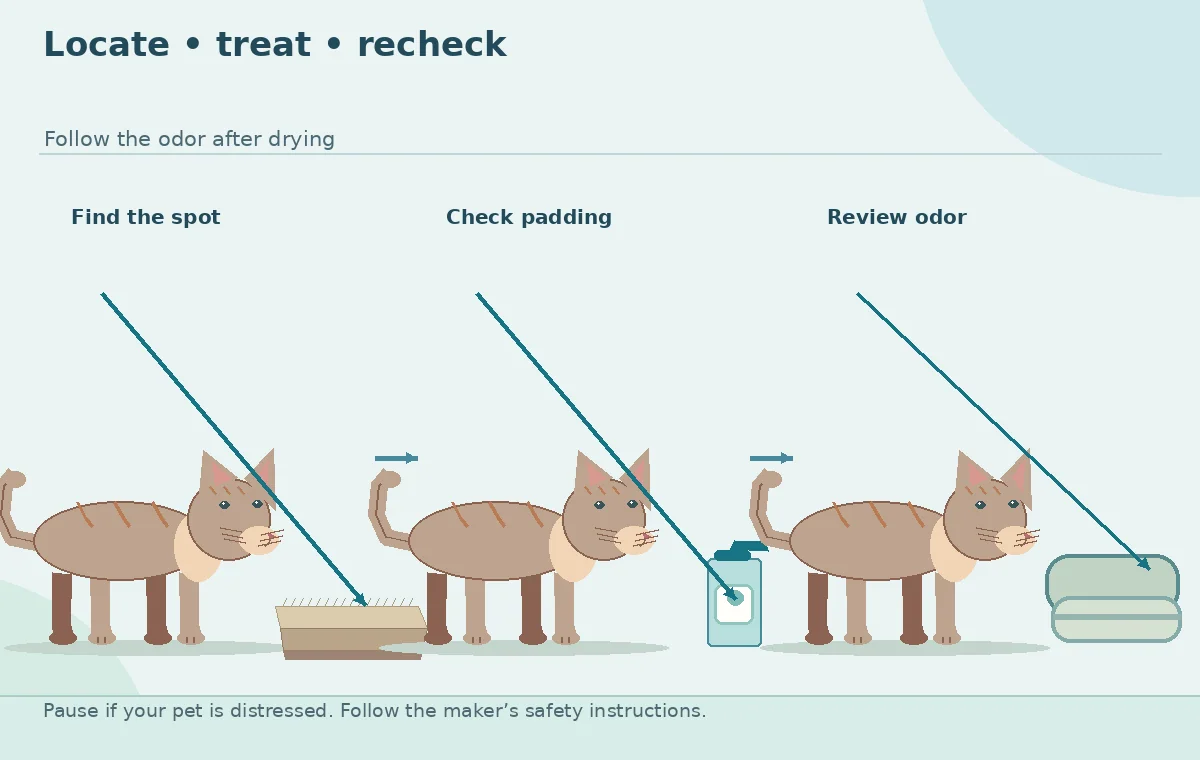
Begin by restricting pet access to the suspected patch, particularly if a cleaning product is needed. Blot any fresh moisture, inspect the fabric or floor manufacturer’s care instructions, and choose a compatible urine-treatment method. SPCA guidance favors appropriate enzymatic cleaners for lingering organic pet marks on carpets and upholstery, while noting that saturated padding can be beyond surface treatment. Follow label contact times and allow adequate drying. Avoid using steam as a quick rescue on unresolved urine residues, and never combine bleach or other household chemicals. Strong fragrance can make it harder to tell whether the original smell has cleared. Assess the location again once it has dried fully.
- Mark each suspected spot with removable paper notes outside the actual contaminated fabric; avoid permanent dyes or sprays.
- Check the care instructions for fabric, floor finish, foam or rug backing before applying any moisture or cleaner.
- Absorb fresh liquid without harsh rubbing; use the material-approved rinse or urine neutralizer exactly as directed.
- Ventilate and keep pets away until the area is dry and product instructions permit access again.
- Recheck each location after drying; if the odor remains, inspect inaccessible absorbent layers or consult a professional.
Troubleshoot by room and surface
A couch needs a textile-specific approach, and its foam may retain odor even when the removable cover washes clean. A carpet may need controlled extraction or a padding assessment. Finished hardwood can conceal contamination at expansion joints, yet aggressive soaking can damage the wood. For bathrooms and utility rooms, porous grout deserves a separate check from tile faces. Outdoors, runoff and the type of paving matter; avoid pouring indoor chemicals into soil or drains. If you can no longer determine what was used on a surface, stop combining products and ask a cleaning professional how to proceed. Match the cleaning plan to the material, not just the intensity of the smell.
| Location | First useful check | Escalation sign |
|---|---|---|
| Living room sofa | Washability of cover and foam | Odor still inside cushion |
| Carpeted bedroom | Pile, backing and underlay | Smell survives correct treatment |
| Wood flooring | Seam staining and finish condition | Darkened or swollen wood |
| Pet bedding | Care label and removable liner | Insert cannot be cleaned or dried |
| Patio or yard | Water flow and pet access | Odor persists after safe routine maintenance |
| Litter corner | Litter hygiene and nearby flooring | Cat avoiding the box or urinary distress |
Why odor masking fails and what to change next
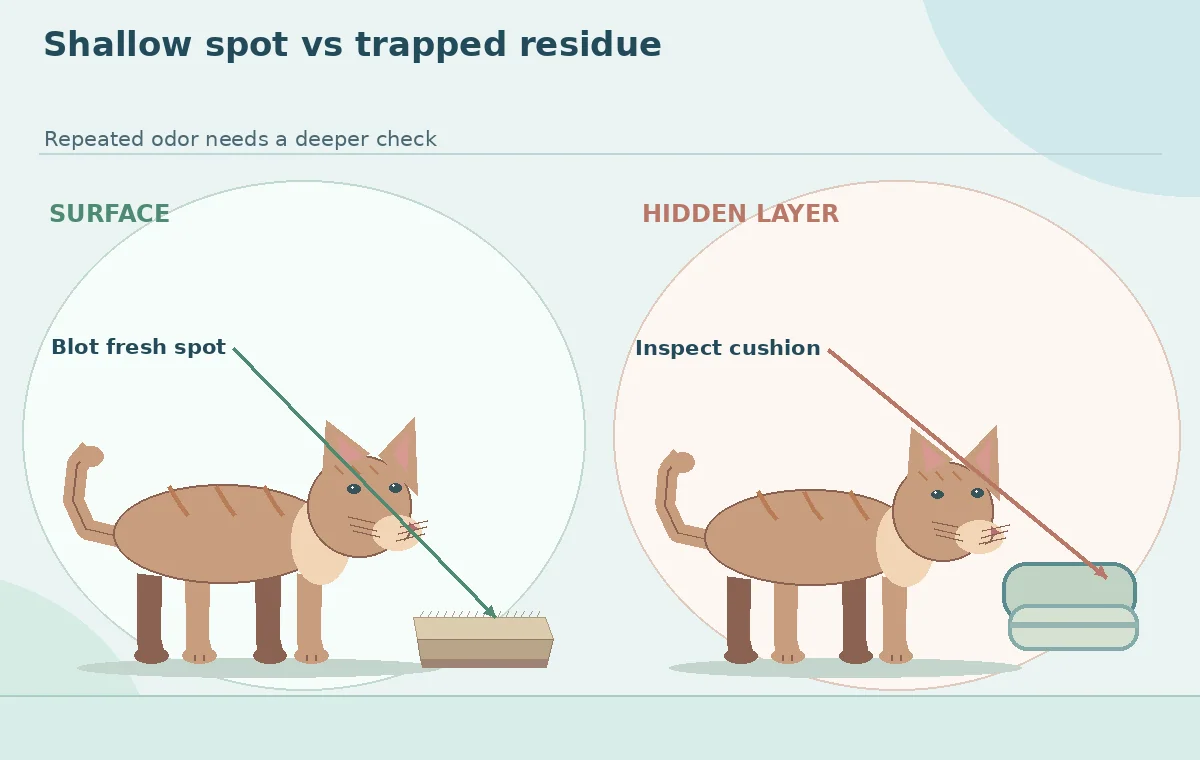
A scented room spray changes what the person smells; it does not tell you whether organic material under the carpet has been removed. Likewise, placing a bowl of household powder nearby cannot reliably restore contaminated foam or particleboard. If urine has passed beneath the flooring, replacement of some porous material may be the realistic outcome, as the SPCA notes for saturated carpet padding. Address underlying causes after cleanup. Move furniture only when safe, keep treated areas off-limits during drying, and avoid converting a recurring problem into a cycle of stronger chemicals. Floor maintenance with pets can help protect frequently used routes.
The problem may also be behavioral or medical, especially when accidents keep returning. Offer predictable bathroom opportunities, clean thoroughly and avoid scolding a frightened pet after the fact. A humane house-training routine gives a practical schedule for dogs. For cats, litter-box placement and clean access are important; a change in urination can also signal illness. Persistent odors and repeated accidents need two different questions: Where is the residue in the room? And why did the pet begin using that location? A spray cannot answer the second one.
When to Call Your Vet
Contact a veterinarian for new accidents in a house-trained animal, pain, blood, urinary urgency, repeated licking around the urinary area or unusual thirst. A cat attempting to urinate repeatedly with little or no urine needs emergency care. Seek advice promptly if a pet may have inhaled or ingested household chemicals. Do not punish an animal for soiling; it can increase distress without resolving either medical or environmental causes.
How We Research
We checked SPCA of Texas advice on cleaning pet accidents and repeat scent-marking, EPA guidance about chemical safety, and veterinary recommendations about confinement and accidents. The room-by-room map is a troubleshooting tool based on differences among common household materials, not a claim that a smell identifies a specific substance or disease. Read our editorial standards on the About page.
Sources
SPCA of Texas — Cleaning Up Pet Messes; US EPA — Biological Contaminants and Indoor Air Quality; SPCA of Texas — Urine Marking and Cleanup; AKC — How to Potty Train Your Puppy.
Look below the visible pile. Backing and padding may retain residue even after a surface stain disappears. Follow surface-compatible treatment and consider professional assessment if the odor returns.
Moisture can reactivate odor from residue trapped in porous fabrics or flooring. This is a clue to investigate absorbent layers, not proof that a particular product has failed.
Fragrance may mask odor temporarily but does not necessarily reach urine retained in foam. Check the fabric code, removable covers and whether professional upholstery treatment is possible.
Avoid hot steam as a shortcut before the underlying urine has been properly treated. Animal-welfare cleaning guides warn that heat can set odors in some fabrics.
Clean odor thoroughly, review litter or outdoor toilet access and keep a dated log. If accidents are new, frequent, painful or associated with straining, contact a veterinarian.