
This article is general information, not veterinary advice. If your pet seems unwell, is in pain or may have eaten something harmful, contact your vet or an animal poison control line right away. Read our vet disclaimer.
The best way to get dog pee out of the carpet depends on whether the accident is still wet and how far the urine reached. For a fresh spot, blotting quickly protects surrounding fibers. When liquid has soaked into carpet padding, washing the visible surface alone may leave odor beneath it. Choose a pet-urine cleaner that suits your carpet and reaches the affected layer. Follow its label instead of masking odors with perfume. This guide shows a decision flow for fresh urine, old marks and lingering smells. It also explains when a professional cleaner may help.
Determine whether the carpet is only damp or saturated
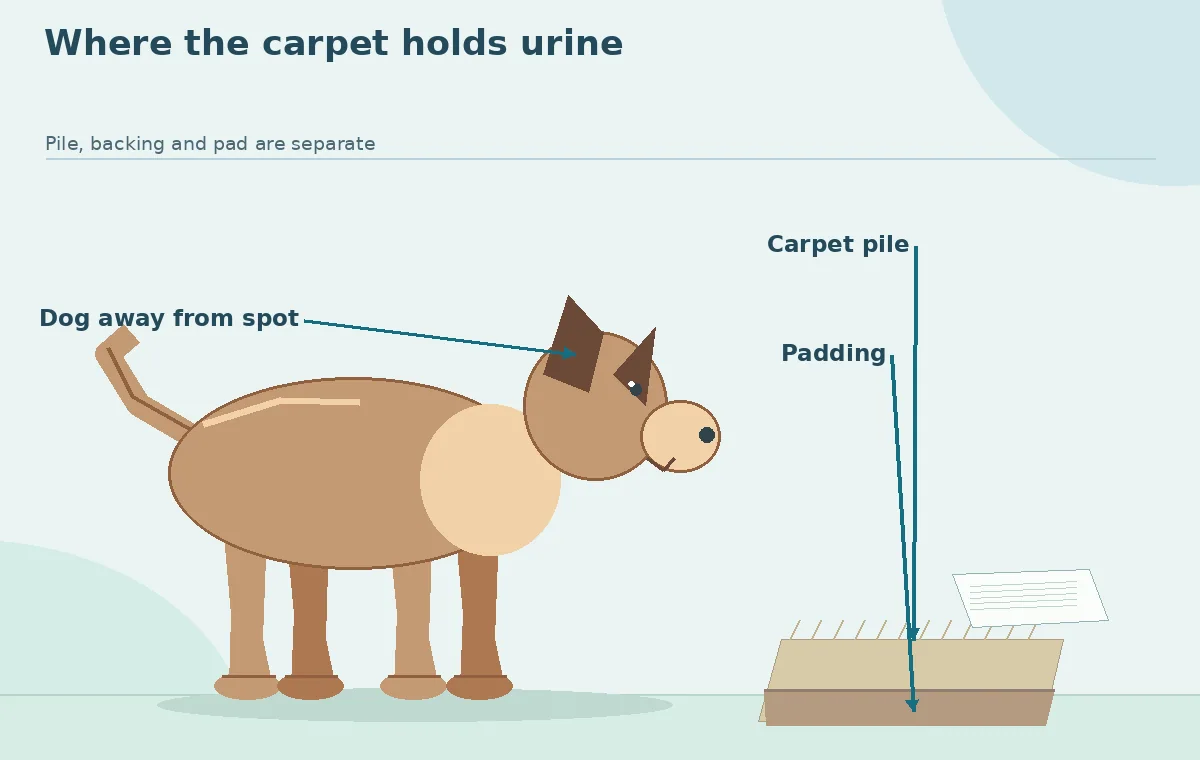
An absorbent carpet pile can hide urine in the backing and pad. Blot with a dry white towel before applying cleaner. Check whether moisture has spread beyond the visible mark. If you can safely lift the rug, inspect its backing and the floor underneath. Never pull up fitted carpet or handle electrical outlets on a wet floor without appropriate professional help. If the spill reached a porous subfloor, the repair may extend beyond normal cleaning. Start by addressing fresh liquid, then select a compatible treatment. Avoid pushing a mop, stiff brush or fragranced powder into the pile.
| What you see | Likely depth | First response |
|---|---|---|
| Wet fresh patch | Pile may be wet | Blot immediately |
| Wide patch or repeated accident | Urine may reach padding | Assess deeper layers |
| Dry stain with smell | Unknown depth | Locate odor source; test cleaner |
| Loose rug over hard floor | Backing may be wet | Lift safely and dry both sides |
| Odor returns after drying | Residue may remain | Reassess padding, consider professional help |
Follow a careful cleanup sequence
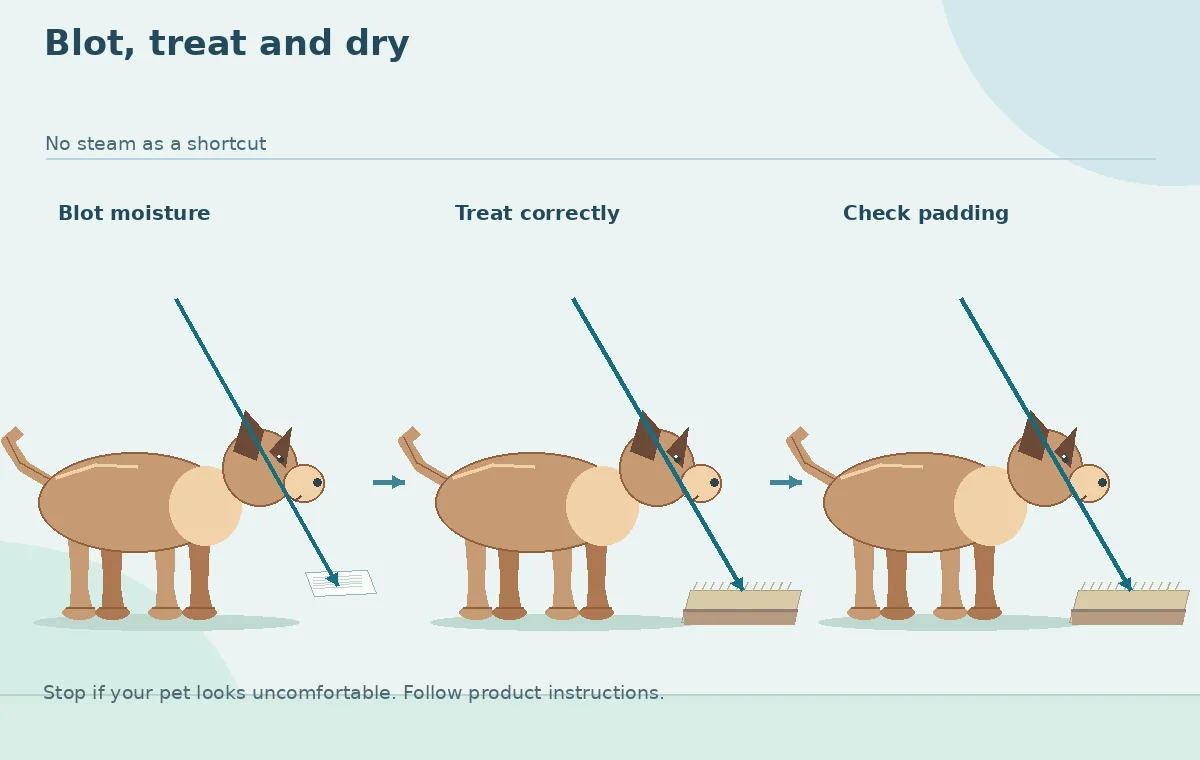
Fresh dog urine is easier to contain before it spreads. Use white towels to track absorption and avoid dye transfer. After blotting away the liquid, follow your chosen cleaner’s directions. Some products need to contact deeper layers. Resist the temptation to pour an entire bottle through a delicate carpet: saturation can damage adhesives or leave moisture trapped. Some products require time to work and air drying. Follow their labels rather than using a universal waiting period. Keep your dog away until the cleaned area is safe and completely dry.
- Block access to the spot so the dog cannot step in cleaner or spread the wet patch; ventilate as the product label directs.
- Blot firmly with white towels from the outside in. Replace towels until they stop picking up much moisture. Avoid forceful scrubbing.
- Check carpet and cleaner instructions, then test an inconspicuous area for color change before treating the visible stain.
- Apply the pet-urine product according to its directions and the depth of contamination; do not mix bleach, ammonia or vinegar into it.
- Allow appropriate drying without hot steam, then smell-test and inspect the spot. For persistent odor in padding, discuss professional treatment.
Handle old stains and carpet padding differently
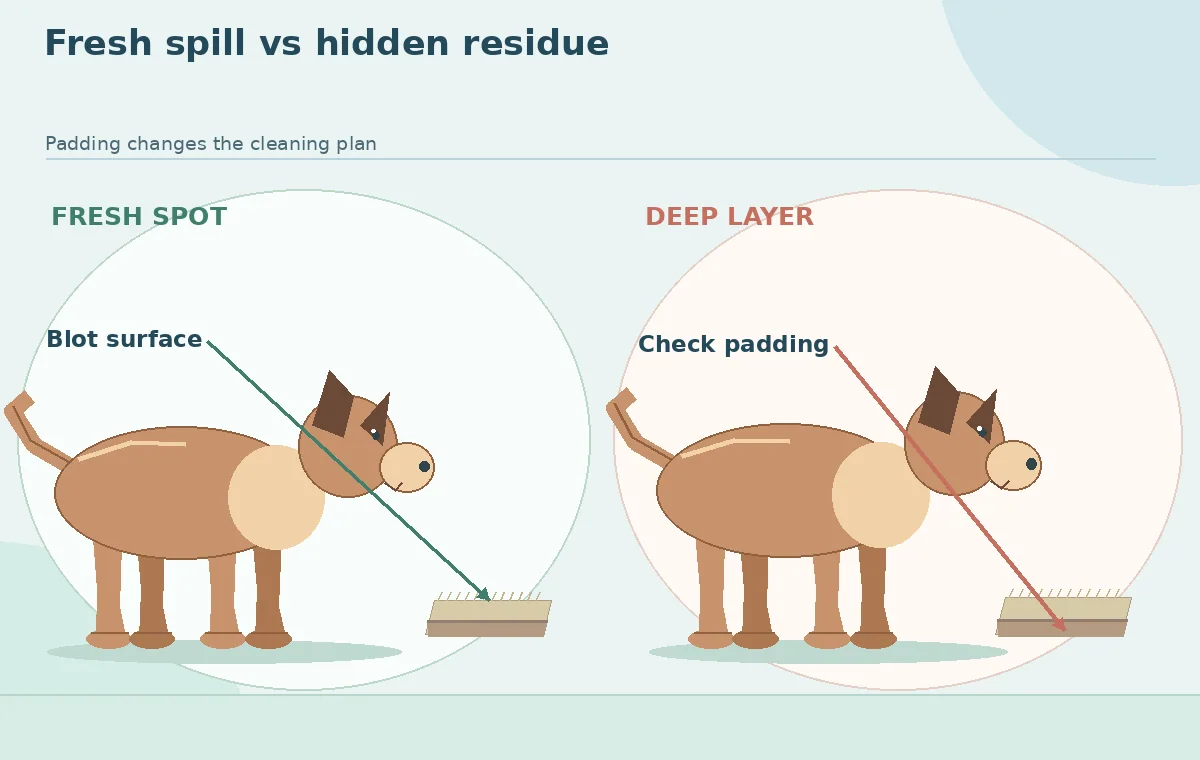
Old dog urine may leave little visible moisture while still producing a strong odor. A black light can sometimes help locate old spots, but it does not prove a stain is urine or show how deep it extends. Follow your urine-specific cleaner’s instructions. Humane-society guidance warns that hot steam can set stains and smells in some fabrics. Repeated saturation of padding may require professional lifting or replacement of contaminated material. For everyday prevention between accidents, see the pet-friendly floor-care guide. Routine drying and entryway cleaning reduce tracked debris, but they do not address urine in the underlay.
| After treatment | Possible cause | Practical response |
|---|---|---|
| Spot looks clean but still smells | Odor below carpet surface | Check pad and backing |
| Carpet color changes | Product or dye incompatibility | Stop and consult professional |
| Dog revisits the same spot | Odor remains or routine issue | Reclean and investigate cause |
| Odor returns in humidity | Deeper residue | Consider professional extraction |
| Dog urinates more often | Possible health/behavior change | Call veterinarian |
Prevent repeat accidents without punishing the dog
After cleaning a spot, review your dog’s schedule and access. Do not assume cleaner performance caused the accident. Puppies, older dogs and pets with mobility limitations may need more frequent bathroom opportunities. Use rewards for appropriate toileting and calmly interrupt and redirect when you catch an accident developing; never rub a dog’s nose in urine. If household smells or missed outdoor access contribute, adjust the dog’s routine. For everyday muddy-paw upkeep, the after-walk paw-cleaning guide is separate from urine removal. Using one cleaning method for every household stain is rarely effective.
When comparing carpet cleaners, choose by how the product reaches affected layers, approved materials, contact time and pet-reentry directions. A credible ranking requires controlled tests on defined stains and carpet materials. Keep pets out of the cleaning zone and do not mix products. Protect furniture legs if the wet area is large. Tell a professional cleaner whether the stain is new or old. List all chemicals you have already used. If the same dog has repeated accidents, record timing and associated changes for a veterinarian instead of buying increasingly harsh household products.
When to Call Your Vet
Contact a veterinarian if a house-trained adult suddenly has accidents or strains. Pain, blood, unusual thirst or inability to pass urine warrant attention. Inability to urinate is urgent. Cleanup is necessary for hygiene, but it does not resolve urinary disease, pain or anxiety-related behavior.
How We Research
This procedure draws on humane-society guidance about blotting, heat and embedded carpet odors. ASPCA housetraining advice supports addressing accidents without punishment. We do not present commercial brands as independently tested, and we distinguish surface cleanup from pad or subfloor repair. Read more about our editorial approach on the About page.
Sources
Humane Society for Tacoma & Pierce County — Removing Pet Stains; AKC Reunite — Tips for Housetraining Your Pet; ASPCA — Litter Box Problems.
Blot promptly with clean towels, check carpet compatibility and use a pet-urine cleaner exactly as labeled. Keep your dog away until completely dry.
Sometimes, if a urine-specific treatment reaches the source. Repeatedly saturated padding may require professional treatment or replacement.
Avoid hot steam as an odor shortcut. Heat can set urine stains and odors into some fibers.
Aggressive scrubbing spreads contamination, while household mixtures may not treat padding. Follow material and urine-product directions instead.
A previously house-trained dog needs veterinary advice for new accidents, straining, blood, pain or increased thirst. Inability to urinate is urgent.