
A pet hair remover is not one universal gadget. A roller that lifts loose fur from a coat may fail on a textured sofa, while a scraping tool that works on a rug can pull threads from a sweater. Start with the surface, the kind of hair buildup, and the damage you need to avoid—not a list of gadgets with impressive names. See the HubPet veterinary disclaimer for health and safety limits.
This guide uses a practical test-and-select method for homes with dogs or cats. You will learn where adhesive rollers, reusable brushes, soft rubber tools, and vacuum attachments each fit, then build a low-waste routine. The product categories are not endorsements, and even a tool marketed for pets can damage the wrong textile.
Identify the fabric before choosing a tool
Read garment and upholstery care labels before using anything abrasive. A smooth washable cotton shirt presents a different task from a loosely woven sofa, velvet cushion, or car headliner. Test an inconspicuous area and check whether the tool lifts hair without changing the nap, pulling loops, or leaving adhesive.
Photograph or note a small test area in daylight. If you see pilling, snagging, fading, or residue, stop and switch to a gentler technique. Never take a sharp metal edge across leather, delicate knitwear, or unknown upholstery simply because the listing calls it a pet hair remover.
Use sticky rollers for quick clothing touch-ups
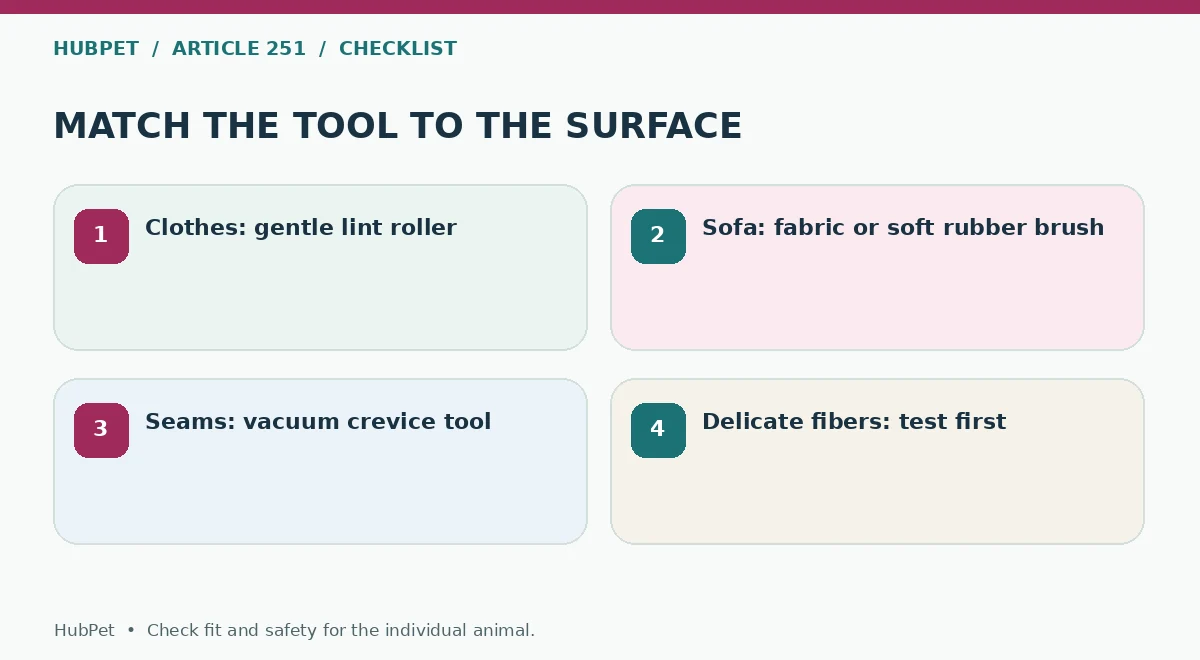
A disposable lint roller usually fits office clothes, jackets, and a last-minute touch-up near the door. Roll gently in the direction of the fabric rather than grinding one area repeatedly. Replace a sheet when it stops picking up hair; worn adhesive can waste effort and leave you rubbing the fabric harder.
Count refills when you compare prices. A low initial purchase price can lead to recurring replacement costs in a multi-pet home. Store the roller away from pet mouths and curious paws so loose adhesive sheets or cores do not become chew toys.
Compare reusable velvet-style and bristle brushes
Directional fabric brushes can gather loose fur from jackets and tightly woven upholstery. Notice the direction arrows, how you empty the chamber, and whether hair traps inside seams. Test gently before use on delicate loops or plush materials because even a soft-looking brush can rough up fibers.
Try five controlled strokes, empty the tool, and inspect the fabric. A brush you can empty without touching a clump of dusty hair may suit daily clothing care. One design that jams after a few strokes might cost more time than a washable microfiber cloth.
Choose rubber tools for stubborn upholstery edges
Try a clean rubber glove, soft squeegee, or flexible rubber brush to move embedded strands into a visible pile on some sofas and car seats. VCA describes a damp rubber-glove approach, but always follow the fabric care instructions first. Avoid adding moisture to upholstery that needs dry-only cleaning.
Work from the outer edge of a cushion toward a seam, then collect the pile with a vacuum upholstery attachment. Use light pressure. The goal is to dislodge hair, not scrape fibers or grind dirt into padding. Keep your pets away from the cleaning area until you remove debris.
Understand when vacuum attachments help more
An upholstery head lifts both loose fur and everyday dirt across a broad surface. A crevice attachment reaches stitching and corners where a roller cannot. Check the manufacturer’s recommendations for curtains, delicate fabric, and vehicle interiors; suction can pull weak fibers or detach trim.
A small attachment that actually reaches the sofa gap offers more value than a branded accessory you cannot maneuver. Empty the dust container, clean hair from rotating parts, and maintain filters according to the machine manual. Hair-removal accessories do not replace routine vacuum maintenance.
Avoid fabric damage from rigid scrapers
Some hair removers use metal teeth, stone-like edges, or firm blades to rake material. Independent fabric-tool testing has found that rigid teeth can snag or damage textiles, especially soft clothing. Reserve any approved edge tool for an explicitly compatible durable surface after a hidden-area test.
Do not use a rough stone or blade across a cat tree merely because the pile looks resilient. Damaged fibers can unravel, and loose threads can tempt a pet to chew. Replace the method if you need force; stubborn hair does not justify damaging a favorite resting spot.

Plan for pet beds, blankets, and car seats
For removable washable covers, lift fur first, check the care label, and wash according to the maker’s directions. Remove loose debris before using a washing machine so clumps do not accumulate in seams or traps. Never put a non-washable foam insert through a cycle meant only for its cover.
Car upholstery adds seams, belts, and seat hardware. Keep liquids away from electrical connections and child-seat fittings. Clean belts only as the restraint manufacturer advises. A small detailing brush plus a vacuum is often easier to control than one large abrasive gadget.
Reduce new buildup without blaming shedding
Schedule brief, comfortable grooming sessions suited to your animal’s coat instead of trying to eliminate normal shedding. Regular brushing can collect loose hairs before they settle on furniture, but pulling harder or shaving a coat without professional advice can create welfare problems.
Use washable throws on the places your pet already chooses and clean them on a routine that suits the fabric. Our existing shedding guide covers coat care, while this article stays focused on cleaning tools rather than medical causes.
Build a useful test kit instead of a gadget drawer
Start with three roles: a gentle clothing tool, a wider surface tool, and an attachment for corners. You may already own suitable microfiber cloths, a household vacuum head, and a washable rubber glove. Compare how they work before you spend money on devices with overlapping jobs.
Run the same small trial on a garment and cushion, noting removal, cleanup time, and visible fabric effects. If a tool leaves more mess than it removes, retire that method. A usable routine should require less time and fewer consumables, not simply add another product to maintain.

Set boundaries for chemicals and pet access
Some commercial kits bundle anti-static sprays or fragrance products. Do not apply a chemical to surfaces your pet licks or rests on without confirming pet and textile safety from reliable instructions. Keep cleaning products, adhesives, sharp tools, and discarded hair out of reach.
If the furniture develops an unusual odor, mold, or persistent staining, follow the upholstery maker’s cleaning guidance. A hair remover cannot fix all household hygiene problems. For ordinary fur, a low-friction physical method and consistent maintenance remain the least complicated starting point.
How We Research
We checked this guide against the authoritative sources listed below on October 26, 2026. We reviewed practical differences, safety limits, and relevant home conditions rather than drawing conclusions from brand advertising. Specifications, warranty policies, and device capabilities change; check the manufacturer’s current manual. We did not purchase, laboratory-test, rank, or endorse individual products. Where a pet has pain, skin concerns, or fear, seek individual veterinary advice. See our approach at About HubPet.
Sources
VCA Animal Hospitals: Tips to get pet fur off clothes and upholstery. Accessed October 26, 2026.
Consumer Reports: Best Lint Brushes and Rollers of 2026, Tested by Experts. Accessed October 26, 2026.
American Kennel Club: How to Remove Dog Hair From Everything. Accessed October 26, 2026.
Try a gentle lint roller or fabric-safe reusable brush on a hidden spot, then check for snags and adhesive residue before using it on the full garment.
Yes. Rigid teeth and abrasive edges can pull threads or change the fabric surface. Test a hidden area and avoid unapproved scrapers on delicate upholstery.
Not always. Compare purchase cost, durability, replacement parts, cleaning time, and how well the device works on the surfaces you actually clean.
Do not apply sprays unless the upholstery manufacturer allows them and you can confirm safety for pets who contact the surface. A dry physical method is a sensible first test.
No. These tools lift hair from surfaces. Comfortable routine grooming may reduce loose hair indoors, but sudden patchy hair loss warrants veterinary attention.