
This article is general information, not veterinary advice. If your pet seems unwell, is in pain or may have eaten something harmful, contact your vet or an animal poison control line right away. Read our vet disclaimer.
Is it too late to train an adult dog? No. The VCA article updated March 26, 2024 states that adult and older dogs can continue learning. However, the best training plan should match the dog’s experience, physical comfort, senses, and current skill level.
The method does not need to become harsher because the dog is older. The AVSAB position statements page continues to identify its 2021 humane dog training statement as current and recommends reward-based methods for all canine training. Start with the positive reinforcement guide.
Is It Too Late to Train an Adult Dog? Start with the Dog You Have
Is it too late to train an adult dog if the dog has practiced an unwanted habit for years? The habit may take time to change, but learning still occurs. First, prevent repeated rehearsal where practical. Then teach a replacement in an easier context with the redirection guide.
Adult dogs also come with useful history. Some already understand household routines, settling, or leash equipment. The basic training guide can help you test simple foundations without assuming the dog knows a cue just because the behavior looks familiar.
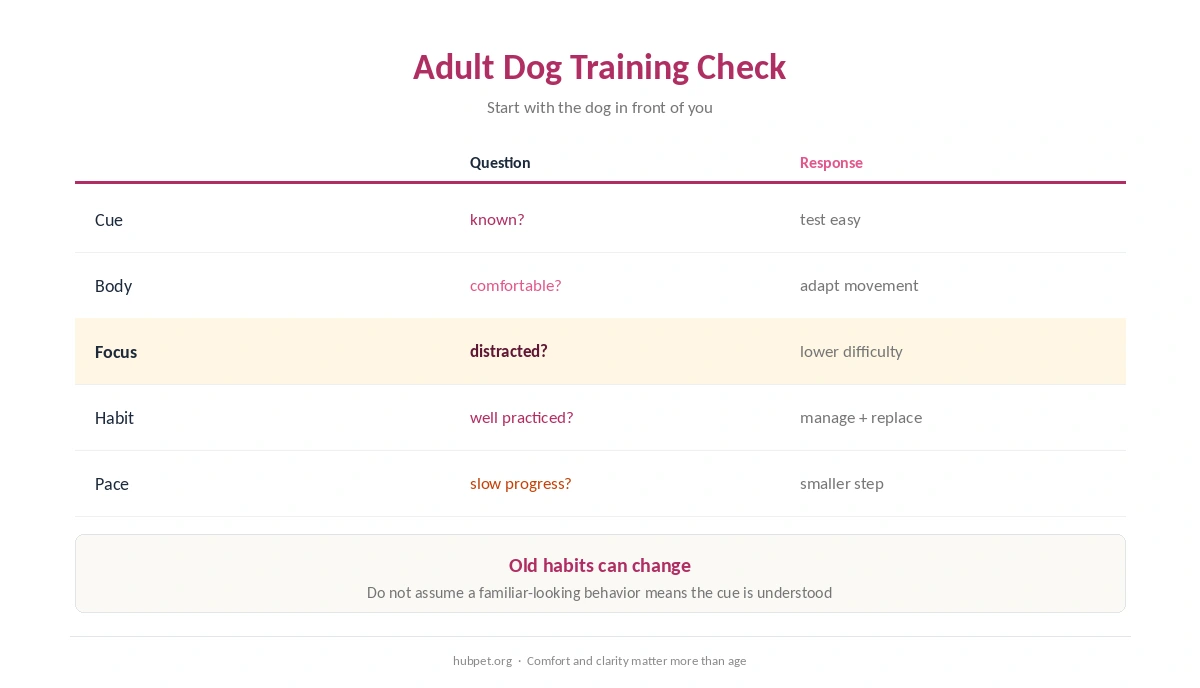
| Adult-dog question | Practical response | Why |
|---|---|---|
| Does the dog know the cue? | Test it in an easy place | Words may have a different history |
| Is the behavior comfortable? | Choose low-strain movements | Physical ability matters |
| Is the dog distracted? | Lower environmental difficulty | Learning needs workable conditions |
| Is the habit well practiced? | Manage rehearsal and reward an alternative | Old patterns can be strong |
| Is progress slow? | Shorten the step, not patience | Clear success builds fluency |
Is It Too Late to Train an Adult Dog for Everyday Skills?
Everyday skills are often excellent adult-dog goals. Use the short-session guide to keep criteria clear. A mat settle from the mat guide can support calm routines without requiring athletic movement.
For walks, begin with the loose-leash guide in an easy setting. If the dog struggles around activity, the distraction guide helps you add difficulty in small steps.
For household safety, teach item skills with the leave-it guide and drop-it guide. Both skills work best when the first setup is easy.
If food-time excitement is a goal, the wait-for-food guide uses the same reward-based logic. This is another example of why the answer to is it too late to train an adult dog stays no: useful skills can be built from manageable steps.
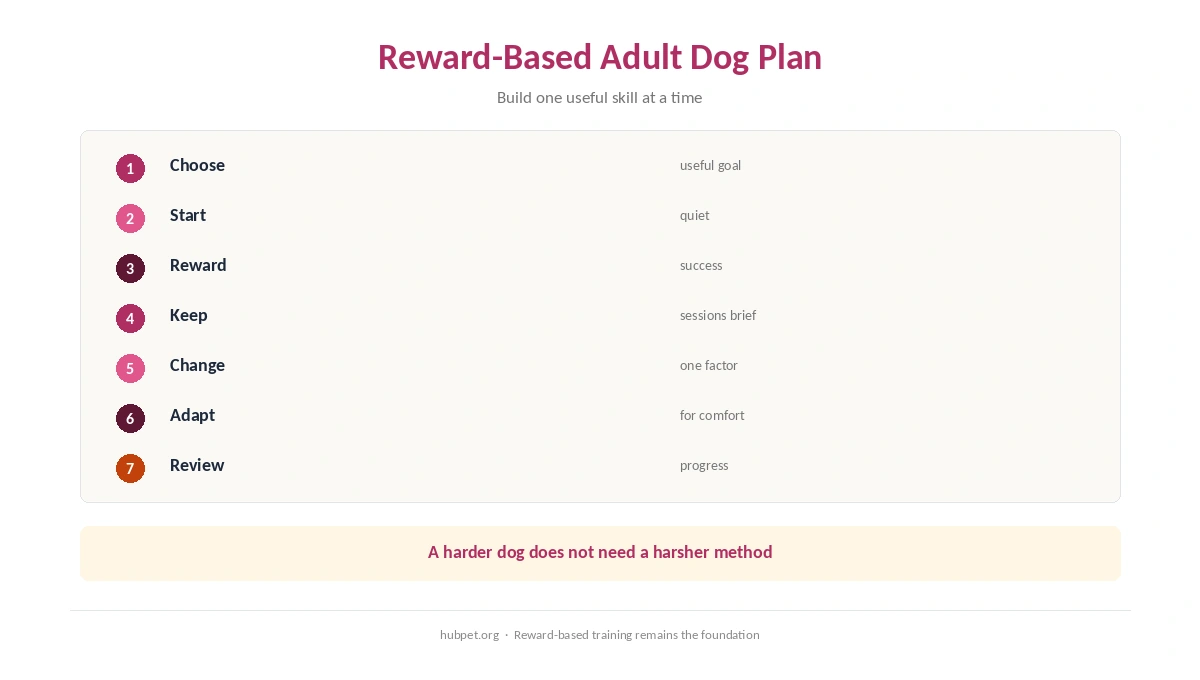
- Choose one useful skill instead of trying to retrain the entire dog at once.
- Start in a familiar, low-distraction place.
- Use a reward the dog values and can comfortably take.
- Mark the exact behavior you want repeated.
- Keep sessions short enough that the dog stays engaged.
- Change only one difficulty factor at a time.
- Adapt movement, surfaces, and cues to the dog’s comfort and senses.
Adult Dog Training Should Fit Physical Comfort
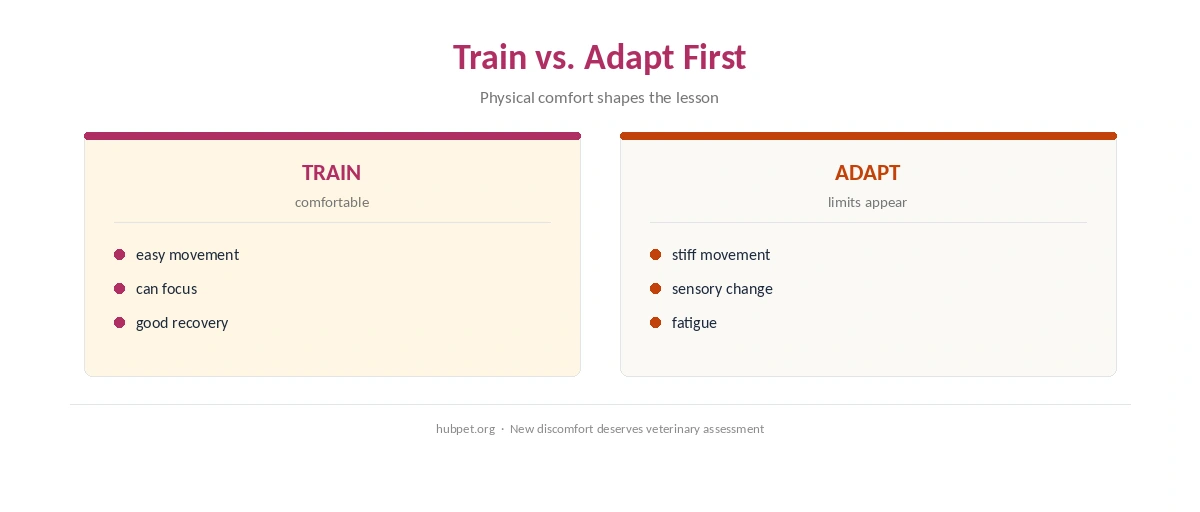
VCA’s 2024 article warns that some physically demanding tricks may be uncomfortable for older dogs and suggests adapting communication when hearing or vision changes. The senior-dog comfort guide can help you adjust the environment before asking for more repetitions.
If sitting, lying down, jumping, or turning suddenly seems uncomfortable, do not push through it for the sake of training. The senior-home guide offers lower-effort access ideas. New reluctance around movement is a reason to discuss comfort with your veterinarian.
Handling skills also need consent and comfort. The handling-practice guide uses short voluntary steps instead of restraint. If the dog is fearful, use the confidence guide and avoid forced exposure.
What Adult Dog Training Should Not Use
Do not switch to punishment because the dog has a long history of an unwanted behavior. The scolding myth guide explains why corrections do not teach the desired replacement. AVSAB’s current position recommends reward-based methods and rejects aversive tools for training and behavior modification.
If the dog guards resources, redirects aggression, or creates bite risk, casual practice is not the place to experiment. The resource-guarding guide explains safer management while qualified reward-based help is arranged.
How We Research
HubPet reviewed these sources on October 11, 2026: the VCA adult and senior dog training article, updated 2024, the AVSAB humane-training position page, and the Merck Veterinary Manual behavior-treatment review, updated 2025. Read more about our research process.
No. Start with simple useful behaviors in an easy setting and reward success.
Yes. VCA states that dogs continue learning, although senior dogs may need adaptations for comfort, hearing, or vision.
Not necessarily. Short, successful sessions can work at any age, and senior dogs may fatigue sooner.
Often you can improve it with management, a clear replacement behavior, and consistent reinforcement, although strong habits may take time.
Seek qualified reward-based help when fear, aggression, resource guarding, or bite risk makes the situation unsafe or difficult to manage.
The Bottom Line: Is It Too Late to Train an Adult Dog
Is it too late to train an adult dog? No. Adult and senior dogs can keep learning. Match the lesson to the dog’s history and comfort, use rewards, keep steps achievable, and adapt the plan when age or health changes what the dog can do comfortably.