
This article is general information, not veterinary advice. If your pet seems unwell, is in pain or may have eaten something harmful, contact your vet or an animal poison control line right away. Read our vet disclaimer.
A home alone pet safety checklist should cover the room, hazards, water, enrichment, temperature, and the individual pet before you leave. RSPCA guidance says a dog’s comfortable alone time varies by individual and advises no longer than four hours for adult dogs, with puppies needing much less time (RSPCA, accessed 2026). Cats also need safe places and separated resources, according to FelineVMA’s 2025 indoor-cat position statement. For the matching checklist, see apartment Living with Pets Checklist.
Home Alone Pet Safety Checklist Before You Walk Out the Door
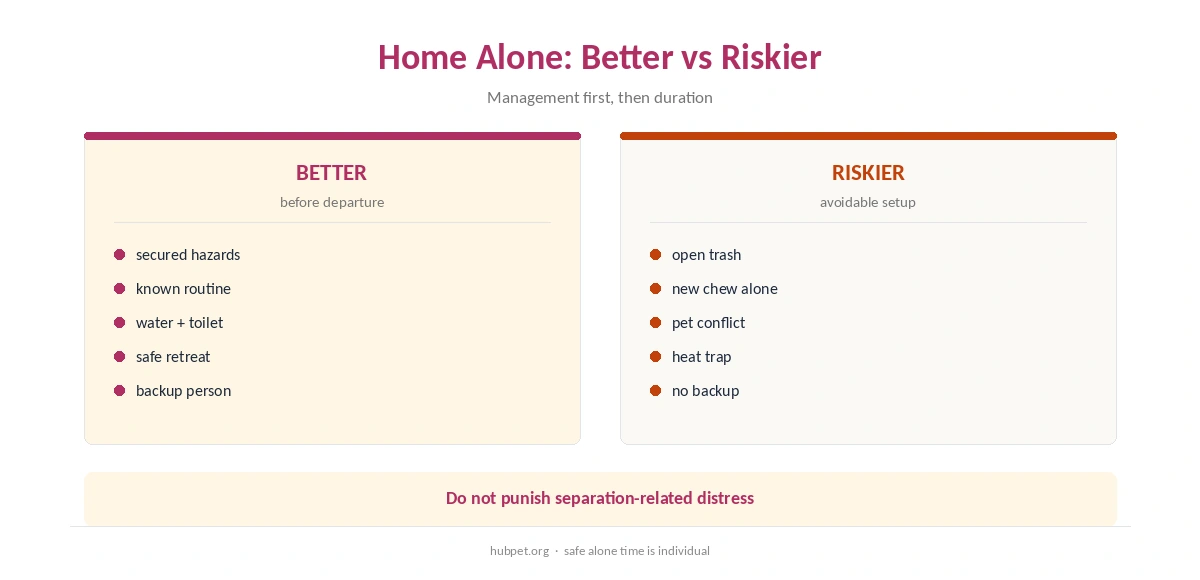
Start with the environment, not the clock. The ASPCA warned in 2026 that cleaners, batteries, diffuser liquids, and other household products can injure pets if they chew, lick, or swallow them. Therefore, use the pet-proofing guide and the pet-proofing checklist before leaving an unsupervised pet with access to a room.
- Put medications, cleaners, batteries, trash, food, and small swallowable objects behind secure doors.
- Close or secure windows, balconies, cords, and rooms that contain hazards.
- Leave fresh water in a stable location your pet can reach easily.
- Set up a comfortable resting area and a retreat where the pet can choose to be alone.
- Give only enrichment items that you already know this individual pet uses safely.
- Separate pets if there is any history of conflict around food, toys, resting places, or doorways.
- Check that indoor temperature and ventilation will remain safe while you are gone.
- Give dogs a toilet opportunity before departure and plan a break when the absence would exceed their comfortable routine.
- Confirm doors, gates, and ID details before leaving.
- Know who can get inside quickly if your plans change or an emergency occurs.
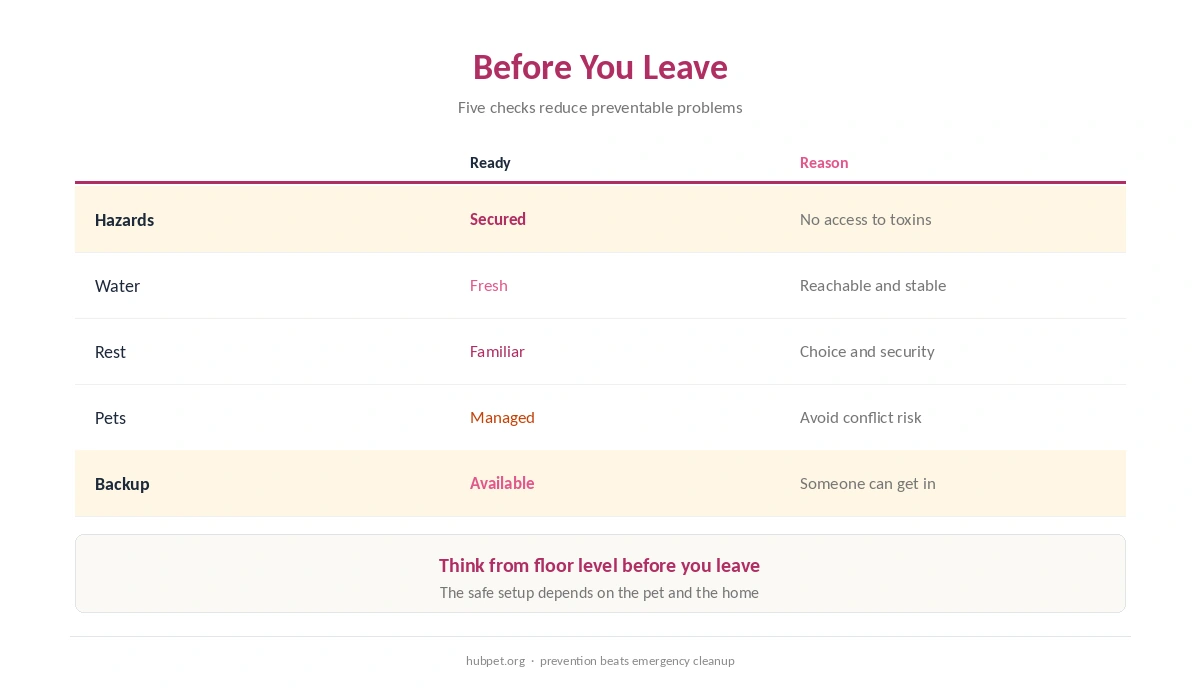
| Check | Ready means | Why it matters |
|---|---|---|
| Hazards | Locked away | Prevents access to toxins and foreign bodies |
| Water | Fresh and reachable | Supports normal hydration |
| Rest area | Quiet and familiar | Gives the pet choice and security |
| Pet interactions | Conflict risk managed | Avoids unsupervised tension |
| Backup | Trusted person has access | Helps when plans change |
Home Alone Pet Safety Checklist for Dogs and Cats
Dogs and cats do not need identical setups. For dogs, RSPCA recommends gradually teaching calm alone time and watching for hidden distress such as pacing or whining. If your dog already struggles, use the separation-anxiety guide rather than extending absences. The first-week dog checklist also helps build a predictable routine before longer departures.
For cats, FelineVMA’s 2025 statement emphasizes a safe place, separated food and water, clean toileting areas, scratching surfaces, play opportunities, and vertical territory. Use this home alone pet safety checklist to confirm a calm pet space and the right litter-box location. For a practical companion checklist, see summer Pet Safety Checklist.
The first-week cat checklist is another useful setup check. Indoor cats still need daily care, so review indoor cat care before planning longer absences.
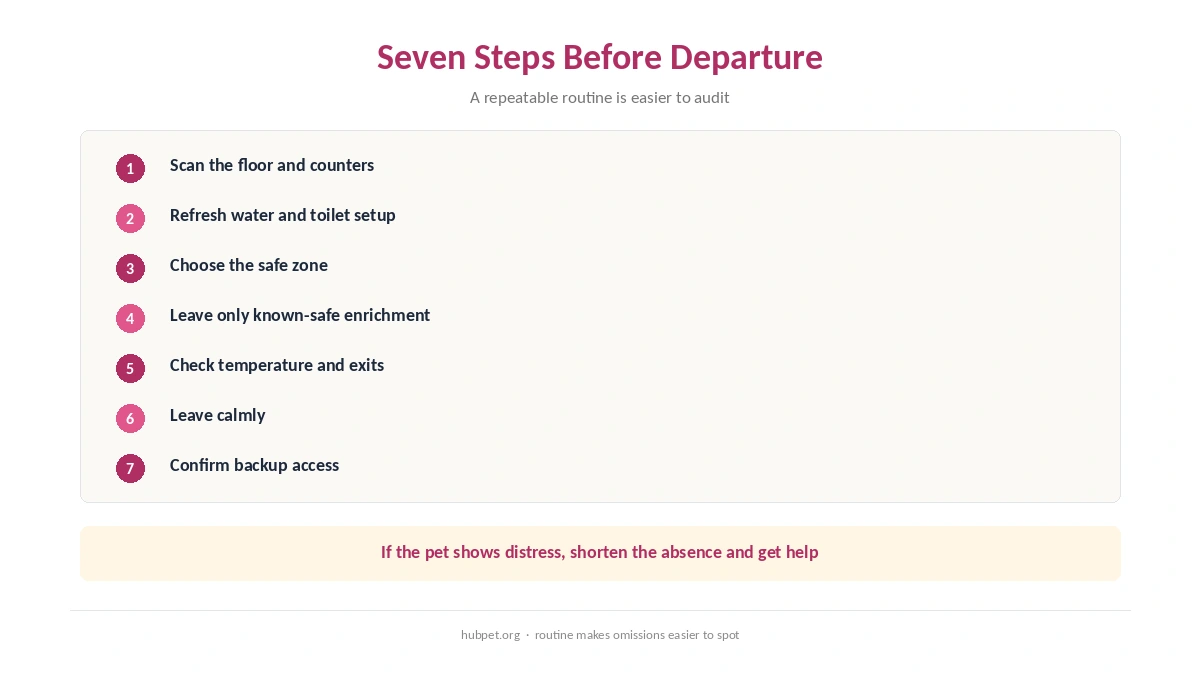
- Do a final floor-level hazard scan before every departure.
- Refresh water and check the litter box or dog toilet routine.
- Choose a safe room or zone that matches the pet’s normal habits.
- Remove food puzzles, chews, or toys that this pet has not used safely before.
- Leave calmly and avoid turning departures into a frightening event.
- Use a camera only as observation; it does not replace a person when the pet needs care.
- Arrange a sitter, walker, neighbor, or family member when the pet needs a break before you return.
When the Home Alone Plan Is Not Working
A home alone pet safety checklist cannot solve distress by itself. RSPCA says dogs may show separation-related distress through barking, toileting, destruction, pacing, trembling, or whining. If those signs appear, shorten the absence and get help instead of punishing the dog. Review the excessive-barking guide when vocalizing is part of the pattern.
Likewise, a sudden behavior change can signal a health problem. A home alone pet safety checklist should include an emergency plan, not just household setup. Use pet emergency signs if your pet has trouble breathing, collapses, has a seizure, or shows another urgent sign. For routine preparation, the vet-visit checklist can help you organize observations. Keep hydration basics in the daily routine, not only on days when you leave.
How We Research
HubPet uses veterinary organizations and research rather than personal anecdotes. We read these sources on October 11, 2026: RSPCA home-alone training guidance, accessed 2026, ASPCA Poison Control household-product guidance, 2026, FelineVMA indoor-cat position statement, 2025. See How We Research for our method.
Home Alone Pet Safety Checklist FAQ
RSPCA advises no longer than four hours for adult dogs, while stressing that the comfortable duration depends on the individual dog and puppies need much shorter periods.
Leave only items that the individual pet has already used safely. Remove new or easily damaged items when nobody can supervise.
No. A camera can reveal behavior, but it cannot provide water, a toilet break, medical help, or hands-on care.
Only when their history makes unsupervised time clearly safe. If there is conflict around resources or chasing, separate them.
Reduce the difficulty and seek veterinary or qualified behavior help. Do not punish separation-related distress.