
An extra-large raised dog cot can free floor space beneath a resting dog and keep the sleeping fabric away from damp ground. The label ‘XL’ does not tell you how much room the dog actually receives. The outer frame, inward-curving corners, and fabric tension all reduce or change usable area. A frame may look substantial in photos while its joints wobble on tile. Measure your dog’s stretched sleeping position and the actual cot surface before shopping. Then compare connection hardware, the floor-facing feet, cleaning instructions, and availability of replacement fabric. Comfort and stability matter more than a size letter. For medical concerns affecting resting comfort, review our veterinary disclaimer and speak with your veterinarian.
Measure the dog in a natural sleeping pose
Watch your dog sleep before choosing a shape. Some large dogs curl into a tight ball; others stretch out fully with front and back legs extended. Measure the resting body from nose area to rear or toe tips while the dog is relaxed, without forcing a position. Allow space so the dog can change sides without catching limbs on the frame. The American Kennel Club recommends beds large enough for dogs to lie on their side. Record usable width as well as length. If the dog turns before settling, check whether the fabric provides enough uninterrupted turning room.
Separate outside dimensions from fabric space
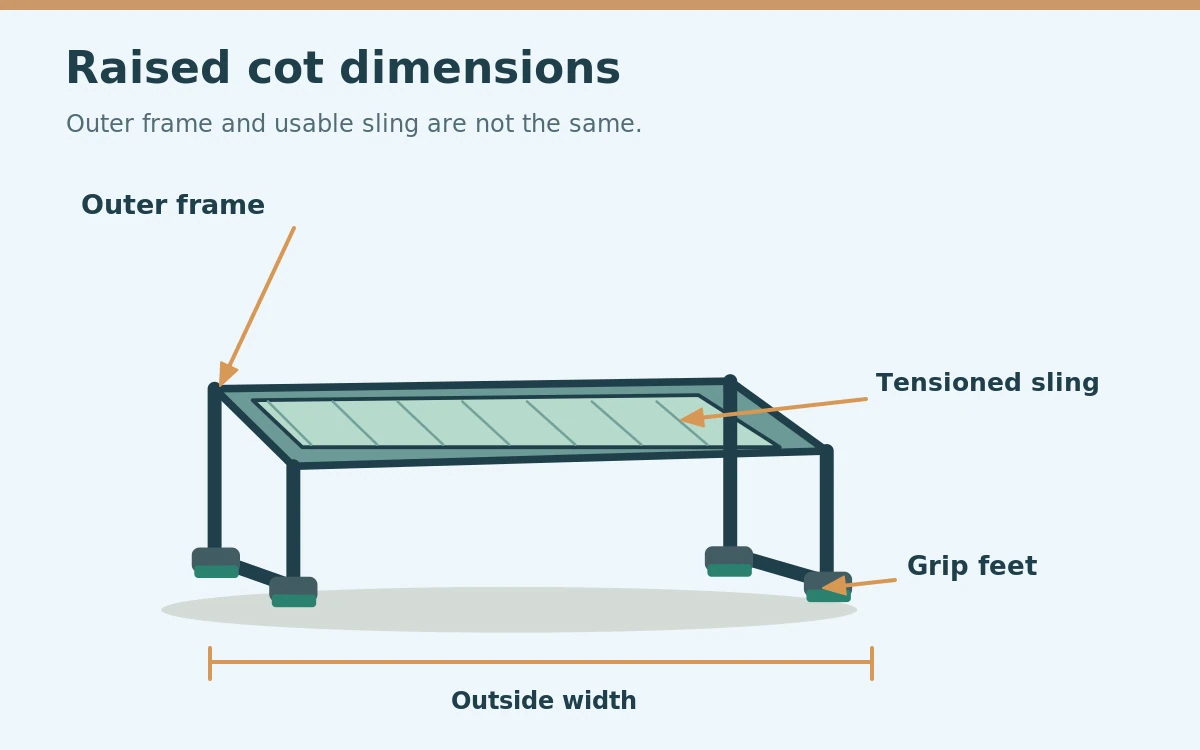
Raised cots usually list a frame footprint and may also list the open sleeping area. These numbers are not equivalent. Wide tubular rails and inward joints consume space that a large dog’s shoulders and elbows cannot use comfortably. Sketch the frame on the floor with painter’s tape before purchasing. Add clearance for people to walk around it and for the dog to step down safely. Kuranda’s replacement-fabric guidance specifically distinguishes full assembled outside dimensions from fabric measurements. That distinction matters again when shopping for spare parts, so save both numbers and the manufacturer’s model information.
Look closely at joints and frame materials
Large dogs put repeated load into corner connections when standing, turning, or dropping into a resting position. Inspect how each leg locks into its rail: screws, pins, and molded joints require different checks. A replaceable connector can extend the life of a cot, but only when the correct part is available. Rounded exterior edges reduce snagging around bedding and people. Avoid cracked tubing, exposed sharp fasteners, and joints that slide apart with ordinary handling. A strong-looking metal tube does not compensate for a weak corner. Assemble according to the maker’s directions rather than improvising extra holes.
Understand fabric tension and load distribution
A taut fabric sling should carry the body without dragging on a central bar or dropping close to the floor. Some normal give is comfortable; a hammock-like deep sag can make standing awkward and concentrate pressure near frame edges. Compare tightly woven fabric, breathable mesh, and coated surfaces based on indoor or outdoor use, cleaning, claw wear, and the dog’s preferences. Do not assume breathable mesh is chew-proof. Check the maker’s maximum load and assembly requirements without treating the rating as a guarantee for a moving dog. Recheck tension as the bed ages and after cleaning.
Choose stable feet for the floor beneath
Tile, sealed wood, concrete, and textured patio surfaces behave differently under the same frame. Feet should contact the floor evenly with the complete dog-sized load, not just when the cot is empty. Rubber caps may reduce sliding indoors but can wear or detach outdoors. Place the cot on a level area, check that all legs touch, and push gently from several sides before inviting the dog onto it. Avoid stairs, balcony edges, door swings, and areas where a person may trip on a projecting frame leg. A small low cot can still slide dangerously on smooth flooring.

Compare indoor and outdoor cot use
Indoors, choose a quiet route with enough room for the dog to step off without bumping furniture. Outdoors, check whether the manufacturer specifies weather-resistant materials and how to dry the fabric and joints after rain. A cot is not shade, shelter, or protection from extreme heat or cold. Do not leave a dog outside just because a raised bed elevates it above wet ground. Watch how the dog uses the bed in real temperatures. If the dog prefers a padded mat, see whether the maker allows a removable compatible layer that will not slip or snag.
Plan cleaning and replacement before purchase
Hair and dirt collect along seams, tucked edges, and frame joints. A removable fabric sling may be simpler to clean than a permanently riveted surface, but disassembly adds work. Kuranda lists replacement fabrics and components for specific bed styles; availability varies by brand and model. Match replacements to the full assembled frame dimensions and compatible corner shape. Avoid buying a fabric insert based only on the width of the sleeping panel. Wash and dry according to the label and check bolts afterward. Replace split covers or fraying seams before your dog can chew loose strands.
Watch the first few entries and exits
Set the cot beside the dog’s familiar bed and let your dog approach willingly. Some dogs hesitate at a moving fabric surface. Reward voluntary paws-on and stepping off rather than lifting or pushing the animal onto the frame. Watch for scraping claws, wobbling corners, and slipping feet. If your dog has trouble stepping up or down, try a lower bed or ask your veterinarian about suitable access. A sudden reluctance to rest or rise can reflect discomfort that a purchase cannot diagnose. Stop the introduction if the dog appears frightened, unstable, or painful.

Keep a simple routine inspection schedule
Once assembled, check each joint by hand and look along the entire fabric edge. Confirm that caps remain attached and the frame sits level after it is moved for cleaning. Inspect a heavily used cot more often, especially when a large dog jumps onto it or shares it with another pet. Mark the maker’s part numbers in your notes instead of guessing sizes later. When fabric sags, first determine whether it is an approved tension adjustment or material wear. Do not continue use with a cracked leg, ripped sling, or missing support fastener.
How We Research
HubPet compared published veterinary and animal-welfare guidance with the practical construction and care questions in this guide. We checked dimensions, exits, cover fit, materials, and everyday cleaning limits; we did not run laboratory testing or claim a product endorsement. Specific features vary by manufacturer and model. Read our editorial approach, follow the product instructions, and consult a veterinarian when pain, mobility difficulties, or other health concerns affect your dog’s rest.
Sources
American Kennel Club — Sleepy Time: Choosing a Dog Bed — https://www.akc.org/expert-advice/home-living/sleepy-time-choosing-dog-bed/ (reviewed October 2026).
Kuranda — Replacement Fabrics and How to Measure — https://kuranda.com/replacement-parts/fabrics (reviewed October 2026).
ASPCA — General Dog Care — https://www.aspca.org/pet-care/dog-care/general-dog-care (reviewed October 2026).
Safety note: This article provides general pet-care and buying guidance, not an individual veterinary assessment. Stop using damaged bedding or any component a dog is chewing. Seek veterinary guidance for pain, burns, suspected ingestion, or changes in ability to rest or rise.
Not reliably. The exterior frame and usable fabric area can differ considerably, so compare both measurements against your dog’s stretched sleeping position.
A small amount of give can be normal. Deep sag that touches frame parts or makes rising difficult suggests incorrect tension, incompatible parts, or wear.
Only where the manufacturer permits the materials and the dog also has suitable shade, shelter, water, and supervision. A raised bed does not control the weather.
Level placement, sound frame joints, and intact floor-contact feet are key. Test the cot on the actual surface without the dog before allowing use.
No. Brand, frame shape, attachment design, and outside assembled dimensions may control the correct fit. Follow the original manufacturer’s sizing guide.