
A custom-size dog bed makes sense when a standard mattress does not fit the dog, the room, or both. Yet a made-to-measure label does not guarantee a useful sleeping surface. You need three different sets of dimensions: the space your dog actually uses, the footprint available on your floor, and the inner size of the cover around the chosen fill. Treat them separately. Start with ordinary observation rather than a breed-size chart. Then plan foam, edge shape, closure placement, and how the whole piece will be cleaned. Good customization solves a specific fit problem without making the bed difficult to maintain. For medical concerns affecting resting comfort, review our veterinary disclaimer and speak with your veterinarian.
Measure the stretched sleeping area first
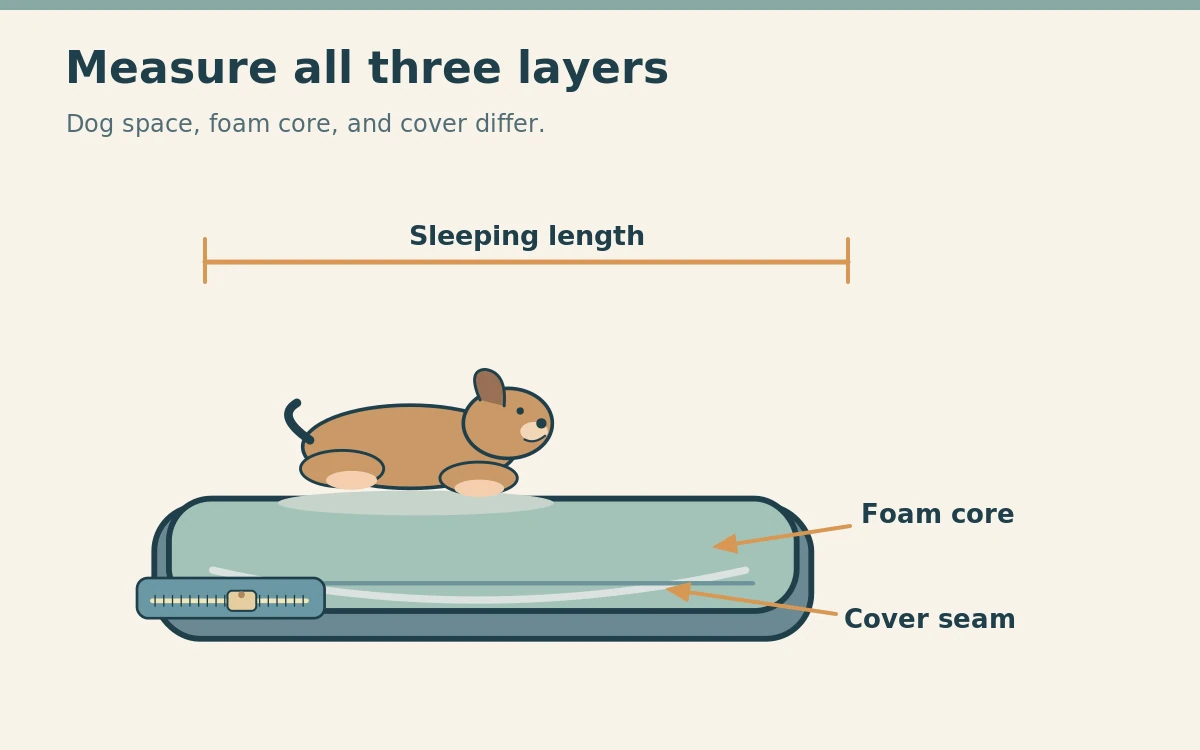
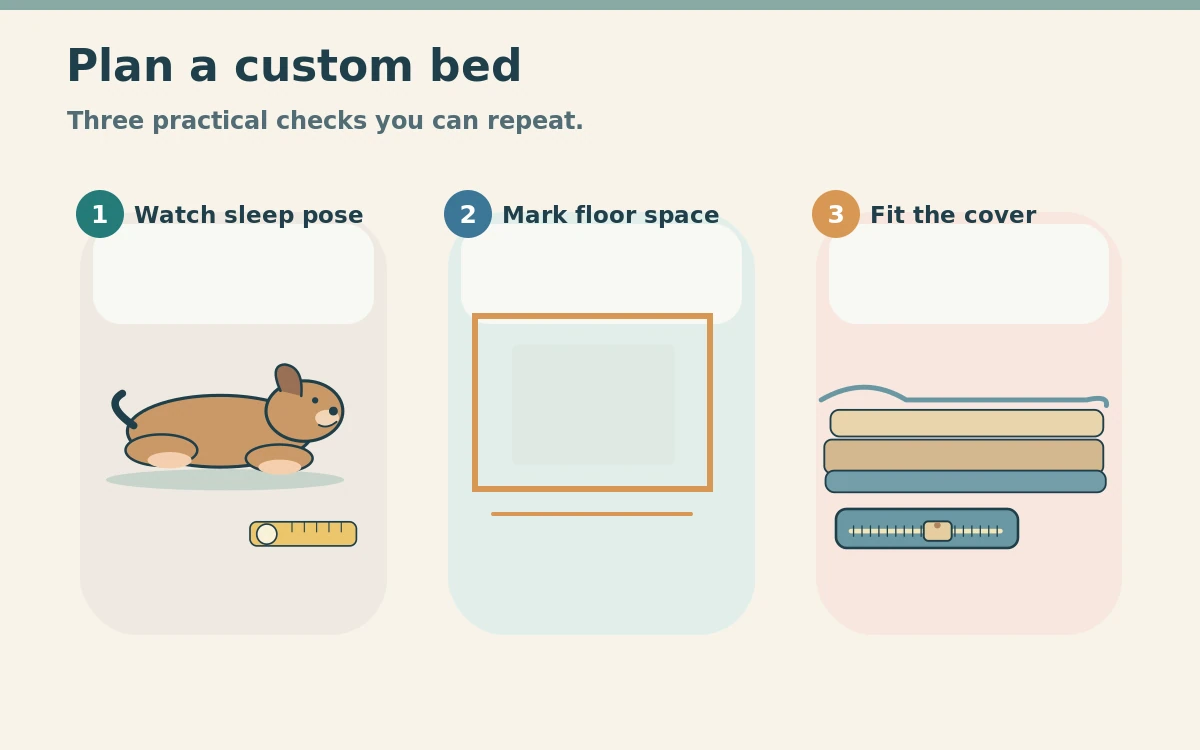
Watch how your dog lies down when fully relaxed. Note whether front legs extend past the nose, hind legs stretch back, and the dog rolls from one side to the other. Use a tape measure alongside the resting shape without disturbing sleep. Write down the longest natural length and widest turn, then add practical clearance around the body. An overstuffed raised rim should not count as flat sleeping room. The American Kennel Club advises choosing a bed large enough for side sleeping. For a dog with a favored curled pose, preserve enough space for an occasional full-body stretch too.
Make a floor mockup before ordering
Use removable painter’s tape or newspaper to outline the proposed bed on the intended floor. Walk around it as you normally would. Verify that a closet, crate door, and room door still open without dragging over the mattress. Place the outline away from heating vents, dangling cords, and furniture edges where your dog might get trapped. If the bed sits near a walkway, a low rectangular edge may be easier to navigate than a high bolster. Extra width may be wasted if placement blocks the animal’s route to water or a quiet exit.
Choose a fill for the way the dog rests
A supportive foam slab, layered inserts, and loose fiber fill behave differently under weight. Despite its apparent loft, a bed may flatten rapidly if most of its height comes from soft loose fill. Firmness alone is not automatically healthier for every dog, and claims such as ‘orthopedic’ do not replace the dog’s observed comfort. Ask the maker what the core contains, whether the fill can be replaced, and what its cleaning restrictions are. Avoid hard exposed corners or stuffing the dog can access through a weak seam. If your dog has pain or mobility problems, involve your veterinarian rather than guessing from foam density alone.
Allow for cover fit, seams, and compression
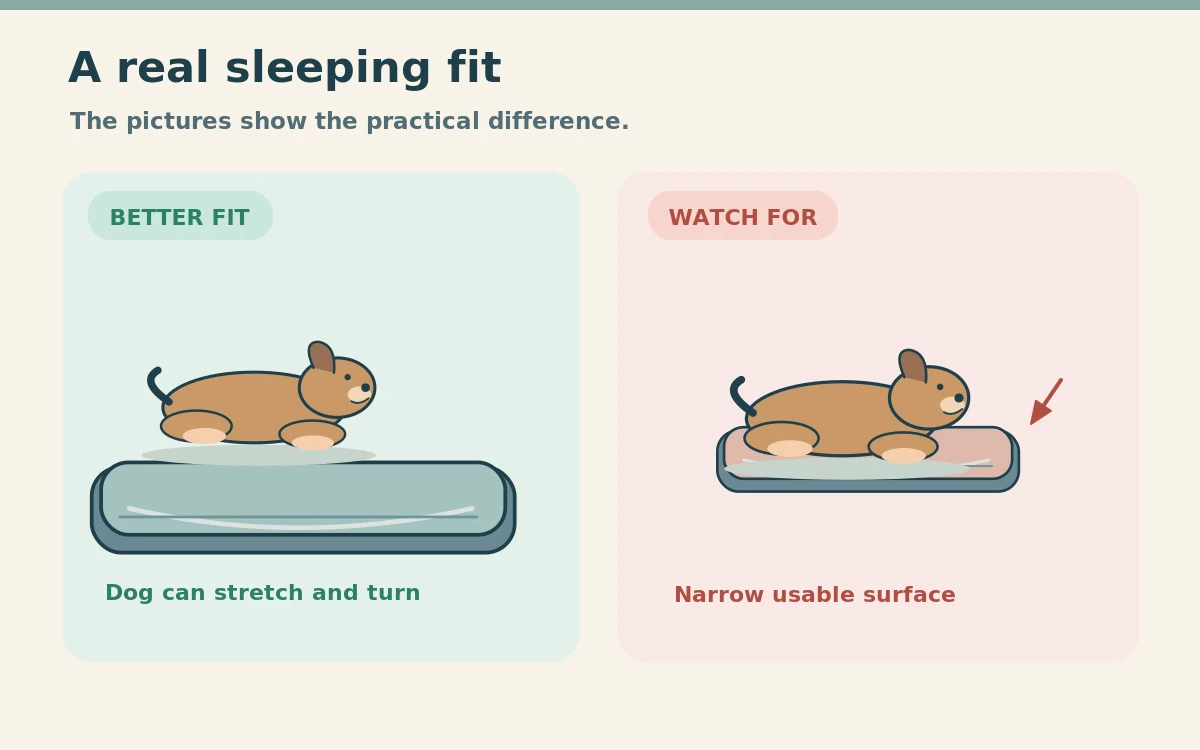
The cover must hold the foam securely without pulling it into a bent shape. An undersized cover raises the edges and reduces usable sleeping room. An oversized cover folds under paws and can make the surface lumpy. Ask whether dimensions refer to the finished outer cover, the foam core, or a measured sleeping surface. Those can differ. Place the zipper where it cannot rub directly against the dog’s body, and use a fabric flap to hide the pull. Check every corner and piping seam for threads that might catch nails or teeth. Confirm the maker’s tolerance for dimensions before buying.
Consider a low-entry design before thick walls
Bolsters can give some dogs a place to rest the chin, but tall walls reduce usable area and can make entry harder. For a dog that prefers to sprawl, a flat mattress provides uninterrupted space. If a supportive side is useful, keep one open side for easy entry and exits. Do not put a very thick mattress beside a high sofa as a makeshift step; it may shift when stepped on. Test a lightweight floor mockup first. The dog should choose to enter, turn, and leave without you lifting it or pressing against its joints.
Design for real washing and drying
A custom cover should remove without requiring you to bend or tear the core. Check the zipper path, fabric care tag, dryer instructions, and whether a protective inner liner is compatible with the foam. Moisture trapped inside a thick block can create odors and other hygiene problems. The CDC recommends following product-specific cleaning instructions and washing soft pet supplies. Vacuum hair from the cover before laundering if practical. Allow the cover and protected inner layers to dry fully before reassembly. Do not assume the foam itself is machine washable because the cover is.
Compare a local maker with a ready-made insert
A made-to-measure bed may solve an unusual alcove or a very long dog, but check its return policy and whether alterations are possible. A standard insert with a custom cover can be more affordable and easier to replace later. Obtain written dimensions, core materials, washable components, and replacement terms. Photographs should show a dog occupying the full mattress, not just sitting at the center. If you order online, keep a sketch that labels floor footprint, foam dimensions, and finished cover dimensions. This avoids conversations in which ‘width’ describes three different things.
Introduce the new mattress gradually
Place the new bed near the existing resting spot and allow the dog to investigate. If you can, transfer an unwashed familiar blanket briefly so the new object smells less strange. Reward voluntary use without trapping or forcing the dog onto the mattress. Watch how the bed compresses when the dog lies down and stands again. An edge that bows upward, a slipping cover, or a dog repeatedly falling off suggests the fit needs adjustment. A practical custom bed should make normal resting easier, not require a special way to lie down.
Recheck dimensions after living with the bed
Measure the usable area again once the foam settles into its cover. Observe resting, turning, and exits for several evenings rather than judging from one photograph. If the dog keeps choosing a different surface, consider temperature, noise, placement, and fabric preference before ordering more foam. Store your final measurements and fabric care instructions where you can find them for replacement covers. Inspect seam tension and zipper flaps during regular washing. A tailored bed is successful only when the dog actually uses it safely and you can keep it clean.
How We Research
HubPet compared published veterinary and animal-welfare guidance with the practical construction and care questions in this guide. We checked dimensions, exits, cover fit, materials, and everyday cleaning limits; we did not run laboratory testing or claim a product endorsement. Specific features vary by manufacturer and model. Read our editorial approach, follow the product instructions, and consult a veterinarian when pain, mobility difficulties, or other health concerns affect your dog’s rest.
Sources
American Kennel Club — Sleepy Time: Choosing a Dog Bed — https://www.akc.org/expert-advice/home-living/sleepy-time-choosing-dog-bed/ (reviewed October 2026).
CDC — Cleaning and Disinfecting Pet Supplies — https://www.cdc.gov/healthy-pets/about/cleaning-and-disinfecting-pet-supplies.html (reviewed October 2026).
ASPCA — General Dog Care — https://www.aspca.org/pet-care/dog-care/general-dog-care (reviewed October 2026).
Safety note: This article provides general pet-care and buying guidance, not an individual veterinary assessment. Stop using damaged bedding or any component a dog is chewing. Seek veterinary guidance for pain, burns, suspected ingestion, or changes in ability to rest or rise.
Measure your dog’s natural stretched sleeping position, then the available floor space. Keep the sleeping surface, foam core, and finished cover dimensions separate.
No. Support depends on the fill and how it responds to the dog, not thickness alone. Watch how the mattress compresses and whether the dog rises comfortably.
Only if your dog prefers them and they leave enough usable sleeping room. An open low edge may make entry and exit easier for some dogs.
Yes. A tight cover can distort the foam and raise the edges. A loose one can wrinkle and create folds under the paws.
Not unless the foam manufacturer explicitly permits that cleaning method. Most care plans separate a washable cover from a core that needs different handling.