
Heated dog beds promise cozy rest, but the electrical details matter more than the marketing photograph. A dog may stay in contact with a warm surface for a long nap. Some animals cannot move away quickly when the bed becomes uncomfortable. Start by asking whether heating is necessary at all. A regular insulated bed in a dry, draft-free room often meets the same everyday goal. If you choose an electric model, favor clear manufacturer instructions, accessible temperature control, and a location where your dog can freely walk onto a cooler surface. Never use a human heating pad as a substitute. For medical concerns affecting resting comfort, review our veterinary disclaimer and speak with your veterinarian.
Decide whether an electric bed fits this dog
Look at your dog’s normal sleeping habits, chewing history, mobility, and room temperature. Does the dog move between cool tile and a padded bed during the same evening? That choice is useful temperature feedback. A dog that tears fabric, mouths cords, or cannot leave independently is a poor match for exposed electrical bedding. Consider a regular washable bed plus suitable room heating instead. The American Kennel Club discusses pet-specific controls and supervised use, while VCA warns that heated pads can cause burns in sleeping pets. Speak with your veterinarian before adding active heat for a frail or medically vulnerable dog.
Inspect the construction beneath the cover
Open or remove only the parts the manufacturer designates for user inspection. Look for intact fabric, an enclosed heating element, strain relief where the cord exits, and a cover that does not bunch into thick hot spots. A low-voltage claim is not permission to ignore chewing or damaged wiring. Reject exposed insulation, pinched wire, scorched fabric, loose connectors, and unknown secondhand controllers. Confirm that replacement parts match the exact model. A stitched label should explain permissible cleaning, surface placement, and operating conditions. Do not insert a separate human heating pad under an ordinary dog mattress.
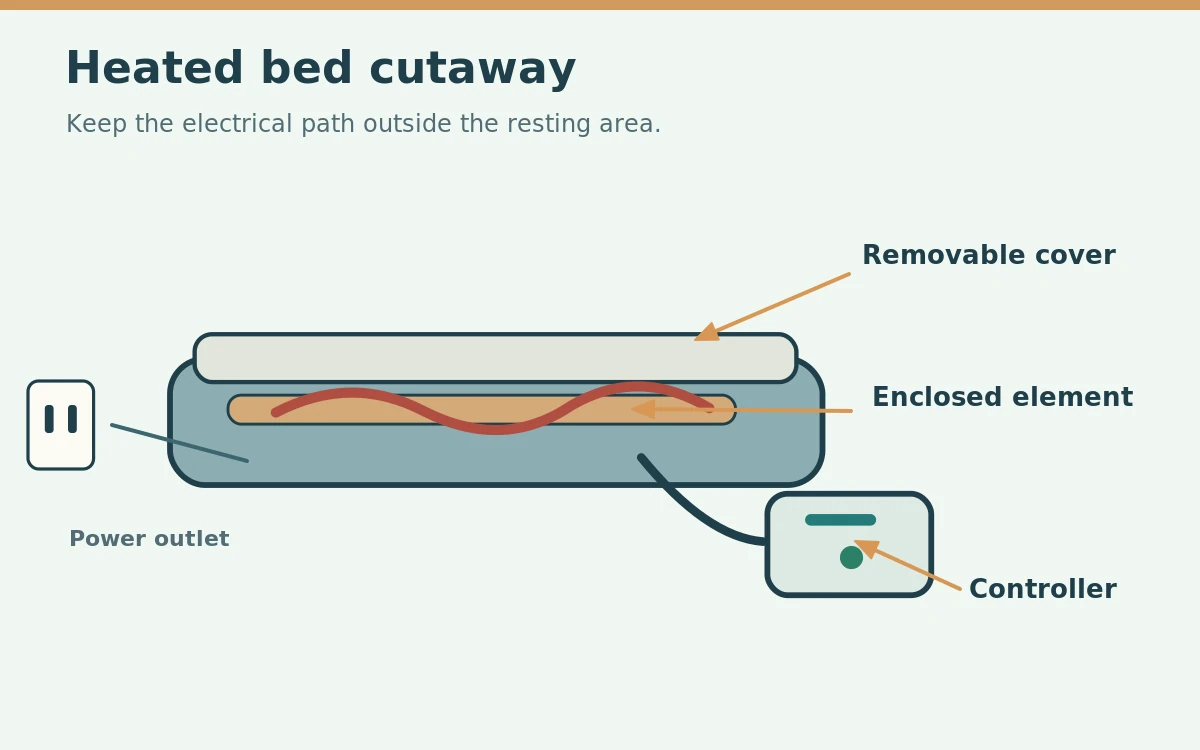
Keep temperature controls easy to reach
Read what each control actually does: adjustable heat, automatic shutoff, thermostat regulation, and timer are not interchangeable features. A timer might end operation without monitoring the surface temperature. Test only by following the product’s setup instructions, with the dog away from the unit until it is ready. The surface should feel gently warm rather than hot. Recheck during the first supervised sessions, especially under thick covers. If the unit lacks reliable instructions or its temperature varies unpredictably, unplug it. Never rely on a controller display as proof that the dog’s contact surface remains comfortable.
Route power safely and preserve a cool exit
Place the bed on a stable, dry indoor surface, away from wet bowls, door swings, heaters, and places where feet catch cables. Lead the cord behind fixed furniture or through a pet-inaccessible route without crushing it or making a tight bend. Keep the outlet dry and accessible to an adult. Do not run a cable beneath a loose rug where heat can build up and foot traffic can damage the wire unnoticed. Leave enough floor around the bed for the dog to step off and choose another resting place. Never confine a dog on active heat inside a small closed crate.
Compare electrically heated and passive warmth
A self-warming pad reflects some of the dog’s own warmth and needs no outlet. A conventional padded bed and blanket provide insulation without an active element. Electric models offer deliberate heat but add cleaning limitations, electrical risk, and supervision duties. The right choice depends on the dog’s ability to move away, not on which product looks plush. A thick outer cover does not guarantee safety if heating components can bunch or fail beneath it. Compare how readily you can remove dirt, inspect seams, and provide a cooler option beside each bed.

Introduce the bed without forcing contact
Place the unplugged bed beside a familiar sleeping area. Allow sniffing and voluntary exploration. Reward a brief approach if your dog enjoys food rewards, but do not hold the dog on the surface. Use heat only after you check the instructions and wiring. Watch for moving away, panting, restless position changes, unusual licking, or refusal to lie down. Those behaviors can indicate discomfort, although they are not a diagnosis. If your dog seems distressed, turn the unit off and offer an unheated place. The dog should always control whether to stay.
Clean the fabric without wetting live components
Unplug the bed before any cleaning and let it cool. Follow the exact washing label: some products have a removable washable cover, while others require careful spot cleaning. Never immerse a heating element, controller, plug, or cable unless the manufacturer explicitly permits immersing that specific component. Remove hair before laundering and dry every approved fabric layer thoroughly. Inspect connectors before reassembly. The CDC recommends following care labels for pet beds and keeping soft pet supplies clean. If urine reached the electrical section, stop using it until the manufacturer advises what to do.
Recognize warning signs that end use
Discontinue use for frayed cords, a damaged controller, unusual odors, hot patches, darkened fabric, damp connections, or a pet trying to chew the cable. Do not repair electric wiring with tape or substitute parts from another appliance. Inspect the dog’s skin if an unexpected reaction occurs, but avoid assuming a hidden burn is minor. VCA notes that heating devices can burn sleeping pets, including animals that have trouble rising. If you suspect a burn or electrical injury, unplug the source safely and contact a veterinarian promptly. A normal-looking coat does not rule out skin injury.

Use a short purchase and setup checklist
Before buying, confirm the manufacturer’s intended pet size, cable length, outlet location, washing method, return policy, and whether parts are replaceable. Measure the surface where the bed will sit with enough surrounding room for easy exit. At setup, photograph the cord route for future comparison, then check it during routine cleaning. Store the instructions with the pet care supplies. For overnight or unsupervised rest, favor a normal unheated bed unless your veterinarian gives a specific plan. A heated bed is optional equipment, not a necessary part of quality dog care.
How We Research
HubPet compared published veterinary and animal-welfare guidance with the practical construction and care questions in this guide. We checked dimensions, exits, cover fit, materials, and everyday cleaning limits; we did not run laboratory testing or claim a product endorsement. Specific features vary by manufacturer and model. Read our editorial approach, follow the product instructions, and consult a veterinarian when pain, mobility difficulties, or other health concerns affect your dog’s rest.
Sources
American Kennel Club — Heated Dog Beds: Safety and Choosing the Right One — https://www.akc.org/expert-advice/vets-corner/heated-Beds-safe-dog/ (reviewed October 2026).
VCA Animal Hospitals — Heating Pads: True or False — https://vcahospitals.com/resources/lifestyle-cat/hazards-safety/heating-pads-true-or-false (reviewed October 2026).
CDC — Cleaning and Disinfecting Pet Supplies — https://www.cdc.gov/healthy-pets/about/cleaning-and-disinfecting-pet-supplies.html (reviewed October 2026).
Safety note: This article provides general pet-care and buying guidance, not an individual veterinary assessment. Stop using damaged bedding or any component a dog is chewing. Seek veterinary guidance for pain, burns, suspected ingestion, or changes in ability to rest or rise.
Active heated bedding has burn and electrical risks. Follow the product instructions and use supervision; a conventional unheated bed is a better default for overnight rest.
No. Human devices may heat differently and can cause burns or electrical hazards. Choose a pet-specific solution only when its use is appropriate.
The dog needs an easy way to leave the heated surface and rest somewhere cooler. Never trap a pet against active heat inside a confined space.
Only wash components that the manufacturer specifically identifies as washable. Unplug the device, cool it, and keep electrical parts dry unless the label explicitly permits otherwise.
Stop using the bed immediately and unplug it safely. An animal that may have received an electrical injury needs prompt veterinary evaluation, even if it appears normal.